
Note: This website was automatically translated, so some terms or nuances may not be completely accurate.
What the SDGs require is "serious discussion" and "horizontal connections."
In this series, we will explore hints for achieving the SDGs by hearing from various experts and practitioners.
For the first installment, we interviewed Kaoru Nemoto, Director of the United Nations Information Centre, who is working tirelessly to promote widespread understanding of the SDGs.
She reflected on Japan's past efforts toward the SDGs and offered recommendations for solutions based on current challenges.
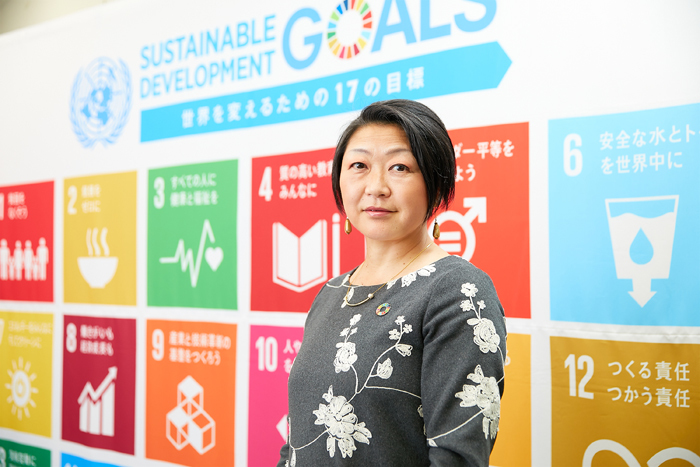
Japan was quick to adopt the SDGs at the governmental level. The institutional framework is already in place.
──The SDGs were adopted at the UN General Assembly in September 2015. This year marks the fifth year since initiatives began in various countries. Could you reflect on Japan's efforts so far?
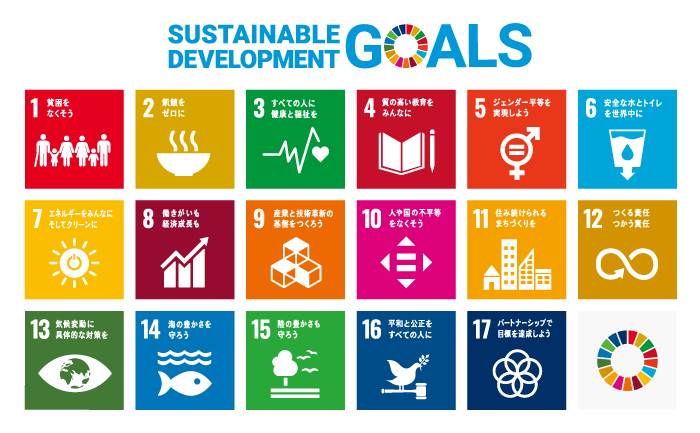
Nemoto: The SDGs (Sustainable Development Goals) are the "Sustainable Development Goals" set by the 193 UN member states to be achieved over the 15-year period from 2016 to 2030. They represent an enormous challenge requiring the world to unite, establishing 17 goals and 169 associated targets to advance social development while eliminating all forms of global poverty and discrimination and addressing climate change and environmental protection.
While the initiative began in January 2016, Japan held the presidency of the G7 Summit (Ise-Shima Summit) that same year. As this summit marked the first time the SDGs were discussed at the leader level, Japan established an SDGs Promotion Headquarters, with the Prime Minister as its head and all cabinet ministers as members. Creating this cross-ministerial meeting body was exceptionally early globally.
Furthermore, in December 2016, Japan formulated its SDGs Implementation Guidelines to outline its direction. A revised version of these guidelines was released in December 2019. Additionally, recognizing that local government action is crucial for achieving the SDGs, the government selected 29 cities demonstrating outstanding SDGs initiatives as "SDGs Future Cities." A subsidy program specifically supporting 10 particularly pioneering projects among these began in 2018.
Beyond the government, Keidanren (Japan Business Federation) has also set a vision to "build a prosperous society that leaves no one behind," based on the technologies of AI and IoT within its Society 5.0 framework. Turning to the education sector, learning about the SDGs will be incorporated into the curriculum guidelines for elementary schools starting in the 2020 academic year and for junior high schools starting in the 2021 academic year. Some teachers are already proactively teaching about the SDGs ahead of this schedule. Indeed, awareness and interest in the SDGs among younger generations are growing significantly.
Reflecting on the nation's efforts thus far, the institutional framework is already in place. We are now entering a phase where the focus shifts to how much concrete action local governments, companies, and organizations can take.
※Society 5.0: This term refers to a new society following hunting societies (Society 1.0), agricultural societies (Society 2.0), industrial societies (Society 3.0), and information societies (Society 4.0). It was proposed in the government's Fifth Science and Technology Basic Plan as the future society Japan should aim for. It refers to a human-centered society that achieves both economic development and the resolution of social issues through systems that highly integrate cyberspace (virtual space) and physical space (real space).
Japan's SDG initiatives are still in their early stages.
──Japan has been establishing its institutional framework early on, hasn't it? How much progress do you feel has actually been made toward achieving the SDGs?
Nemoto: I often hear about SDGs from corporate representatives, and I feel we're still at the initial stage. Companies are currently mapping their existing initiatives to the 17 SDG goals and 169 targets. Few have developed strategies outlining "how our company will contribute" toward the goals we want to achieve by 2030, let alone translated those into concrete plans.
Of course, there are good initiatives, but they are often too small in scale and progress too slowly. We need to scale up and accelerate.
When companies promote the SDGs, there are three key elements: various internal measures like governance and compliance; planning core operations; and engagement that involves partner companies, suppliers, and consumers. Perhaps these three elements are not being viewed holistically.
──How can we achieve this cross-functional integration?
Nemoto: Many companies have established SDG promotion offices, but it's crucial for their staff to participate in planning meetings across various departments. From upstream to downstream, SDG promotion office staff should be called upon at key moments to facilitate discussions like, "This is important for advancing the SDGs," or "The global SDG landscape is evolving this way; our company is strong here but weak there." Such debates need to be more active within the company.
──Among the 17 SDG goals, is there any where you feel a significant gap between Japan and the global situation?
Nemoto: The most significant challenge I perceive in Japan is gender equality. Dentsu Inc.'s consumer awareness survey also indicates that "among the 17 goals, this is the one furthest from the thoughts and actions of Japanese consumers."
I believe one reason gender equality remains elusive is the influence of advertising and similar media. Global companies and people worldwide are constantly considering how to communicate effectively to sell products and services to diverse audiences. From their perspective, Japan still has far too many advertisements that appear strange – particularly from a gender perspective.
Companies promoting SDGs and those responsible for advertising and media expressions must strongly recognize this issue and recommit to communicating information more in line with global standards.
Within the media and advertising industries, female decision-makers remain scarce. Corporate presidents, as top executives, must change their mindset, boldly increase the number of women in responsible positions like board members, and foster discussions and information dissemination within diverse environments.
Furthermore, consideration for minorities and work-style reforms are also crucial for achieving the SDGs. I hope companies will take actions that are not embarrassing in terms of governance and compliance.
Japanese companies lack substantive discussion and action
──Are there companies actively displaying the SDGs logo and communicating their initiatives?
Nemoto: Globally, Japan is probably the only place where the SDGs logo and icons are so prevalent. Yet, when you ask, "Do companies truly understand the SDGs and take action?" the gap is significant. I wish they would engage in discussions that focus more on the core issues.
Overseas, the SDGs logo isn't displayed as prominently as in Japan. However, even without using the term or logo, I sense they are having discussions that touch on the more fundamental aspects of each social issue.
I want Japanese companies and stakeholders to actively join global forums discussing the SDGs. The strength of the SDGs is that they serve as a universal language. Companies pursuing the same goals within the SDGs find it easier to connect. They can share their experiences and lessons learned, learn from each other, and elevate one another. It's regrettable, however, that Japanese participants are rarely seen in such forums.
──The Davos Conference (World Economic Forum) took place in January. This year, it seemed like SDGs-related topics were the main focus rather than economic issues. There was also talk that the "tide has turned" in terms of what's being discussed globally. Japanese companies participated and took the stage, but how did their presence appear on the world stage?
Nemoto: I wished for more grounded discussions. Take the issue of disposable plastic waste, for example. Developing biodegradable or plant-based plastics is certainly important. But the sheer volume of plastic already flooding the world is staggering. How can we drastically reduce plastic waste? While the world is having this conversation, Japanese stakeholders rarely engage on that front.
Climate change is the same. While various technological innovations are certainly necessary, the critical question is how to innovatively reduce the overwhelmingly increased CO2 emissions that have become the problem. I sense a disconnect with the world in how this discussion rarely gains traction in Japan.
Many technologies require numerous conditions to align before they become feasible. Telling young people like Greta's generation, who will bear the brunt of climate change's consequences, to simply bet on these technologies is unlikely to convince them.
This year's Davos Forum focused intensely on climate change. Building on that momentum, numerous Japanese companies, organizations, and local governments issued a message to the government demanding Japan raise its greenhouse gas reduction targets and submit them to the UN. This is the "Climate Change Initiative." The fact that there was support for this initiative is commendable.
The key now is how to translate this into the formulation of bold reduction plans. If Japan fails to set more ambitious reduction targets, it risks losing credibility as a nation. I sense a strong sense of crisis driving many companies to sign this petition urging the government to act.
Of course, the SDGs cannot be reduced solely to environmental issues. They are societal challenges and economic issues. Economy, society, and environment are interconnected.
To foster the SDGs going forward, articulating a vision is also necessary. While it must be translated into action plans, I believe Japanese executives speak too little about vision. Overseas executives routinely discuss social issues when gathering with peers.
Not just how-to discussions, but the essence: "What are our company's strengths and weaknesses?" "In what situations can we take action to solve social issues?" "Are there other companies facing the same problems we could collaborate with to solve?" I believe we can have much more discussion using the SDGs as context.

TeamSDGs collaborates with various SDG stakeholders to disseminate information about the SDGs and plan/develop solutions.
※For more articles by Kaoru Nemoto, see:
Interview with Kaoru Nemoto, Director of the United Nations Information Centre: The Present and Future of the SDGs, and What We Can Do
Was this article helpful?
Share this article


