
Note: This website was automatically translated, so some terms or nuances may not be completely accurate.
 What is the nature of business in an uncertain era? [1/5]
The Sociology of Confusion The Management Science of Frustration #01
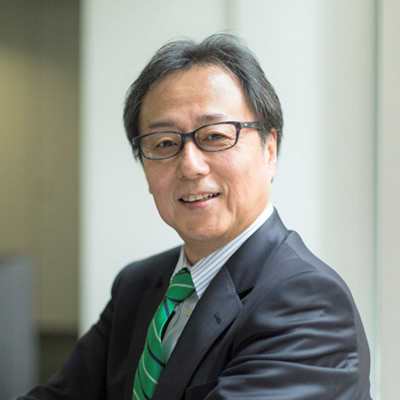
Masakazu Sugiura
Professor, Waseda University Business School
Society is currently in a state of "confusion." Under this "confusion," management faces unprecedented "frustration." The future is opaque, filled with uncertainty. An unidentifiable anxiety is spreading.
When gripped by anxiety, individuals, companies, and society alike tend to halt their thinking. "The more I think, the more anxious I become. So perhaps I should just stop thinking altogether." Could this mindset be stagnating and slowing down business?
In this column, I aim to deepen our examination of "how business should operate in uncertain times" by unraveling the true nature of this "confusion" and "frustration."
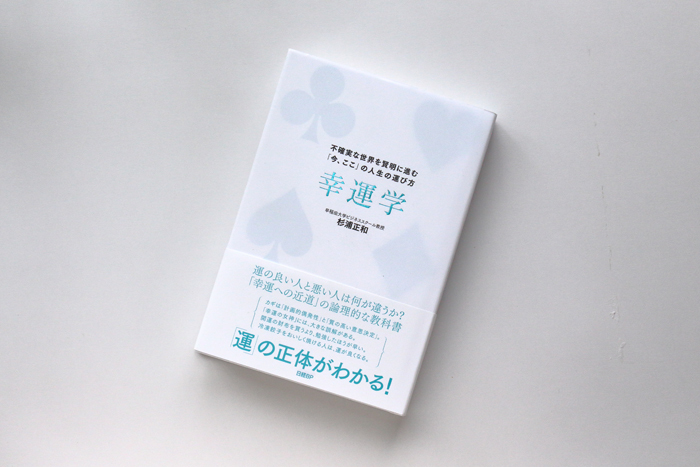
Navigating an Uncertain World Wisely: The Art of Living in the "Here and Now" - The Science of Luck by Masakazu Sugiura
A professor at Waseda University Business School, frequented by many corporate executive candidates, unravels the true nature of "luck." What distinguishes the fortunate from the unlucky? How should we handle luck we can control versus luck beyond our control? Is mastering how to cook frozen dumplings more likely to bring good fortune than buying a lucky wallet? Strengthen your life wisely with this "textbook on luck." Nikkei BP
Let's examine business as a science.
When told to "scientifically approach business," most people think of "statistics" or "management studies"—typically associated with MBAs—and tend to shy away, thinking it's "too difficult." (They assume it's beyond them.) But if you think about it just one step before that, all you really need is an understanding of the concepts behind "differentiation" and "integration."
Yet, for most people, hearing "differential" or "integral" makes them think not just "difficult," but "tedious." So, how about thinking of it this way? "Differential" is about how you live each moment. (Imagine slicing time.) "Integral" is about how you've lived up to now. (The total amount of actions accumulated.)
What becomes visible when you grasp this image? You see the extremely simple "probability" you learned in elementary school math class. Viewing the world's phenomena with an awareness of "probability" reveals the "expected value." You understand the "structure of compound interest." You see "guidelines for action." You develop "sensors" for everything: things, events, people, money... Not sense (that vague notion of intuition or gut feeling), but sensors—meaning you can analyze the present and predict the future using reason and concrete numbers.
Now, here's the crucial part: what happens when you develop these sensors? You gain access to "opportunities" and "probabilities." Opportunities refer to ♣️ Future Development (career building) and ❤️ Relationship Building (how to interact with people). Probabilities refer to ♠️ Decision-Making (e.g., business judgments) and ♦️ Self-Management (asset management, etc.).
If the mathematical term "probability" feels unfamiliar, think of it as "momentum."
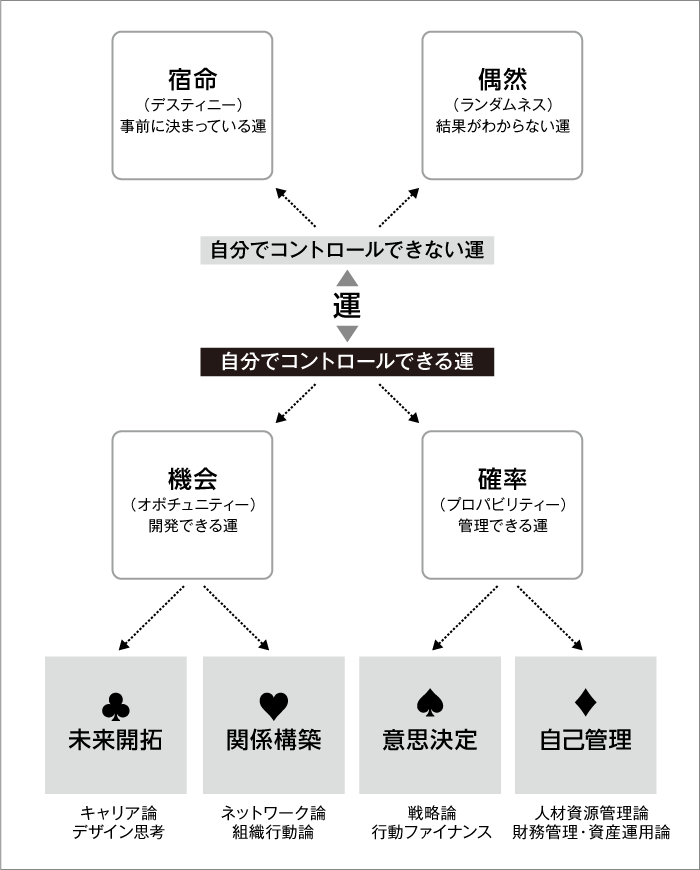
Mastering "opportunity" and "probability" makes your path to the future crystal clear. You gain a waste-free, straightforward, and remarkably simple "vision of the future." In this column, we'll explore this perspective over five installments, delving into
over five installments.
Was this article helpful?
Share this article


Newsletter registration is here
We select and publish important news every day
For inquiries about this article
Author
Masakazu Sugiura
Professor, Waseda University Business School
Director of National University of Music (in charge of management strategy)