
Note: This website was automatically translated, so some terms or nuances may not be completely accurate.
 What is the nature of business in an uncertain era? [5/5]
The Sociology of Confusion The Management Science of Frustration #05
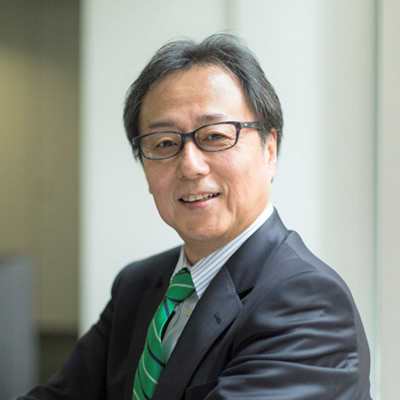
Masakazu Sugiura
Professor, Waseda University Business School
Society is currently in a state of "confusion." Under this "confusion," management faces unprecedented "frustration." The future is opaque, filled with uncertainty. An unidentifiable anxiety is spreading.
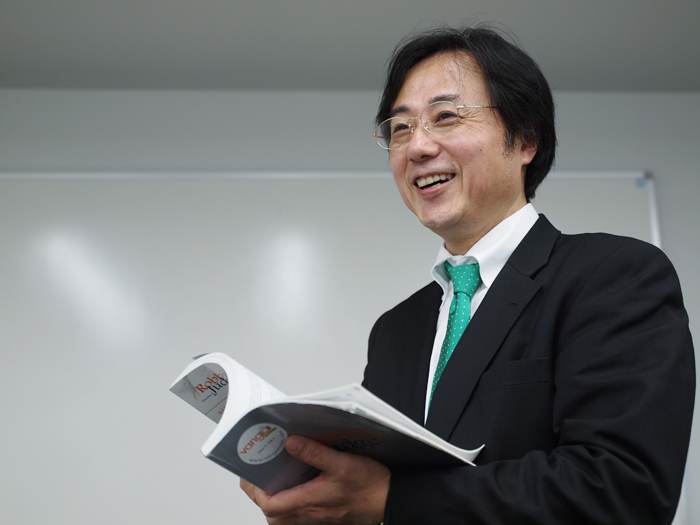
When gripped by anxiety, individuals, companies, and society alike tend to halt their thinking. "The more I think, the more anxious I become. So perhaps I should just stop thinking altogether." Could this mindset be stagnating and slowing down business? In this column, I aim to deepen our consideration of "how business should operate in an uncertain era" by unraveling the true nature of this "confusion" and "frustration."
What is the nature of business in an uncertain era?
My five-part series has now reached its final installment.
Business, and more broadly, life itself, is not a gamble. It is an extremely rational action based on the concept of "certainty." To succinctly express what I have sought to convey in this column, that is the essence. In a word: "Let's think."
For example, in Japanese we say "brothers" (兄弟). In English, it's "Brother." Even middle schoolers know that. But think about it. For Japanese people, "whether someone is older or younger" is paramount. What does that mean? It means we live in a world of seniority (or, in the business world, seniority-based hierarchy).
In contrast, English has no "older brother" or "younger brother"—just "Brother." What matters isn't "older or younger," but whether it's "Brother" or "Sister." In other words, they live in a world defined by gender. Languages like French are even clearer—all nouns are categorized as either "masculine" or "feminine." And this is in our gender-neutral times, mind you.
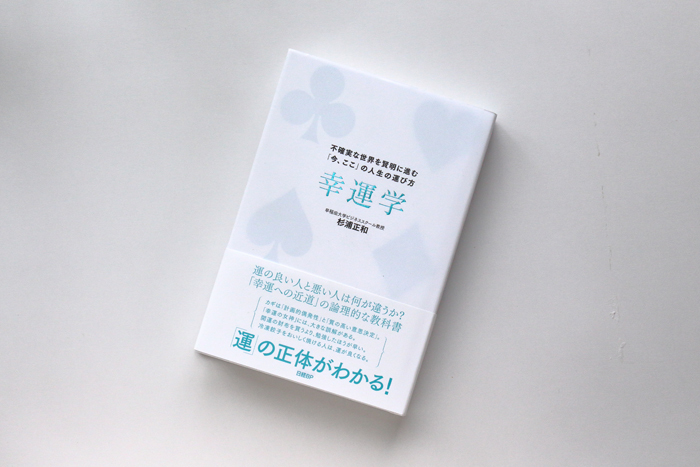
A professor at Waseda University Business School—attended by many corporate executive candidates—unravels the true nature of "luck." What distinguishes the fortunate from the unlucky? How should we handle luck we can control versus luck beyond our control? Is mastering how to cook frozen dumplings more likely to bring good fortune than buying a lucky wallet? Strengthen your life wisely with this "textbook on luck." Nikkei BP
These differing values, over long periods, create entirely distinct societies. That's obvious, right? Yet now, the world is rapidly shifting toward "seniority-free" and "gender-free" societies. While it's true we're all facing the same direction, "what we're changing from and what we're changing to" varies dramatically by country, generation, gender, and profession.
That's what "let's think" means. It means "let's first consider the premises for thinking from a meta (higher-level) perspective."
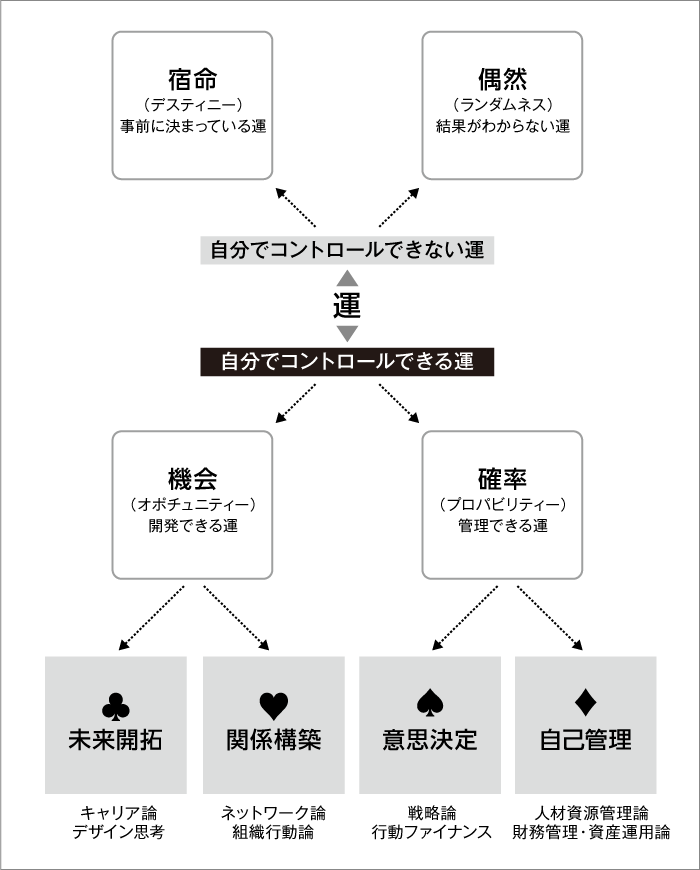
The character "案" (an) has two meanings: "to plan" as in a proposal, and "to contemplate" the future. This "案" is composed of "因" (cause), "運" (fortune), and "縁" (connection).
"Cause" refers to management.
"運" (un) is probability.
"縁" (en) means development.
"An" is something you can control with your own power. For things beyond human control, rely on "on" (favor). In English, this is "Think" and "Thank."
Society is currently in a state of "confusion." Management is currently in a state of "frustration." If this column can offer even a small insight or hint about "working in an uncertain world" or "living through uncertain times" – the challenges we face now – nothing would make me happier.
(Editor's Note)
Listening to Professor Sugiura's talk reminded me of that feeling of "frustration" for the first time in ages. Perhaps it's something close to the feeling of "first love."
I know I like the other person, more or less. I know what I like about them and how much. But I don't know how to convey that feeling to them. (After all, it's my first time.)
Even if I did tell them, I wouldn't know what the outcome would be. And even if we ended up loving each other, I wouldn't know what to do next. That's why I feel "confused" and my chest tightens with "frustration."
Professor Sugiura teaches, "In an uncertain world, there are things people can control and things they cannot. Discerning which is which is crucial." Put plainly, it means: "Give up on what you should give up on decisively," and "Hold on to what you should hold on to with all your might."
This column made me realize it's not just a guidebook for business, but also a guidebook for life.
Was this article helpful?
Share this article


Newsletter registration is here
We select and publish important news every day
For inquiries about this article
Back Numbers
Author
Masakazu Sugiura
Professor, Waseda University Business School
Director of National University of Music (in charge of management strategy)