
Note: This website was automatically translated, so some terms or nuances may not be completely accurate.
 What is the nature of business in an uncertain era? [3/5]
The Sociology of Confusion: The Management Science of Frustration #03
Masakazu Sugiura
Professor, Waseda University Business School
Society is currently in a state of "confusion." Under this "confusion," management faces unprecedented "frustration." The future is opaque, filled with uncertainty. An unidentifiable anxiety is spreading.
When gripped by anxiety, individuals, companies, and society alike tend to shut down their thinking. "The more I think, the more anxious I become. So perhaps I should just stop thinking altogether." Could this mindset be stalling and slowing down business? In this column, I aim to deepen our understanding of "how business should operate in an uncertain era" by unraveling the true nature of this "confusion" and "frustration."
Returns cannot be controlled, but risk can.
Last time, we examined the nature of the "uncertain world" we now inhabit.
How should we conduct business in such an "uncertain world"? This time, I want to delve deeper into that point. Many executives, and indeed most workers, are frantically trying to increase "returns" like sales revenue or profit margins. But "returns" are something that appear as a result; they are fundamentally not something people can control.
If they were controllable, it would be simple. "Let's aim for a 30% sales increase!" "Yeah!" If it could be achieved with a rallying cry and hard work, everyone would just cheer and push forward. But that's not how it works, which is why everyone struggles.
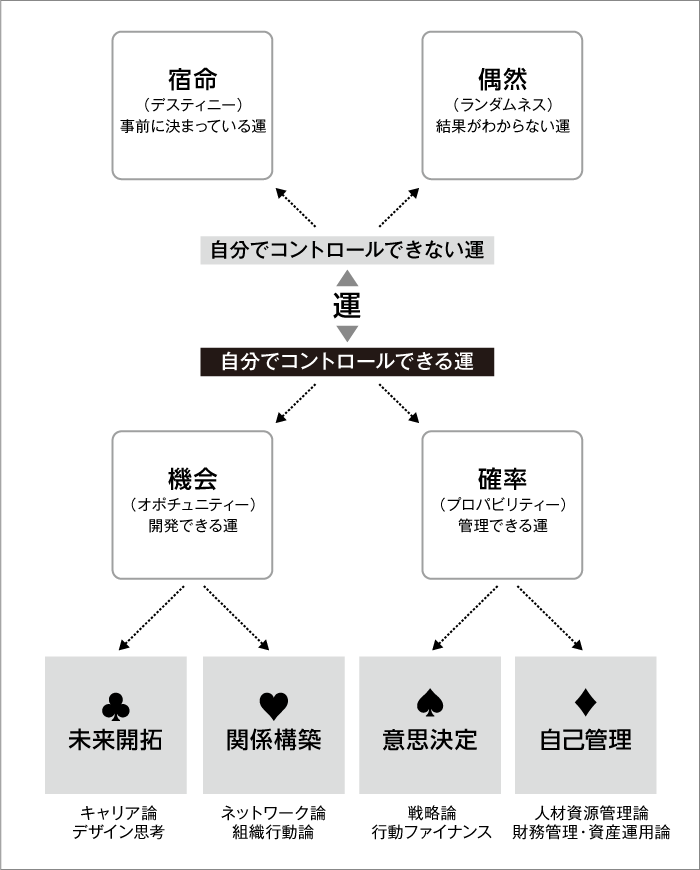
Returns are uncontrollable, but risk is controllable. This is the crucial point. When we hear "risk management," we tend to think only of "crisis avoidance." Yet risk comes in two types: "risks worth taking" and "risks to avoid." Crisis avoidance pertains to the latter.
In contrast, the former includes things like "investment" or "startups." Companies that fear these will inevitably lose momentum. Returns are only possible by taking the risks that should be taken. Returns will never come to people or companies that don't choose to take the risks they should.
Management is not about control. It is about organization.
As symbolized by terms like "hotel manager," many people mistakenly believe management means controlling people, things, organizations, or money. This misconception breeds power harassment and sexual harassment. It's only natural, stemming from an inability to think beyond hierarchical relationships.
What, then, is leadership? It is the quality of being able to think in terms of "front and back," not "up and down." It means facing forward, discerning which direction "front" lies. It signifies the ability to see into the future. That is the absolute prerequisite for leadership.

A professor at Waseda University Business School, where many corporate executive candidates study, unravels the true nature of "luck." What distinguishes the fortunate from the unlucky? How should we handle luck we can control versus luck beyond our control? Is mastering how to cook frozen dumplings more likely to bring good fortune than buying a lucky wallet? Strengthen your life wisely with this "textbook on luck." Nikkei BP
With that as a premise, let's consider what management is. I believe "management = organizing." It's not about controlling, but rather the image of preparing many small boxes to organize things. This applies to personnel, capital investment, everything.
Why do companies have various departments? Because they've organized. These are the "boxes" for placing people in the right spots to maximize their potential. To put it poetically, they're "treasure chests." Many executives lack this awareness, so when they say "promote work-style reform," they end up revising employment rules or monitoring overtime hours. That's not what it's about. It's about organizing. Both business strategy and organizational structure. It's precisely because you organize that you can look forward. I believe that's where true leadership is born.
Was this article helpful?
Share this article


Newsletter registration is here
We select and publish important news every day
For inquiries about this article
Back Numbers

Author
Masakazu Sugiura
Professor, Waseda University Business School
Director of National University of Music (in charge of management strategy)