Note: This website was automatically translated, so some terms or nuances may not be completely accurate.
 The Accelerating Digital Transformation of TV Advertising [1/3]
Making TV advertising easier for startups!
For startups accustomed to placing internet ads, television advertising presented a significant hurdle in a sense.
Therefore, CARTA HOLDINGS, INC (hereafter CARTA), which drives DX (digital transformation) within the Dentsu Group in Japan, collaborated with Dentsu Inc. to develop "PORTO tv," a service that allows companies to purchase TV advertising slots with the same ease as buying digital ads.
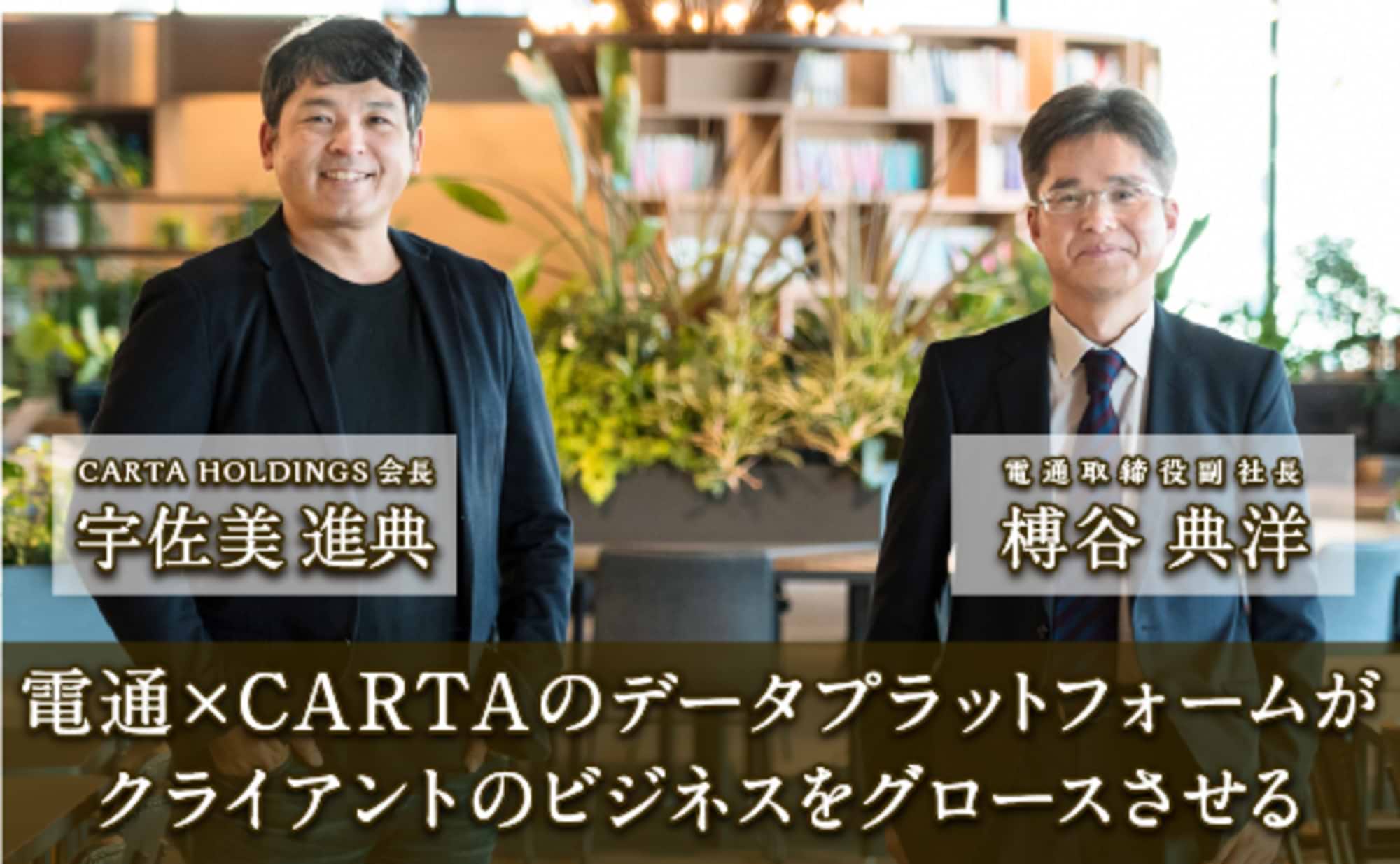
CARTA was formed in 2019 through the management integration of VOYAGE GROUP, which broadly handles internet advertising platforms and media operations, and Cyber Communications Inc. (CCI), part of the Dentsu Group. We spoke with Mr. Shinnosuke Usami, Chairman of CARTA and Founder/CEO of VOYAGE GROUP, about the details and purpose of "PORTO tv".

Lowering the Barrier for "First-Time TV Advertising"
VOYAGE GROUP had previously run a television ad campaign just once. It was for an internet service, and the honest impression after running it was, "We weren't really sure if it was effective."
While they could see that the ad campaign had moved user numbers to some extent, analyzing the data to determine the actual advertising effectiveness took over two weeks. This felt too slow compared to internet advertising, where you can measure effectiveness the next day and run PDCA cycles. Consequently, they didn't pursue ongoing TV advertising.
As an advertiser running TV ads for the first time, we found TV advertising required significant costs and effort—from planning and production to securing airtime slots and verifying effectiveness. Furthermore, as I personally experienced, the effectiveness metrics are complex, and visualizing actual delivery results takes time. This makes real-time comparison and optimization difficult, leading to unclear cost-effectiveness. Given these challenges, many advertisers likely shy away from TV ads and focus solely on internet advertising.
Having managed VOYAGE GROUP for years, I've operated digital advertising platforms and understand both the strengths and weaknesses of digital advertising well. From my perspective, television advertising possesses the power to repeatedly deliver the same message to consumers over a specific period, stimulating demand, encouraging the desire to purchase products or services, and appealing to latent needs. It also contributes to brand awareness and image building. Furthermore, television advertising excels in its format, long accepted by consumers, where commercials air between programs.
Furthermore, through discussions with Dentsu Inc.'s Media Services / Radio,TV Division, I realized that by incorporating the essence of digital advertising into TV ads, we can actually implement the PDCA cycle for TV ads just like digital ads, enabling immediate visualization of effectiveness.
By platformizing this service, we wondered: Couldn't we make TV advertising—which is effective at driving attitude change toward products and services—more accessible?
Therefore, as a joint service between CARTA and Dentsu Inc., we launched "PORTO tv" to solve advertisers' problems and lower the barrier to entry.
PORTO tv is a platform for TV advertising placements.
CARTA developed "PORTO," an integrated marketing platform for brand advertisers, in 2019. Within "PORTO," we have released features to deliver audio ads to platforms like radiko and Spotify, as well as to deliver DOOH (Digital Out of Home) advertising.
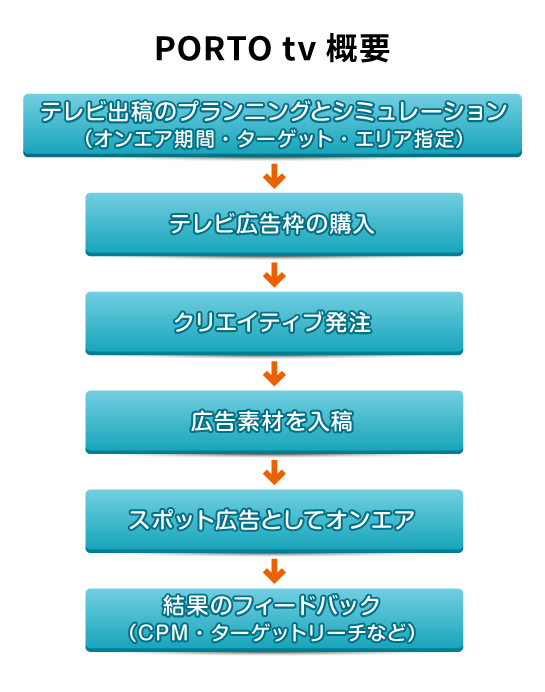
"PORTO tv" is one format of "PORTO" focused specifically on television. It allows companies to purchase TV ad slots and order ad production online, just like traditional digital advertising. The service primarily targets companies, such as startups, that have not previously been familiar with TV advertising. For companies accustomed to managing internet-based advertising campaigns, the system for placing ads is similar, making it easier to adopt.
Leveraging Dentsu Inc.'s extensive assets—among Japan's largest in television advertising—it enables highly detailed pre-campaign simulations, such as "spending this budget in this area is expected to yield these results." Post-airing, reporting tools allow performance tracking as early as the day after ad delivery.
By comparing results against pre-launch simulations, AI-driven tuning enables further optimization. Based on campaign outcomes, we help clients visualize future campaign strategies and placement approaches.
Furthermore, a major feature is that it's not just a tool for purchasing TV ad slots; you can also order TV ad production through the same interface. We collaborate with various creative partners, such as Kaizen Platform and Crevo, to produce ads tailored to your needs. Of course, the usual reviews by TV stations and other entities for the advertisers placing ads and the ads themselves will continue, ensuring ethical advertising standards are maintained.
While "PORTO tv" fundamentally provides an interface advertisers can operate themselves, CARTA supports them in its implementation rather than leaving it entirely to the advertiser. We provide optimal solutions for each company, incorporating digital technology throughout the process—from appropriate planning and advertising creative production to PDCA-based campaign management.
The goal is the integration of mass advertising and internet advertising
One of CARTA's major objectives in developing "PORTO tv" is to create an integrated platform for television and internet advertising.
PORTO tv places strong emphasis on reporting functions to effectively drive the marketing PDCA cycle. By visualizing various TV advertising metrics, we aim to support swift decision-making by executives, such as increasing advertising budgets at the right time.
Furthermore, from a long-term perspective, it's crucial to consider how television advertising connects with internet advertising, rather than being a standalone solution. We aim to develop "PORTO" into a platform that enables integrated planning across mass and digital media, as well as effective integrated PDCA cycles.
We are also considering combining PORTO tv with digital advertising services like Premium In-Stream, Premium Audio, and Premium DOOH. We hope that having PORTO tv available will encourage advertisers currently running only digital ads on the PORTO platform to consider TV placements.
In the past, placing internet ads on major portal sites required budgets in the tens of millions of yen, making it difficult to advertise casually. However, the emergence of programmatic advertising allowed ads to run with budgets as low as 1,000 yen, attracting new advertisers and expanding the market. Creating a system with "PORTO tv" that allows TV advertising to be placed with smaller budgets than before and in a more targeted manner will stimulate new demand.
Moving forward, as we provide services to advertisers, we will continuously incorporate their diverse feedback into development, steadily improving the service. This will evolve it into a higher-satisfaction offering.
With the release of "PORTO tv," we aim to help many advertisers recognize the value of TV advertising and contribute to the expansion of the TV advertising market.
Was this article helpful?
Share this article


Newsletter registration is here
We select and publish important news every day
For inquiries about this article
Author

Shinji Usami
CARTA HOLDINGS, INC
Chairman and CEO