Note: This website was automatically translated, so some terms or nuances may not be completely accurate.
 The "Remote-Controlled Life" Brought by COVID-19 [7/10]
A company is a place where people meet. The office is the cover that represents the company.
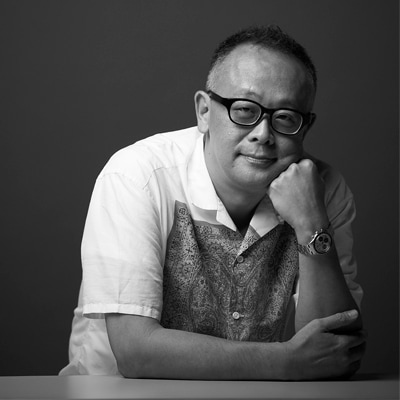
Yoshita Nishida
Magazine House, Inc.
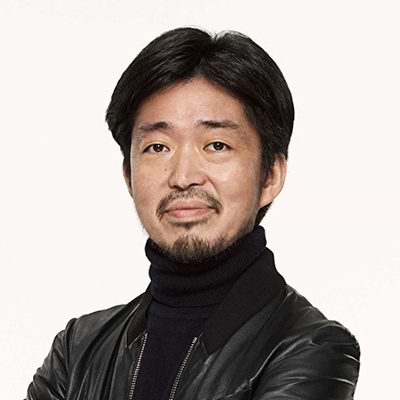
Tomohiro Nozawa
Dentsu Inc.
Even when physically apart, skillfully using technology can make us feel closer than ever before. A slight shift in perspective can create entirely new connections. The new lifestyle emerging in the wake of COVID-19 could be called "Remote Connection Life" (Remote Connection Life). Remote Connection Life is Remote Communication Life, and it also creates Remote Comfortable Life. This series explores the "future vision" of this lifestyle—staying connected while physically apart—through conversations between magazine editors and Dentsu Inc. creators.
For the seventh installment, we spoke with Mr. Zenta Nishida, Editor-in-Chief of "BRUTUS".
<Table of Contents>
▼ [Remote Connection Life Story #07: Places Where Ideas Flow]
▼ On-site work offers discoveries you can't get remotely
▼ The Office: The "Cover" Symbolizing the Company
▼ When Home Becomes the Workplace, Architectural Design Matters
▼ What if we brought metropolitan functions to local areas?
▼ New ways to enjoy new towns
▼ What is the strength of magazines in the coming era?
▼ What we need now is a "sense of balance"
【Remote Control Life Story #07: A Place Where Ideas Flow】
(Case of Tomoki Nozawa / Financial Company Employee / Age 44)
Editor-in-Chief Nishida states that as remote work becomes standard at many companies, downtown offices will lose their role as "workplaces," replaced by homes serving as workplaces. How will this impact the very meaning of offices, the nature of housing, and how cities are built? Based on Editor-in-Chief Nishida's insights, we've compiled a brief story.
Tomohiro Nozawa (Dentsu Inc. 1CRP Bureau)
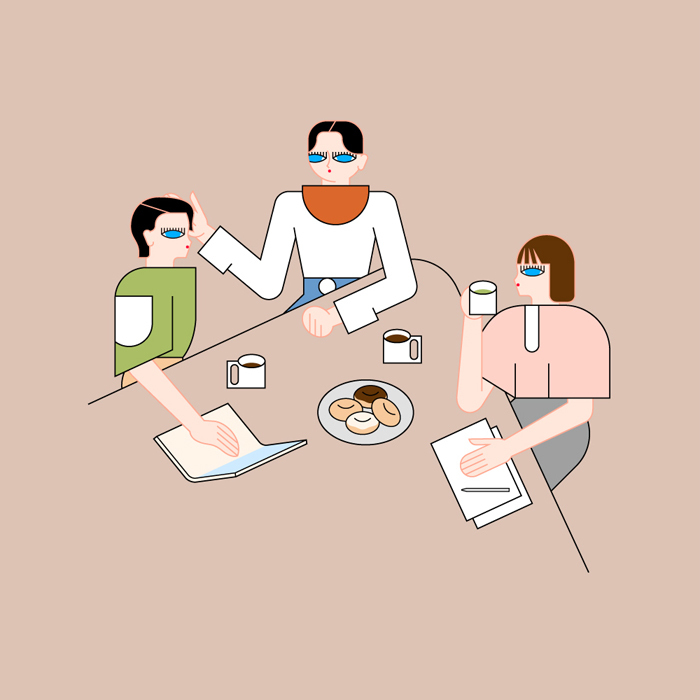
Illustration: Taro Uryu
──It's become harder to come up with new ideas. Around six months after remote work became standard company-wide, I started hearing this sentiment internally. Tomoki himself felt that remote meetings fostered more active discussion than in-person ones, but somehow, it also felt like people were less inclined to voice "unnecessary" thoughts. While it was easier to voice what was immediately necessary, he found himself swallowing unformed thoughts, sudden inspirations, or minor complaints and grievances, thinking, "It can wait." Tools for brainstorming in remote meetings had been developed, and they'd tried weekly "remote casual chats," but Tomoki's "Product Planning Department" hadn't seen any significant results.
This sentiment seemed shared by all eight members. When Tomoki proposed during a remote chat session, "I was thinking we should make every Friday a 'office day'," no one objected. "However, no meetings or appointments scheduled." The team leader's unexpected rule initially puzzled the members, but they quickly understood its purpose once they tried it. It was fine to finish leftover work alone, or to take time to concentrate on thinking about something. However, what the members appreciated most was the ability to talk whenever inspiration struck, and the environment where they could casually ask each other, "Can I just quickly ask something?"
On "office days," the team first spends about an hour "chatting." They discuss things they've noticed at work or challenges they're facing. It doesn't have to be strictly work-related—recent family outings are fair game too. Since two female members use wheelchairs, they're in charge of picking the location. On nice days, they sometimes head to Hibiya Park, but the terrace seats at a cafe near the office were becoming the standard spot.
"How about brainstorming at my place next Friday?" Just as the morning chat was running out of topics, Naoto Yamashita blurted out an unexpected suggestion. "Huh? Your place?" Tomoki blurted back. "You mean your home?" "Yes," Yamashita replied energetically, prompting a barrage of questions from the six team members. "Where exactly is it?" "Can all of us fit?" "Huh? Is it that big?" The nearly-finished casual chat session suddenly came back to life. Tomoki ordered a refill of coffee, preparing for the unexpected overtime.
According to Yamashita, they had originally planned to renovate, but when both he and his wife started working from home, they decided to create a workspace inside. Following a suggestion from the designer in charge of the layout, they turned the first-floor area just inside the entrance into a so-called "doma" (a raised earthen floor area), installing a long table seating eight and bookshelves. It was more than enough space for the couple to work comfortably together.
"It's not that big, really," Yamashita said, sketching a floor plan in his notebook. "It's really just the entryway with a bit of extra space. My wife and I call it the 'Entrance Office'." "Seriously, I'm jealous," said Sawada Makoto, the oldest member, pouting. "At my place, my wife and I often end up working facing each other at a small dining table. It's really tough." Tomoki laughed and added, "Same here, pretty much."
"Is it okay even with a wheelchair?" Okamura Satomi leaned forward from her wheelchair to ask. "Totally fine," Yamashita replied, flashing Okamura an uncomplicated smile. "Actually, I use my wheelchair more on weekends." Come weekends, the "Entrance Office" transforms into a small community space. Elementary school kids bring friends over, neighborhood association meetings are held there. Recently, his wife even started a calligraphy class gathering neighborhood children. Being close to the station and easily accessible by wheelchair, it seemed more valued than the town's community center.
"Some people actually seem to think it's a town facility," Yamashita said with a laugh, prompting more questions from the members. "Do you have a whiteboard?" "The entire wall is a whiteboard, so no problem." "Can people stay overnight?" "If you're okay sleeping on the dirt floor, feel free to stay as long as you like." "When we bring ideas, maybe we should bring snacks too, right?" "Ahaha, that's great," muttered Kumamoto Shinya, the youngest member. "If there were several bases like this nationwide, we could travel every time we brainstormed ideas..." — Hmm, that might actually be fun...
Seeds of new ideas were planted in every member's mind. "Hey, we could sell that to companies as 'Idea Tourism'," Sawada jumped on the idea. "Seems like lots of companies are struggling with remote work." "That's great," Yamashita chimed in loudly. "Let's get the designer who planned our space involved too." "Then it'd be nice if there were hot springs nearby," Okamura countered without missing a beat. "I mean, they say the best places for ideas are the bath and the toilet, right?" Each member tossed out ideas freely. Tomoki, caught off guard by the sudden brainstorming session, ordered another refill of coffee.
(This story is fictional. It bears no relation to any real persons or organizations.)
On-site work offers discoveries you can't get remotely
Please take a look at the interview with Mr. Zenta Nishida, Editor-in-Chief of "BRUTUS," which served as inspiration for the above "Remote Life Story."
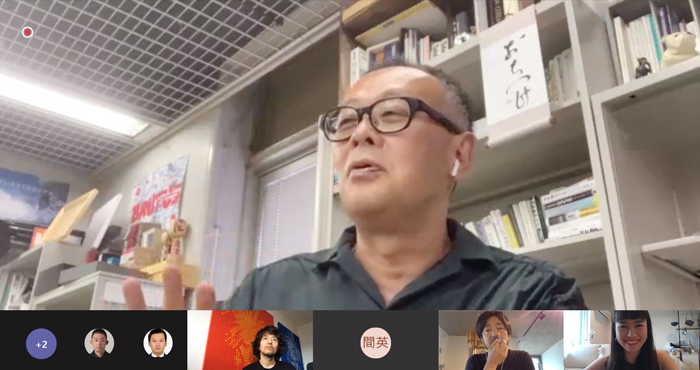
What I've realized most during the pandemic is how much work I was actually doing (laughs). You see, an editor-in-chief is like a catcher—the only one facing away from the team. I'm constantly surveying the entire editorial department, watching each person's movements, calling out when needed, handling countless small tasks. Remote work eliminates all those little tasks. It made me truly appreciate the sheer volume of information I normally process as editor-in-chief.
Magazines are a "discovery medium," while the web is a "search medium." For those who know the search terms, nothing is more convenient than the web. In terms of work feel, remote work is closer to "search work." You ask someone who knows what they can do, and you get back what you expected. Conversely, on-site work is "discovery work," where unexpected information and surprises constantly emerge. To create packaged media like books and magazines, the on-site environment is essential, and "discovery" is indispensable. Personally, I value "meeting while keeping distance" over relying solely on remote work.
The office is the "cover" symbolizing the company
While society is trending toward promoting remote work, I've heard that tech companies surprisingly still strongly hold the stance of "going to the office." Many companies believe that having a physical space where people meet directly sparks ideas. Perhaps it's precisely virtual IT or tech companies that need the presence of substantial, weighty architecture or environments. While discussions like "Maybe we don't need downtown offices anymore" are emerging, the location of a company and the form of its building are actually things we should really value. Removing the "sense of place" from a company is like ripping the cover off a book (laughs).
When home becomes the workplace, an architect's design skills come into play
The biggest change brought by COVID is "sense of distance." Especially the "sense of distance at home" is about to change dramatically. Until now, Japanese homes haven't really separated work and private life. Suddenly working from home without a proper desk? Plenty of people end up hurting their backs, right? (laughs) The editor-in-chief of the magazine "Shinkenchiku Jutaku Tokushu" has been a source of ideas for me since my days as the architecture editor at "Casa BRUTUS" (laughs). When she mentioned that architects and designers who can solve the problem of "distance at home" will gain attention, I thought, "Absolutely!"
For example, there's an editor's house where you enter the entrance hall into a mudroom, and built-in there is a small desk space and bookshelves. In traditional Japanese homes, the mudroom was a kind of "workspace" – a place for cooking and farm work. Contemporary architects have reinterpreted this, placing a workspace there. When a home becomes not just a "place to live" but also a "place to work," traditional residential layouts can't solve this problem, making architects' design skills crucial. Remote work might spark some very interesting developments in residential architecture going forward.
What if we bring urban functions locally?
Another major change is that as time spent in residential areas increases, there will be a need to bring functions from the city center to the local level. Yoshiharu Tsukamoto of Atelier Bow-Wow, one of Japan's leading architectural firms, suggests that what holds potential going forward isn't large-scale halls, city halls, or other institutional buildings. Instead, it's structures that are the size of a typical home, yet aren't just a single family's residence nor purely public facilities.
He points out that the current closed residential areas and high-rise office districts represent a complete outsourcing of functions that originally belonged within homes. The idea is to reclaim those functions back into the home. Following this logic, what if we were to finely distribute functions like department stores or mass retailers and disperse them throughout residential areas...? Thinking about such possibilities could become a catalyst for new urban development. This concept will likely influence not just architecture, but offices and various aspects of entire cities.
New Ways to Enjoy the City
There are clear shifts in how we enjoy the city. One is a changed sense of time. Since we start drinking earlier, it often happens that even when we think, "We've had quite a bit, let's head home," we realize, "Huh, it's only 10 o'clock?" It feels a bit like being abroad. In the sense that we can properly wrap things up by the time we could watch a movie at home, maybe our lives are finally becoming more reasonable (laughs).
Another shift is the feeling that you go out to play because it's a "great neighborhood," not just because there's a "great bar" there. This isn't a new phenomenon, but in terms of neighborhoods becoming increasingly versatile hubs where you can have fun at any hour, places like Kiyosumi and Hatagaya right now are incredibly exciting. I'm truly rediscovering the appeal of local areas and neighborhoods. Watching the process of a neighborhood coming to life is becoming more and more important to me.
What will be the strength of magazines in the coming era?
Magazines are indeed made of "paper," but I don't think we're insisting people read "paper media" at all costs. We're simply adopting the method of creating with "paper." Unlike when you publish content online, magazines have a story. The appeal of the "package" is constantly being tested. It's work that requires one or two extra steps compared to creating web content.
Magazines exist as tangible objects you can hold, so their sheer "presence" is undeniably stronger than digital. Normally, you can't just decide to create a trend, but with magazines, if you tentatively decide "this would be interesting," package it with various information, and put it out there, sometimes the world gets pulled along as you imagined. That's the strength of packaged media. A single article won't change a phenomenon, but a feature sometimes leaves a lasting one.
What we need now is a sense of balance.
Right now, many media outlets are reacting to every single news item, predicting all sorts of futures, or exaggerating the digital shift. But I think, "Trust people's sense of equilibrium a little more." What will become most important going forward is "a sense of equilibrium." While we must accept inevitable change, a pendulum swing back is bound to happen.
Including times of disaster, humans always strive to balance what changes and what remains constant. Extreme claims like "We'll change after COVID" are probably not that common. Of course, some things are better off changing because of COVID, but the things that truly matter to people might surprisingly remain unchanged.
[From the Remote Control Life Team]
From Editor-in-Chief Nishida's remarks,
Here are the keywords for enjoying Remote Control Life more fully.
◉ Office Campusization
◉ Brainstorming-Only Office
◉ Domestic Distancing
◉ Proximity/Integration of Work and Residence
◉Tsuchima Office
◉De-institutionalization
◉Regional Dispersion of Urban Functions
How will the novel coronavirus change our lifestyles? We aim to predict the future by focusing on subtle shifts in daily life and subtle changes in people's minds—the "new normal" right before our eyes—and strive to create new value. This series explores that potential through the lens of "remote control living."
Was this article helpful?
Share this article


Newsletter registration is here
We select and publish important news every day
For inquiries about this article
Back Numbers
Author
Yoshita Nishida
Magazine House, Inc.
Executive Officer, Third Editorial Bureau Director
Brutus Editorial Department Editor-in-Chief
Tomohiro Nozawa
Dentsu Inc.
Creative Planning Division 1
Creative Director