
Note: This website was automatically translated, so some terms or nuances may not be completely accurate.
New business partners connected through new communities
Even when physically apart, skillfully using technology can make us feel closer than ever before. A slight shift in perspective can create entirely new connections. The new lifestyle emerging in the wake of COVID-19 could be called "Remote Connection Life" (Remote Connection Life). Remote Connection Life is Remote Communication Life, and it also creates Remote Comfortable Life. This series explores the "future vision" of this lifestyle of staying connected while physically apart, with magazine editors and Dentsu Inc. creators collaborating.
For the eighth installment, we spoke with Masaharu Fujiyoshi, Editor-in-Chief of Forbes JAPAN.
<Table of Contents>
▼ [Remote Connection Life Story #08: My Community, My Life]
▼ Rethinking "Human Relationships" Amid the Pandemic
▼ What's Required of Future Leaders
▼ "Being Useful" is Key to Regional Revitalization
▼ Revitalizing Towns Starts with Revitalizing People
▼ Do Startups Need "Gray Hair" (Middle-Aged Employees with Gray Hair)!?
▼ Building Networks in an Era of Physical Distancing Through "Community"
▼ From "Abnormal" to "New Normal"
【Remote Life Story #08: My Community, My Life】
(Case of Mei Kawabata / IT Startup Employee / Age 28)
As remote work advances and face-to-face communication diminishes, building new connections may become increasingly difficult. Precisely because of this situation, Editor-in-Chief Fujiyoshi points out that "going out to meet people" becomes even more crucial. "When I was young, it was common to hear things like 'Go meet three people a day' or 'Go build your own network through cold calls.' Now that meeting people easily is difficult, what's important is joining a 'community.' Or rather, I think it's crucial to align yourself with one."
In this "remote control life," how do people create "connections with others"? What kind of people should you look up to as mentors, and what organizations or communities should you place yourself in?
Based on Editor-in-Chief Fujiyoshi's insights, we've compiled a brief story.
Tomohiro Nozawa (Dentsu Inc. 1CRP Bureau)
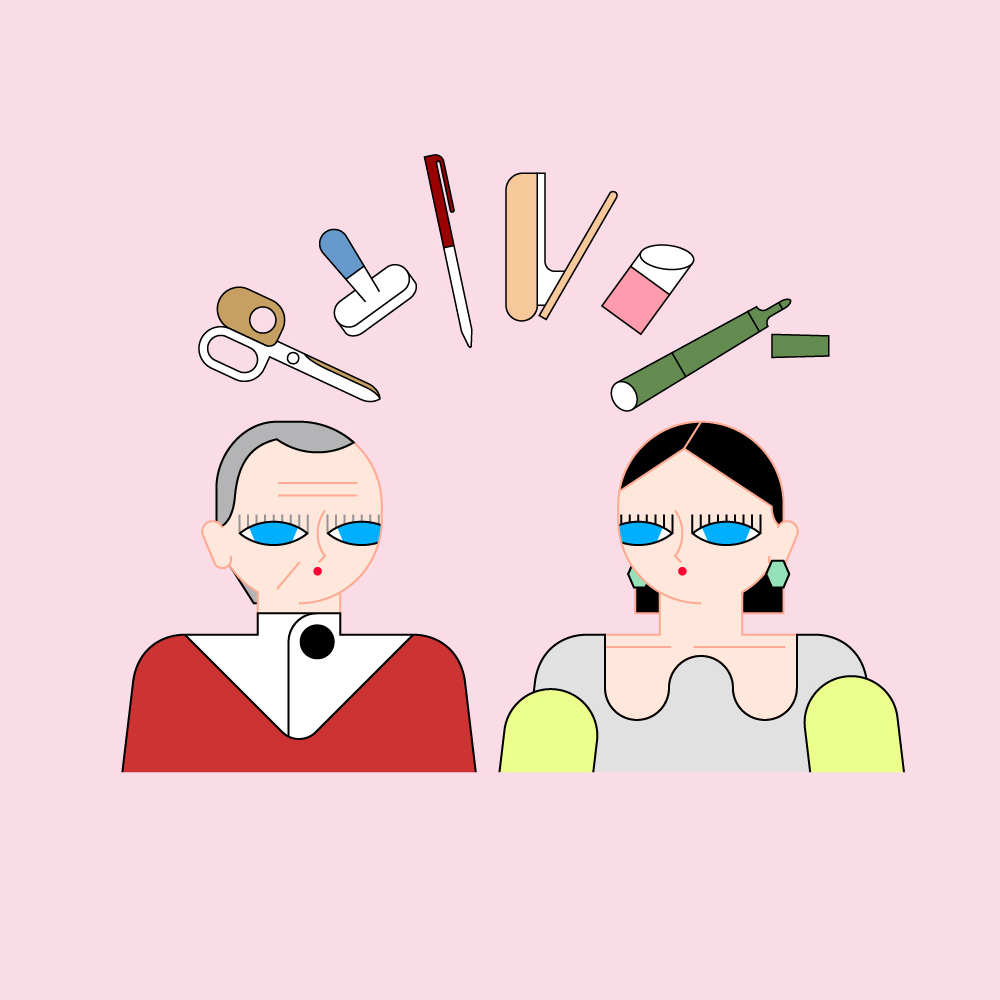
Illustration: Taro Uryu
"Community Big Bang." Some media outlets even used this term to describe how the number of "communities" surged following the COVID-19 pandemic. It's said this was triggered by restrictions on meeting people due to the virus, and also because remote work weakened the sense of belonging to companies, leading people to seek something else to replace it. In popular communities, entry required tests or interviews, making "community activities = community job hunting" a life-or-death issue for young people, even more critical than job hunting itself.
Mei herself belonged to several communities: a "community for female entrepreneurs in their 20s," a local "community for young restaurant owners in Nakameguro," and a "community for people who love cute stationery." Among these, the "cute stationery community" was particularly diverse in age and gender, drawing over 100 people to its monthly events. At one such event, Mei met an older gentleman named Shimada and became hooked on the charm of "handmade stationery."
"I tried making this. What do you think?" At the event, Shimada-san pulled out a peculiar "pencil." Its rear half was made of resin eraser, painted in vibrant colors. "Wow, so cute!!" Mei exclaimed involuntarily. Shimada-san beamed, his face crinkling with delight. "The eraser on the end of pencils never really erases, right? So I tried attaching a resin eraser that actually works."
Mr. Shimada was originally an engineer at a stationery manufacturer, but he seems to be enjoying a leisurely life after retiring. His hobbies include traveling to Tokyo from Shizuoka once a month to hunt for cute stationery and making his own erasers. "But Mr. Shimada, if this breaks, it's done for, right?" Mei said, trying to snap off the eraser part. Mr. Shimada's smile deepened, his face creasing even more.
"I tried making one too," Mei said, showing Shimada her own "eraser." "I'm still not very good at making the molds..." It was "eraser jewelry" – rings and necklaces where the gem parts were made from erasers. She never would have imagined she could make erasers at home if she hadn't met Shimada. With his online guidance, she'd managed to get reasonably good at it.
"This is so cute!!" Shimada exclaimed so loudly that the members present gathered around Mei. "Before starting a business, why not try launching a community first?" One day, when Mei casually shared her dream of "someday starting a stationery company" with Shimada, he responded with a big smile. Instead of starting a business right away, more people are choosing to launch a community first to gather "comrades." You can start without quitting your current job, and running the community itself serves as practice for managing a company. Shimada-san's advice was that it's better to start doing what you love without taking on too much risk. Mei partnered with Shimada-san to launch the "Handmade Stationery Community."
"There are more people making their own stationery than I thought..." Among the members were people crafting cute animal pencil cases, designing original notebooks, and even those who made their own mechanical pencils. Their numbers grew week by week. Mei, the organizer, diligently created "eraser jewelry" and posted it on social media. With Shimada-san's guidance, she was also succeeding in achieving a translucent effect. Though Shimada-san was the oldest member, she had the most flexible ideas. Her "erasable pencil sharpener," made from eraser-like resin, even became a talking point. With her extensive knowledge of patents, she was an indispensable advisor to the community.
For Mei, Shimada-san was certainly a "teacher" in terms of technique, but when it came to getting excited over cute stationery, she was simply a "friend" and also a "comrade" burning with enthusiasm for inventing new stationery. "I have something I'd like to discuss..." After the third event of the DIY Stationery Community, Shimada-san approached Mei. "Actually, an acquaintance of mine runs a small stationery manufacturer that makes rubber stamps and such," he told Mei in a gentle tone. "He doesn't have any children, you see. He's getting on in years and has been wanting someone to take over the factory for quite some time. But people who want to work at a stationery manufacturer in the countryside are hard to come by."
Indeed, inheriting a small company was far preferable to starting a business from scratch. Building a factory? Just think of the capital investment required... For Mei, this was a godsend. "That town has always been known for its thriving manufacturing scene," Mr. Shimada continued in a leisurely tone. "These days, the younger second-generation owners seem to be trying all sorts of new things." I'm sure they'd be thrilled to have someone with fresh ideas like yours take the lead."
For Mei, her current company was enjoyable enough, but it was clear the work would run smoothly without her. She'd considered "starting a business" before, thinking through business models, but each idea felt self-indulgent, leaving her without confidence. Yet, listening to Shimada now, she sensed that there, she could potentially balance "what she wanted to do" with "being useful to someone"...
"I understand," Mei replied with a smile to Mr. Shimada. "Please let me visit the site and hear more about it." "That's wonderful. Thank you," Mr. Shimada said, bowing deeply. "I'd like to research things beforehand. What's the company name?" "Yes, it's called Shimada Manufacturing, located in Shizuoka." Saying this, Mr. Shimada crinkled his face into a smile.
(This story is fictional. It bears no relation to any real persons or organizations.)
Reexamining "Human Relationships" Amid the Pandemic
Please take a look at the interview with Mr. Masaharu Fujiyoshi, Editor-in-Chief of Forbes JAPAN, which served as inspiration for the above "Remote Control Life Story."
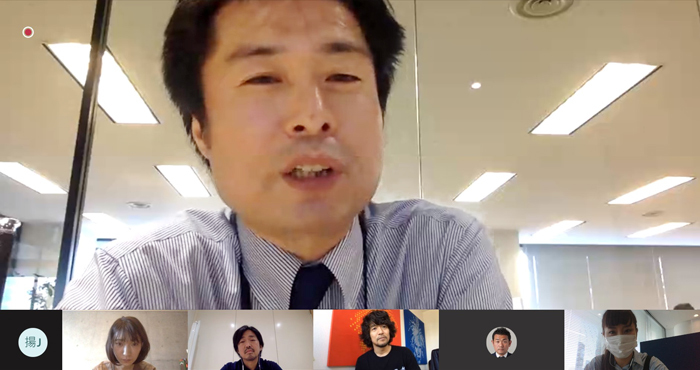
In April, we ran a feature on "New Mentor-Protégé Relationships," which received an overwhelming response. This period felt like a time for fundamental reevaluation – questions like "What defines my identity?" and "What is this era?"
Signs regarding workplace relationships had been emerging for years. I'd heard young people genuinely say, "I want a mentor," several times. At first, I thought, "How can they say that without embarrassment?" I didn't understand. Or, a few years ago, I started hearing directly from CEOs of major corporations that they had begun having regular lunches with employees in their 20s to exchange opinions. I sensed something was beginning to shift in organizational relationships, and I believe everyone started becoming conscious that "we must change."
Then COVID-19 forced change upon us, accelerating everything. Since it's a tradition of America's Forbes to depict the economy and the times through people, I think our sense of foreboding aligned with our readers' consciousness in terms of interpreting the COVID era through human stories.
What is required of leaders going forward
Whether they can prioritize employee well-being or not. Precisely because it's a time of crisis, a leader's true character tends to shine through (laughs). I believe leaders must establish clear "principles" or "rules" and place significant emphasis on them. When direct communication is difficult, having a clearly documented corporate culture or leaders making decisions based on explicit rules reduces uncertainty across the entire organization. That's a common trait among well-functioning organizations.
Furthermore, no matter how much organizational flattening progresses, hierarchy remains necessary. How the president himself projects his "leadership image" also becomes crucial. A common trait among successful people is metacognition. Because they view themselves objectively, they maintain composure even in crises. I think you always have to be conscious that you are being watched.
Regional revitalization hinges on "being useful"
This isn't a new concept, but whether leaders can provide employees with "opportunities to excel" is crucial. People who choose jobs based on factors like good pay or state-of-the-art office facilities will get distracted and leave quickly. What matters more is whether they can feel they are "making a difference." For example, the difference between municipalities succeeding in regional revitalization and those struggling often boils down to whether they provide "opportunities to excel." When a new mayor takes office and calls for reform, or when the second-generation leader of an established company tries to do something new, resistance often emerges. At such times, if the new leader provides a space where people can work with vitality, they are more likely to feel, "There are so many opportunities for me to make a difference here," and become cooperative.
The most straightforward and rewarding meaning of work is "bringing joy to others." I feel that more people, regardless of company size, are placing greater emphasis on this. Especially among startups, I've noticed more people saying they "want to be of service to others." Forbes JAPAN publishes an annual "Billionaire Special Feature," and reader interest is shifting from "how much they earn" or "how much wealth they hold" to "how they use that wealth" and "how they contribute to society." This trend isn't limited to readers; it's also common among young executives.
Revitalizing a town starts with revitalizing its people
Even without a ton of major industries, some areas naturally attract startups. Places with vibrant human interaction, where locals and businesses unite to create a supportive ecosystem, draw in talented people. Even if a town prospers with a new railway line, if it lacks a culture of human connection, talented individuals will likely move elsewhere.
Places where interesting ideas emerge tend to have clusters of good companies or strong leaders. For example, if the heir to a long-established company has the drive to break away from their parents' old traditions, the young people around them get inspired, and before you know it, the whole town becomes revitalized. Town revitalization really comes down to people. Interesting people gather where other interesting people are.
Startups Need "Gray Hair" (Mid-Career Professionals with Gray Hair)!?
For any organization, including startups, to thrive, it's better to mix people of different nationalities and generations. I heard this from people who experienced Silicon Valley back when the term "startup" wasn't even common in Japan: investors always ask, "Do you have any gray hair in your company?" Meaning, "A company without seasoned veterans is doomed." Bringing gray hair into the organization is a winning formula. Since then, we've consistently emphasized the importance of gray hair at Forbes JAPAN, but in Japan, collaborating across generations just doesn't seem to take root.
However, it can sometimes be easier to communicate with someone older from a different organization. This is what's called a "diagonal relationship." I think it's common among those who rise to CEO that it's important to build relationships with senior figures in other departments, not just your direct supervisor or board members. I became convinced that successful people are often those who have been nurtured by people outside their own company.
Building Networks in an Era of Limited In-Person Interaction: The Power of "Communities"
In times like these, when meeting people directly is difficult, joining "communities" becomes crucial for expanding your "network." There are countless "communities" and "circles" out there – startup communities, female entrepreneur communities, and so on. Just hanging around the edges of communities that interest you will inevitably spark some kind of inspiration.
When considering the role of a magazine like "Forbes JAPAN," I also keep "community" in mind. We believe the magazine can serve as a blueprint for "the kind of society we want to build," taking on the role of proposing projects to the world. Using the network unique to a magazine, we can say "Follow this lead!" and engage various companies. At that point, Forbes JAPAN itself becomes the "ticket" to enter the worldview it proposes. We hope to offer real-world events and experiences to those who purchase that ticket.
From "Abnormal" to "New Normal"
During the lockdown period, I found myself wondering, "Why have I been writing manuscripts for decades?" "Why did I struggle so much to keep writing them?" And I arrived at a simple answer: "Because I have something I want to tell people." So, I kept thinking about what exactly that "thing I want to convey" was, and I realized I just want to depict the drama of growth – how people change. I thought, "Man, what a naive thing to think" (laughs).
Another thing: People often talk about the "new normal," but I think you could also say the 70 years since the war were the abnormal period. Maybe what we believed in all this time was actually abnormal? Maybe what was "abnormal" has just become "normal." COVID-19 might be a catalyst for realizing that what's truly important is something more human, something extremely ordinary and primal. It's probably trying to remind people all over the world of that naive idealism.
[From the Remote Life Team]
From Editor-in-Chief Fujiyoshi's remarks,
Here are the keywords for enjoying Remote Control Life more fully.
◉ Flat mentor-mentee relationships
◉ The buddy principle
◉ Building Networks in the Community
◉ Gray-haired talent
◉Community-Based Entrepreneurship
How will the novel coronavirus change our lifestyles? We aim to predict the future by focusing on subtle shifts in daily life and subtle changes in people's hearts, identifying the "new normal" around us and creating new value. This series explores these possibilities through the lens of "Remote Control Life."
Was this article helpful?
Share this article


