
Note: This website was automatically translated, so some terms or nuances may not be completely accurate.
 Discovering the Path to Co-Creating Regional Value from Kyushu's "Front Lines" [1/2]
A New Approach to Community Building Takes Root on a Remote Island off Karatsu
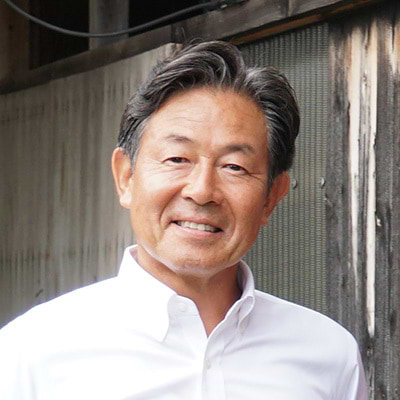
Toru Suzuki
Dentsu Kyushu Inc.
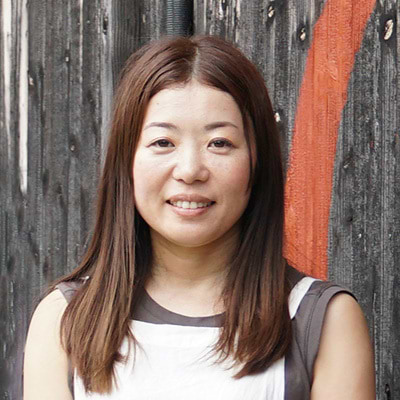
Kaori Mita
Litokos Co., Ltd.
Amidst a shrinking population, the "front lines" of regional industries grapple with multiple challenges, including labor shortages and a lack of successors, as they continue searching for breakthroughs.
While national and local governments are focusing on promoting and subsidizing DX, the tendency to prioritize short-term results in these measures often fails to lead to sustainable regional development... This frustration is likely shared nationwide.
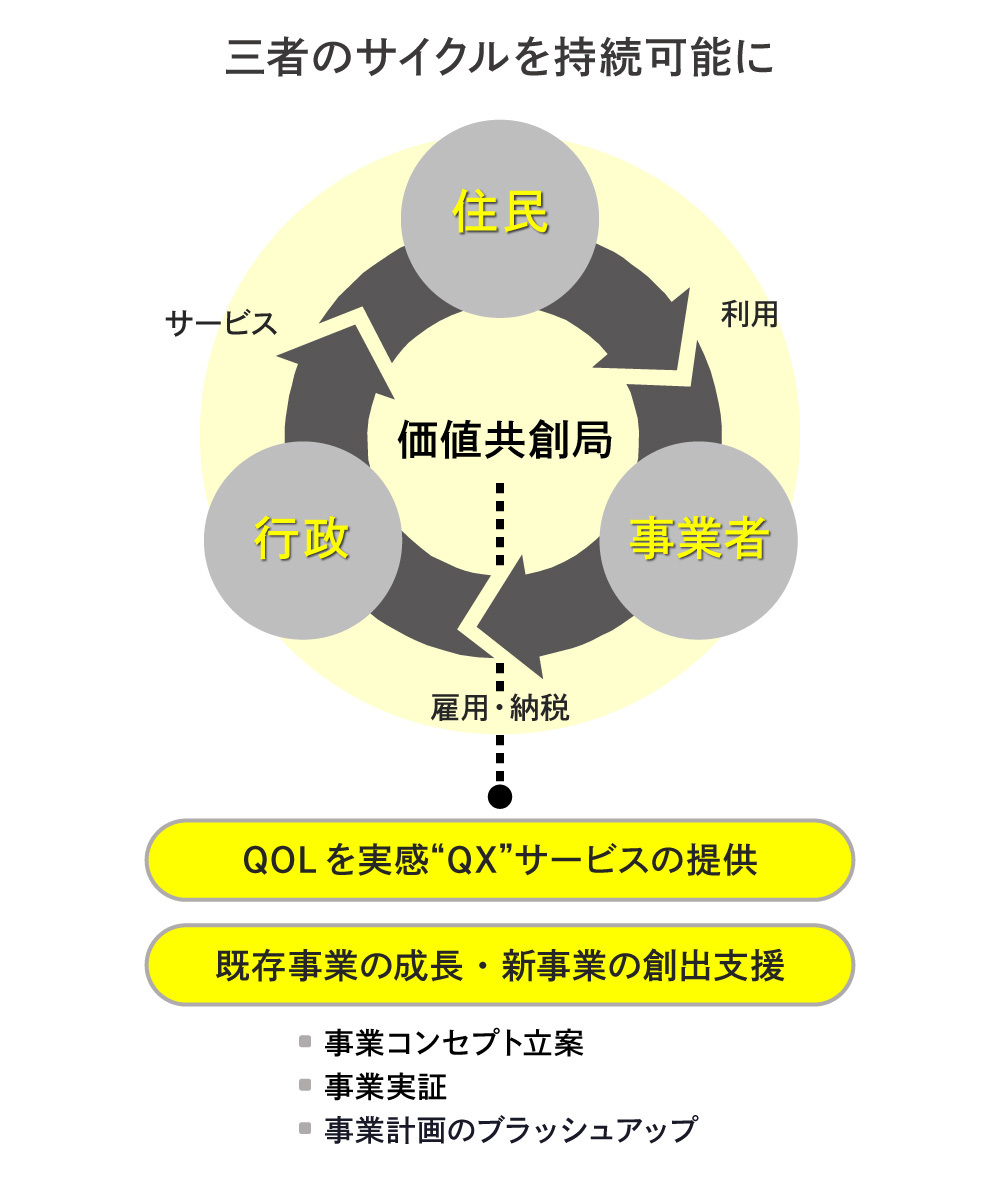
To help address these challenges, Dentsu Kyushu Inc. launched the 'Regional Value Co-creation Bureau' ( details here ) in 2023. This initiative deepens our engagement with local communities, supporting not only DX but also the growth of existing businesses and the creation of new ventures.
Essential to co-creating regional value is stakeholders forming scrums and collaborating across industries.
Therefore, in this series, Dentsu Kyushu Inc. President and CEO Toru Suzuki visits pioneering companies and individuals driving regional value co-creation at various "front lines" across Kyushu. He interviews them about the key points, motivations, and perspectives behind regional value creation. We explore the potential for co-creation with businesses engaged in creating regional value and deliver hints to those seeking to take the first step in similar situations.
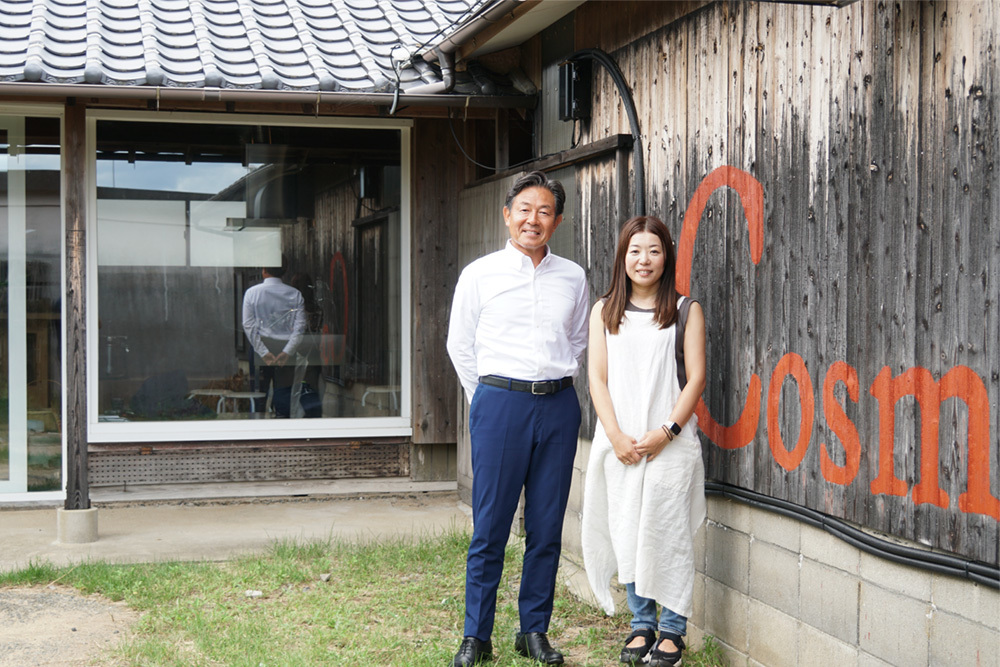
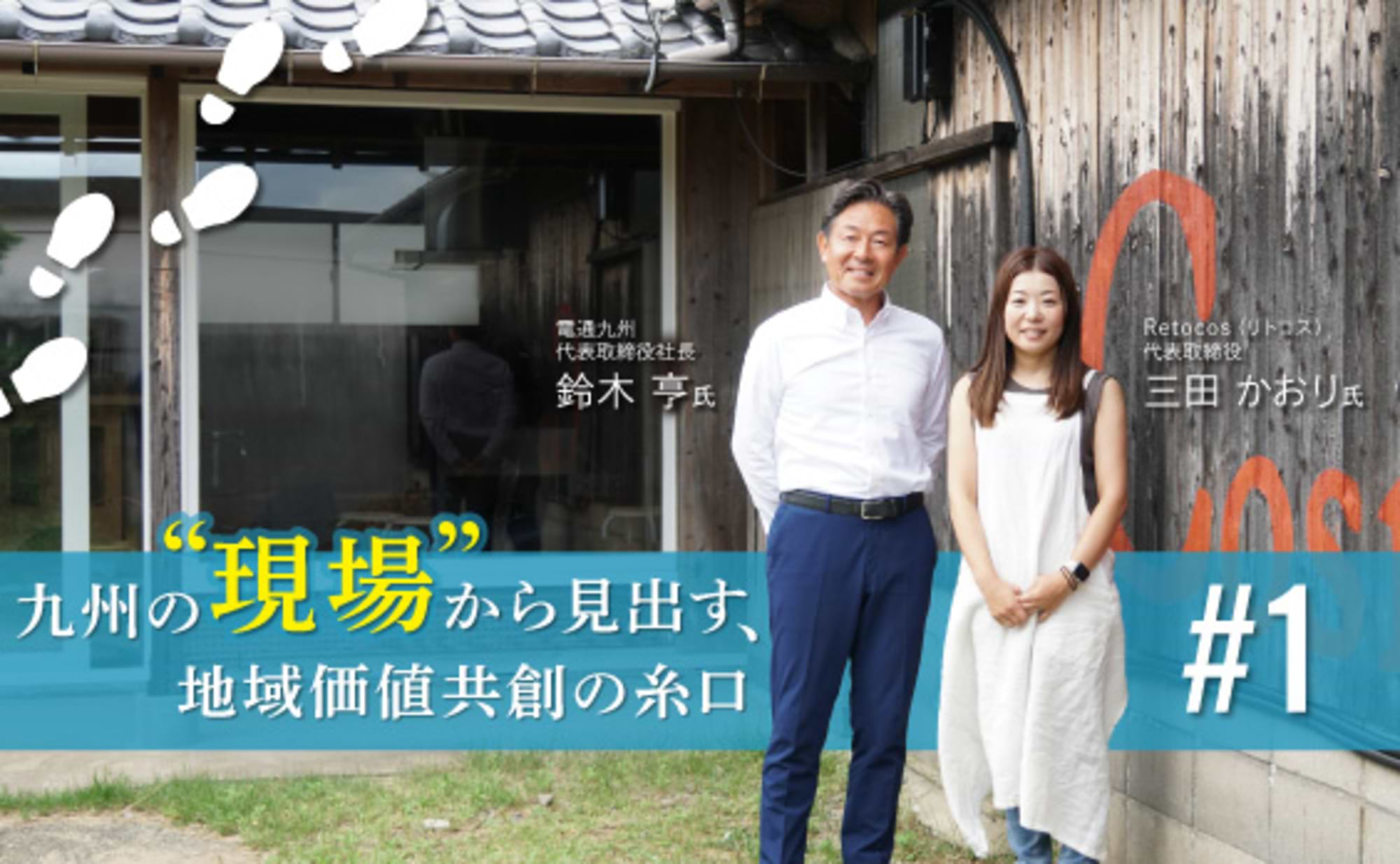
The first installment features Retocos, a company operating in Karatsu City, Saga Prefecture. President Kaori Mita lives on Takashima, an island off Karatsu, and has gained recognition for her user-friendly products—such as cosmetic ingredients and tea utilizing the island's natural materials—while increasing employment opportunities for island residents. She also promotes initiatives to increase the number of people connected to the island and future residents through a system called "Island Study Abroad." Her activities and purpose offered many valuable lessons.
<Table of Contents>
▼What's Important is Close at Hand—Creating Ethical Products Using Untapped Resources
▼Valuing "Discernment" for Business Scaling: Finding Partners for Each Project
▼ "Creating a 'Hometown' for City Kids"
▼An Era of Co-Creating Value with Consumers. We Also Want to Carefully Deliver the "Story" Behind Business Advancement
What's important is close at hand—Creating ethical products utilizing underutilized resources
Suzuki: What prompted you to start your current activities and business?
Mita: It began with a government assignment to revitalize remote islands, which led to my posting to Kakarashima Island in Karatsu. The island's specialty is camellia, so famous it's recorded in the Nihon Shoki as the "Island of Camellias." Camellia is synonymous with camellia oil, but the main production areas are Toshima in Tokyo and Goto in Nagasaki. The people of Kakarashima showed little interest in industrializing it. Realistically, with a population of about 220, large-scale production isn't feasible. However, I realized that small-scale production has its own advantage: you can see the faces of the producers.
※1 = Kagoshima Island: An island off the coast of Karatsu City, Saga Prefecture. One of Karatsu City's seven inhabited islands.
Suzuki: Camellias and camellia oil are traceable and ethical, just like grapes and wine.
Mita: Yes. When the camellia is processed into cosmetics, we can tell users, "The camellia used as the ingredient was cultivated in Mr./Ms. XX's field." We thought this was a new approach in cosmetics.
Suzuki: I hear Kagoshima Island's camellias were adopted by a major select shop.
Mita: It was right in the middle of the COVID-19 pandemic, when people were seeking to enrich their time at home and showing a growing interest in the background of products. Given that climate, they were adopted by United Arrows' cosmetics brand. After that, they were also adopted by Saishunkan Pharmaceutical Co., Ltd. As a result, many cosmetics enthusiasts shared the story, which then led to experiential tourism.
Suzuki: I understand product development is based on materials found right here on the island—truly local ingredients.
Mita: The camellia project was a government-funded, time-limited initiative. To revitalize the island's economy, we needed to create something sustainable. That's when we decided to focus on making products using plants found everywhere on the island.
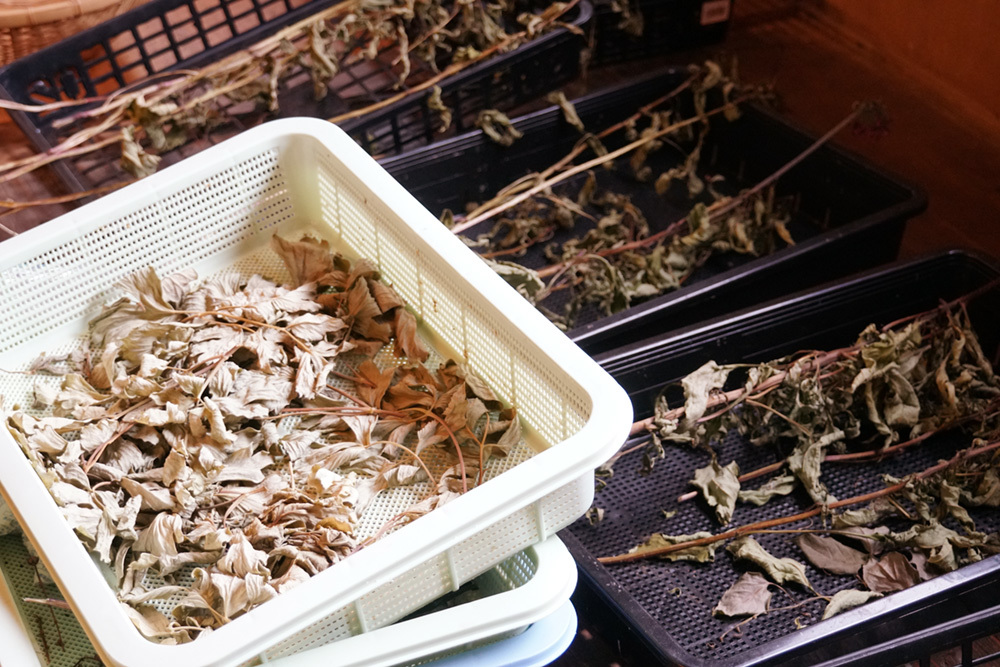
Because the island is separated by the sea, endemic and native species grow wild here. For example, here on Takashima, the herb known as "long-life grass" (Botanboufu) grows like a weed. It's a medicinal herb said to add a day to your life with just one plant, yet it wasn't being utilized.
Suzuki: Exploring new uses for underutilized resources seems to offer many insights.
Mita: The scientific name for camellia is Camellia japonica. "Japonica" means camellia is a flower native to Japan. By focusing on species like this, which grow wild all over Japan, I hope it encourages many people to take a fresh look at what's right under their feet.
Suzuki: So abandoned land can be utilized and become new work, right?
Valuing discernment for scaling the business, seeking partners for each project
Mita: The fields on this island are for personal consumption. There's no need for mass production, and since we don't use pesticides, the soil is clean.
However, the mountains lie directly behind the fields, and wild boars emerge from there to ravage the crops. This forced the islanders to abandon farming. The fields became increasingly overgrown, turning the areas right next to homes into boar habitats. So, we collaborated with the islanders to clear the fields and plant herbs. Herbs are low-growing, so the improved visibility makes wild boars wary. Additionally, they dislike the scent, so they stay away.
Suzuki: What kind of products did you make from the herbs?
Mita: We focus particularly on tea to let people enjoy the aroma. Fresh herbal tea on the island is wonderful, but by drying the leaves, we can share it with people nationwide.
We want to deliver seasonal herbs as a message of the changing seasons. We'd be delighted if the connections made with those who drink it could lead to the revitalization of abandoned farmland.
Suzuki: It smells wonderful. What are your particular points of focus?
Mita: We blend with a focus not just on the aroma that rises, but also on the "aftertaste aroma" that lingers in the nose after drinking. While herbal tea itself isn't rare, our blend with Ureshino tea is a unique product you won't find anywhere else. We alter the flavor using the fermentation techniques and blending methods of renowned tea master Shuichi Matsuo.
Suzuki: It must be a blessing to make your living from scents and tea.
Mita: On hot days, working in the fields and then drinking tea I made myself to cool down—that's when I feel "this is happiness."
This island is a microcosm of Japan. There are people who accept what I do, and those who don't. At times, I wondered why, even though I was doing good things for the island. Now, I prioritize staying true to myself, moving forward with those who share my vision and what I want to achieve.
Suzuki: Do you find business partners yourself?
Mita: For each project, I carefully select who to collaborate with, valuing that discernment. Relying solely on what the island has won't scale the business. I want to blend various technologies and materials to create a unique quality.
Suzuki: You received the WWD Award Special Prize for this venture. How did you feel when you heard?
Mita: It was incredibly gratifying to have our down-to-earth, grassroots venture in the countryside recognized by a top-tier fashion media outlet. There was a time when I thought, "You can't achieve your dreams unless you're in Tokyo," but that era is over. Now, I want to challenge the status quo by starting with what truly matters locally.
Even small steps can become a big movement if everyone takes one. I hope this can be that catalyst.
※2 = WWD: A leading fashion and beauty industry magazine covering both domestic and international markets
"Creating a 'hometown' for city kids"
Suzuki: By the way, there's the school issue on Kakarojima, right? It's become difficult for families to continue living there.
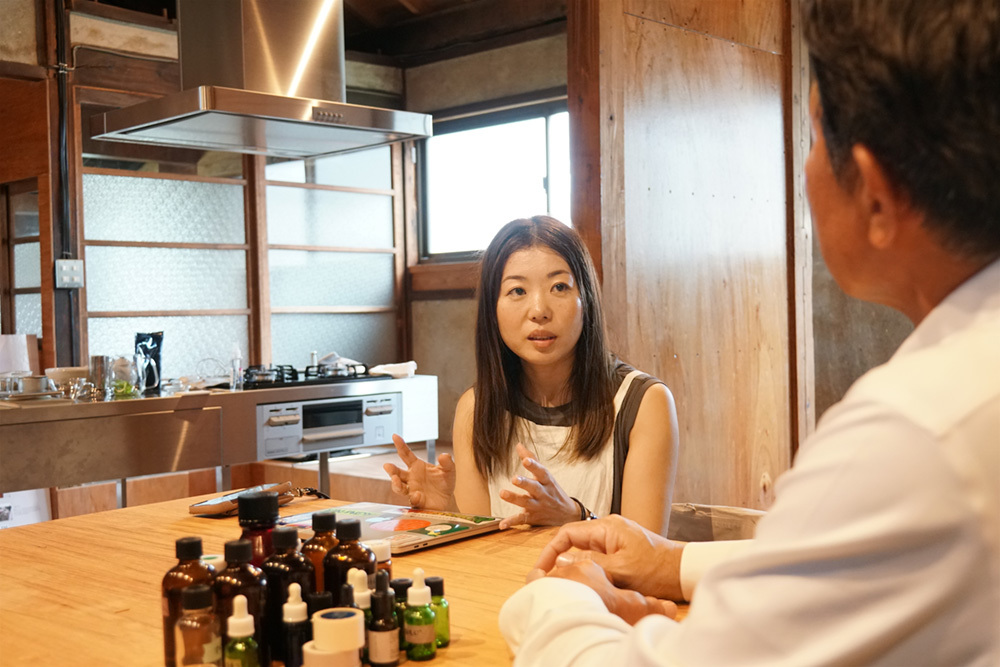
Mita: There's no high school, and no junior high either. With only two elementary school students on the island now, even the elementary school's survival is uncertain. That's why we started the "Island Study Abroad" program. We host four elementary school students from the city for a year. A dorm mother takes care of them while the children live together, experiencing things only possible here. We hope they'll see this as a second hometown in the future, increasing the connected population.
Suzuki: It's encouraging to hear more young people are looking at their local area's potential and asking themselves what they can do. "Related population" is also a key concept for sustainable community development. Deepening engagement between people and the region seems crucial for solving various challenges, and I believe the Dentsu Group can contribute to this.
Mita: Remote islands are places where daily life and regional challenges are directly intertwined. On an island, you naturally become conscious of your environment, and children start thinking about how to solve problems. That's the very essence of why we do island study programs.
Suzuki: Where do you see the key challenges and prospects for sustaining this initiative?
Mita: It's about creating a curriculum unique to this location and attracting families who want their children to learn here. Increasing the number of residents means increasing the island's population, which in turn means more children. While there are various approaches, this initiative focuses on forming a new community rather than bringing back former residents.
Suzuki: Having children here seems likely to increase the islanders' level of involvement. That's a crucial point for sustainability.
Mita: Hearing children's voices makes adults happy too. Everyone greets them like grandchildren. When the children finish their studies and return home, practically everyone comes to the port to see them off. There's the warmth of the people, the traditional house construction, and the original Japanese landscape. We provide a nostalgic place not just for our generation, but for today's children too. It's about creating a hometown.
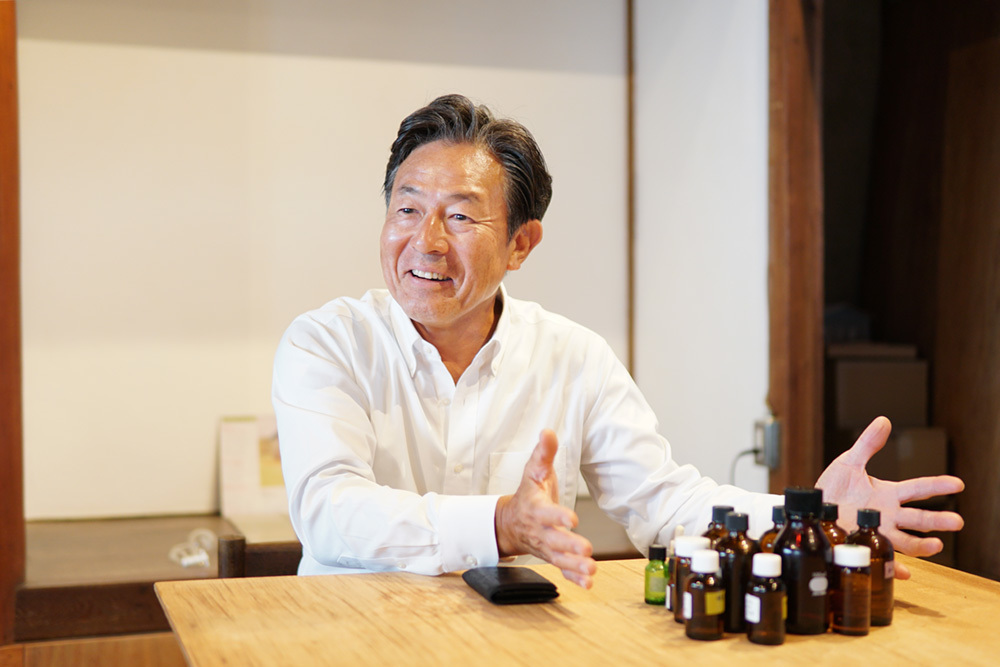
Currently, we're also developing fragrances in collaboration with an incense supplier. Moving forward, we want to focus on BtoC and offer the scents of native herbs to consumers. In this way, we aim to co-create new value together.
An era of co-creating value with consumers. We also want to carefully convey the "story" behind our business initiatives.
Suzuki: Returning to the topic of products, we are now in an era driven by purpose. It's crucial for people to understand the underlying vision.
Mita: Yes. I think this emerged after the pandemic. For example, with cosmetics, more people are thinking not just about price or skin compatibility, but about resonating with the background and the vision, and wanting to enhance value together with the creators. There are many ways to share information, and you can meet people who share your values, so I feel this kind of business can thrive.
Suzuki: To make business a collective effort rather than a self-serving activity, storytelling becomes crucial.
Mita: Since it's a product, tea must be "delicious," and aromatherapy must be "high-quality." That's fundamental. To achieve that, we carefully, meticulously consider how to proceed with product development while deepening relationships with local people. That very process of moving forward becomes the story itself.
Suzuki: It's our tendency to try to systematize businesses and products into patterns everyone can follow. Hearing from someone like you, who's grounded and practicing co-creation business, feels like an important lesson. That said, we're good at putting unseen things and stories into words and images. It would be wonderful if we could help. Thank you for today.
What is the "Regional Value Co-creation Bureau"?
Guided by the concept of "QX," we provide integrated communication and DX solutions so every individual in a region can experience enhanced quality of life (QOL) in their local area. Simultaneously, we support the growth of existing businesses and the creation of new ventures. Through conceptual planning and proof-of-concept initiatives, we collaborate with stakeholders—including local governments, corporations, and universities—to build mutually beneficial business models and contribute to sustainable regional development.

Was this article helpful?
Share this article


Newsletter registration is here
We select and publish important news every day
For inquiries about this article
Author
Toru Suzuki
Dentsu Kyushu Inc.
President and CEO

Kaori Mita
Litokos Co., Ltd.
President and CEO