
Note: This website was automatically translated, so some terms or nuances may not be completely accurate.
 Discovering the Path to Co-Creating Regional Value from Kyushu's "Front Lines" [2/2]
Business Succession and Renovation: From a Single Store or Workplace to Regional Revitalization
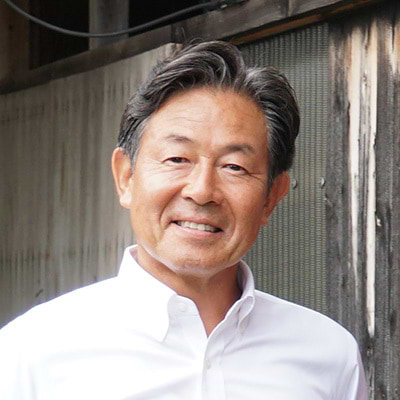
Toru Suzuki
Dentsu Kyushu Inc.
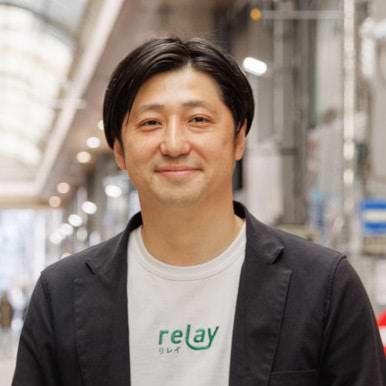
Ryuta Saito
LightLight Co., Ltd.
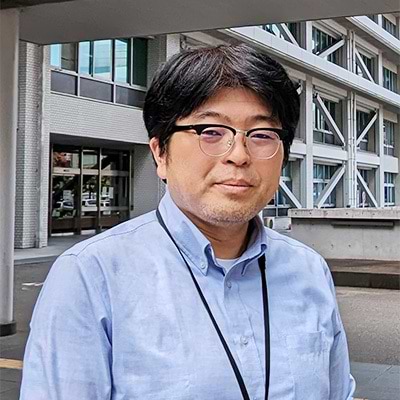
Yasuyuki Murayama
Kyushu Bureau of Economy, Trade and Industry, Ministry of Economy, Trade and Industry
In this series, Dentsu Kyushu Inc. President and CEO Toru Suzuki visits pioneering companies and individuals across Kyushu who are co-creating regional value at their respective "front lines." He interviews them about the key points, motivations, and perspectives behind regional value creation. The series explores possibilities for co-creation with businesses engaged in generating regional value while offering insights for those seeking to take the first step in similar situations.
This installment's theme is "Business Succession."
<Table of Contents>
▼Passing on "Intangible Assets" Together: The New Path for "Business Succession" Opened by Open Name
▼Revolutionizing the M&A Industry: What is "Face-to-Face" Business Succession?
▼Business Succession Means "Opening Up and Changing"
▼Community-Wide Support and Collaboration with Operating Companies
Transferring "Intangible Assets" Together. Open Name Paves a New Path for "Business Succession"
As you know, "business succession" means passing a company to a successor. However, it also implies transferring not just management and assets, but also the "intangible assets" cultivated by the previous generation—such as the scenery that colors the community and connections with people.
These intangible assets are particularly strong in small local businesses like neighborhood bakeries and bookstores. Such shops create nostalgic scenes in our memories.
On the other hand, a strict rule in the business succession industry, including for such small businesses, is "non-disclosure of seller information" (non-name). This is to avoid reputational damage; the seller's identity is kept confidential and, of course, never appears online.
However, "non-disclosure" can sometimes spoil succession opportunities for small shops. Judged solely on their financials while remaining anonymous, small businesses appear unattractive, and buyers rarely emerge. Without successors, intangible assets are lost, accelerating the decline of shopping districts.
To change this situation, Miyazaki City startup LightLight stepped up. President Saito launched "Relay," a business succession matching platform.
Relay discloses seller information (open names). By revealing the seller's "face," it creates value distinct from typical M&A—specifically, promoting U-turn and I-turn migration. Furthermore, it aims for buyers to update the business, transforming a single store or workplace into a catalyst for regional renewal.
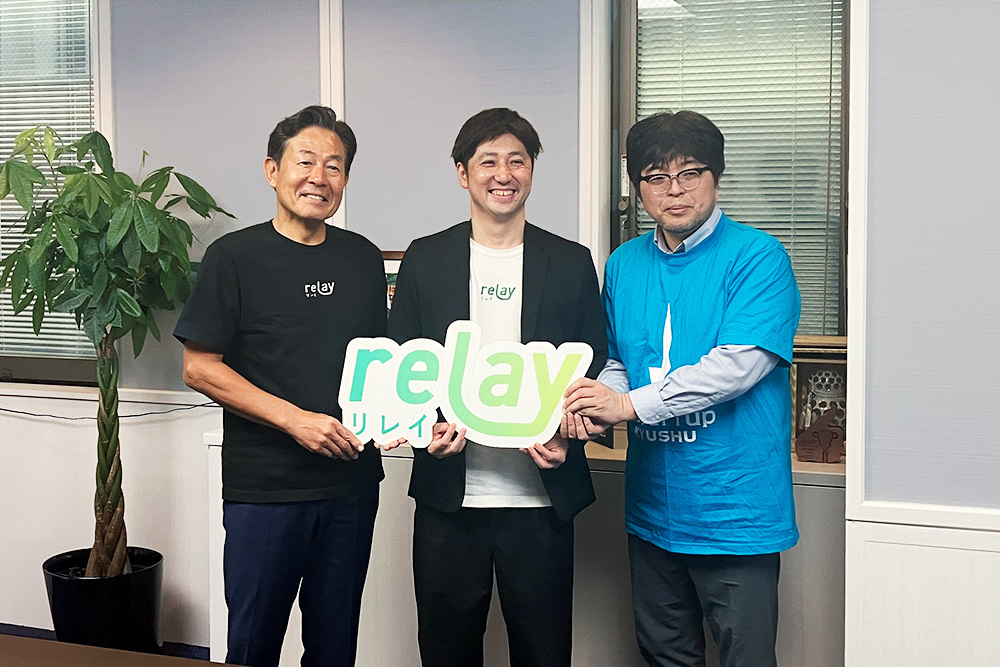
Suzuki interviews Ryota Saito, CEO of LightLight, about business succession and regional revitalization. We also welcomed Yasuyuki Murayama, Director of the New Business Creation Promotion Office at the Kyushu Bureau of Economy, Trade and Industry, who shared insights about the national startup support program "J-Startup."
Here lies one solution for regional revitalization. Enjoy.
Revolutionizing the M&A Industry: Business Succession Where You See the "Face"
Suzuki: Please tell us about the business succession platform "Relay".
Saito: Relay's key feature is "Open Name." Typically, transferring or closing a business stirs anxiety among employees, clients, and financial institutions, making reputational damage likely. Therefore, non-disclosure of seller information ("non-name") is an ironclad rule in the business succession industry, with strict confidentiality.
However, small-scale businesses—for example, family-run operations with no debt and limited clients—are less susceptible to reputational damage. They don't inherently need to use non-disclosure, yet they're bound by industry rules.
And this approach risks overlooking the appeal of small businesses. People just look at the numbers and think, "It's small, it's in the red, it's no surprise it's going under."
Suzuki: With non-disclosure, the value not reflected in the numbers isn't evaluated.
Saito: Yes. So, by using open names and sharing information online so people recognize "that place" or "that shop," we thought people might emerge who feel "it's a shame it's disappearing" or "let's figure out a way to help."
Suzuki: A revolution in business succession.
Saito: That's why we faced significant opposition from the industry. Even the Small and Medium Enterprise Agency warned against disclosure, saying it would cause problems. Each prefecture has an SMEA "Succession Support Center," essentially a refuge for small businesses. Even there, they operate anonymously.
Suzuki: But you had conviction, Mr. Saito?
Saito: Yes. I previously ran "FAAVO," a "region-specific crowdfunding" platform. It's a system where people who have moved away support local challenges in their hometown.
From that experience, I knew many people realize the value of their hometown only after moving to the city and want to contribute back.
Suzuki: So it's a platform for local contribution.
Saito: That's why I wanted to promote U-turns and I-turns through business succession. Even if people want to use skills honed in the city to contribute locally, they can't earn the same salary. So, as an alternative, I thought: let them buy local businesses to build assets. Eventually, they could become successors and make a U-turn. I wanted to create that flow, thinking, "Let's try this as a startup."
Suzuki: It's a new form of local contribution—not just giving money, but running a small business locally.
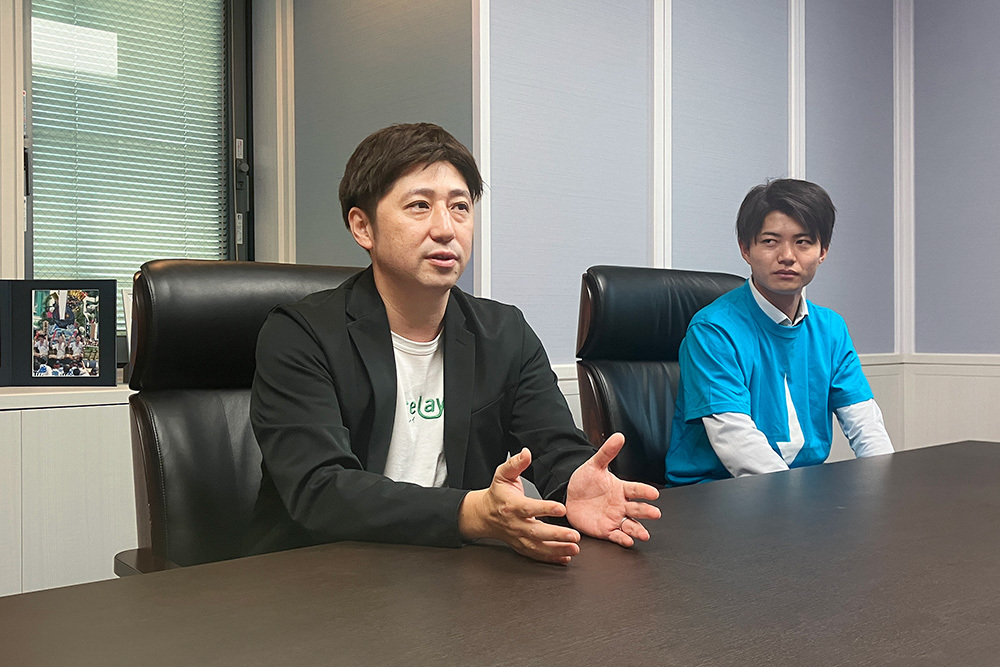
Saito: Business succession also has the effect of "creating new connections." For example, if someone only meets old friends when they occasionally return home, their community doesn't expand. Instead, the community they live in daily in the city becomes much larger, and the importance reverses. We believe this reversal is one factor contributing to the concentration of population in urban areas.
Therefore, while living in the city, we can create new connections with our hometown through succession. I thought that as that community grows, more people might choose to return to their hometowns.
Providing assets and opportunities for community building to "maximize the feelings and actions of local natives living in the city" is the core of this strategy.
Business succession means "opening up and changing."
Suzuki: Could you share one example?
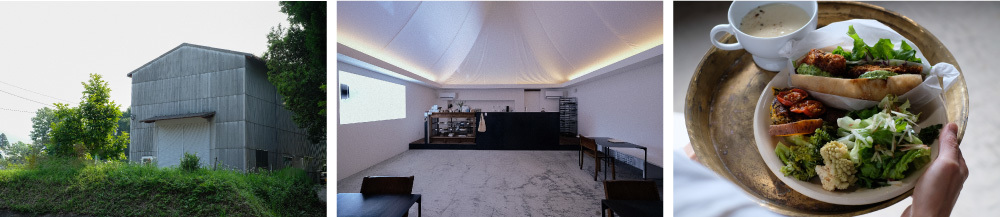
Saito: In Takahara Town, Miyazaki Prefecture—a town with a population of less than 8,000—there was the only authentic bakery. But they announced, "We're closing because we have no successor." So, through the local government, we listed it on Relay.
Then, a magazine covering U-turn and I-turn movements came to cover the story. By chance, someone originally from the area—specifically, from the city next to Takahara Town—who now lives in Chiba happened to be browsing that magazine.
Reading it, they thought, "When I visit home, that shop I always go to is unexpectedly closing..." and "Hmm? Maybe I actually wanted to run a cafe." From there, things moved fast. They applied to Relay, gave up their home in Chiba, and made the U-turn. After a year of frantic preparation, they opened a cafe called "vote" inside a warehouse-like building at their family home.
Suzuki: It seems coincidental at first glance, but the open name created the encounter and provided the momentum, right?
Saito: Yes. This wouldn't have been possible without the open name. Achieving succession in this form was exactly what I envisioned from the start. Until now, even if someone wanted to take over a business and start running a cafe, they'd have to gather information anonymously and go through quite a tedious process. That requires a significant commitment.
On the other hand, I think many people get inspired by information they encounter through word of mouth or social media. We wanted to incorporate this kind of circuit into the world of business succession.
Suzuki: Even if they aren't thinking of it as full-fledged management, there are surely many people who, given the chance, would say, "I'd like to run a shop with a personal touch." Open Name provides that opportunity.
<vote>
1419-1 Hirohara, Takahara Town, Nishimorokata District, Miyazaki Prefecture
A cafe in a small town. A unique structure: a tent set up inside a warehouse next to a field. It was renovated into a cafe by inheriting the techniques and equipment from the original bakery.
The name "Vote" comes from the idea that purchasing goods is a form of support for the shop, akin to casting a vote. It embodies the desire for something safe and secure, harmonious with the surrounding environment, and capable of opening new worlds.
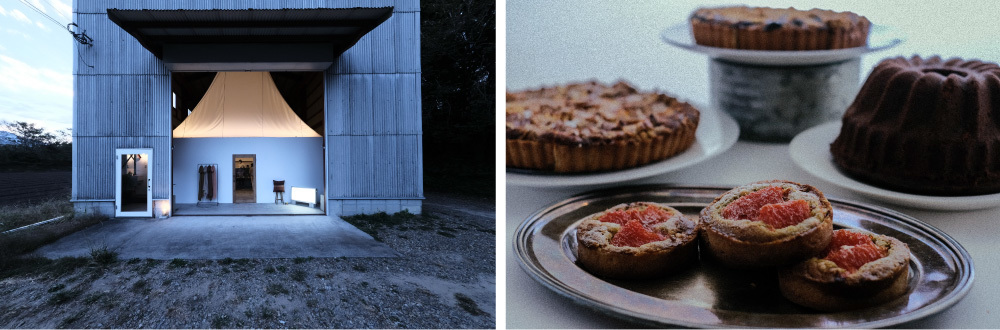
Saito: Another crucial point in this case is "business renovation." While the owner inherited the bread-making machinery, recipes, and know-how, the store and products were completely revamped, and the business model shifted from a bakery to a cafe.
Its unique decor and menu spread through social media, attracting visitors from outside the prefecture.
Suzuki: The intersection of "what we wanted to preserve" and "what we wanted to create" sparked ideas and ingenuity.
Saito: Exactly. There's a unique appeal to open-name succession, allowing buyers to imagine new uses and combinations. Other examples include repurposing a carp restaurant as a goldfish export hub or collaborating between a print shop and a stationery store.
There's a misconception that business succession means "inheriting things as they are" or "receiving them." But it's actually about "rebirth." First, disclose information. Then, both the successor and the predecessor must embrace the mindset of "change." I keep saying that "opening up and changing" is crucial.
Suzuki: For example, in rural areas, you often find eateries with fantastic views or prime locations. Places where you think, "Wow, just being here is amazing," yet they seem destined to close with the current generation. Encouraging business renovation for such establishments could potentially transform an entire region starting from a single point.
Saito: Yes. And the more rural the area, the greater the impact one business renovation can have on its surroundings. For instance, in a shopping district where no new stores have opened for decades, a business succession might bring a new shop, followed by startups nearby. This kind of ripple effect can lead to the creation of new regional value.
Community-wide Support and Collaboration with Business Companies
Suzuki: Are most of the businesses featured in Relay based in Kyushu?
Saito: Most are based in Miyazaki, where our headquarters is located, followed by Hokkaido. In Eastern Japan, they're spread far and wide—places like Kiryu City in Gunma Prefecture, Hitachinaka City in Ibaraki Prefecture, Oshima Town in Tokyo, and Itoigawa City in Niigata Prefecture.
However, we currently list around 180 businesses simultaneously, so our goal is to increase that number significantly. We are now working with local governments to identify more sellers.
For local governments, business succession has shifted from merely "preventing closures and providing support" to a positive role of "facilitating new startups and attracting new residents."
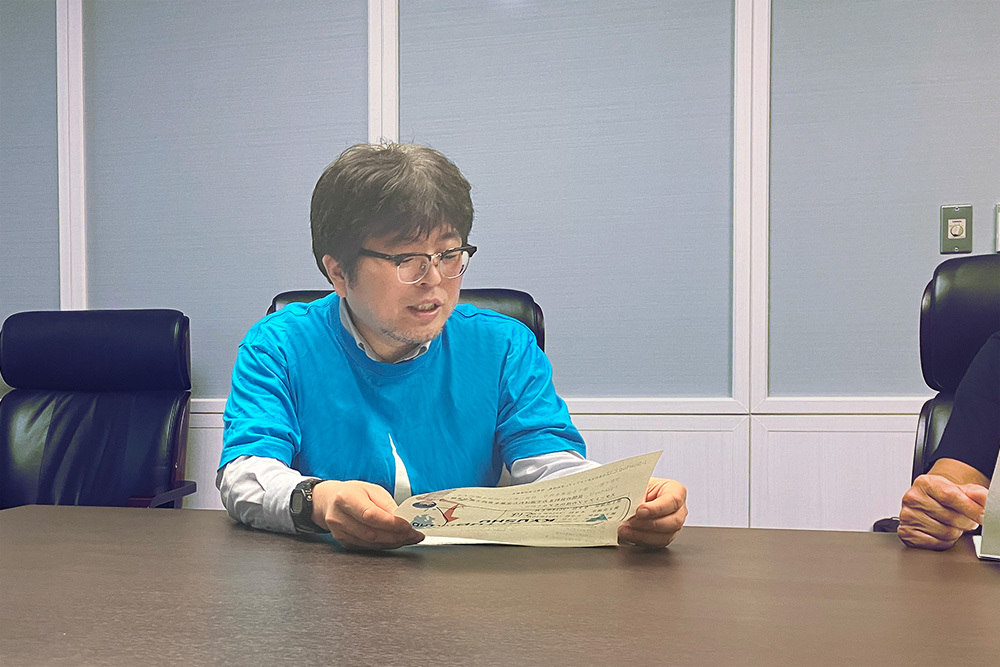
Murayama: LightLight is one of the companies selected for the Kyushu Bureau of Economy, Trade and Industry's "J-Startup KYUSHU"* program. "J-Startup" is a Ministry of Economy, Trade and Industry program that provides concentrated public-private support to companies selected by private-sector experts. "J-Startup KYUSHU" is its regional version. The national government also supports these companies, recognizing them as having the potential to pioneer the next generation for Kyushu and Japan, working alongside local governments and the business community.
Saitō: Being selected has been incredibly helpful. We've received valuable information on markets, intellectual property, accelerators, and more.
Murayama: We sometimes accompany them on sales calls to local governments. Our mission is to create new markets and jobs, revitalizing the region by supporting startups with a deep connection to the area and strong future potential.
Suzuki: That's reassuring.
What is J-Startup KYUSHU?
A startup support program launched by the Ministry of Economy, Trade and Industry (METI) to create companies that can compete and win globally from within Japan. Primarily targeting early- to mid-stage companies, it provides support through subsidized projects, matching initiatives, preferential financing measures, branding assistance, and more to accelerate growth and expansion. In addition to the national "J-Startup," regional versions are developed in collaboration with local governments and regional economic organizations to redirect human, material, and financial resources concentrated in Tokyo back to regional areas. J-Startup KYUSHU is one such regional program. As of November 2023, 238 companies have been selected for J-Startup, and 283 companies for J-Startup (regional names).
Suzuki: Dentsu Kyushu Inc. has also established a 'Regional Value Co-creation Bureau.' We've signed cooperation agreements with local governments to uncover regional resources and create new value. This isn't something we can do alone, and it requires numerous solutions to address the challenges.
We want to collaborate with startups, taking turns leading and supporting each other, to build successful models. We can also share insights with regional Dentsu Inc. offices nationwide and create organic frameworks as needed.
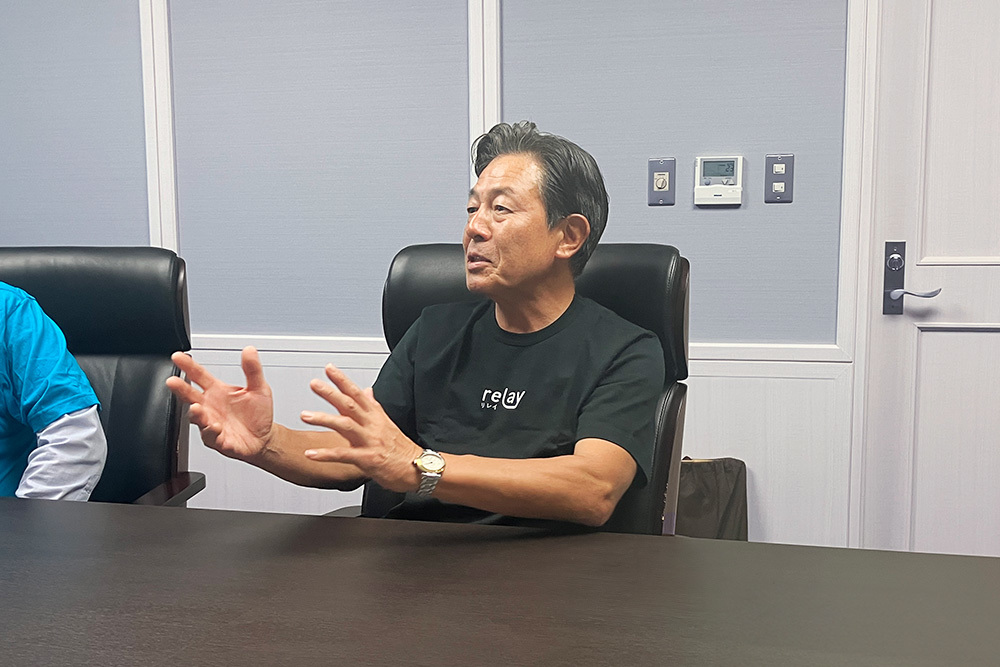
Saito: While we've focused on discovering sellers until now, we believe supporting business growth will also expand our own opportunities. We want to offer these services because even small changes can lead to remarkable transformations.
Suzuki: I think we could have Saito at the center of the circle, gathering various industries to expand our services. By the way, how many members are in the company?
Saito: About 25 to 30 people, all remote across Japan. This enables diverse work styles while also reflecting each member's deep connection to their local area.
Suzuki: So it's a way of working where people stay in their regions, utilize Relay, and contribute to solving local challenges. It's precisely because of that local love that they can tackle each small issue one by one. Our company is the same. I believe this is the foundation for revitalizing regions.
And above all, the open-name approach opens new possibilities for business succession, not just for the younger generation but for the senior generation too. Thank you for today.

Was this article helpful?
Share this article


Newsletter registration is here
We select and publish important news every day
For inquiries about this article
Back Numbers
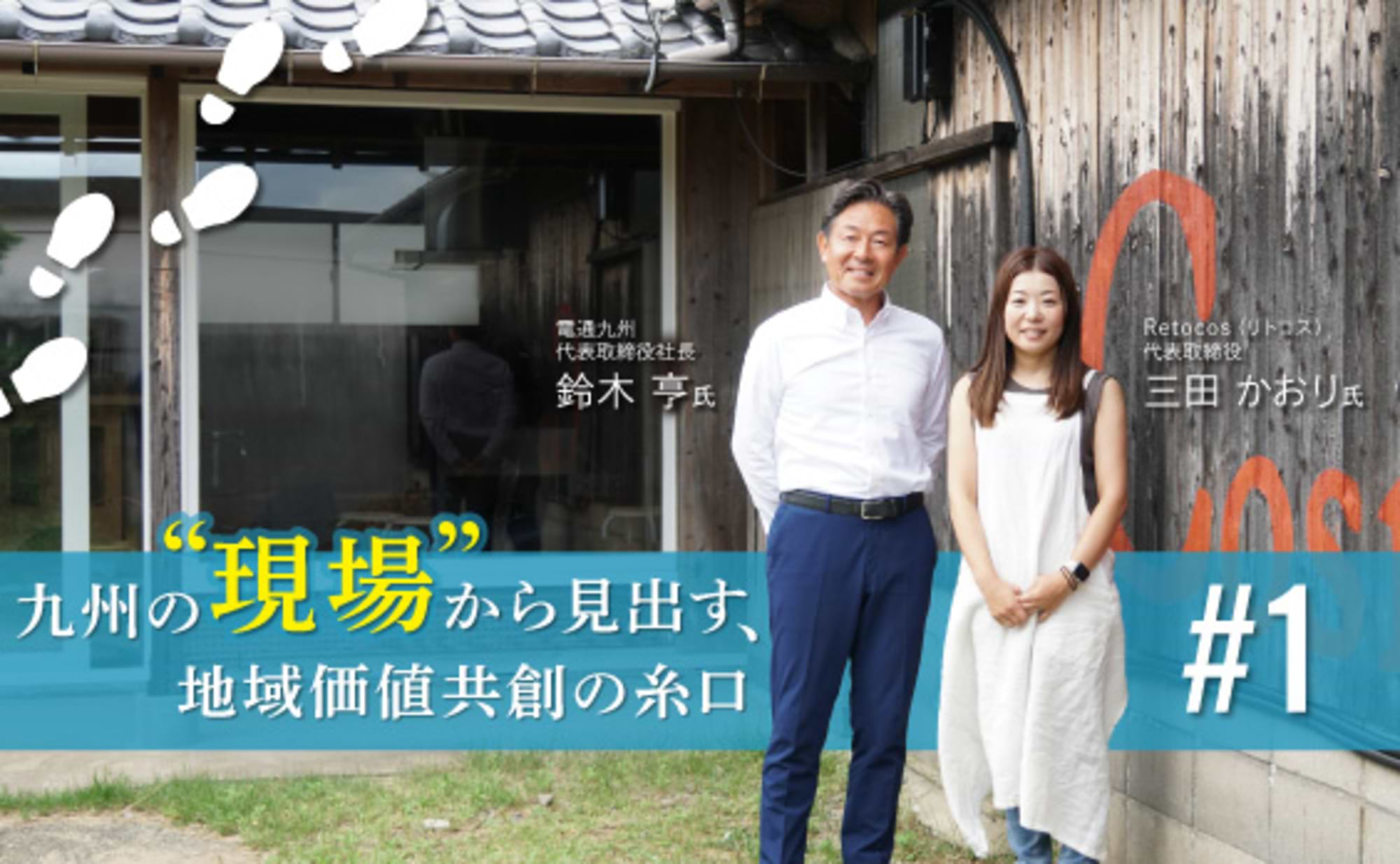
Author
Toru Suzuki
Dentsu Kyushu Inc.
President and CEO

Ryuta Saito
LightLight Co., Ltd.
President and CEO
Yasuyuki Murayama
Kyushu Bureau of Economy, Trade and Industry, Ministry of Economy, Trade and Industry
New Business Creation Promotion Office
Section Chief