Note: This website was automatically translated, so some terms or nuances may not be completely accurate.
 HR for Growth: A Human Resources Strategy to Accelerate Business Growth [1/3]
Driving business growth through HR transformation from "HR improvement thinking" to "business contribution thinking," Strengthening the "connectivity" between business units and HR departments to provide ongoing support toward true human capital management.
※ This is an advertorial article published in DIAMOND Harvard Business Review Online on December 20, 2023.
※ITID, Dentsu International Information Services, and ISID Business Consulting have merged and changed their corporate name to "DENTSU SOKEN INC." effective January 1, 2024.
Summary
Many companies are undertaking HR system reforms and developing HR initiatives to realize human capital management. However, there are increasing cases where these initiatives fail to deliver significant results. What is the Dentsu Group's CHRO program for strategic HR designed to solve this challenge?
Many companies implement various HR initiatives aiming for sustainable business growth through the realization of human capital management. However, an increasing number are now grappling with these initiatives failing to deliver significant results. To avoid falling into this trap, it is crucial not to treat human capital management as merely an "HR matter." We explore the Dentsu Group's program for CHROs and strategic HR teams, which realizes human capital management from both "HR" and "business" perspectives.
<TABLE of Contents>
▼ How to Address "Second-Round Challenges in HR Transformation"
▼ Advancing Human Capital Management with a Management Perspective Beyond "HR"
▼ What's Needed for HR Initiatives to Gain Acceptance in Business Operations
▼ Dentsu Group: Thoroughly Aligned with "People" and "Business"
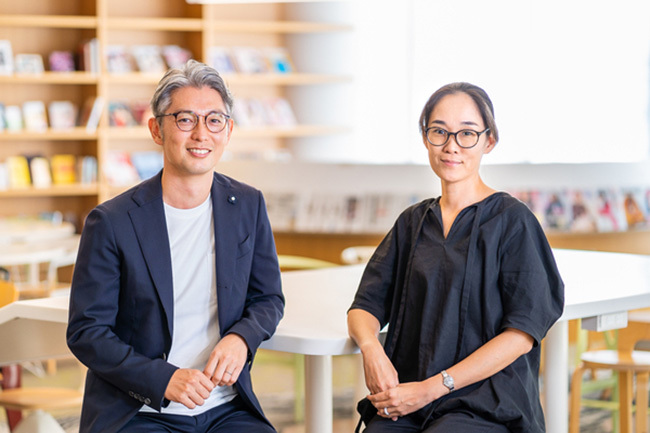
How to Address "Second-Round Challenges in HR Transformation"
"We introduced an internal job posting system to enable employees to proactively shape their careers, but no one applied." "We implemented various measures to improve employee engagement, but scores didn't improve." "We introduced training to develop DX (Digital Transformation) talent and many employees participated. Yet, there's no tangible sense of results afterward." Recently, more executives and HR managers are voicing such concerns.
Developing and strengthening "human capital," the very foundation of an organization, is crucial for corporate transformation. Many companies have leveraged HR initiatives to achieve human capital management.
Yet, despite the strong commitment from management and HR departments, it's increasingly common for various initiatives to either spin their wheels or yield only partial results, failing to generate the "significant impact" needed to create a ripple effect throughout the entire organization.
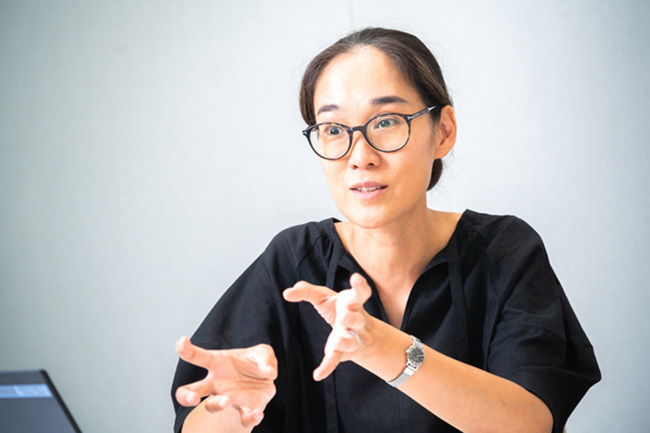
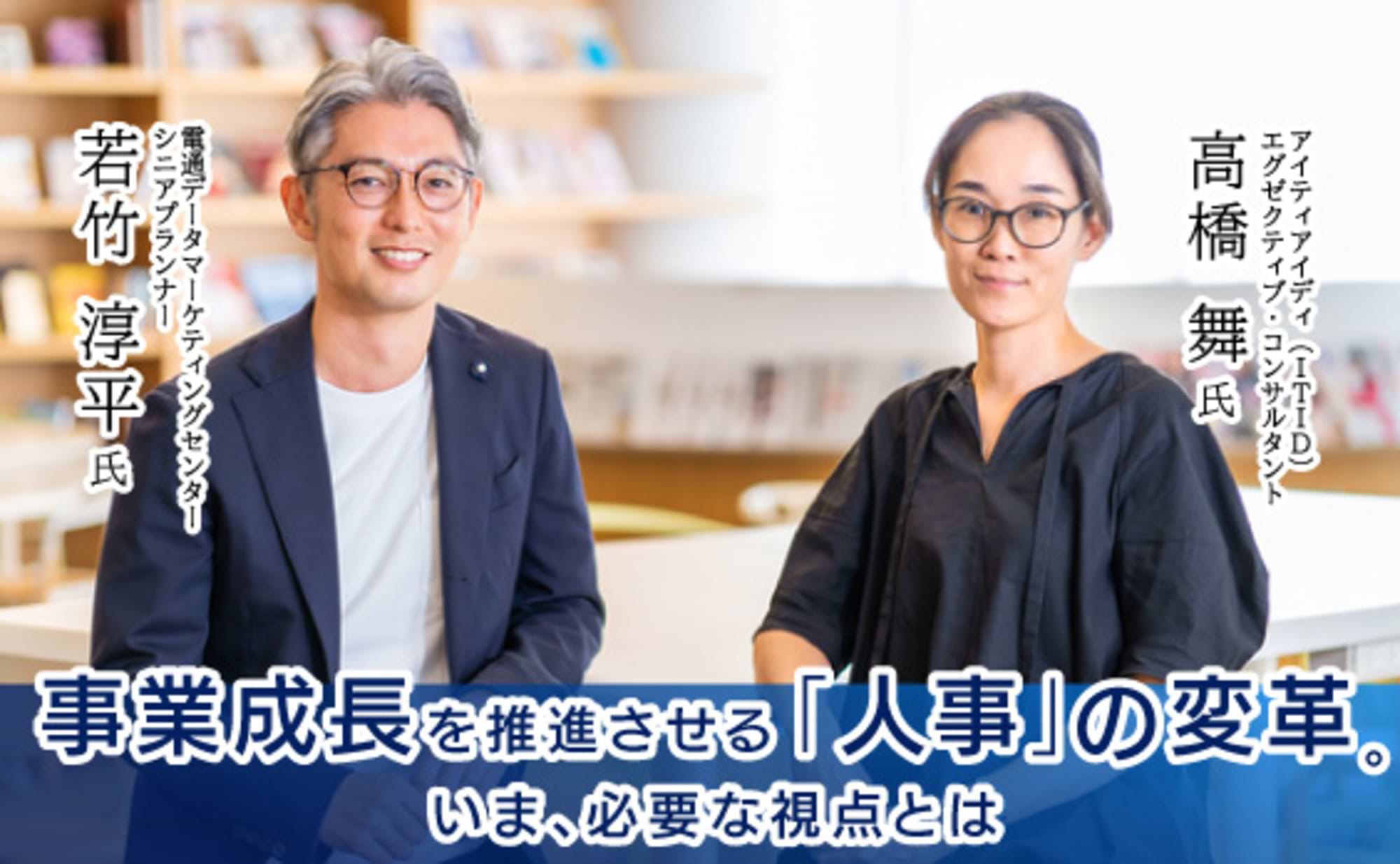
A prime example is the scenario described at the outset. "I truly feel that many HR managers share this frustration: 'We've implemented what should be the right HR reforms, yet they aren't leading to talent growth.' We call this the 'second-round dilemma of HR reform,'" says Mai Takahashi, Executive Consultant at ITID.
Why do these frustrations arise? We unravel the reasons and reveal a unique program designed to resolve these second-round struggles, linking HR initiatives to genuine talent development and business growth.
Surprisingly, the major factors causing these second-round struggles don't seem to be insufficient announcements of transformation visions by management or inadequate dissemination of HR initiatives. Drawing on the "raw voices" of employees undergoing transformation, we explore the perspectives essential for corporate development right now.
Advancing Human Capital Management from a Management Perspective Beyond Just "HR"
"When speaking with executives from companies where transformation has succeeded, I consistently notice a shared characteristic: they all demonstrate a strong interest not only in business operations but also in HR and culture," says Mr. Takahashi.
The root cause of the second-round struggles in HR transformation lies in treating human capital management as solely an "HR matter," confined to the HR department.
Even when directed by management, it has become increasingly difficult for the HR department alone to complete initiatives like HR system reforms or HR policy development. It is now essential for management, bearing the company's major transformation mission, to initiate the process, with the HR department taking the lead and organically connecting with business units to drive HR transformation.
In reality, employees are often reluctant to engage proactively. This was highlighted in Dentsu Inc.'s 2022 "Employee Attitude Survey on Corporate Transformation," which surveyed 600 employees at large corporations.
- Only about 20% of employees were "change promoters" actively engaged in their company's transformation.
- Employees who "took no action" regarding transformation (38.3%) outnumbered those who "took some action" (32.3%).
- Approximately 90% of employees feel "some anxiety" about their company's transformation.
"In such situations, it's not just the HR department that needs to work hard. Under leadership from management, a company-wide effort centered on HR is necessary. It's crucial to outline the process and narrative for major transformation before rolling out HR initiatives internally," said Mr. Takahashi.
So, where should we start and how should we proceed?
What is necessary for HR initiatives to be accepted by the business frontlines?
HR initiatives often become difficult for business units to accept. This is largely because the promotion of human capital management remains "an HR matter."
Various HR initiatives are often planned and driven solely by a portion of management and the HR department, without input from the business units. Furthermore, the tendency for initiatives to be launched sporadically, often within the context of a functional organizational structure divided by areas like "recruitment" or "development/organizational development," frequently poses a major challenge in advancing human capital management.
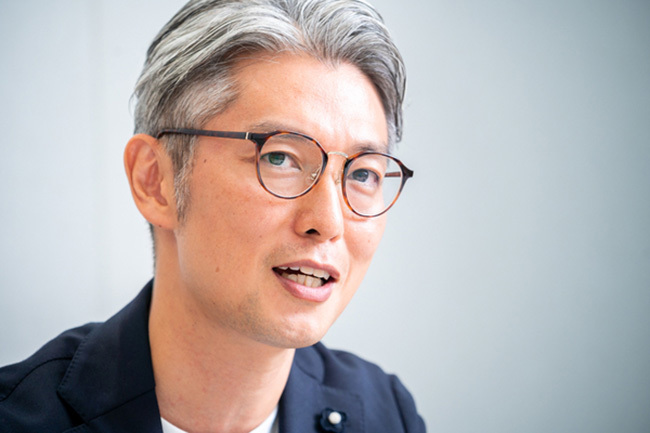
"It's not uncommon for new initiatives to be planned and pushed in a one-way, scattered manner by HR, without sufficient understanding of the current situation in the business units where the actual work happens. However, what truly matters is how these new initiatives will concretely develop talent and lead to increased profitability for the business units. If HR initiatives aren't properly connected to the current challenges faced by the business units, there's a high risk they will be difficult for the front lines to accept." (Junpei Wakatsuki, Senior Planner, Dentsu Inc. Data Marketing Center)
This is where the Dentsu Group is putting its full weight behind "HR for Growth." As shown in the diagram below, it strengthens the "connectivity" between the strategies, initiatives, and KPIs (Key Performance Indicators) of the HR department and the business units. It is a program designed to drive not only talent growth but also business growth through HR initiatives.
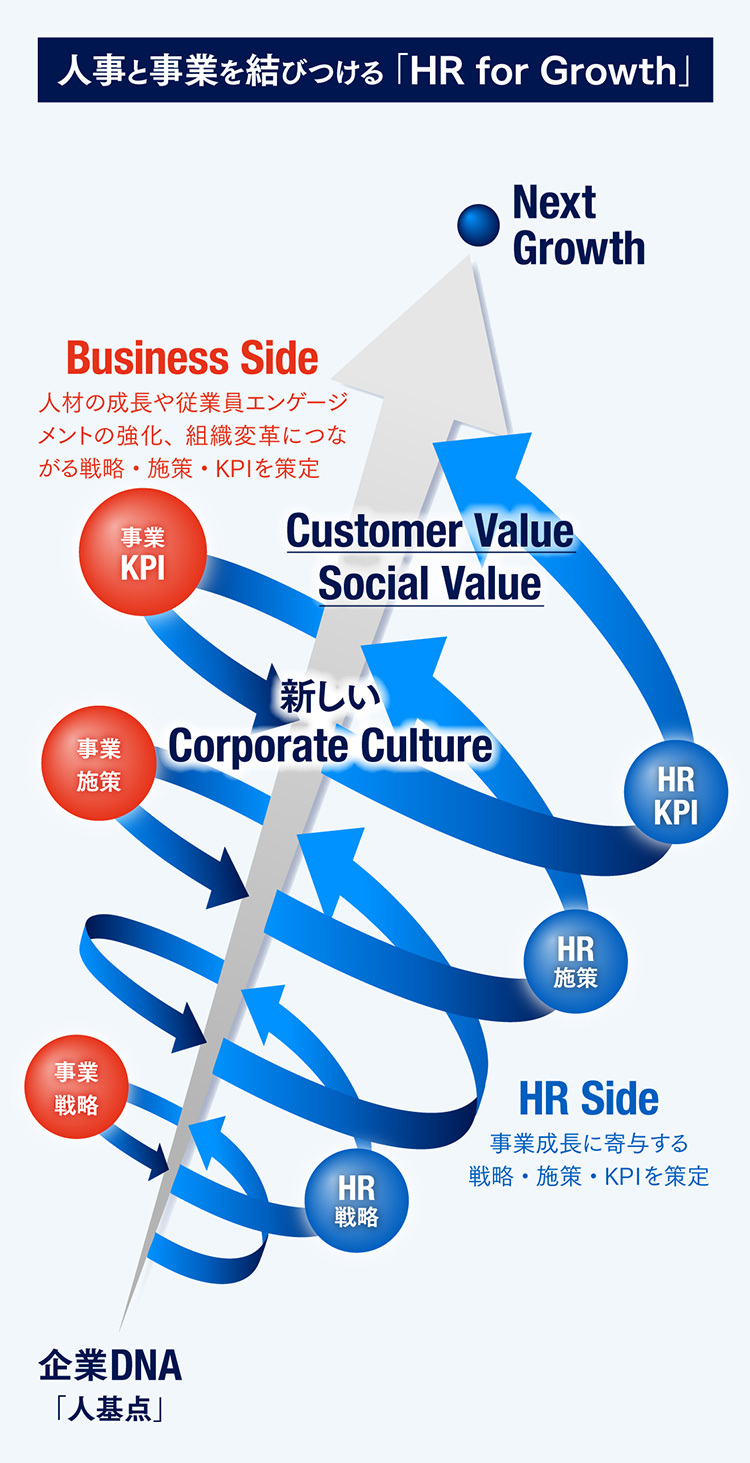
This program promotes a paradigm shift from "HR Improvement Thinking"—focused on internal HR improvements—to "Business Contribution Thinking"—where HR directly contributes to business outcomes. It supports CHROs (Chief Human Resources Officers) driving management strategy through HR strategy, their strategic HR teams, and HR members highly conscious of contributing to business growth.
For example, KPIs for various HR department training programs typically focus on participant numbers or attendee satisfaction with the content. This remains within the "HR Improvement Mindset" framework. To transition to a "Business Contribution Mindset," it is necessary to holistically design and set KPIs that encompass how knowledge gained from training is applied in actual business operations and how that application is evaluated. Only then can we truly say the HR department and business units are "connected."
Furthermore, CHROs and their teams face numerous challenges delegated by executive leadership: transforming employee skill sets, reshaping mindsets, boosting engagement, embedding purpose, and building culture. They require the "connecting power" to link these challenges, weave them into a cohesive HR transformation process and narrative, and ultimately drive business growth.
The Dentsu Group aims to resolve these second-round HR transformation challenges by supporting not only the design of these HR transformation processes and narratives, and strengthening collaboration between HR and business units, but also by assisting with the internal communication initiatives needed throughout the process.
HR for Growth is precisely a program designed to ensure that HR transformation, originating from management intent, is not treated as a purely HR matter. Instead, it fosters organic connections between HR and business units to ensure its successful completion.
Success stories utilizing this program are already emerging.
Dentsu Group: Deeply Rooted in Both "People" and "Business"
At Sanrio, we developed a transformation concept to foster understanding and alignment with the newly established "VMV" (Vision, Mission, Values) following a leadership transition. We further supported various initiatives with HR and departments to connect VMV to daily operations.
At J-Lease, which handles guarantee-related businesses, we realized a project to rebuild the HR system while involving employees from the business division. To ensure the new system gained field acceptance, we formed a task force through open recruitment, gathering next-generation talent to review the evaluation, grading, and compensation systems. This resulted in deeper employee understanding of the new system, contributing to enhanced engagement and talent retention.
"We receive several inquiries every week," reveals Wakatsuki. Riding the momentum of successes at Sanrio and J-Lease, demand from clients for the Dentsu Group is steadily increasing.
However, consulting firms and others have recently been aggressively offering support for corporate HR system reform and HR policy development. Where does HR for Growth's competitive edge lie?
"I believe the value sought in HR consulting today lies in the ability to define challenges beyond existing HR domains and the capability to approach them effectively. I suspect the increased inquiries we're receiving stem from these expectations," says Mr. Takahashi.
In reality, the Dentsu Group within HR for Growth can provide a breadth of value and functionality that other consulting firms cannot fully cover. The underlying strengths of the Dentsu Group can be summarized into three key areas.
The first is production capability. We possess extensive experience supporting client companies' business growth through branding and communication activities, as well as assisting in new product and business development. Furthermore, we own the know-how to coordinate and mediate across multiple departments within client companies, aligning their efforts toward a single objective.
Second is the "human-centric marketing methodology" (Mr. Wakatsuki). This applies the "human-centric" marketing approach, honed in consumer-facing contexts to move hearts and drive behavioral change through data-driven insights, to HR (human resource utilization). It enables the design of initiatives that, based on the employee journey, foster shifts in individual employee awareness and behavior, ultimately contributing to business growth.
Third is the group's comprehensive strength. Combining the expertise of group companies—such as Ignition Point Inc., which has built a track record as an HR consultant, and Dentsu International Information Services (ISID), which provides the integrated HR system "POSITIVE" used by 2,700 domestic companies and supports data-driven HR that fully leverages HR data—allows us to support HR initiatives that realize human capital management contributing to business growth.
By enhancing the connection between business units and HR departments, and linking human capital management to tangible outcomes like business growth and enhanced corporate value—the Dentsu Group uniquely advances human capital management from a management perspective that transcends HR alone. We accompany client companies toward the completion of corporate transformation.

Was this article helpful?
Share this article


Newsletter registration is here
We select and publish important news every day
For inquiries about this article
Author
Junpei Wakatsuki
Dentsu Inc.
Data Marketing Division
Senior Planner

Mai Takahashi
Dentsu Inc.
Dentsu Inc. Business Design Square
Business Designer