The SDGs are increasingly becoming a key factor not only for companies seeking to attract top talent, but also for influencing stock prices and securing financing or investment from financial institutions and venture capital (VC) firms. Furthermore, since local companies actively engaging with the SDGs contributes to the region's sustainable development, proactive and independent SDG initiatives by businesses are highly anticipated. For a company to be chosen by all stakeholders, the importance of engaging with the SDGs and communicating its activities is extremely high.
Against this backdrop, Hiroshima Bank, Ltd., Dentsu West Japan Inc., and Hiroshima Home Television Co., Ltd. have jointly developed the 'Kawaruken.' project—a platform that uses the SDGs as a starting point to support corporate growth and regional revitalization. This project aims to foster momentum and invigorate SDGs initiatives by uniting Hiroshima Prefecture companies to jointly promote and communicate SDGs projects. The project name declares the will to become "A Prefecture Changing for the Future," and features a key visual symbolizing each company taking flight toward the future.
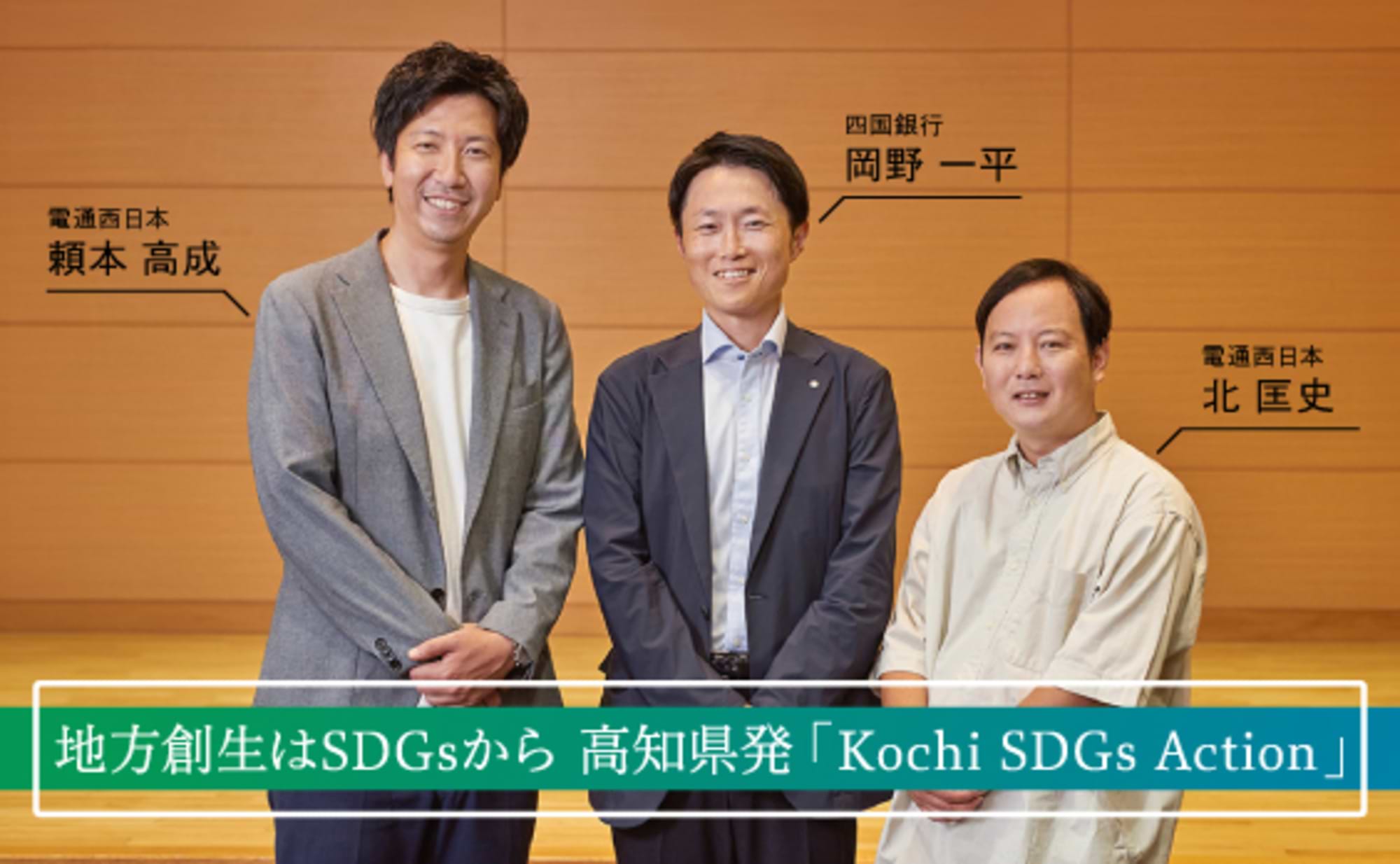
This article features a dialogue between Kenji Sato of Hiroshima Bank's Corporate Planning Department and Takashige Yorimoto of Dentsu West Japan Inc. Project Promotion Department. They discuss the background leading to this collaboration, project details, and future goals. The interview is presented in two parts: Part 1 and Part 2.
Hiroshima Prefecture's Challenges and SDG Potential: Perspectives from Inside and Outside
Yorimoto: First, Mr. Sato, how do you perceive the challenges Hiroshima has faced in recent years?
Sato: Hiroshima's primary industry is automobiles, and the prefecture is home to numerous automotive subcontractors. In recent years, we faced a tough situation due to lockdowns causing disruptions in parts procurement and a decline in domestic production. However, that situation has improved significantly, so we expect a recovery.
Corporate capital investment is trending upward and is now at a significantly higher level compared to the three years before the pandemic. This fiscal year, new job openings are also increasing. In tourism, visitor flows have returned since the lifting of the Prevention of Spread of Infectious Diseases Act. A new global chain hotel opened in September 2022, and we're seeing growth not only in tourist numbers but also in hotel occupancy rates.
Thus, while Hiroshima's economy shows an overall recovery trend, the global economy remains quite unstable. Factors like the Ukraine situation, exchange rate movements, and China's zero-COVID policy create significant global uncertainties, and we expect to feel their impact. Particularly now, the weak yen poses a risk of downward pressure on import performance.
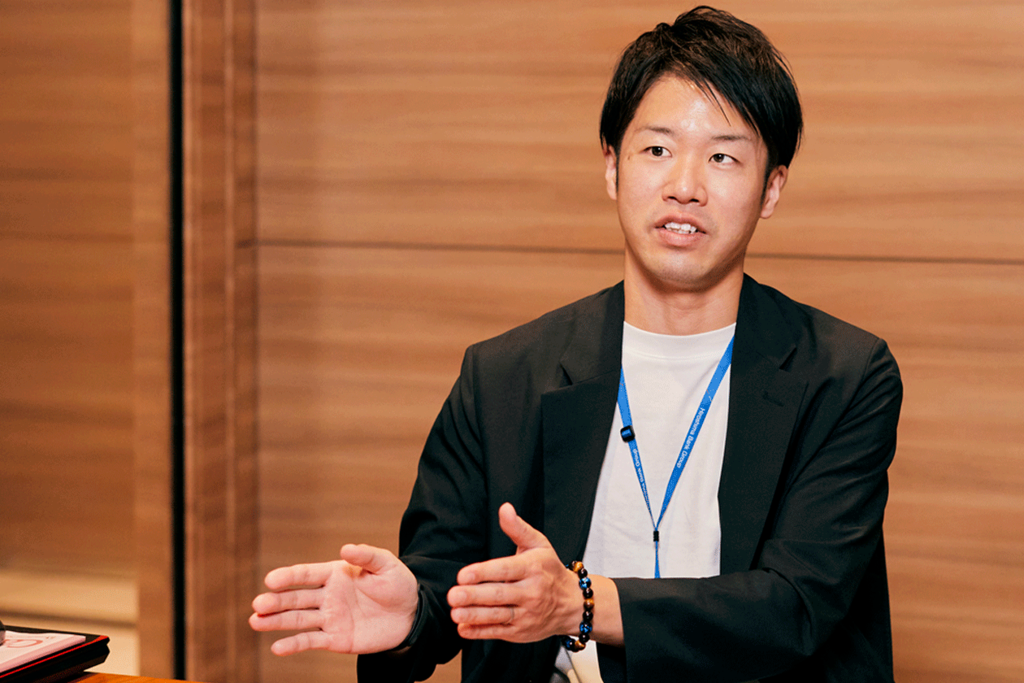
Hiroshima Bank, Ltd. Corporate Planning Department, Kenji Sato
Raimoto: That's right. On top of that, Hiroshima has a higher net population outflow than other areas. Successor shortages are also a challenge. It's a real shame that Hiroshima has so many excellent companies and unique businesses that aren't well known. If we can address that, I believe it will help solve regional issues.
Moreover, today's young people place far greater importance than we realize on whether companies are engaged in SDGs when seeking employment. Data shows that over 70% of students consider SDGs during their job search. Conversely, this means companies not addressing SDGs, or those failing to communicate their efforts, will likely struggle in future recruitment.
If we can convey to university students who have left the prefecture that "Hiroshima has attractive companies genuinely committed to the SDGs," it could create a flow of people returning to their hometowns. It could also serve as an opportunity for those already working locally to recognize the true appeal of their own companies.
Sato: I agree. Some universities are already incorporating SDGs into their curricula. In fact, I recently received a request from a Tokyo university student asking about the 'Changing Now.' project. It seems they covered it in a seminar. There's a clear demand for this information, and it's becoming a key consideration during job hunting. If Hiroshima companies can effectively promote their solid SDG efforts, it could encourage students who left for Tokyo, Osaka, or elsewhere to return and find jobs locally, ultimately contributing to the revitalization of regional businesses.
Yorimoto: I believe Hiroshima has tremendous potential. Its global recognition as a "City of Peace" is already strong, and its commitment to the SDGs is easier for people to understand compared to other prefectures. After all, SDG activities ultimately connect to the concept of global peace. The key, I think, is how we present that and shape the companies' vision.
Sato: That's right. Hiroshima Bank operates in its four core prefectures: Hiroshima, Yamaguchi, Okayama, and Ehime. Combined, these four prefectures have a population of approximately 7.42 million and 342,000 business establishments, ranking third nationally. We recognize this as having economic scale potential comparable to major cities. As a financial institution deeply involved in the local economy, while the success of individual projects is important, we also want to contribute to enhancing the regional value of these four prefectures from the perspective of revitalizing the entire region.
Yorimoto: That said, the reality is that it's quite difficult to set long-term goals for the region at this point.
Sato: That's true. However, given its industrial structure and the number of coal-fired power plants, Hiroshima has one of the highest per capita CO2 emissions in the country. Therefore, we believe it is crucial for this region to take the lead in addressing issues like carbon neutrality.
Yorimoto: And it's also a Peace City, directly linked to SDG 16: "Peace, Justice and Strong Institutions."
Sato: Exactly. Conveying that message to the world is vital. Currently, Hiroshima Prefecture is seeing a flurry of redevelopment projects centered on Hiroshima City—like the south exit redevelopment, the high-rise plans for the north exit, and the soccer stadium relocation. Plus, next year brings the Hiroshima Summit. With global attention focused here, we want to make our presence felt as a local financial institution.
Beyond introducing our SGD initiatives, we're exploring how to effectively communicate each company's business activities to society.
'Changing Now.' Key Visual
Yorimoto: For this SDGs project, 'We're Changing,' we first discussed it with Hiroshima Bank and Dentsu West Japan Inc. This is because Hiroshima Bank has extensive daily contact with local companies and is the first to identify their challenges. We believed combining their communication expertise and content with our business solutions could resolve various issues. Later, Hiroshima Home Television also resonated with the project's concept and agreed to participate.
Sato: While there's much discussion about media these days, I still feel television's power remains exceptionally strong in terms of reaching a wide audience and creating trends.
Yorimoto: We believe this 'Change Now.' project will gain momentum by reaching many residents of the prefecture, so the presence of a TV station is indeed crucial.
Hiroshima Bank and our company will engage local businesses to understand their challenges and introduce them to this project. Crucially, we must thoroughly discuss what kind of initiatives these companies are undertaking and how they plan to communicate these to the world.
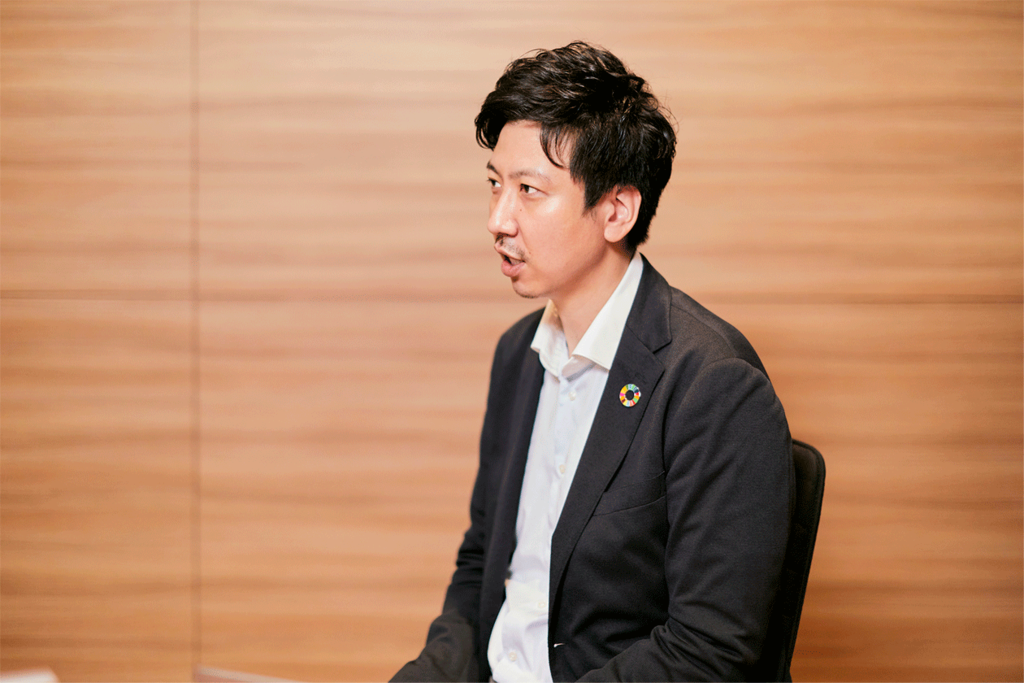
Takashige Yorimoto, Project Promotion Department, Dentsu West Japan Inc.
Sato: Sometimes companies aren't sure what they should do, so the process of listening to their business and bringing out their strengths is also vital. In those cases, we believe it's important to delve into each company's specific business activities, not just their SDGs initiatives. We carefully organize their corporate philosophy, history, and points of contribution to the SDGs, helping to unify the perspectives of everyone within the company.
Yorimoto: Based on these interviews and discussions, we create the commercial videos. These videos are distributed on a dedicated website and also aired as TV commercials to reach a wide audience of prefecture residents. Additionally, as part of the project, we hold three events annually. Participating companies are invited to attend these events, creating opportunities to connect with local stakeholders.
Rather than merely introducing SDGs initiatives, we organize how they connect to each company's business and philosophy, identify their specific contribution points to the SDGs, and communicate this by linking it to their respective business activities. This seems to be a major characteristic of the 'Kawaruken.' project. In the upcoming second part, we will hear about the vision both companies aim for through the 'Kawaruken.' project and more concrete initiatives.
Joined Hiroshima Bank in 2005. Assigned to the Loan Planning Department (now the Corporate Planning Department) in 2012. Since then, while engaged in a wide range of activities including corporate lending and SDGs-related initiatives, has focused on planning and executing projects that contribute to solving challenges faced by regional companies.
Takashige Yorimoto
Dentsu West Japan Inc.
Hiroshima Branch Business Production (BP) Department / Project Promotion Department
Dentsu Inc. Team SDGs SDGs Consultant
After joining Dentsu West Japan Inc., I primarily handled financial and retail clients as a Business Partner. Following the establishment of the Project Promotion Department, I supported the entire West Japan region, focusing on the financial sector. I am responsible for creating regional projects and collaborative ventures with local companies, engaging in planning and execution to solve challenges and drive development.