The importance of corporate initiatives to achieve DE&I (Diversity, Equity & Inclusion) continues to grow. While DE&I encompasses various themes, "employment of people with disabilities" stands as a critical topic. Companies above a certain size are legally obligated to employ individuals with disabilities, and the diversity they bring to the workplace can become a powerful force driving the company forward.
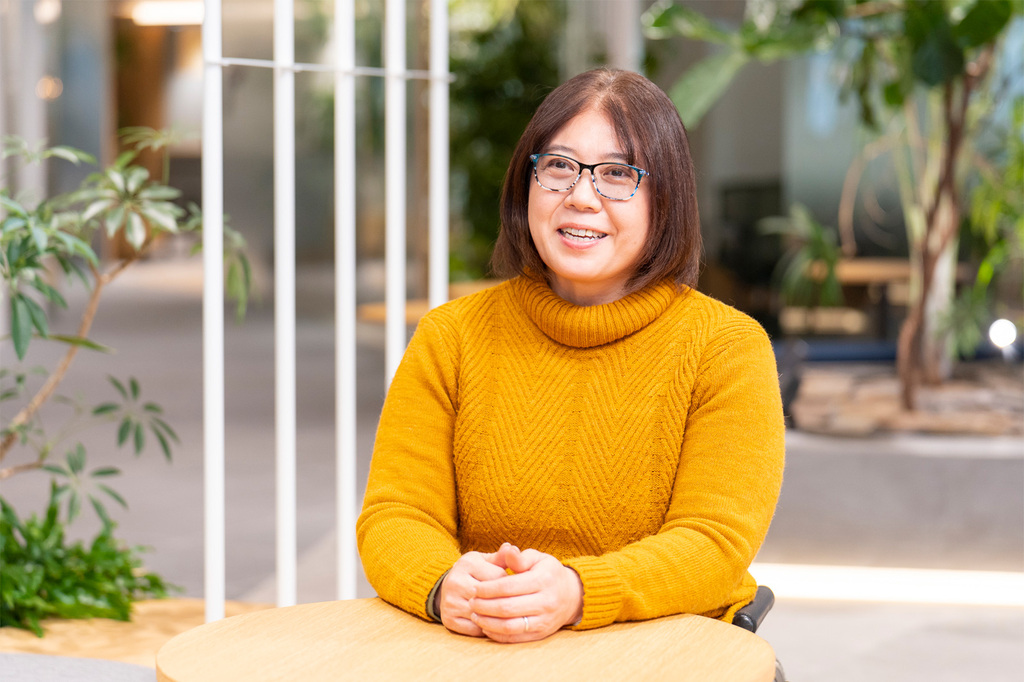
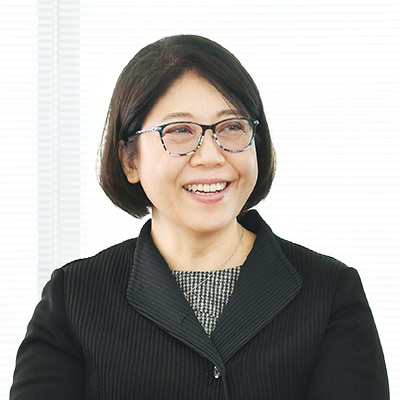
For this article, we interviewed Kuniko Ohinata, Fellow at Dentsu Group Inc. and Deputy Director of DENTSU SOKEN INC., and Yuta Ishii of PR Consulting Dentsu Inc.Ms. Ohinata, an accomplished alpine skier who won Japan's first-ever gold medal at the 1998 Nagano Paralympics, currently serves as President of the Japan Paralympians Association. She actively promotes parasports in Japan and drives various initiatives to realize diversity through para-athletes.Mr. Ishii, meanwhile, belongs to the department at PR Consulting Dentsu Inc. that promotes " Sustainability Transformation (SX) " and has long collaborated with Ms. Ohinata on numerous projects.
We asked Mr. Ishii, who has advanced projects alongside Mr. Ohinata—a leading figure in para-athletics and a pioneer in promoting diversity within corporations—to discuss "how employing people with disabilities brings strength to companies and business."
Continuing Para Sports While Joining a PR Company
Kuniko Ohinata, Dentsu Group Inc.
Q. Ms. Ohinata, you achieved remarkable success as a chair skier. You competed in five consecutive Winter Paralympics from Lillehammer to Vancouver, winning a total of 10 medals (2 gold, 3 silver, 5 bronze) in alpine skiing.You hold the distinguished honor of being Japan's first Winter Paralympic gold medalist (downhill, 1998 Nagano Games). It's fascinating that someone with such an impressive background joined PR Consulting Dentsu Inc. (formerly Dentsu Public Relations Inc.). What led you to this career path?
Dai-Nichi Co., Ltd.: I started skiing in my second year of high school. By the time I was in college, I was already competing as a Paralympic athlete while also being a student—essentially wearing two hats. Back then, the environment for para sports was quite different from today. To continue competing as an athlete, it was standard practice to work a job to support yourself financially, and then also cover the costs of training camps and competitions out of your own pocket. I joined a TV station right after graduating and worked there for ten years.
I was assigned to Tokyo, working as a production director for educational programs. Then, at the 1998 Nagano Paralympics, I was fortunate enough to win Japan's first-ever gold medal. My TV station was broadcasting the event, and there's this funny story: they asked, "Who is that Dai-Nichi Co., Ltd. guy? Which company is he from?" They looked it up and found out he was a colleague (laughs). That's how little I was known.
As I built my competitive record, I started worrying that continuing like this would leave me half-hearted in both my job and sports. That's when I encountered Dentsu Inc. Public Relations. My strengths—the media connections I'd built at the TV station and being an athlete—meant I could contribute to the company. They also offered the generous support of letting me continue competing. So, at the milestone of my 11th year in the workforce, I decided to change jobs.
Q. So after changing jobs, you met Mr. Ishii, who was already working at Dentsu Inc. Public Relations.
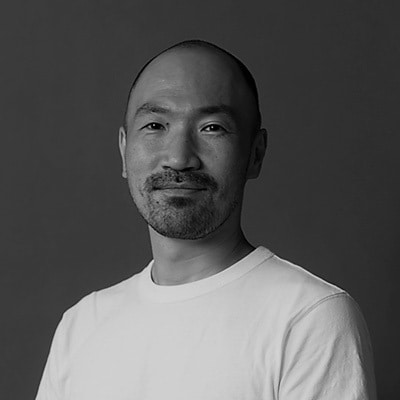
PR Consulting Dentsu Inc. Yuta Ishii
Ishii: Dai-Nichi Co., Ltd. joined when I was in my sixth year at the company. I'd heard, "A former TV station employee, a sports professional? is coming in," and I was excited, wondering what kind of person he'd be... Then I found out he was a para-athlete, and a Paralympic gold medalist to boot. I was truly shocked (laughs).
Our company, within the Dentsu Group, isn't particularly large, which gives us the advantage of being agile and responsive. Back in 2007, companies actively hiring and supporting active para-athletes weren't as common as they are today. That's the beauty of this company – you can act on that sense of excitement, thinking, "Working with someone like this would be really interesting." I believe that's exactly the kind of decision that was made back then.
Q. Did you two start working together right after Dai-Nichi Co., Ltd. joined the company?
Dai-Nichi Co., Ltd.: No, I actually started working with Ishii a little while after joining.
Ishii: Among all the people I'd seen within the company, she seemed the most interesting. So I raised my hand and said, "I want to work with Ms. Ohinata," and was transferred to the same department. I had originally joined a PR company because I wanted to contribute to solving social issues through business, so I felt now was the time to work with Ohinata.
Engaging with people who approach society and have different perspectives helps reveal the essence of things.
Q. Now that you two are working together, you're advancing initiatives like supporting parasports, right?
Dai-Nichi Co., Ltd.: I see parasports as one means to permeate society with concepts like "inclusive society" and "diversity." For instance, we often visit parasports organizations to make proposals or presentations. Normally, you'd spend a lot of time meticulously crafting those presentation materials, obsessing over the design.But when athletes or board members have visual impairments, the visual appeal isn't always essential. Instead, "communicating in a single sentence" becomes crucial. In a way, I think this is the "essence" of things, and it becomes an opportunity to reexamine such fundamentals. We often take what we're creating or doing for granted, but what if that very thing becomes invisible? There are countless opportunities to ponder this.
Ishii: Working with Dai-Nichi Co., Ltd. lets you feel a world unconstrained by conventional wisdom—not with your head, but with your body. For example, if "disability employment is good because..." represents a theoretical, "left-brain" understanding, then beyond that is the intuitive, "right-brain" understanding: "I get excited just knowing diverse people are around me, and it's incredibly fun because I discover so much myself."Through my work so far, I've been able to experience this kind of right-brain world. For instance, a visually impaired friend knows tons of incredibly cheap and delicious restaurants. They said, "Maybe it's because I can judge by the good smells wafting from the place, rather than the restaurant's appearance or reviews on food sites." That really clicked for me. Accumulating these new insights and questions that challenge conventional wisdom is incredibly exciting.
This also highlights the difference between "results" and "outcomes." Take "women's advancement" as a key agenda in today's DE&I field. The desired "result" here is an objective output, like "achieving 30% female representation in management roles." But what's even more important is the "outcome" – the actual change in someone's life brought about by this advancement.In other words, I believe we have personally experienced various tangible outcomes – specifically, how and for whom women's advancement has brought happiness.
Dai-Nichi Co., Ltd.: Engaging with people who have different perspectives and ways of relating to society brings many fresh feelings. Of course, this depends on the recipient's sensibilities, but in that sense, Ishii seems very well-suited to the current environment. She isn't afraid of taboos, faces people directly, and when she doesn't understand something, she asks questions and discusses it.
Paralympic athletes aren't saints either. They're often portrayed as admirable people "striving while living with a disability," and while that aspect certainly exists, as individuals, they possess far more diverse facets. You can see Ishii's understanding deepening as she glimpses the true faces of these athletes.
Ishii: Meeting and talking with Dai-Nichi Co., Ltd. and his friends really expands my curiosity. It's a real experience that tickles my curiosity in ways textbooks and media alone can't provide.
Dai-Nichi Co., Ltd.: Many para-athletes use diapers. They asked, "Why are diapers only white?" During intense wheelchair competitions, if a glimpse of a white diaper shows, it looks uncool. They suggested options like black or patterned designs. It makes sense when you think about it.Many adults, including those requiring nursing care, need diapers. While care products are often white or pink, what about the users' feelings? They might be happy to have diapers in other colors. Proposing such ideas to clients is a crucial part of our work.
The key to advancing diversity is whether we can engage with each other's "true feelings."
Q. I understand you two are conducting diversity research in collaboration with experts.
Dai-Nichi Co., Ltd.: It's widely discussed that having diverse talent within an organization—differing in gender, disability status, background, etc.—can invigorate the group and become a driving force for innovation. However, simply having diverse people doesn't automatically spark innovation.The challenge is to uncover the essential elements and environment needed to create something new within this diverse gathering. Once these elements are clear, it could help companies not only meet legal obligations for hiring people with disabilities but also foster an environment conducive to innovation. It could enable them to recruit diverse talent with a clear perspective on how to leverage their strengths.
Through our discussions, we've learned that "catalysts" are crucial. Yet, ultimately, we've also seen that this role doesn't necessarily have to be filled by a para-athlete. What matters is whether someone can drive diversity within the team – not because they have a disability or are a para-athlete, but because they possess that ability.
Ishii: After interviewing many para-athletes and their colleagues at companies over about two years and analyzing the data with language analysis tools, one distinctive keyword was "honest opinions." It's about whether the environment allows people to speak their minds without being constrained by social norms or reading the room.
Q. I see. Honest opinions are certainly important, but it's tricky, isn't it? We generally understand "logical arguments," and they're not necessarily wrong. But when it comes to "honest opinions," we see many cases today where such statements can be career-ending.
Dai-Nichi Co., Ltd.: I think balance is key. It's true that autonomy within each individual is highly valued in today's society. But within that, isn't the ability to speak freely and lightly also very important?
Many para-athletes possess a strong core within themselves, a resilience that isn't swayed by the words or actions of others. As a para-athlete myself, I hold certain values dear. While maintaining a humble attitude, I also want to live with confidence.
Ishii: Maintaining "psychological safety" within the organizations and teams we belong to is also crucial. It's precisely because this exists that people can speak their true minds, and from there, new questions and values are born. Personally, I am fortunate to be in such a supportive environment, and I am very grateful for it.
Previously, I helped arrange an interview with a boccia athlete. It was featured prominently not from a welfare perspective, but as a top athlete in the sporting realm. At that time, both the athlete and their family were incredibly happy, saying, "This is a treasure!" It made me realize anew how truly precious it is to do work that brings such joy. I believe encountering such work was possible because I met people like Dai-Nichi Co., Ltd. and many others. I want to build on these achievements and connect them to various future projects.
Mr. Ohinata, who has engaged with the themes of "disability employment" and "DE&I" as a person with a disability himself. His insights were incredibly realistic and valuable. His point that engaging with people with disabilities brings fresh perspectives and reveals the essence of things is a crucial viewpoint, isn't it?
No matter how conscious we are of "diversity," there are limits to what one person can conceive. It is precisely because diverse people exist, each with their own perspective, that we can arrive at new viewpoints and important discoveries we couldn't have noticed alone. In today's "VUCA era," ensuring diversity within a company is crucial for building the resilience to adapt to any situation. Mr. Ohinata and Mr. Ishii realistically conveyed the strength that diversity brings to companies.
The information published at this time is as follows.
Director, Japan Paralympians Association / Fellow, Dentsu Inc.
Former Japanese Paralympic Alpine Ski Team member. Began his skiing journey in his second year of high school after encountering chair skiing. Competed in five Winter Paralympic Games from Lillehammer 1994 to Vancouver 2010. Won a total of 10 Paralympic medals, including Japan's first-ever Winter Games gold medal at Nagano 1998.Served as Team Leader for the Japanese delegation at the Milano-Cortina 2026 Winter Paralympics. Joined NHK in 1996 as a director, working on educational programs and Paralympic broadcasts. Joined PR Consulting Dentsu Inc. in 2007. Became a Dentsu Group Fellow in 2022 and assumed current position in 2025. Holds numerous public positions including Director of the Japan Para Sports Association and Director of the Japan Paralympians Association.
Stakeholder Engagement Bureau Corporate Communications Division 2
Department Head / Chief Consultant
Born in 1979. Since joining PR Consulting Dentsu Inc., he has been involved in all aspects of communication strategy, addressing diverse issues ranging from the environment to human rights. He currently focuses on corporate branding that aims to achieve both social and economic impact. His signature look: shaved head and white T-shirt.