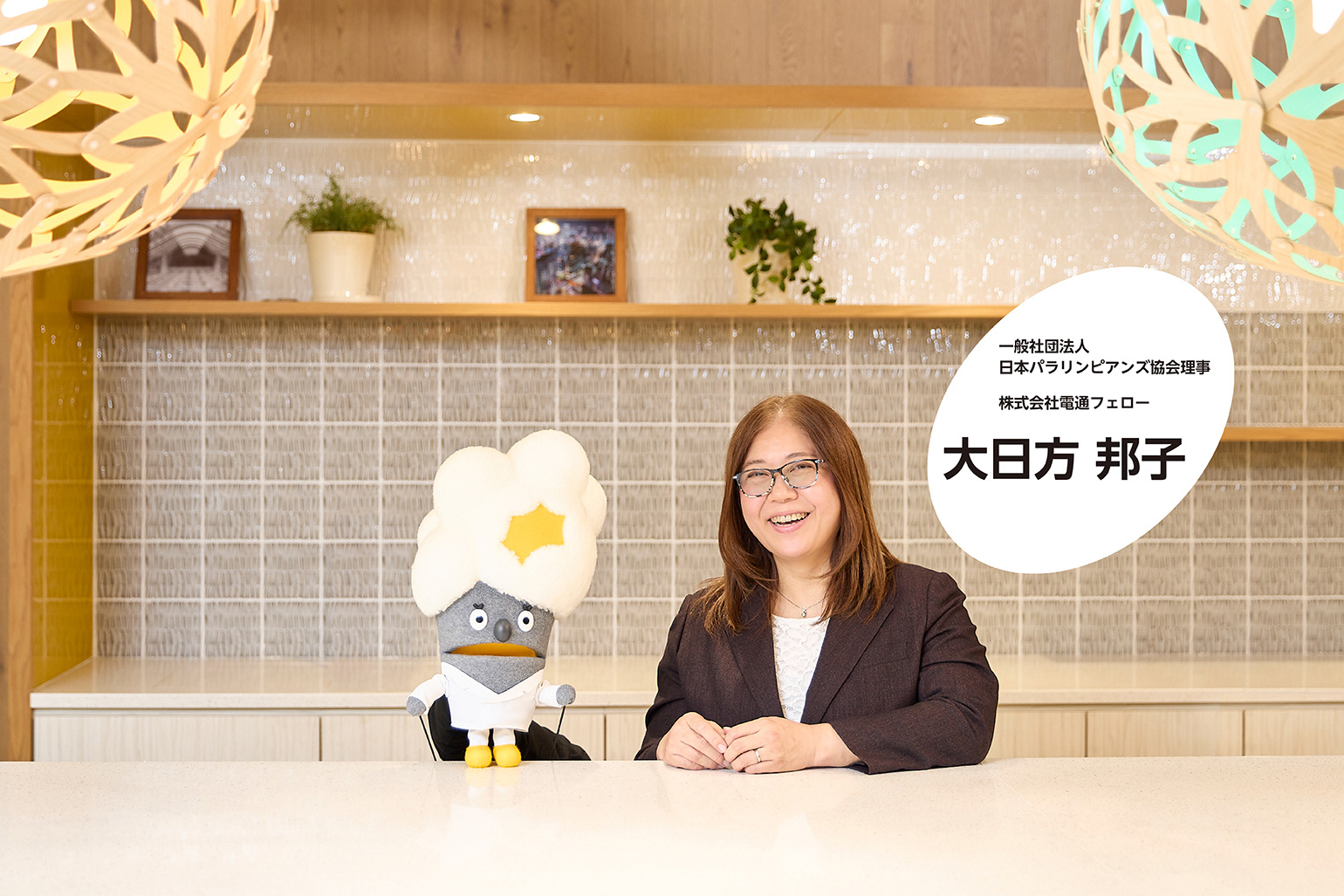
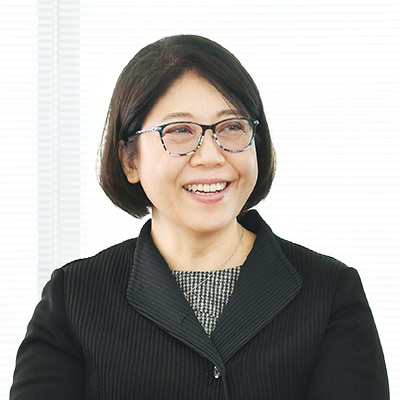
The "Sports Future Research Notes" series explores the value of sports through both qualitative and quantitative analysis. In the second installment, we spoke with Kuniko Obinata, a Paralympic alpine skier and Director of Dentsu Inc.'s Sports Future Research Institute, about the value of sports she observed throughout her athletic career and the direction the Sports Future Research Institute aims to pursue.
Sports Future Research Institute Launched in July 2025 under the slogan "Let's expand sports." It explores the true value of sports by leveraging Dentsu Inc.'s accumulated expertise in sports business while incorporating the knowledge and perspectives of diverse sports enthusiasts.
Discovering the Joy of "Sharing a Space" Through Sports
――How did you first encounter sports?
Dai-Nichi Co., Ltd.: I discovered the joy of moving my body in my final year of kindergarten. After being in a traffic accident at age 3 and spending about three years in the hospital, I started kindergarten wearing a prosthetic leg. It happened to be around the time of the sports festival, and I thought, "I want to do something too," so I challenged myself to do a pull-up on the horizontal bar.
The prosthetic leg weighed about 2 kilograms, and doing a pull-up with it wasn't easy. But through practice, I managed it. That made me incredibly happy. I vividly remember everyone around me cheering, "Amazing! Amazing!" That joy and the success experience of "I can do it if I try" became the origin of my relationship with sports.
In elementary school, I also played pickup baseball. We often didn't have enough players, so the kids would flexibly adjust the rules each time to make the game work and have fun. When I joined, they'd make me a designated hitter who only batted and used a pinch runner, or add an extra fielder when I was on defense. I learned that with creativity, you could make rules that let everyone enjoy the game.
――So those experiences of success and enjoyment led you to try skiing too, right?
Dai-Nichi Co., Ltd.: I first tried skiing in my second year of high school. Since you have to balance and slide on a single ski board about 7-8 cm wide, I fell constantly at first. When I fell, I couldn't get up by myself, and the support staff would help me up, but that required a lot of strength and was really tough.
I was gradually getting better and enjoying myself, but I wondered if the people supporting me were really having fun, drenched in sweat like that. Back then, partly due to bullying I experienced in middle school, I was distrustful of people and pretty prickly towards others (laughs). I ended up asking, "Are you really having fun, sweating like this?" They replied matter-of-factly, "It's fun to see someone do something they couldn't do before, and sharing that is incredibly rewarding."
I was a complete beginner, relying on them for my safety, but their answer made me realize it was okay to trust people. This experience changed me.Trusting others deepened our connection. We tackled challenging courses, got covered in snow, and had a blast together. Sharing those moments was incredibly fun. I believe "sharing the experience" is one of the core values of sports. Later, when I became a Paralympic athlete and then a coach, I repeatedly experienced the joy and happiness of sharing the moment. That was a major reason I became so deeply immersed in sports.
Becoming a medalist made me realize: "Sport can change society."
――Tell us about when you were selected for the Paralympic team.
Dai-Nichi Co., Ltd.: As a university student, I was selected for the Japanese team at the 1994 Lillehammer Paralympics. While I wasn't quite at the required level yet, it was positioned as a "development slot" with an eye on the Nagano Games four years later.
At Lillehammer, I met many outstanding athletes. A top American competitor at the time told me, "If you take the Paralympics seriously, you can change society." Inspired by those words, I decided to continue skiing after graduating from university. Back then, the environment surrounding parasports was completely different from today. All travel expenses and equipment costs were self-funded. I changed my plan to become a lawyer, got a job, and started juggling two careers: working while training on my days off.
――Did you feel society change after winning gold at the Nagano Games?
Dai-Nichi Co., Ltd.: Before winning gold in Nagano, it was rare even to see someone in a wheelchair on the streets.Ski resorts were even more so. But winning the medal made people aware that this sport existed, and changed how they viewed us athletes. For example, the atmosphere where people would avoid letting us ride lifts because it was "dangerous" shifted to them actively encouraging us to come practice more. I truly realized that by seriously engaging with the sport, achieving results, and communicating the journey to get there, you can significantly change society.
――Then, you won your second gold medal at the 2006 Turin Games.
Dai-Nichi Co., Ltd.: After not achieving the results I wanted at the 2002 Salt Lake City Games, that gold medal in Turin was one I finally grasped after eight long years. At the time, people around me said things like, "You've done so much already, isn't it enough?" Back then in Japan, sports for people with disabilities were often seen as part of welfare policies, so some people felt winning wasn't necessary.I asked myself what I wanted to do next. The answer I came to was that I wanted to dedicate myself solely to sports, even if just for a moment, rather than continuing to juggle two careers. Then, through a fortunate connection, Dentsu Inc. created an environment where I could continue skiing as part of my job.
I retired after the 2010 Vancouver Games. During that time, I was able to engage with sports in diverse ways—not just as an athlete, but also as a communicator at NHK and Dentsu Inc. This multifaceted involvement ultimately made sports more interesting to me. If I had only "played" sports, I might never have seen this level of fascination.
The Sports Future Institute's Challenge: Visualizing the Value of Sports
――You are currently challenging yourself with a new initiative called the Sports Future Institute. What do you aim to achieve there?
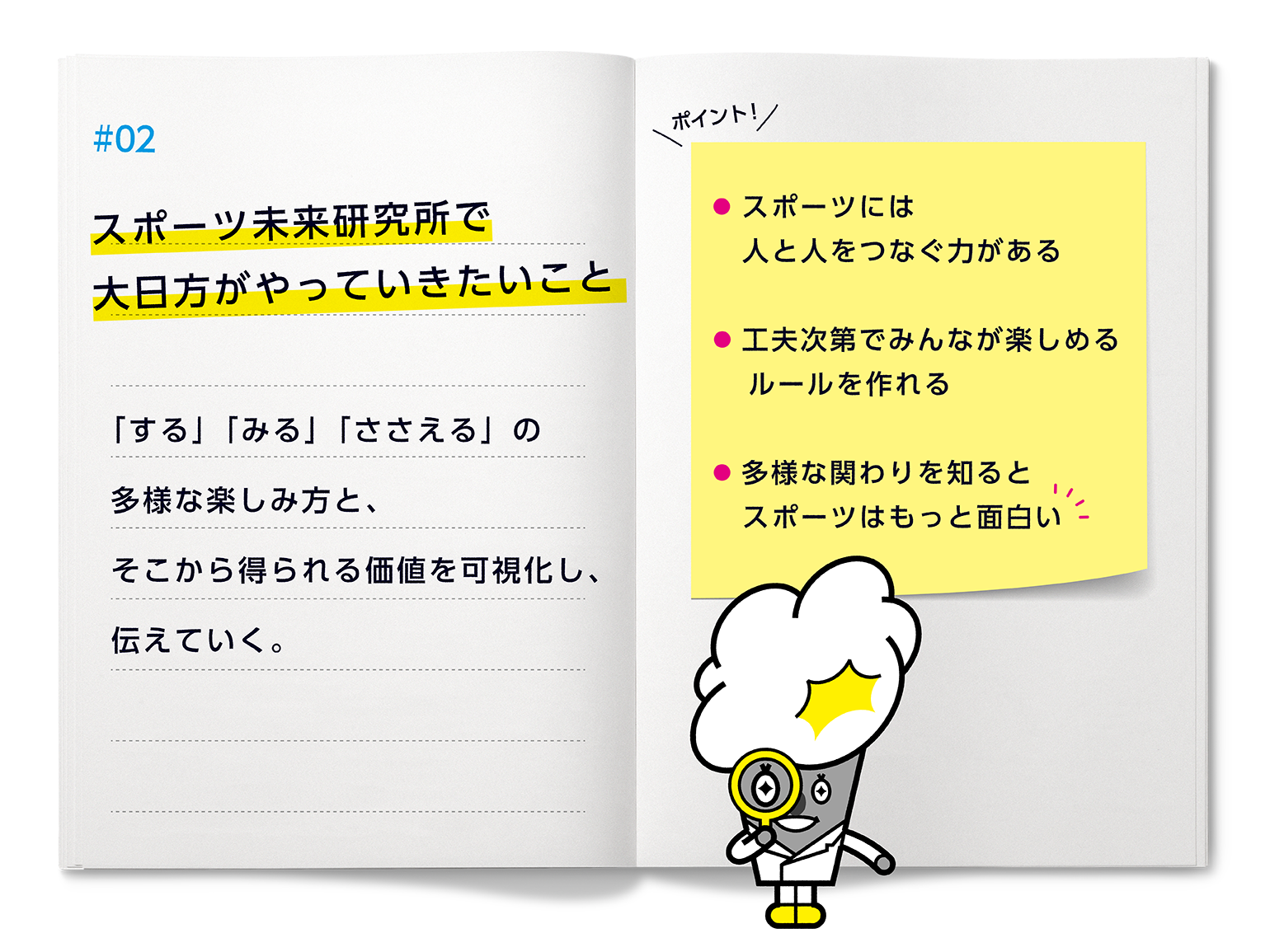
Dai-Nichi Co., Ltd.: I want to clarify the future value and role of sports. For many years, I've considered how to convey the appeal and excitement of sports.Sports offer diverse ways to enjoy them: "playing," "watching," and "supporting." My own enjoyment deepened through these varied connections with sports. I believe visualizing the perspectives of those who "play," "watch," and "support" could make sports even more enjoyable. Regarding "supporting," the sports business expertise within Dentsu Inc. isn't widely known. I want to actively share such insights with students through lectures.
Furthermore, while quantitative data on those who "play" sports has been accumulating, I also want to explore the quantitative aspects of "watching" and "supporting." For example, how long does the excitement and thrill of watching a sport last? Does it differ when watching alone versus with friends? Is there a difference in heart rate between watching on TV and watching at the venue? We are entering an era where we can demonstrate these things with data, so I expect we can provide evidence-based proof that sports contribute to well-being.It would be fascinating to convey the diverse ways of enjoying sports—playing, watching, and supporting—and the value gained from them.
――Finally, what do you consider the most important value of sports?
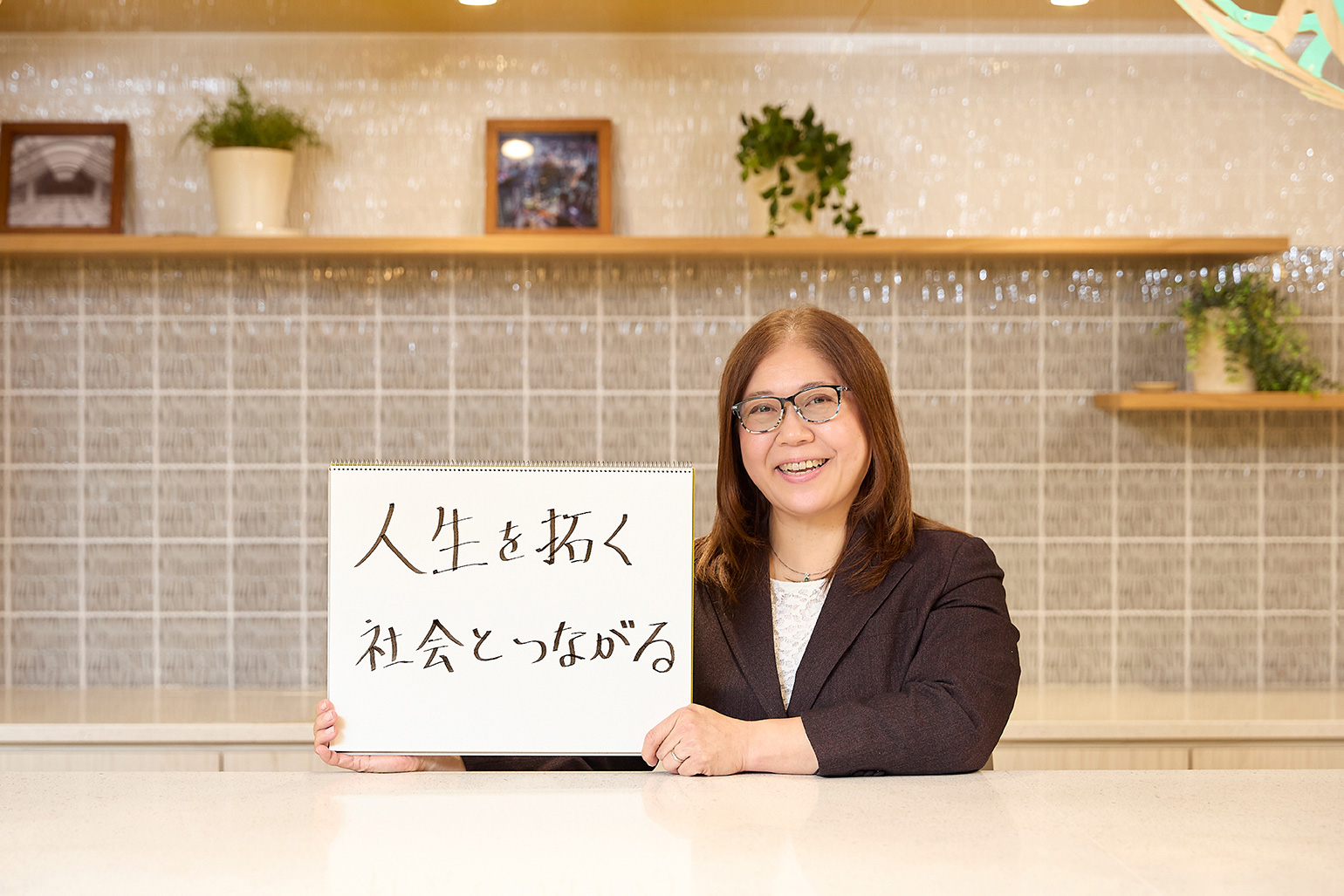
Dai-Nichi Co., Ltd.: "Opening up life. Connecting with society." This perfectly encapsulates my own relationship with sports. Sports opened up my life, and I learned how to face obstacles from sports.Sport enriches my life, and in the sense that it only happens because of the people around me, it also connects me to society. Here, "society" doesn't just mean the world in a broad sense; it includes the people next to me and those I do things with. I believe the value of sport lies in connecting with the people who share the space.
When I ask people who dislike sports why, it's often because they were slow, couldn't do it well, or were laughed at – experiences like that. I find that incredibly unfortunate. There's joy in finishing a race, even if you're not fast. I want to convey that to children. I just want to eliminate sports aversion.
Just as we used to adapt rules to make games fun for everyone when we were kids, we should think beyond the "faster is better" mindset and create rules that everyone can enjoy. It's interesting to compete in things like "Yuru Sports" (*), where you see how slowly you can move. I want children to experience the joy of moving their bodies from a young age.
For people who are indifferent to sports or feel distant from them, expanding the diversity of ways to enjoy it or communicating its positive health impacts might spark their interest. I hope that through sports, we can create a society where many people feel life is enjoyable and where people feel it's a good place to live.
※Yuru Sports: A new type of sport advocated by the World Yuru Sports Association, designed for everyone to enjoy regardless of gender, age, or athletic ability. Over 100 events have been developed so far.
Upcoming Schedule
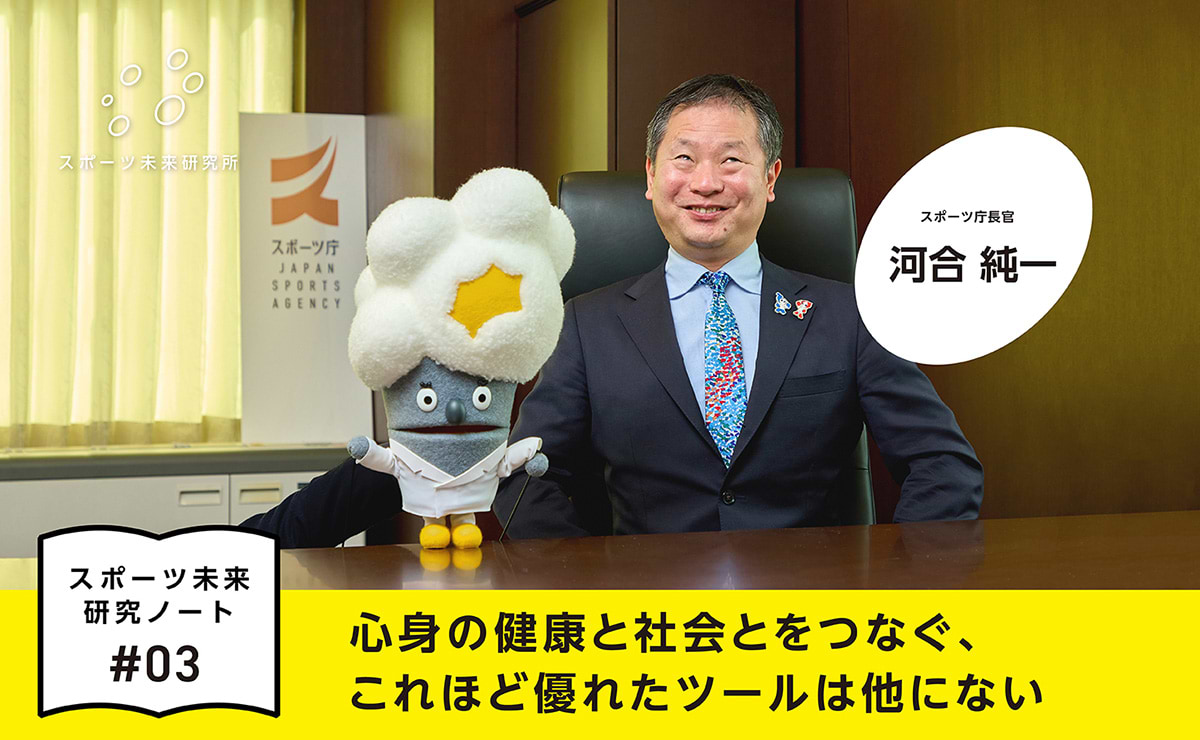
Next time, we interview Junichi Kawai, Commissioner of the Japan Sports Agency. We'll hear about his personal sports experiences and how Japanese society should engage with sports moving forward.
Director, Japan Paralympians Association / Fellow, Dentsu Inc.
Former Japanese Paralympic Alpine Ski Team member. Began his skiing journey in his second year of high school after encountering chair skiing. Competed in five Winter Paralympic Games from Lillehammer 1994 to Vancouver 2010. Won a total of 10 Paralympic medals, including Japan's first-ever Winter Games gold medal at Nagano 1998.Served as Team Leader for the Japanese delegation at the Milano-Cortina 2026 Winter Paralympics. Joined NHK in 1996 as a director, working on educational programs and Paralympic broadcasts. Joined PR Consulting Dentsu Inc. in 2007. Became a Dentsu Group Fellow in 2022 and assumed current position in 2025. Holds numerous public positions including Director of the Japan Para Sports Association and Director of the Japan Paralympians Association.

 Visualizing the value of sports. "Sports Future Research Notes" [2/7]