
Note: This website was automatically translated, so some terms or nuances may not be completely accurate.
 What kind of stores make Gen Z want to go shopping? Let's ask Gen-Kyun! [1/2]
Do Gen Zers like cluttered stores? Purchasing behavior revealed by the honest survey
As Generation Z becomes the core of future purchasing, how do they view shopping at physical stores?
This article answers that question by presenting the results and analysis from the "Gen Z's True Feelings About Retail Survey"!
The survey was conducted by Dentsu tempo Inc. and Dentsu Retail Marketing Inc., two companies within the Dentsu Group with particular expertise in retail. It was carried out as part of a marketing project by these two companies, aptly named "Genekyun."
Genecun is a project centered around Gen Z members. It aims to explore Gen Z's consumption behavior based on the members' own experiences, insights, and unique perspectives, and to propose new retail concepts aligned with Gen Z's values.
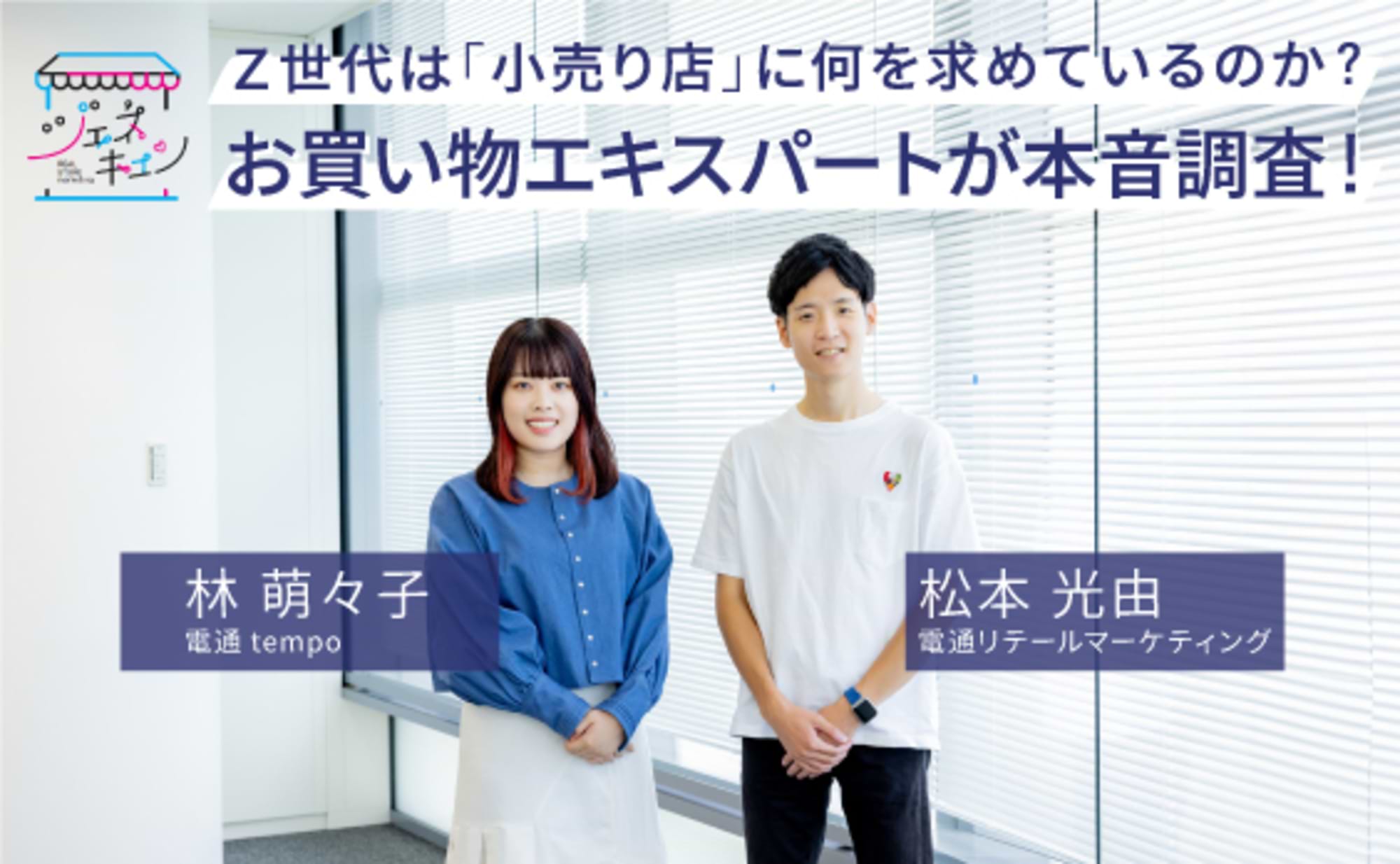
We spoke with Momoko Hayashi of Dentsu tempo Inc. and Mitsuyoshi Matsumoto of Dentsu Retail Marketing Inc. about the real values Gen Z holds toward shopping, as revealed by the candid survey.
*See survey overview at the end of the article
<Table of Contents>
▼Want to know Gen Z's true feelings about "shopping"?
▼Gen Z actually likes cluttered store displays!?
▼Gen Z makes a lot of "unplanned" purchases!?
▼Gen Z trusts influencers and friends more than companies
▼Are "in-store promotional tactics" effective with Gen Z?
Want to know Gen Z's true feelings about shopping?

──Please introduce yourselves and your respective companies.
Hayashi: As a Marketing Planner at Dentsu tempo Inc., I develop proposals to solve challenges for the retail and foodservice industries. For example, I plan seasonal promotions and events for family restaurants. Being Gen Z myself and enjoying researching trends among my peers, I specialize in projects targeting Gen Z.
Dentsu tempo Inc., where I work, is a specialized company providing marketing and promotions centered around the storefront for the retail and foodservice industries. Our strength lies in integrated digital and offline promotions, enabling us to develop strategies that capture evolving consumer behavior.
Dentsu tempo Inc.
https://www.dentsu-tempo.co.jp/
Matsumoto: I work as a data analyst at Dentsu Retail Marketing Inc. My daily tasks involve analyzing purchase data from a consumer-centric perspective using ID-POS data from supermarkets and receipt data.
With ID-POS linked to individual IDs, we can perform privacy-protected analyses at a granular level, such as: "People who bought this brand last year started buying this product this year," or "Customers who bought this item also placed these other products in their cart." Receipt data allows us to analyze "shopping patterns"—for example, what other stores customers who visited this location also frequent.
Dentsu Retail Marketing Inc. specializes in retail promotions, sales promotion solutions utilizing retail media, and field grounders (store visits and in-store sales). Its particular strength lies in conducting verification based on various data analyses, formulating hypotheses, and developing plans.
Dentsu Retail Marketing Inc.
https://dentsu-rm.co.jp/
Hayashi: As their names suggest, both companies possess extensive expertise in stores and retail. For example, Dentsu Retail Marketing Inc. handles research and analysis while Dentsu tempo Inc. manages planning, allowing the two companies to cover the entire process. Beyond this Genecun project, they often collaborate on other work as well.
──It's truly a team of retail specialists. So, what exactly is Genecun, created by these two companies?
Hayashi: Genekyun is a project that combines the expertise of Dentsu tempo Inc. and Dentsu Retail Marketing Inc. to develop in-store initiatives that resonate with Generation Z.

Currently, there are four Genecun initiatives.

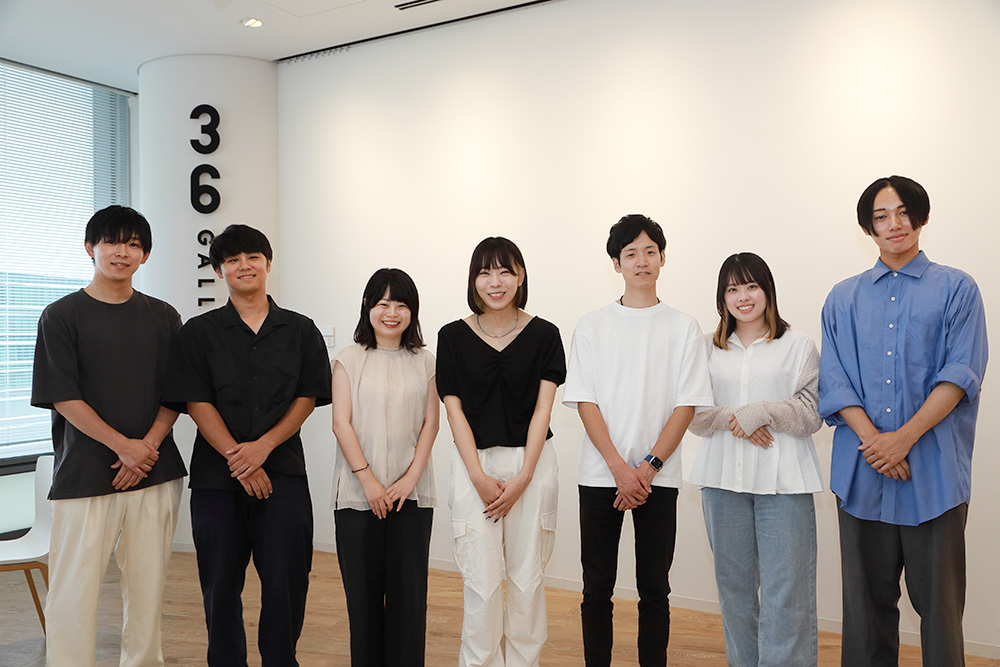
Hayashi: The core Genecun team consists of two Gen Z employees selected from each company, with additional members joining based on the specific initiative. For this candid survey, we brought in Matsumoto-san, an expert in survey analysis.
──What led to this particular survey?
H ayashi: Our client wants Generation Z, who will be the main drivers of purchasing in the next era, to visit their stores. Therefore, to explore Generation Z's purchasing behavior and gain ideas for creating better sales floors, we conducted a survey in the fall of 2023.
Gen Z actually liked cluttered store displays!?

──Could you share some of the most striking insights about Gen Z revealed by the honest survey?
Hayashi: There are several, but one major finding was that "Gen Z prefers cluttered store displays with lots of products." As a member of Gen Z myself, this result was actually a bit surprising. I had the image that Gen Z prefers things neatly organized and that many are minimalists who don't own much stuff.
Matsumoto: For the question "Do you like stores that are cluttered and have lots of products?", 47.4% of Gen Z respondents answered "Agree" or "Somewhat agree" – nearly half. In contrast, only 27.6% of other generations agreed, a 19.8-point gap. The trend was quite clearly divided.
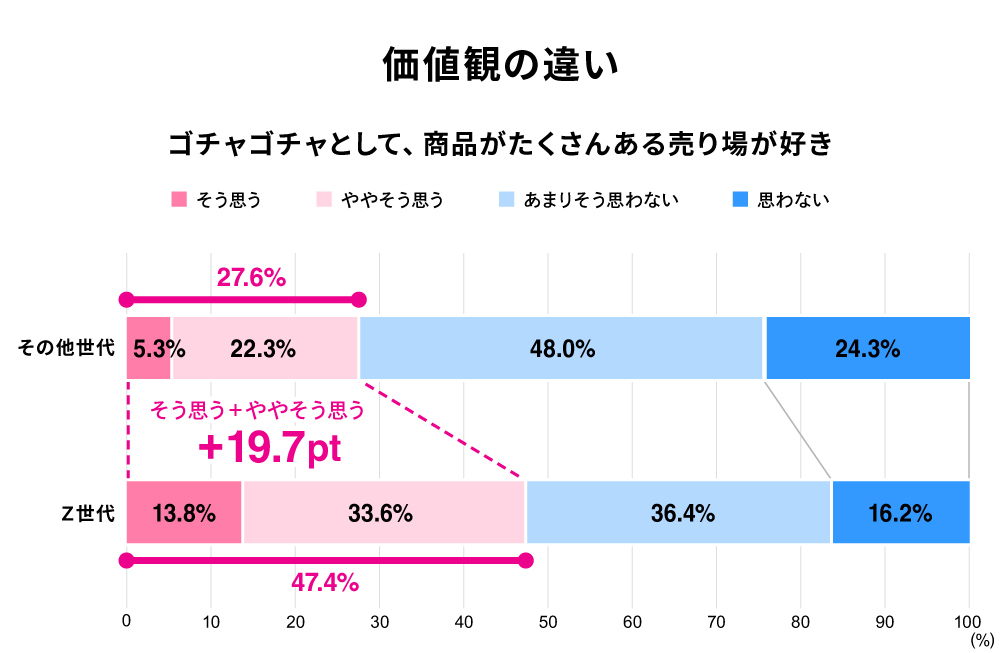
※Percentage composition is rounded to the second decimal place, so totals may not always add up to 100%. The same applies below.
Hayashi: We frequently heard Gen Z say things like, "I go to stores packed with products to find things I like or to hunt for trends." It seems they visit physical stores to see trends they spotted on social media with their own eyes, and then discover even more trends while there.
When we say "cluttered stores with lots of products," we don't mean it negatively—we're imagining fun stores where shopping feels like a treasure hunt.
──You mean stores like Don Quijote or Village Vanguard?
Hayashi: Yes. Other stores Gen Z frequently visit include 3COINS, Loft, Hands, and Plaza. All feature abundant merchandise on the shelves, making them places you just want to visit.
Matsumoto: While "fun shopping environment" was a common factor for store selection across generations, Gen Z respondents also frequently cited "understanding trends" and "being Instagrammable."
──Does "Instagrammable" refer to both the store and the products?
Hayashi: Yes, recently stores have started designing POP displays to be SNS-friendly and allowing in-store photography. They also promote SNS-friendly products at the store. For example, when launching a new cheese product, they might announce, "Create and post recipes using this cheese!"
──So they're aiming for a cycle where customers post photos of the photogenic store to SNS, and people who see those posts then visit the store.
Hayashi: I think so. Recently, at Dentsu tempo Inc., we've seen an increase in client requests like, "We want ideas that really resonate with Gen Z and spread rapidly on social media."
Gen Z makes a lot of "unplanned" purchases!?
──What insights did you gain regarding their purchasing behavior?
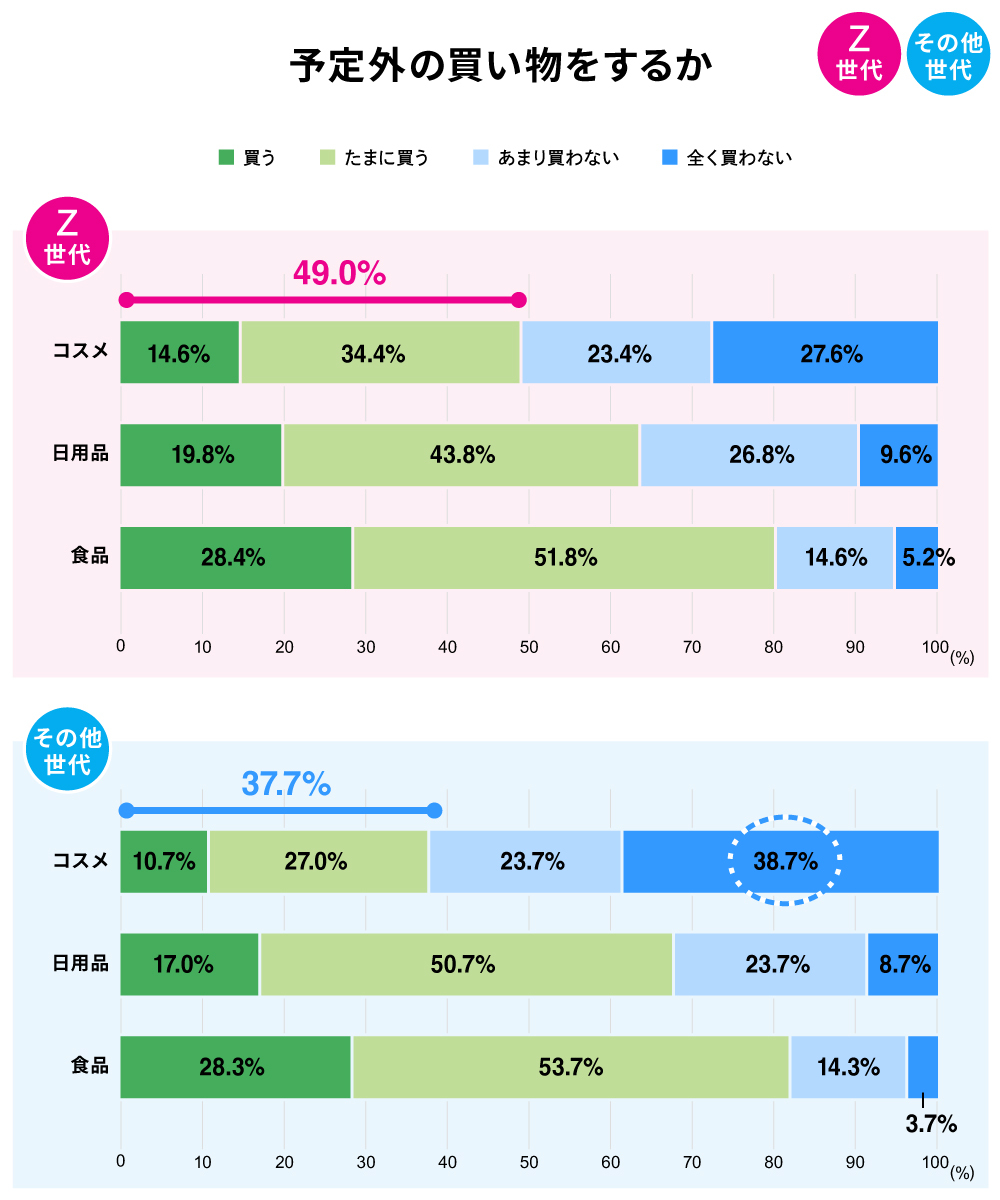
Matsumoto: The percentage of "unplanned purchases" was higher among Generation Z than other generations. This trend was particularly pronounced in the cosmetics category, showing an increase of +11.3 percentage points compared to other generations.
──I see. So does that mean Gen Z tends to "spend money frivolously"?
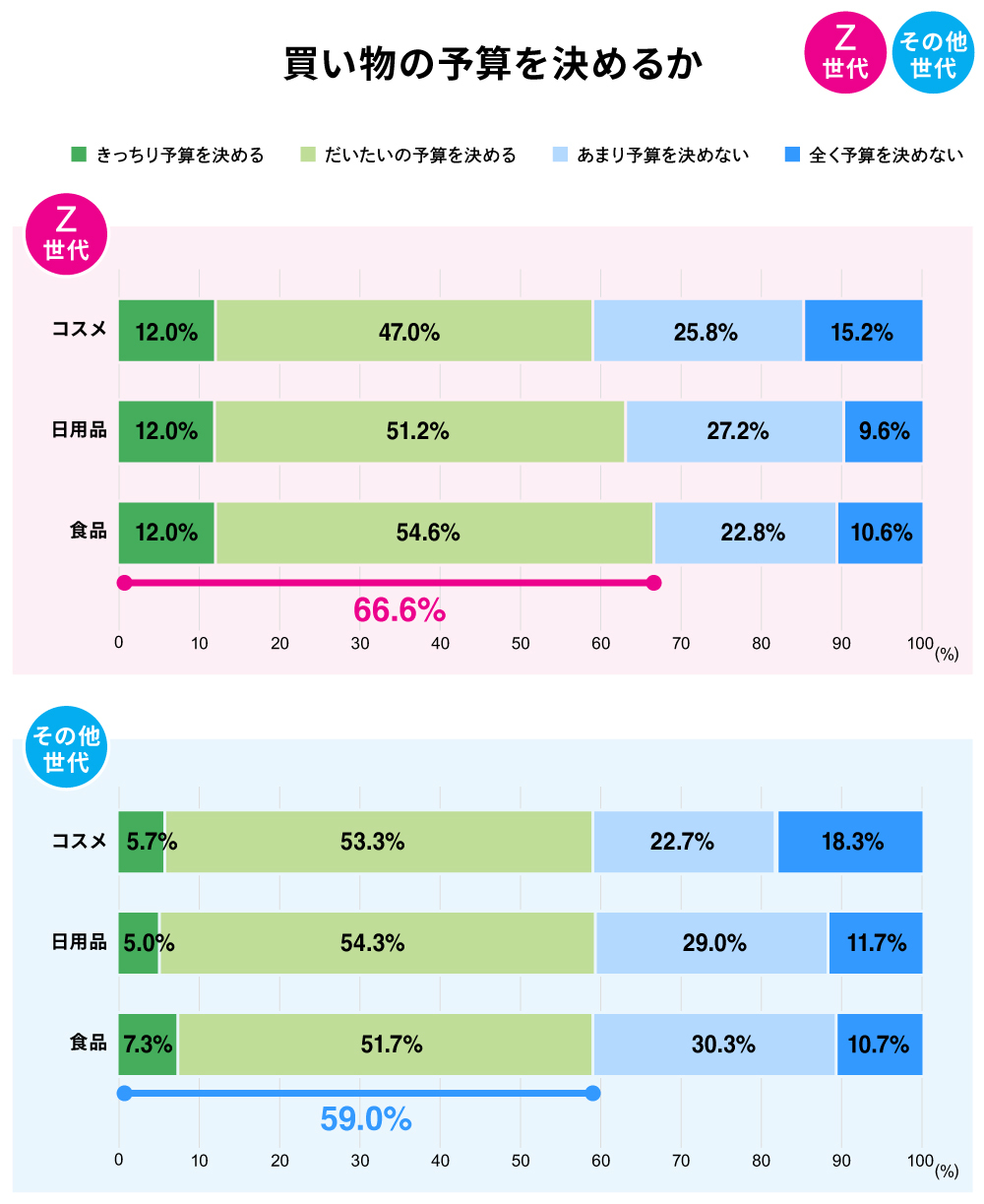
Matsumoto: That doesn't seem to be the case. Actually, the percentage who answered "When I go shopping, I set a strict budget" is also higher than other generations.
──It's a bit surprising that they set a strict budget but still make unplanned purchases. Why do these unplanned purchases happen?
Matsumoto: What stood out in the survey was the response "because it was a collaboration with a favorite celebrity or character." We asked about three categories: "food," "daily necessities," and "cosmetics." Among Gen Z, the response "favorite celebrity or character..." was significantly higher across all three categories.
Hayashi: So, they go to the store with a budget and specific items in mind, but then they see a pop-up for their favorite celebrity or a collaboration with their favorite character, and they just can't help but buy something. Having a favorite celebrity or character is just a given for Gen Z now. When it comes to their favorites, I guess their purse strings just loosen up.
──Earlier, you mentioned unplanned purchases were particularly common in the "cosmetics" category. What specific scenarios come to mind?
Hayashi: This is from my own experience. For example, when I entered a Plaza store, there's a monitor at the entrance, right? It was playing a video featuring my favorite artist, who was saying, "This product is recommended." That made me think, "Huh? They had this collaboration? I didn't know!" and I got really excited (laughs). Actually, things like that are often things you only find out by going to the store in person.
Matsumoto: Before the survey, I had this preconception that "digital native Gen Z must be shopping efficiently on e-commerce sites." But now I think they might actually be seeking the shopping experience as a real-world event—enjoying the fun atmosphere of the store or getting that strong sense of "I bought this."
In other words, the in-store shopping experience has this "experience-oriented consumption" aspect to it. This time, we also asked about "reasons for buying products in-store," and among Gen Z, there were quite a few responses like "because I want to be served by staff" and "because I can choose with friends or family." You could say that interacting with people is also a kind of event. For Gen Z, the appeal of physical stores lies in gaining these experiential consumption moments, and based on the encounters and events that happen there, "unplanned purchases" seem to occur.
Hayashi: Indeed, they seem highly interested in limited-time events and pop-up stores held in-store. Some of my peers also prefer shopping in-store whenever possible. They say that even for the same product, the emotional attachment to it differs between buying with one click online and buying in-store after a salesperson helps you choose a color that suits you. The key point is creating "memories of enjoying the shopping experience itself as an event" – something you can't get from e-commerce.
Gen Z trusts influencers and friends over companies

──Regarding product selection, are there any insights unique to Gen Z?
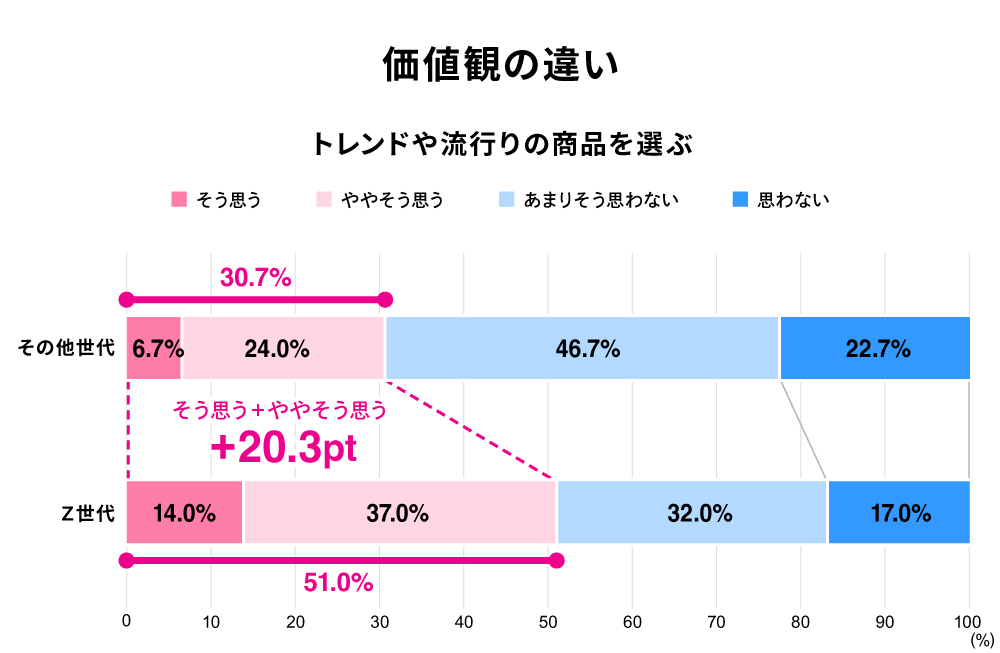
Matsumoto: Compared to other generations, Gen Z showed a significantly higher tendency to choose "trendy products." Over 50% of Gen Z respondents answered "agree" or "somewhat agree" to the question "Do you consciously choose based on trends or popularity?"—more than 20 percentage points higher than other generations.
Hayashi: I believe this is because Gen Z has been familiar with social media since childhood, making them sensitive to the ever-changing trends. For students, they also have frequent opportunities to get information from friends daily. Information spreads much faster and wider on SNS than in the past.
Furthermore, Gen Z's purchasing behavior often follows a set sequence: "check trends → buy the product → post it on SNS." It's not just about buying and using what they want; it's equally important to have others see what they've purchased.
──So, since shopping is fundamentally about "showing it to everyone," they're highly trend-conscious, right?
Matsumoto: I think so. The preference for "SNS-friendly displays" mentioned earlier is likely related to their greater emphasis on trends compared to other generations. Also, Gen Z seems particularly active in gathering information on SNS. Looking at survey responses for "I gather information online before purchasing a product," the combined percentage of those who "strongly agree" and "somewhat agree" is 11.3 points higher than other generations.

Hayashi: Regarding the background of their enthusiasm for information gathering, Generation Z tends to be thrifty and strongly motivated by the desire to "avoid making mistakes when shopping." To avoid mistakes, I think they thoroughly research reviews on social media beforehand, set a budget, and then go to the store.
──What platforms does Generation Z primarily use to gather information?
Hayashi: While this survey didn't ask for specific platform names, from conversations with Gen Zers, it varies by product category. They routinely use multiple social media platforms together. For example, YouTube has videos where people spend considerable time trying on clothes. Instagram has accounts that curate newly released food items.
During a workshop we held at Dentsu tempo Inc., when asked "Whose information do you trust the most?", every Gen Z participant answered, "We trust information from friends or influencers we like more than from companies." Moreover, it seems many find reviews from people like niche micro-influencers – "people whose lives feel relatable and close to their own" – more trustworthy than those from major influencers.
Are in-store promotions more effective with Gen Z?
──Despite being digital natives, Gen Z actually has many reasons to visit physical stores.
Hayashi: As we've discussed, they largely view shopping as an "experience-based consumption"—seeking interactions with store staff and discovering new trends. Therefore, I believe there are many opportunities to approach Gen Z with in-store promotions.
Matsumoto: Since Gen Z has less shopping experience than older generations, they seem to want guidance on what to buy and how to avoid "mistakes." If we can implement promotional strategies in-store that effectively support them in this area, it should be quite effective.
──Do you have any ideas for interesting promotional strategies?
Hayashi: While having a wide variety of products contributes to the fun of shopping, it can also make it hard to identify what's currently popular. That's why I think POP displays showing "sales rankings" would be useful. But not just overall sales rankings – something more specific, like "Top Cosmetics Currently Trending Among 20-Somethings Who Love Korea," broken down by age group and category, would make it easier for shoppers to find what they want.
Matsumoto: This strays slightly from the storefront discussion, but I feel initiatives to engage younger generations like Gen Z are also crucial for sports content like professional baseball. We see collaborations producing themed merchandise and items targeting fans who support specific players. Also, thinking about "avoiding disappointment," I feel it's important to share information that lowers the barrier to attending games after sparking interest through collaborations. By promoting viewing styles tailored to different purposes, we can offer a satisfying experience without disappointment.
──The broader concept of having a favorite seems key to capturing Gen Z's hearts. Thank you for today!
<Editor's Note>
Surprisingly, Gen Z prefers cluttered sales floors and wants to soak up the shop's atmosphere. They want to choose products while seeing promotions for "favorites" they can only encounter there, chatting with staff, and consulting with friends. In other words, shopping has become an "experience-based consumption." Being such a place might be the charm of physical stores that e-commerce sites lack.
Next time, we'll hear from a Gen Z planner about creating emotionally engaging store experiences. Stay tuned!
[Survey Overview]
Gen Z's True Feelings About Retail Survey Report
Surveyed shopping values and behaviors at four types of stores: "Supermarkets," "Convenience Stores," "Drugstores," and "Variety Stores."
・Survey Purpose: To understand Gen Z's shopping values and actual behavior in physical stores
・Survey Period: Thursday, November 8, 2023 - Friday, November 9, 2023
・Survey Area: Nationwide (Men and women aged 15–27 and 30–59 who visit any of these stores at least once a month)
・Survey Method: Online research
・Valid Responses: 800 ※Gen Z: 500 ※Composed of 250 students and 250 non-students / 100 in their 30s / 100 in their 40s / 100 in their 50s)
Check out more survey data on the Dentsu tempo Inc. website!
https://www.dentsu-tempo.co.jp/case/

Was this article helpful?
Share this article


Newsletter registration is here
We select and publish important news every day
For inquiries about this article
Author

Momoko Hayashi
Dentsu tempo Inc.
Marketing Planning Department
Associate Planner
Articles by this person
Mitsuyoshi Matsumoto
Dentsu Retail Marketing Inc.
Retail DX Division Retail DX Department 2
Data Analyst