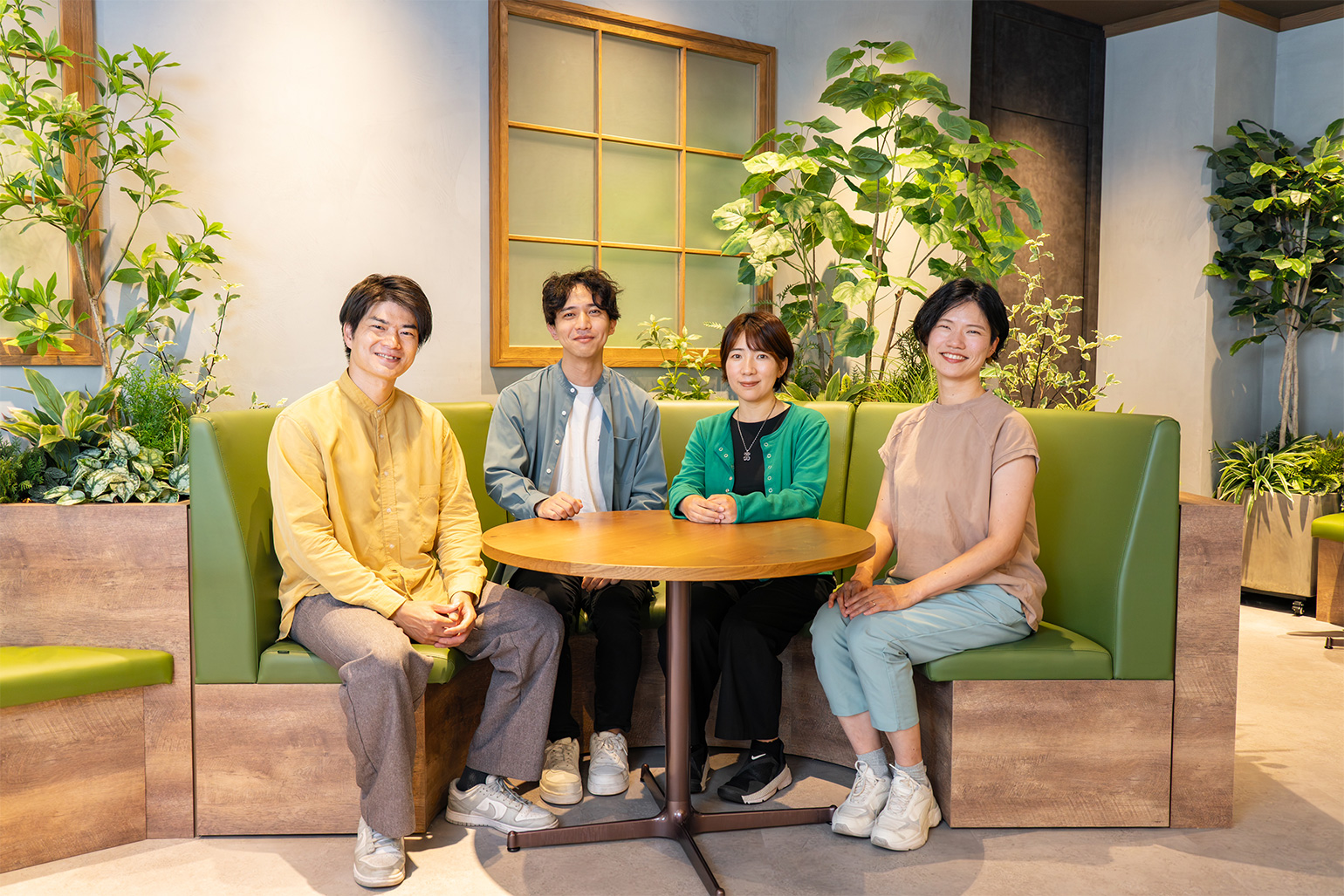
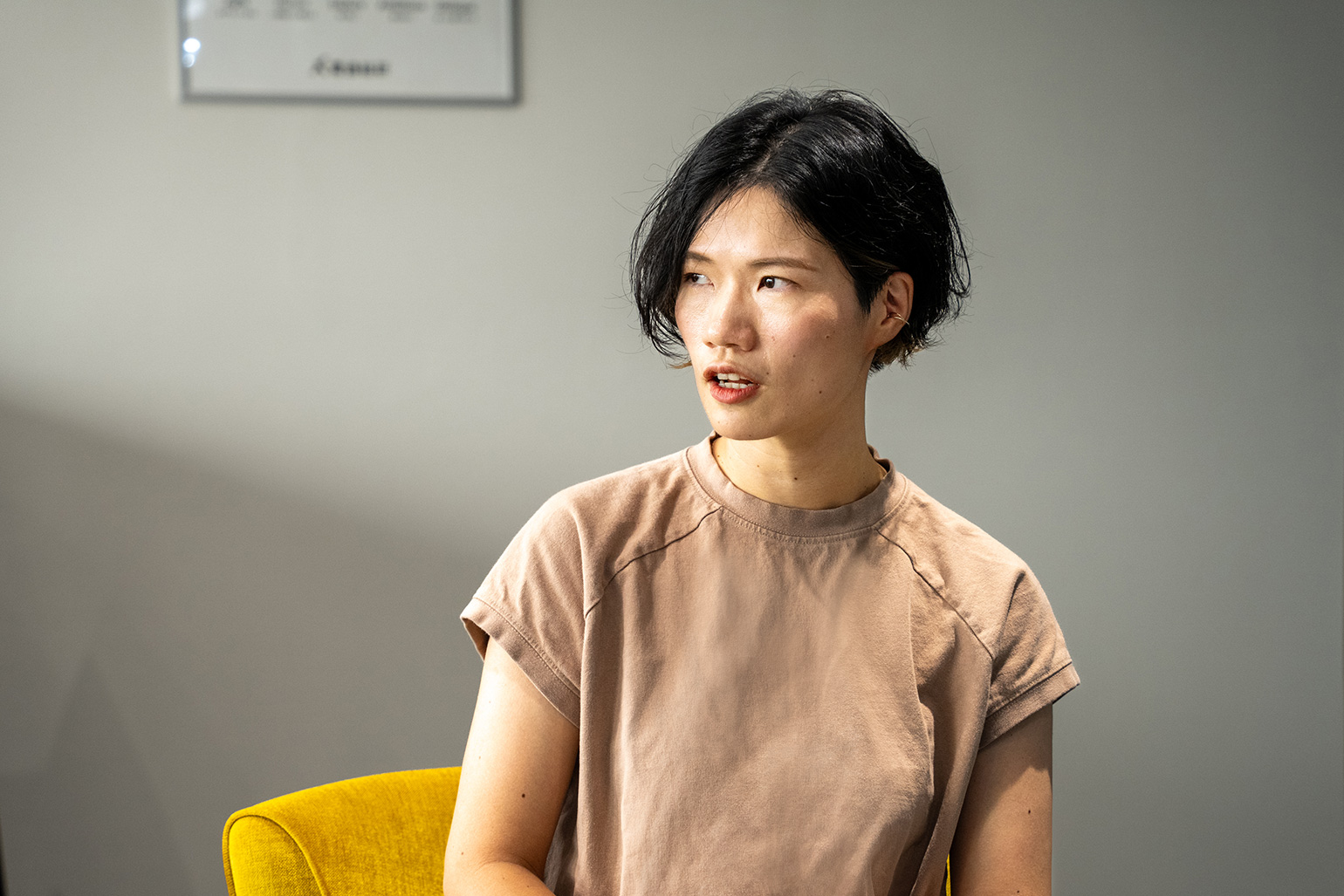
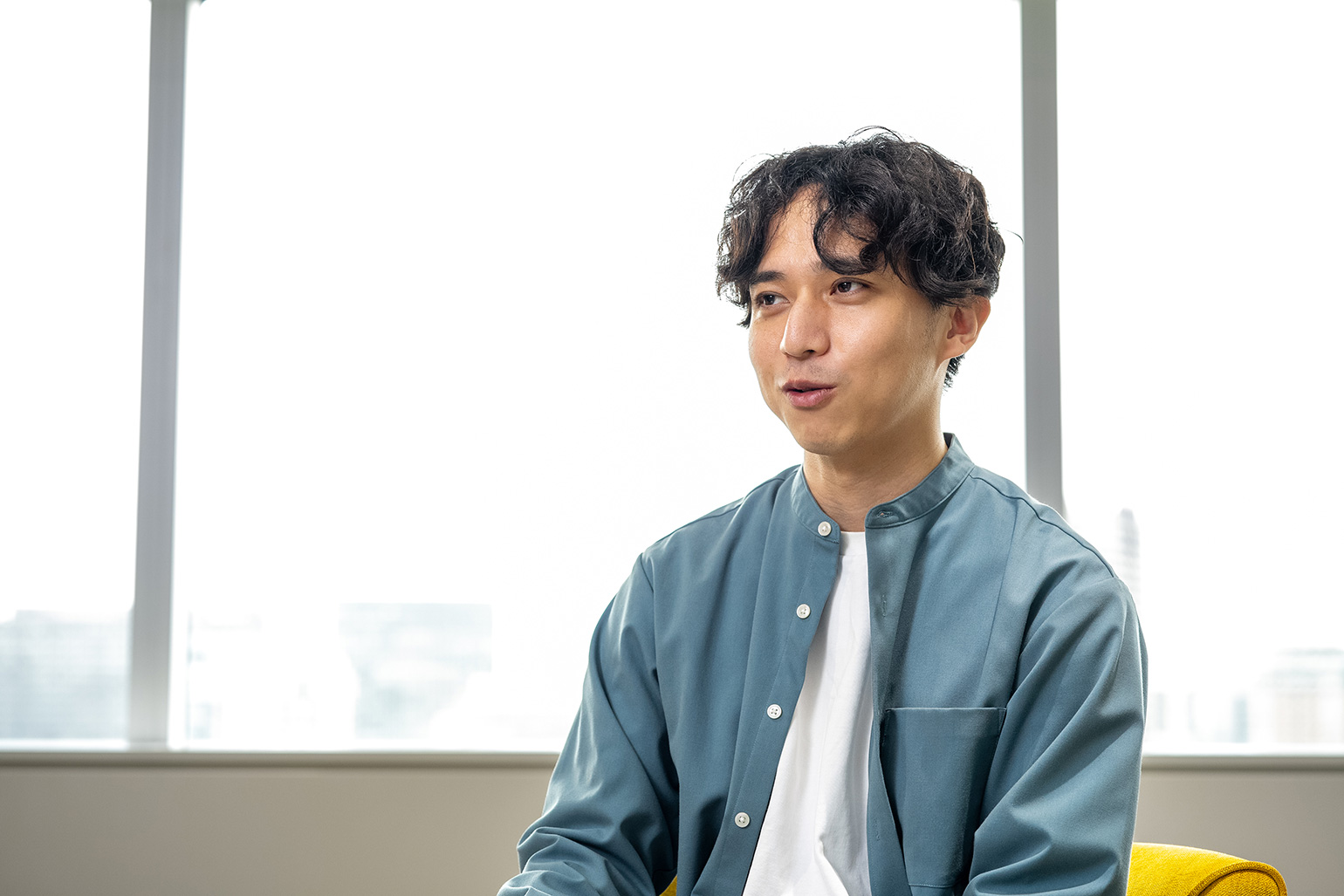
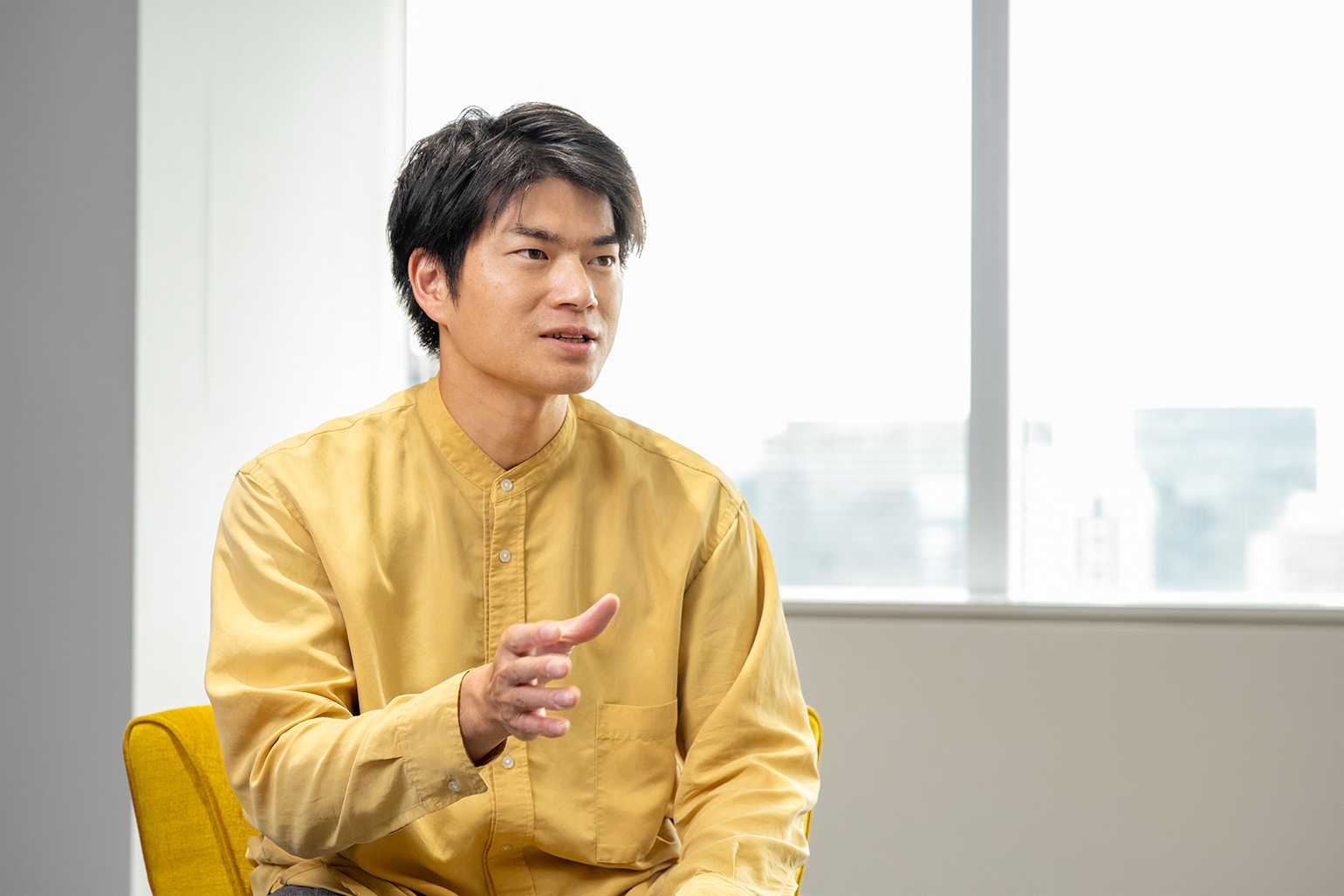
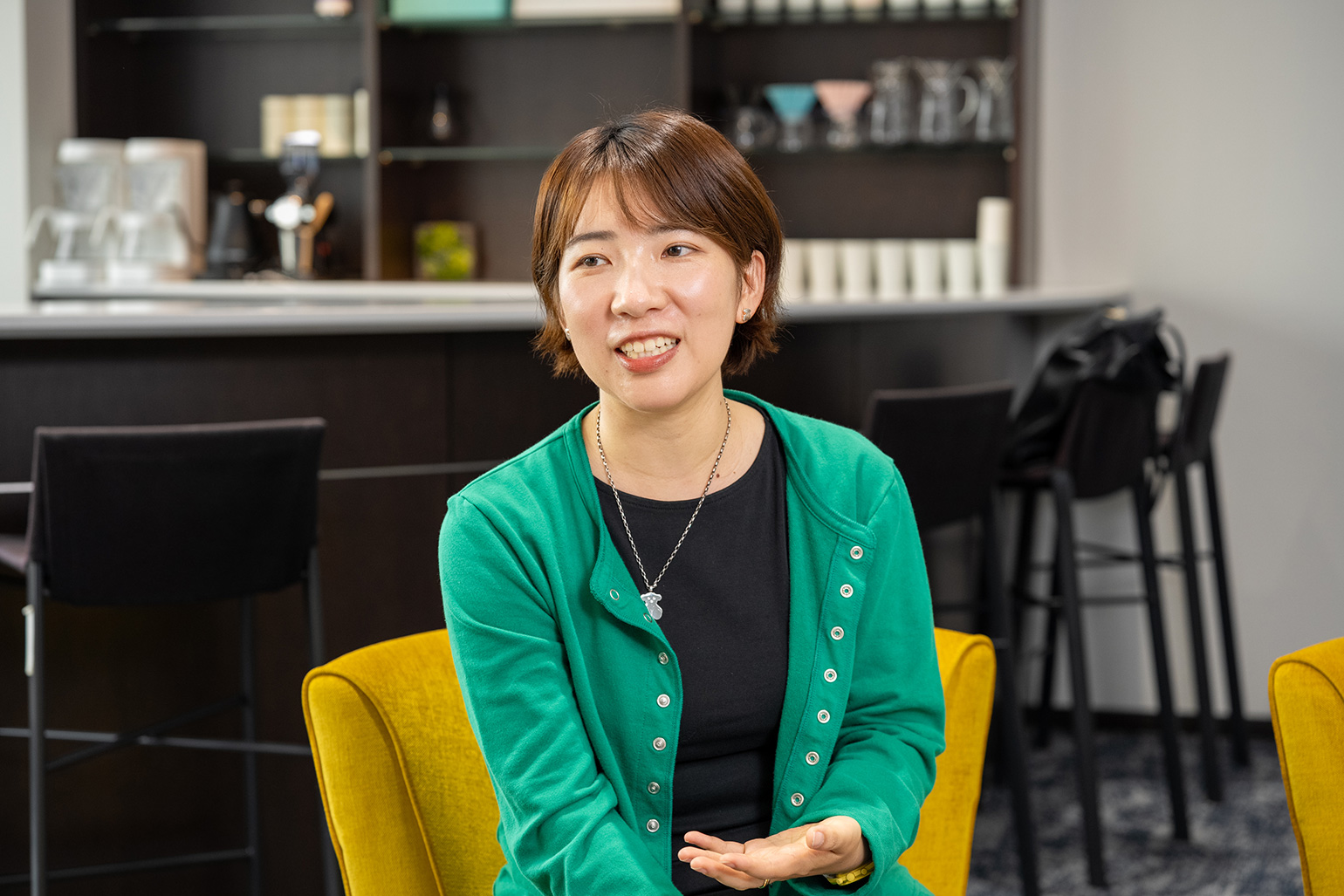
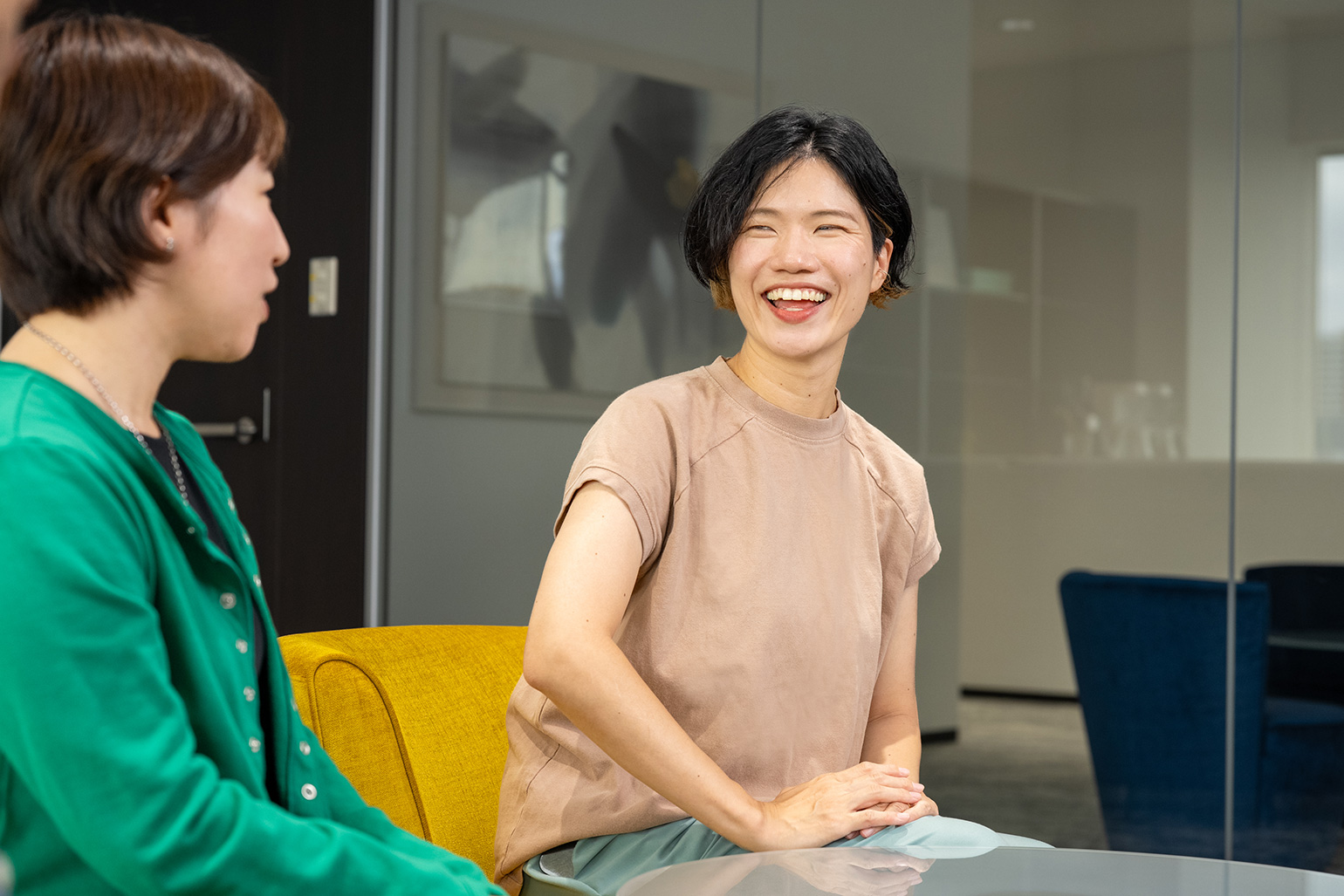
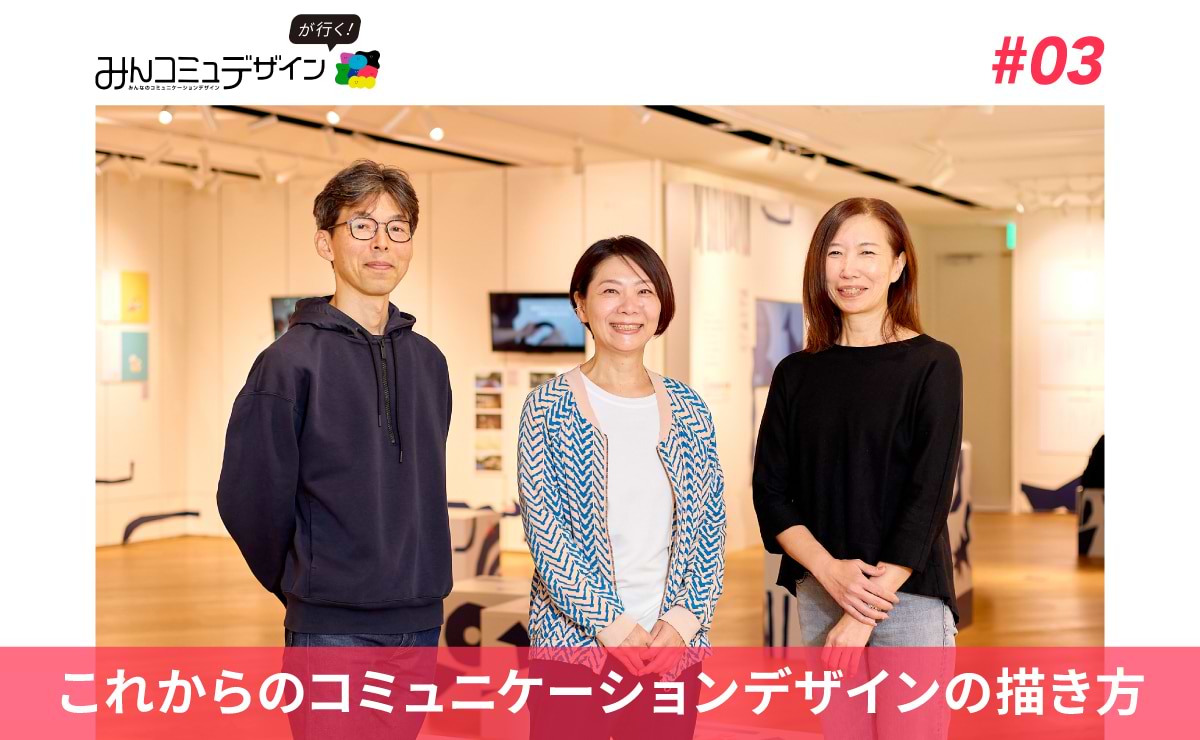
Participants in this roundtable discussion. (From left) DENTSU SOKEN INC.: Takeshi Iida, Keisuke Fukuyama, Natsuki Shibata, Yuri Fujisaki.
Dentsu Inc., in collaboration with eight domestic Dentsu Group companies, has created the " Everyone's Communication Design Guide" (hereinafter referred to as the Min-Comu Guide), aiming to realize communication that leaves no one behind. It was made publicly available starting January 28, 2025.
In this series, members of the Min-Comu Secretariat will introduce examples that contribute to diversity and inclusion in communication while delving deeper into their social significance.
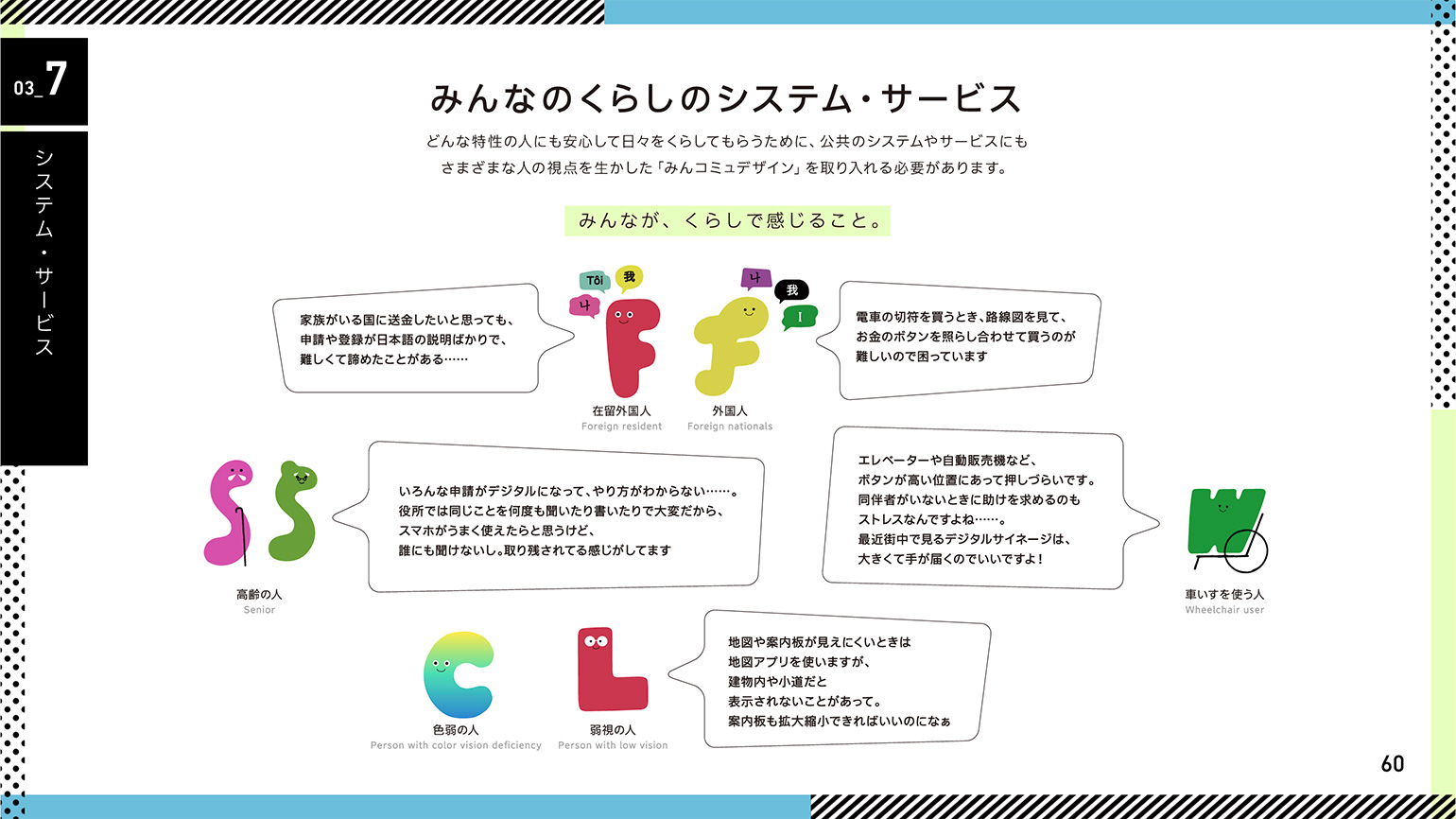
In today's world where digital technology permeates every aspect of life, ensuring that systems and services can be used with confidence by people with diverse characteristics is a crucial perspective.
This installment focuses on the initiatives of DENTSU SOKEN INC., which develops systems and provides services for businesses, local governments, and the daily lives of citizens. We introduce the usefulness and societal potential of UI design that considers not only appearance and functionality but also ease of use and comfort, using concrete projects as examples.
Achieving "ease of use for everyone" requires a user experience perspective
Fujisaki: Today, we've gathered everyone for a roundtable discussion on the "Mincomu Guide," a project in which DENTSU SOKEN INC. also contributed. This time, I'd like to explore with you the potential changes for society that can occur by incorporating an inclusive perspective into IT system mechanisms and UI design.
First, brief introductions. I'll start. I'm Fujisaki from the Cross Innovation Division's UX Design Center (UXDC). UXDC is a cross-company design organization focused on designing systems and services prioritizing user experience (UX). As a designer, I handle UI design and related tasks from the end-user perspective.
Fukuyama: I'm Fukuyama from the Smart Society Center. The Smart Society Center is an organization that provides systems and solutions to local governments. I primarily handle sales for the administrative procedure application management system " minnect" and promote alliances with various vendors.
Iida: I'm Iida from the Cross Innovation Headquarters Solution Development Center. As a business producer for new solution development, I handle business development for "MAFA gumi," a creative tool for employment of people with disabilities, and propose new initiatives.
Shibata: I'm Shibata from the Work Support Department, Corporate Headquarters. The Work Support Department handles hiring, task allocation, management, and support for individuals with disabilities. I am responsible for management duties and related tasks.
Fujisaki: Thank you. Let's get right to the main topic. DENTSU SOKEN INC. primarily engages in planning, developing, maintaining, and operating solutions tailored to the needs of corporations, local governments, and societal challenges. When actually planning and developing these solutions, we place great importance on proposing comprehensive solutions. This includes considering what functions and UI should be provided from the perspective of the end-users who will utilize the system, as well as what kind of operation and service would be optimal.
Recently, it has become increasingly important to adopt perspectives that recognize diverse characteristics and needs among recipients—such as age, disability status, gender, and nationality—across various business activities.
Members of the UXDC within DENTSU SOKEN INC. participated in formulating the "Min-Commu Guide." They were responsible for planning and producing the "Systems and Services for Everyone's Daily Life" page.
Iida: From that perspective, it means that in system development, simply pursuing functionality or packing in lots of content doesn't automatically translate to ease of use or user satisfaction, right?
Fujisaki: Exactly. It's not just about the system's users, but also considering who the operators are and what actions they take. While we often talk about user experience, I believe it will become increasingly important going forward to design systems and UI holistically, taking these factors into account.
The "minnect" administrative procedure application management system for local governments, featured in the "mincommu guide" case studies, is one example I feel embodies user experience. I'd like to ask Mr. Fukuyama, our sales representative, what concept guided the development and UI design of "minnect"?
Fukuyama: "minnect" is one of the solutions developed and provided by the Smart Society Center. Let me start by explaining why we developed this system in the first place.
In recent years, online applications like Myna Portal have become increasingly common as national administrative services, and local governments have also started offering various online application options. However, many residents still prefer paper-based procedures and applications. Consequently, local governments provide services that allow procedures to be done either on paper or online. While this improved convenience for residents, it conversely increased the workload for staff.
Fujisaki: So, enabling procedures both on paper and online made the work more complicated.
Fukuyama: That's right. Through discussions with officials from various municipalities, we identified this challenge. That's why we developed "minnect" as an application management system that handles both online and paper applications.
Fujisaki: How has the feedback been from municipalities that have actually implemented it?
Fukuyama: We focused intensely on UI design and development. We've received particularly positive feedback on the design aspects, such as screen colors and button placement, as well as the system's usability.
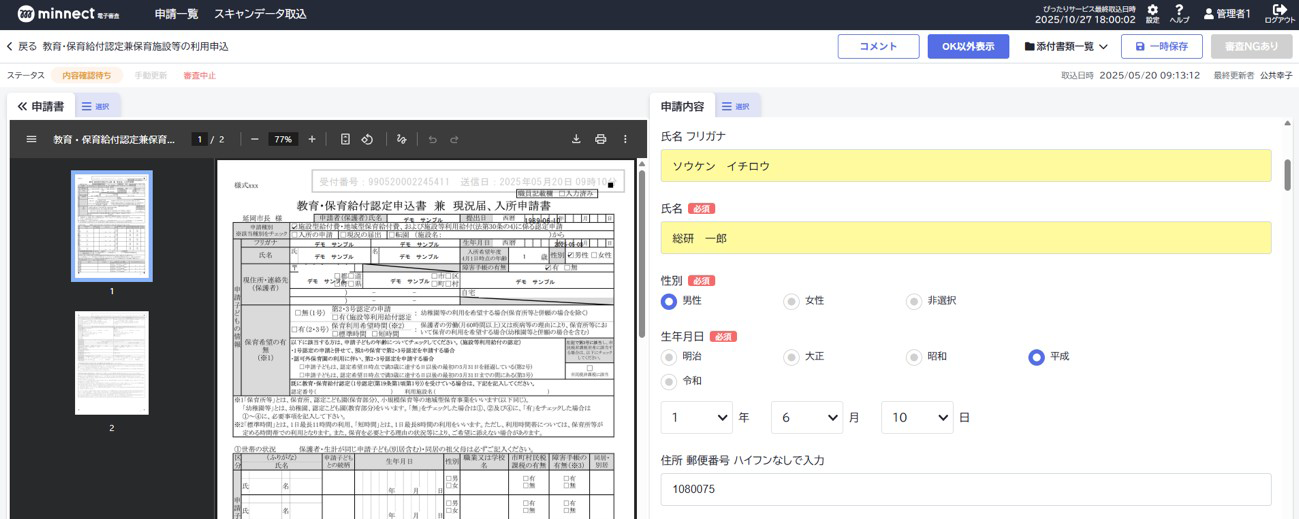
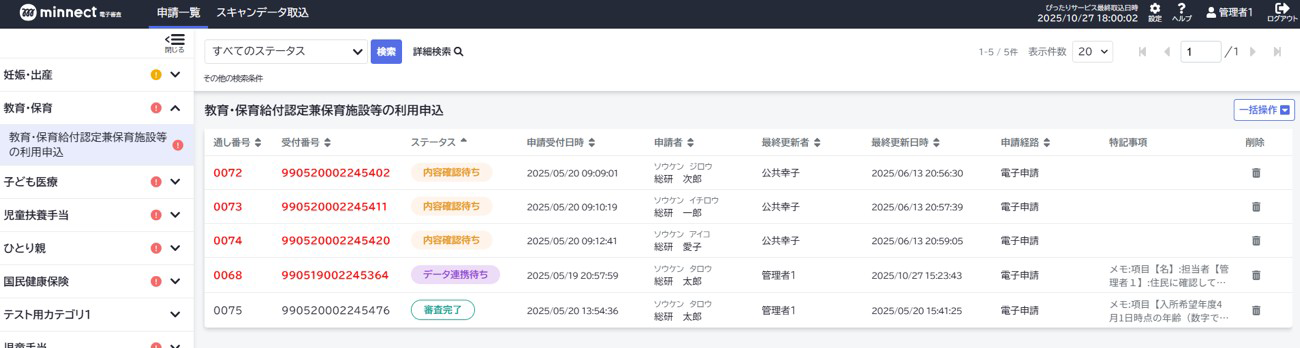
minnect's operation screen. The UI design considers the specific work characteristics of local government staff, such as ease of verifying application forms against submitted content.The application status is indicated by color, allowing progress to be understood at a glance.
Application procedures have various statuses, such as whether they are under review or have completed review. Therefore, a key feature is the clear color-coded status display, allowing the procedure's status to be understood at a glance.
Furthermore, since the system also handles paper applications, the design pays attention to details like screen positioning, making it suitable for staff who need to cross-reference paper documents with the screen.
Fujisaki: So the design is based on a thorough understanding of the end users' work, behaviors, and the context in which this system is used. I feel that each of these meticulous details contributes to the ease of use for the staff.
Will AI implementation be expanded in the future?
Fukuyama: Application procedures involve a combination of simple checks, like verifying names and addresses, and complex assessments that determine eligibility based on information like income and tax status. AI can handle many of these tasks.
We hope to build a system where tasks AI excels at are automated, allowing staff to focus on core functions that require human judgment. If staff work becomes more efficient, the freed-up time can be allocated to resident counter services, leading to smoother public service delivery.
Furthermore, while "minnect" is a system that handles application procedures both on paper and online, the decision notices are currently sent in paper form. To eventually realize the digitization of these decision notices, we have also launched "minnect cBase," a CRM (Customer Relationship Management) system. We are actively researching and developing this, including the utilization of AI.
Fujisaki: So "minnect" will continue evolving as an interface between local governments and residents.
Fukuyama: It would be wonderful if it could further develop as a form of communication that positively impacts both staff and residents' lives.
Using tools to create more creative job opportunities for more people!
Fujisaki: Speaking of user-centric UI design, "MAFA gumi" is another new initiative, right? First, could you tell us about " MAFA " and the background leading to the development of "MAFA gumi"?
Iida: "MAFA" was originally developed as a manga and animation production tool for SNS, through collaboration between Dentsu Inc. and various domestic Dentsu Group companies.
In corporate marketing activities, both "quality-focused content" that conveys the brand through time and cost investment, and "frequency-focused content" that creates frequent touchpoints through SNS posts, etc., are crucial.
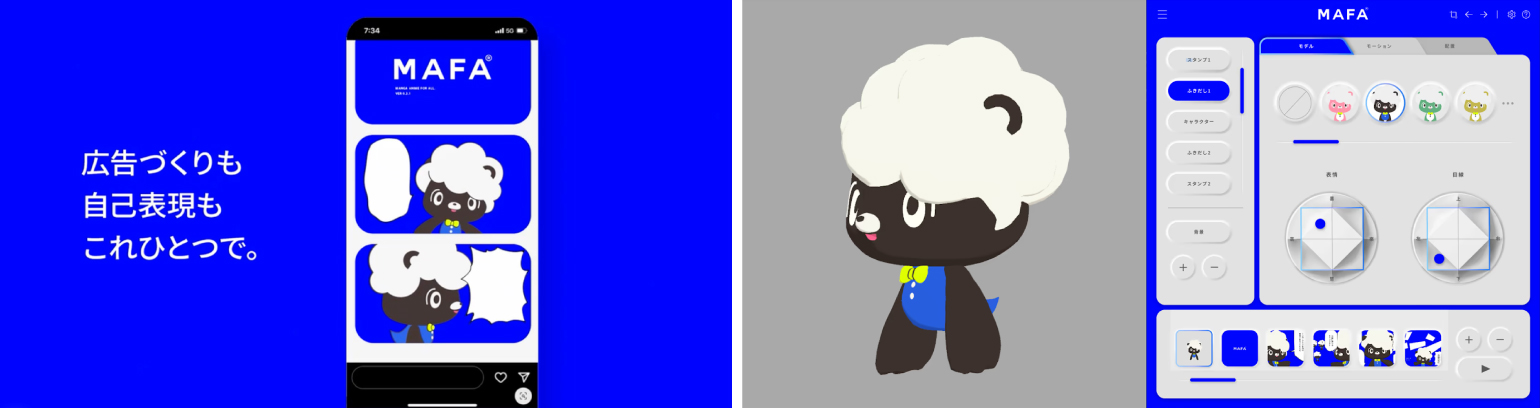
That's why "MAFA" was born as a tool to make creating this frequency-focused content—like social media posts and banner ads—easier and faster. By importing 3DCG characters into "MAFA," users can select motions, speech bubbles, backgrounds, and more. Simply inputting a message allows anyone to easily create original manga-style or anime-style content.
Left: Part of the "MAFA" feature introduction video. Right: Sample screen.
Through my work with disability employment departments and job support agencies, I've had opportunities to speak directly with users and support staff. During these interactions, I learned that many sites use existing creative tools to design leaflets and create banner ads.
While learning times vary due to individual strengths, weaknesses, and developmental characteristics, I believe having diverse options and opportunities for challenge in work is important for everyone. However, in disability employment settings, constraints from corporate task design and support systems often resulted in work being limited to standardized, fixed procedures.
Having experienced these workplaces firsthand, when I was approached about the "MAFA" project, I intuitively felt that improving the UI to make this tool usable in disability employment settings could open up new possibilities for people to thrive.
So, I immediately consulted with Mr. Shibata, who manages the work assignments for our company's employees with disabilities.
Shibata: When I first heard about this from Iida-san, I was honestly surprised, thinking, "New tasks for manga and anime production...???" (laughs).
Fujisaki: I can see why (laughs).
Shibata: But many members in the Work Support Department are interested in manga and anime, and since it's different from the business tools we've used before, it was also an intriguing proposal.
On the other hand, introducing new tools or software often involves significant challenges until members get used to them, so I couldn't immediately visualize how it would work as a viable business process.
But when we actually held the workshop and had members try out "MAFA," they were using it smoothly without even needing a manual. During the workshop, they created videos and held a presentation session, and I was amazed at how high the quality of every piece was.
Iida: It was also impressive how much everyone enjoyed the work, right? Through these workshops, we gathered direct feedback from the field on usability and UI improvements. We provided this feedback to designer Fujisaki, who refined the UI design, resulting in the completed "MAFA gumi."
*Developmental characteristics refer to individual differences in neurodevelopment, such as cognition and sensory processing, which constitute part of the diversity in thinking and behavior. Differences in developmental characteristics lead to unique patterns in communication, information processing, and learning for each person. In this article, we refer to these characteristics as "developmental characteristics" rather than "developmental disabilities," as we view them as individual traits.
Designing the color scheme and icons from the user's perspective further enhanced operability!
Iida: When improving the design this time, what did you pay particular attention to, Fujisaki-san?
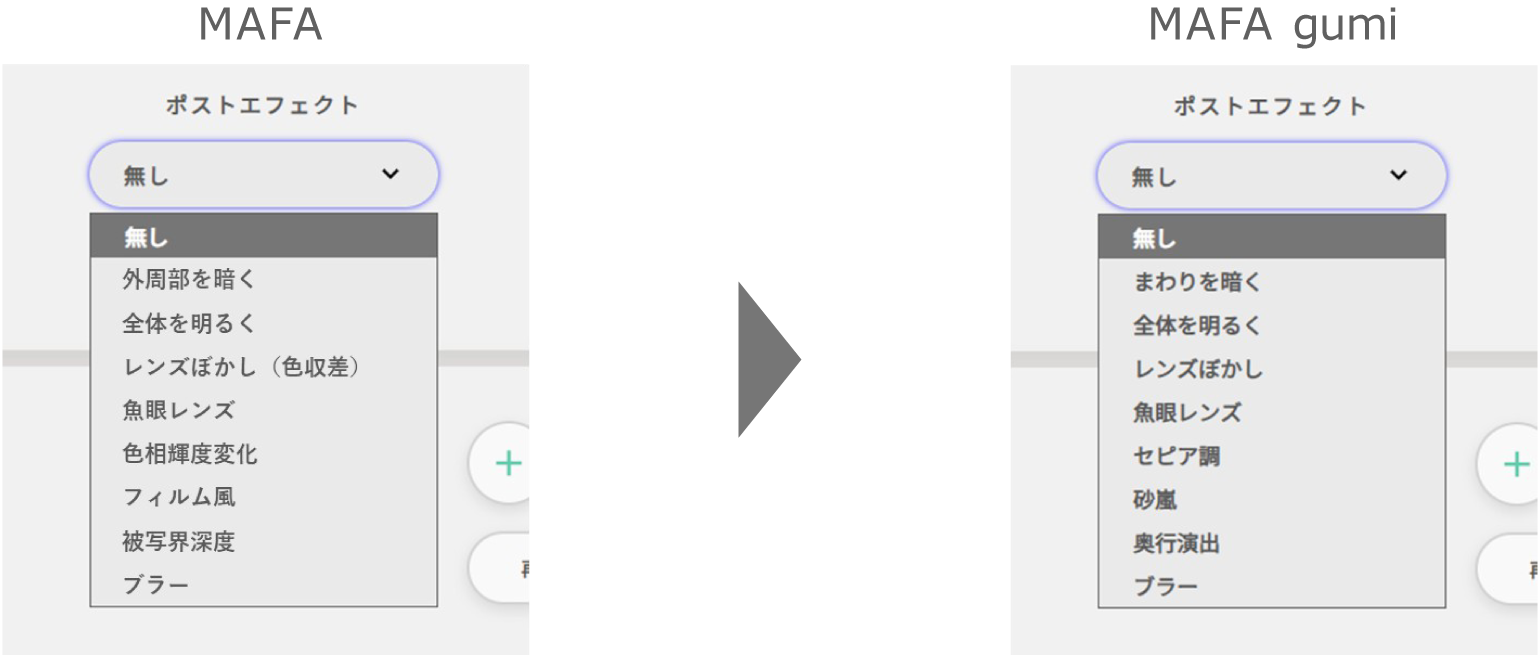
Fujisaki: We really prioritized an inclusive perspective of "making it easy for everyone to use." Applying the concepts of the "Mincom Guide" and a universal design viewpoint, we rebuilt the screens down to the smallest details—overall layout, color schemes, text size, button placement, and more.
Personally, attending a workshop at a Dentsu Inc. group company's special subsidiary and observing participants at work really helped me visualize the workflow.
Shibata: During the workshop, I felt the existing "MAFA" was already quite user-friendly, so I was skeptical about what exactly needed improvement. But when I saw the new UI for "MAFA gumi," I was surprised by how much it changed. Details like font size, button placement, and operation steps were updated from a user perspective.
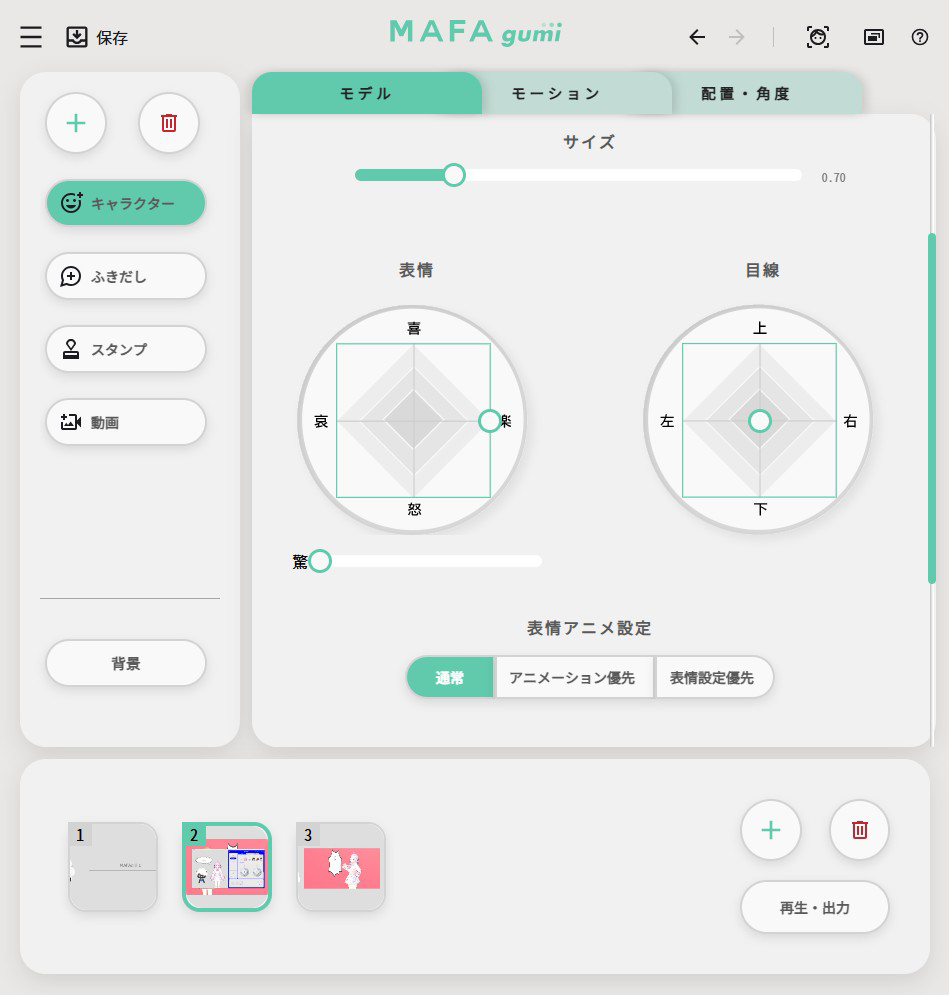
Fujisaki: The buttons and text also follow universal design principles, making them larger and easier to see. Another improvement point is the use of icons. While recent UI design trends sometimes favor simple text-based interfaces, from a usability perspective, pairing icons with text is still clearer and easier to remember. It also makes it easier to recognize common functions across different screens and tasks, enabling more intuitive operation.
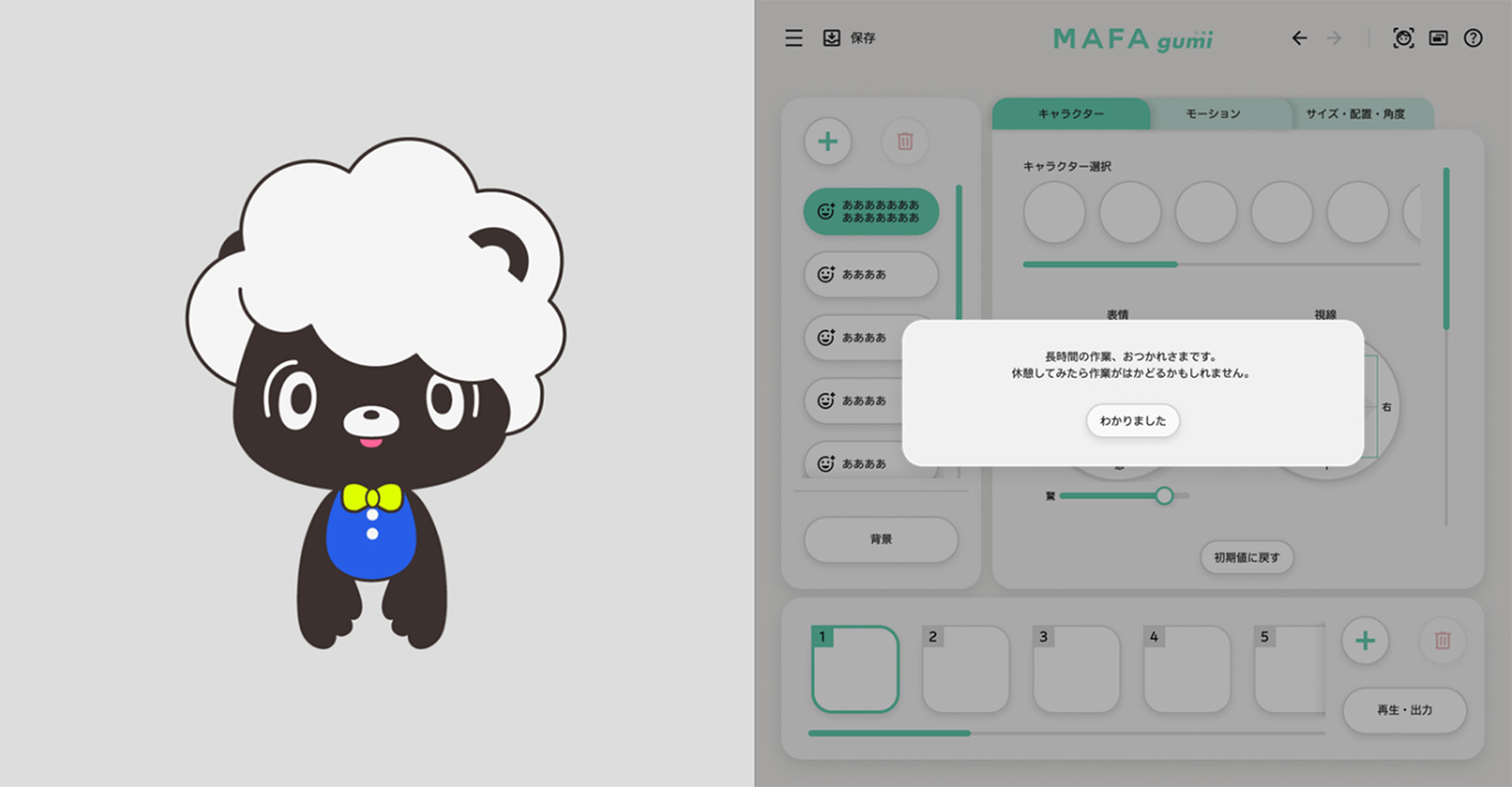
MAFA gumi operation screen.Operation screen for selecting visual effect processing methods. "MAFA gumi" replaces terms like "Darken outer edges" with simpler, more intuitive expressions like "Darken surroundings".When working for extended periods, a message recommending a break appears.
Shibata: This has been well-received by members, with many saying it's become easier to use. While it's not universal, many members find it easier to understand information through colors and shapes rather than text. We're very grateful that these aspects were also taken into consideration.
Fujisaki: I'm glad to hear that. Currently, "MAFA gumi" is used for one internal task. How is it being utilized?
Shibata: We've formed teams of 4-5 people to handle tasks. Their work includes creating animated announcement videos for internal use. Moving forward, we plan to have them produce video content to enhance security awareness. Additionally, the Health Management Office hosts health management events, and we used MAFA gumi to create promotional videos for those.
Seeing the PR videos we created actually being used is a tangible result that we feel boosts motivation for the work itself. Furthermore, the fact that "MAFA gumi" allows members to enjoy their work is definitely contributing to the overall team's motivation.
Addressing "someone's" inconvenience eventually benefits "everyone."
Fujisaki: Did you discover anything new by using "MAFA gumi" as a work tool this time?
Shibata: Seeing many members create creative videos with various ideas.
As Iida-san mentioned earlier, much of our company's administrative work involves tasks like data collection/entry and webpage creation, where deliverables and procedures are fairly standardized. Personally, I'd mainly assigned tasks to members based on their past experience, so taking on this new type of work was a valuable experience.
I believe participating in the MAFA gumi pilot project was the first step toward expanding the scope of work for our Work Support Department members.
Iida: Going forward, we hope to expand the use of "MAFA gumi" to departments handling employment for people with disabilities within companies and local governments, as well as employment support agencies.
Additionally, the Dentsu Inc. MAFA team has praised the MAFA gumi UI design as "user-friendly," and there's discussion about whether this design could be adapted for universal accessibility, regardless of disability status or characteristics.
Fujisaki: While we designed the UI specifically as a tool for use in disability employment settings this time, the fact that it resulted in a design usable by anyone is very encouraging to me personally. I hope that design intended for "someone" becomes design for "everyone," leading to even greater expansion in the future.
Finally, could you share any insights gained through these two projects?
Shibata: Our members are enjoying their work while utilizing their individuality and ideas through "MAFA gumi." I truly feel this initiative holds significant value in enabling everyone, regardless of disability, to express their individuality.
Iida: It has created new employment options for people with disabilities and provided insights applicable to designing user-friendly interfaces for tool development. The intuition I had when I first encountered "MAFA" has now been reborn as "MAFA gumi." I hope we can nurture it into a tool that creates new possibilities for everyone.
Fukuyama: The Smart Society Center has a vision to enrich all regions through regional revitalization. To achieve this, it's crucial to address each small inconvenience faced by local governments, their staff, and residents. By utilizing systems like "minnect," we aim to integrate into staff workflows, resolve these minor inconveniences, and ultimately improve both staff productivity and resident quality of life.
I want our work to be recognized as something that makes this city a better place to live, thanks to DENTSU SOKEN INC.
Fujisaki: Yes. By carefully listening to the voices of those involved, engaging in thoughtful dialogue, and resolving each inconvenience one by one, we can eventually improve the lives of many people. I also feel that this kind of steady, sincere approach is something DENTSU SOKEN INC. should continue doing, no matter how much AI evolves.
I believe expanding this cycle—where "for someone" becomes "for everyone"—is an indispensable element for future society and business.
It's an approach that aims to realize ideal communication for everyone, ensuring "no one is left behind." This is based on the premise that communication targets include diverse recipients with varied characteristics and needs, such as age, disability status, gender, and nationality. The "Min-Comu Guide" focuses on understanding this diverse "everyone" and covers the wide range of communication media that exist between senders and receivers. It introduces necessary considerations and reference cases.
Cross Innovation Division Solution Development Center
Business Producer responsible for planning and developing creative tools in the field of employment for people with disabilities, designing service businesses utilizing bio-signals, and launching new ventures.
As a Specially Appointed Lecturer at the Diversity Work Model Co-creation Institute, I promote the co-creation of social systems where everyone can work authentically, centered on neurodiversity.
Yuri Fujisaki
DENTSU SOKEN INC.
Cross Innovation Headquarters UX Design Center
At a web production company, I participated in website creation projects across various industries, gaining broad experience from planning and information architecture to graphic design. Leveraging this experience, I now focus on UX design, user research, and overall design direction for system development and app design.
Keisuke Fukuyama
DENTSU SOKEN INC.
Smart Society Center
After gaining experience in system proposals and business planning for local governments and central ministries at a Japanese SIer, I joined DENTSU SOKEN INC. Smart Society Center. Currently, I'm driving the planning and sales of our proprietary solutions for local governments, focusing on themes like digitizing administrative procedures, improving staff efficiency, and advancing smart city initiatives.
Natsuki Shibata
DENTSU SOKEN INC.
Corporate Headquarters, Work Support Department
Participated in managing administrative teams and establishing special subsidiary companies within the department handling employment and operational management for people with disabilities. Currently driving the planning and launch of new business initiatives.
Also read
How might society change if we approach system development and UI design with diversity and inclusion in mind?

 Mincom Design is on the move! [4/4]