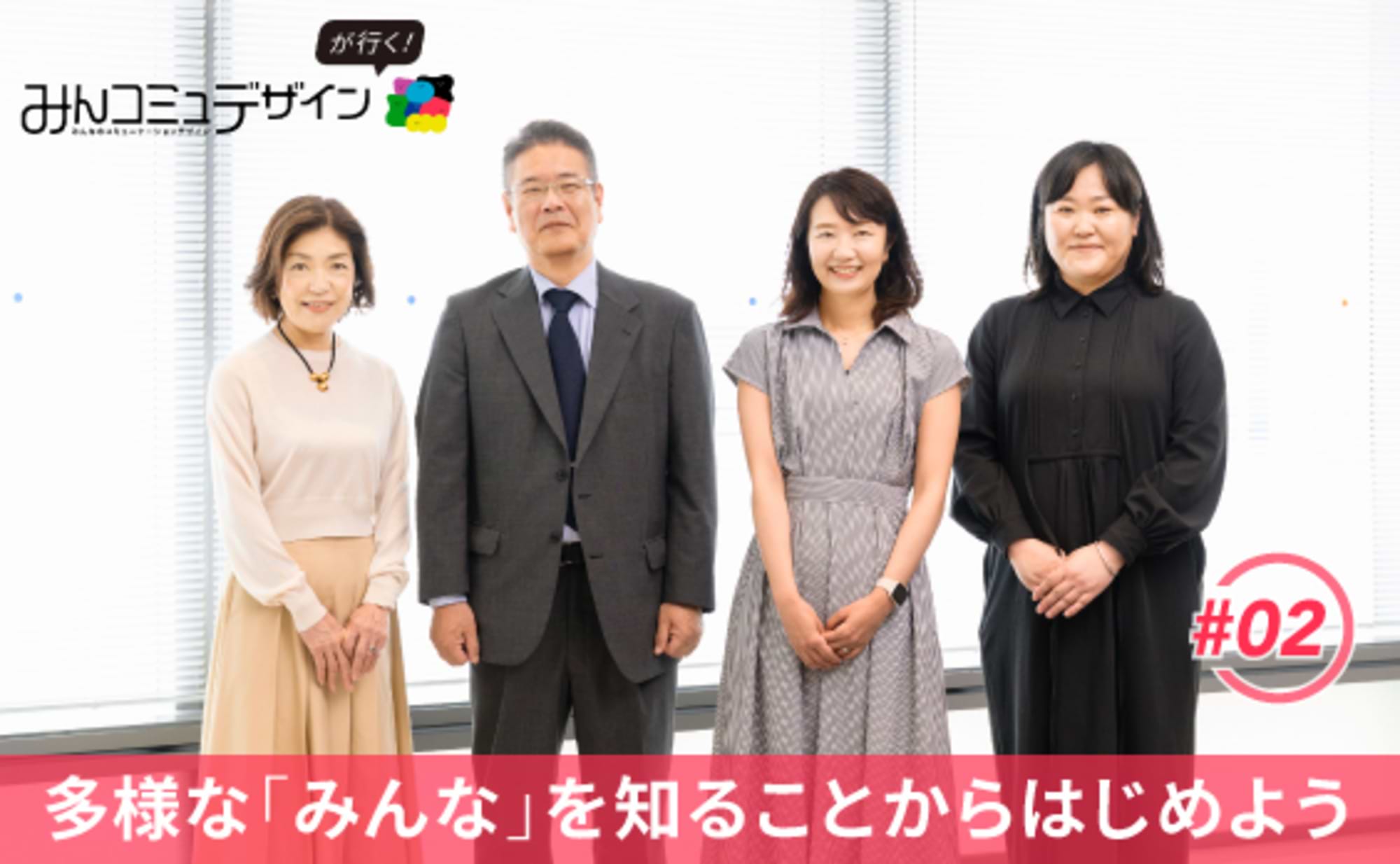
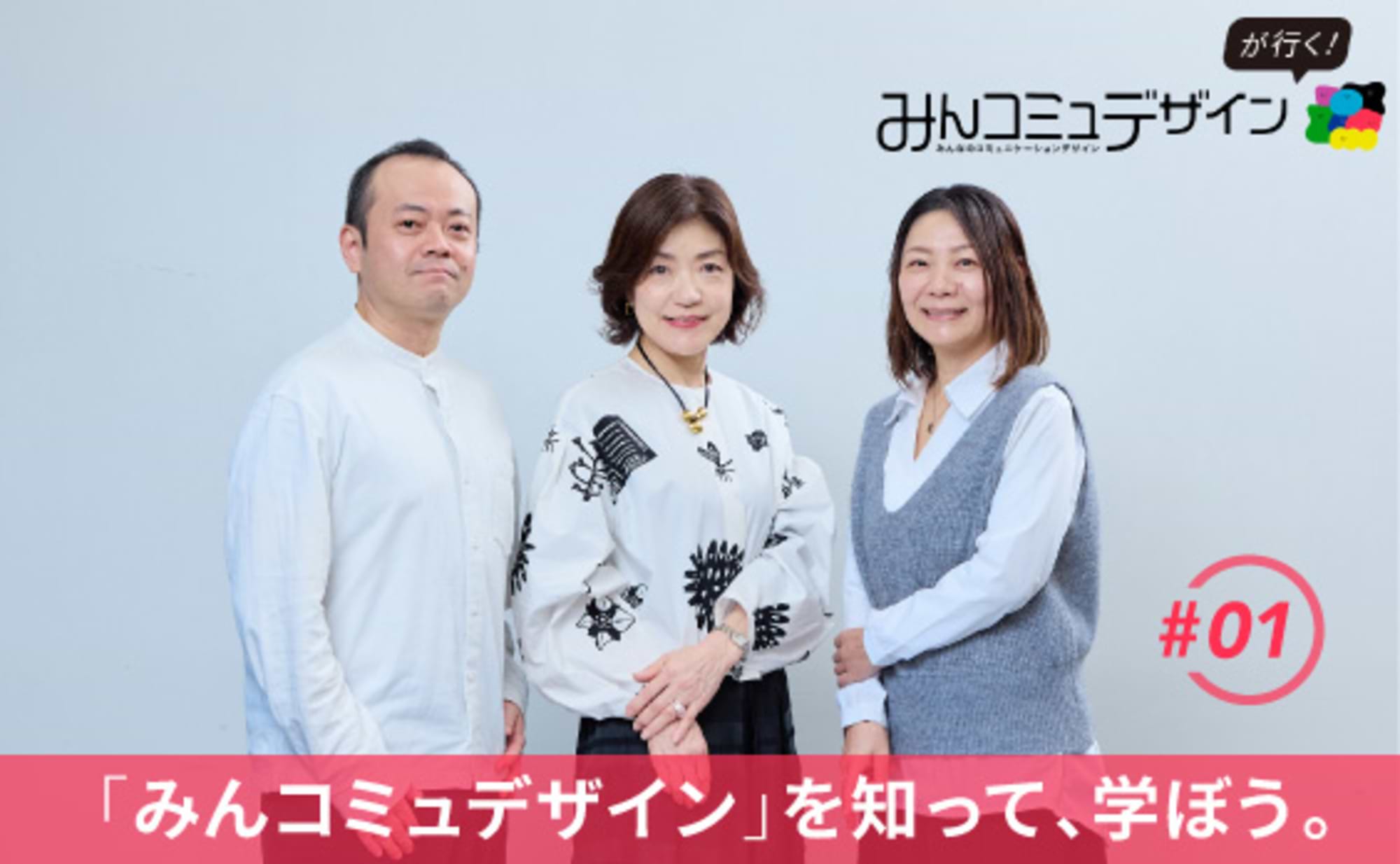
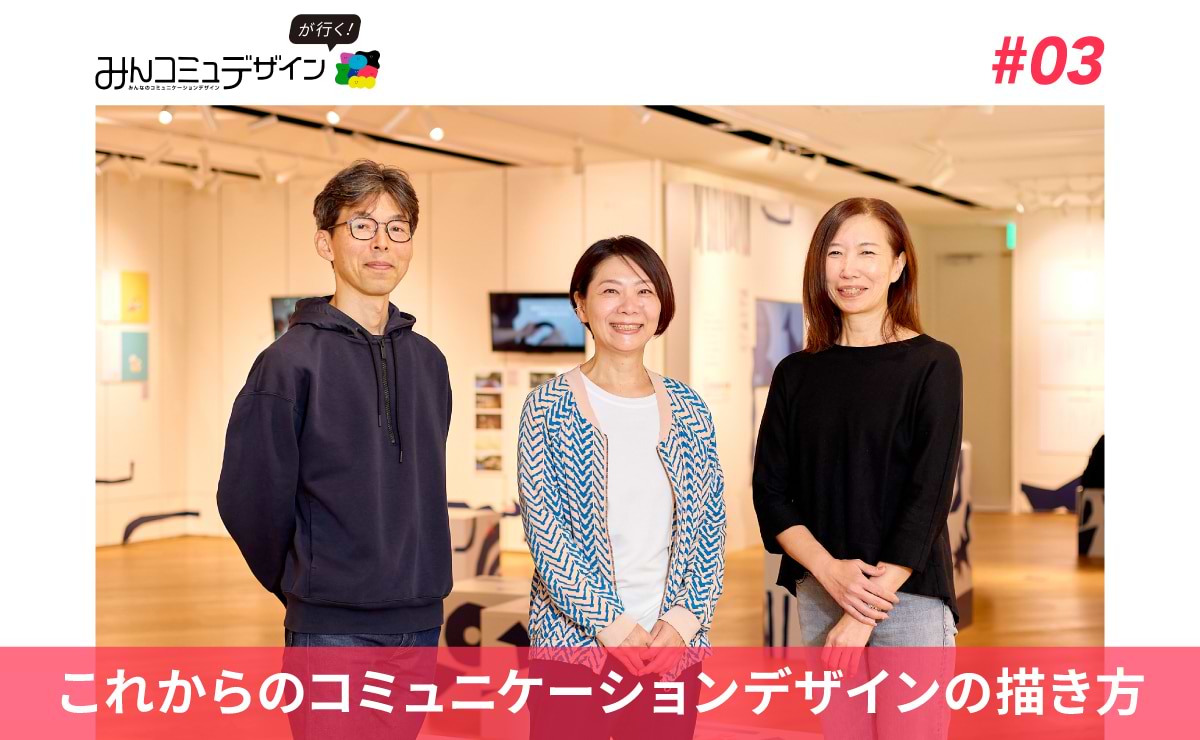
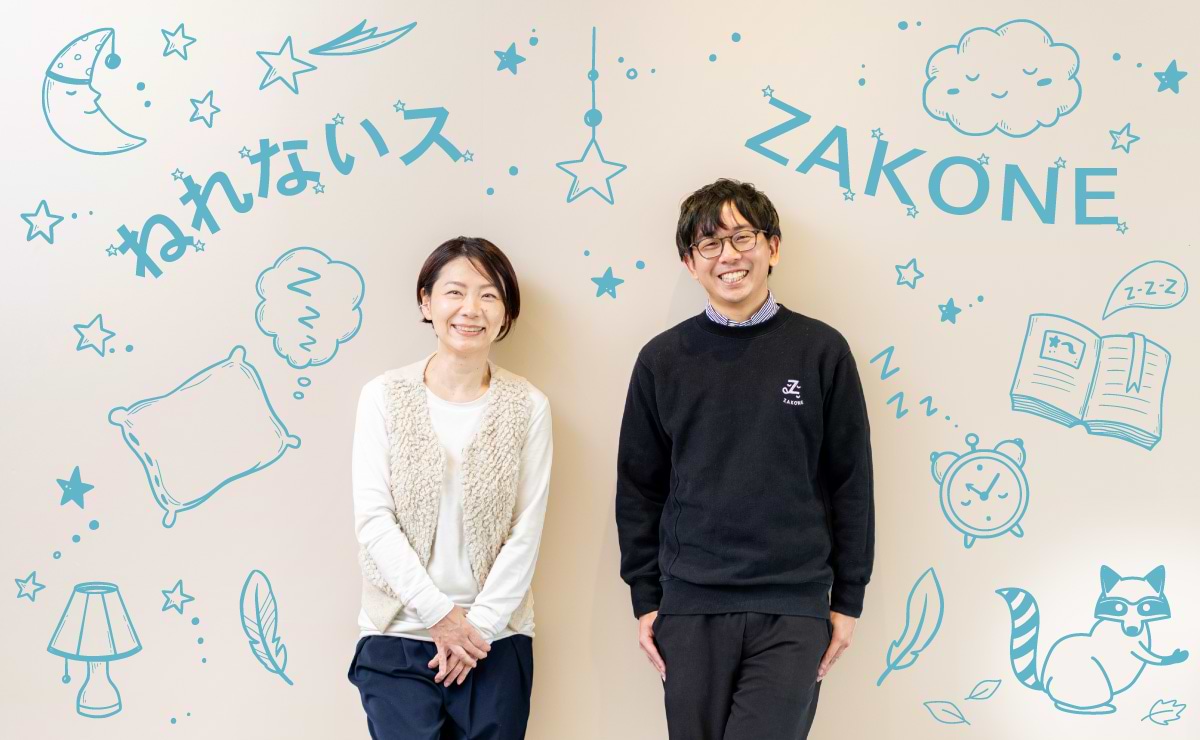
(From left) Min-Com Design Guide production members: Kazuko Maruhashi, Koji Kagoshima, Hitomi Omoto
Dentsu Inc., in collaboration with eight domestic Dentsu Group companies, has produced the " Everyone's Communication Design Guide" (hereinafter referred to as the Min-Comu Design Guide), aiming to realize communication that "leaves no one behind." It has been publicly available since January 28, 2025.
This series will delve into the social significance of the Mincomu Design Guide, featuring its production team members introducing case studies that contribute to diversity and inclusion in communication.
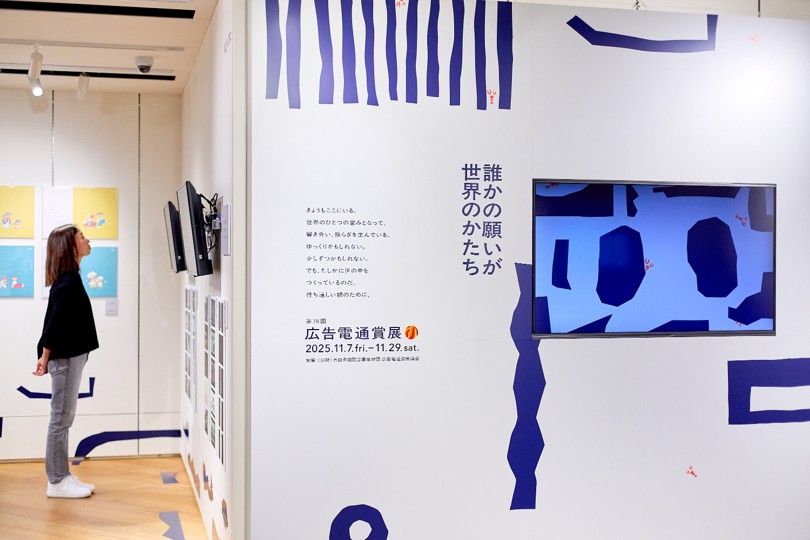
This installment focuses on the special exhibition "The 78th Dentsu Inc. Advertising Awards Exhibition," held at the Ad Museum Tokyo in Shiodome, Tokyo, from Friday, November 7 to Saturday, November 29, 2025. We highlight award-winning works that realize communication leaving no one behind, addressing diversity, inclusion, gender, and more.Members of the Mincom Design Guide production team will discuss each award-winning work from the "Mincom perspective" – communication design that reaches everyone.
Toward a society where everyone can enjoy cooking equally. A recipe site focused on sound
Omoto: The winning entries for the "78th Dentsu Inc. Advertising Awards," which honors outstanding advertising and communication activities in Japan, have been decided. The Ad Museum Tokyo is exhibiting the Grand Prize-winning work by Suntory Holdings, along with Special Prize-winning works focused on social issues.
Scene from the special exhibition "The 78th Dentsu Inc. Advertising Awards Exhibition."
Maruhashi: Looking at each award-winning work, you really feel how communication methods have changed significantly alongside shifts in the social environment and the times.
Among them, Ajinomoto's corporate ad "Soundful Recipe" truly surprised me with its perspective. I rarely cook while paying attention to sounds, so I was initially skeptical about how much difference sound could make.
Launched in February 2025, this recipe site by Ajinomoto Co., Inc. specializes in audio narration, designed so both visually impaired and sighted individuals can enjoy cooking. It replaces expressions traditionally reliant on sight—like the sound of tempura frying or stew simmering down—with auditory cues, introducing recipes and cooking tips. The design also prioritizes accessibility for the visually impaired.
Kagoshima: With tempura, you might judge by the sound of the oil, but for grilled or simmered dishes, you often rely more on sight than sound, right?
Maruhashi: Exactly. But listening to SOUNDFUL RECIPE was truly eye-opening. Even for stir-frying, you hear distinct sounds—like a sizzle turning into a lighter fizz—with clear auditory differences at each step. It was a revelation.
Traditionally, recipes often relied on visual cues like "when the onions turn translucent" or "when the meat changes color." But that makes it difficult for visually impaired people to follow... By focusing on recipe narration and cooking sounds, this creates an unprecedented recipe guide. It's a perfect example of achieving inclusion.
The actual SOUNDFUL RECIPE website.
Kagoshima: What I think is great about this recipe site is that it focuses on sound to provide a new way to enjoy cooking. It's designed so that everyone, whether they can see or not, can enjoy cooking.
For sighted people, it also becomes an opportunity to learn about cooking sounds. Acquiring knowledge through both sight and sound could even improve your cooking skills. It makes meal preparation feel more enjoyable.
<Developer's Voice / Development Motivation> Among the recipes Ajinomoto Co., Inc. had previously published on its website, some relied heavily on visual descriptions. The development background stems from meeting Miki-san, who is fully blind and loves cooking. We realized recipes often use expressions like "golden brown" or "when browned," which are difficult for visually impaired individuals to understand. We also hope this site will help people experience new ways to enjoy cooking and foster mutual understanding between visually impaired and sighted individuals.(Dentsu Inc.: Asato Onose, Takahiro Shimoda)
Leveraging digital technology to bridge experiential gaps. An art experience where everyone shares their senses!
Omoto: Next, I'd like to introduce the NPO Hachioji Association for the Welfare of the Visually Impaired's "ENTOUCHABLE MUSEUM - The Ultra-Touchable Museum," which I believe is another example embodying inclusion.
■ENTOUCHABLE MUSEUM - The Ultra-Touchable Art Museum - (NPO Hachioji Welfare Association for the Visually Impaired)
An exhibition held at Tokyo Midtown Hibiya in December 2024, centered on experiencing art through touch and sound. It features cutting-edge technologies like haptics, allowing visitors to "experience" paintings through touch and sound, independent of sight. Its goal is to eliminate the gap in painting appreciation between visually impaired and sighted individuals.
Kagoshima: It's true that within art, painting appreciation in particular inevitably places a heavy emphasis on "seeing," making it difficult for visually impaired individuals to enjoy. In fact, the project's introduction video states, "Regarding satisfaction levels among visitors to domestic museums, while 92.1% of sighted individuals report satisfaction, the percentage among visually impaired individuals remains at just 25.0%."
Ōmoto: While barrier-free measures like audio guides and tactile paving are advancing in museums and exhibitions, the gap in the experience of appreciating paintings has persisted—that's a crucial perspective.
Kagoshima: While paintings are typically appreciated visually, this isn't simply replacing that with touch or sound. It's more accurate to say they've been transformed into new works that everyone can enjoy using touch and sound. This is a world made possible by the evolution of digital technology, and elevating it into an art experience for everyone is a major point.
Mr. Maruhashi (left) experiencing the Mona Lisa's hand. Guiding him is Mr. Sawada (right), who oversaw planning and development. *The ENTOUCHABLE MUSEUM - Ultra-Touchable Art Museum experience event has now concluded.
Maruhashi: Touching the Mona Lisa's hand, feeling the sound of the Wind and Thunder Gods' drums or the flow of a waterfall... The significance lies in creating a space where both sighted and visually impaired people can share the same experience and thus share their sensibilities. The ability to experience artworks equally and share sensibilities might become an increasingly valued element not just in art experiences, but across other fields as well.
Kagoshima: While hoping this exhibition might be a gateway to "changing how art exists," it also seems highly likely that art focusing on senses beyond sight—like touch and smell—will develop significantly going forward.
<Organizer's Voice / Development Motivation> The project began with the idea of leveraging the 'instinctive human desire to touch something appealing' for entertainment. Further, considering how this concept could address social issues led to the creation of the 'Ultra-Touchable Museum.' We consciously aimed to foster a space where visually impaired and sighted individuals could share the same experience and exchange opinions and impressions, rather than making it an event solely for the visually impaired. (Yuta Sawada, Copywriter, Dentsu Inc.)
Using impactful messaging and hashtag campaigns to advocate for the need for discussion
Omoto: The Think Name Project gained significant media attention and became a hot topic with its sensational content, "#2531 Sato-san Problem." It's also notable for using the familiar theme of surnames to provide an opportunity to consider gender equality and respect for identity.
■Think Name Project(General Incorporated Association Asunoha / Tohoku University and 40 other organizations)
Japan is the only country in the world with a law requiring married couples to share the same surname, with 95% of those changing their surname being women.Despite various drawbacks like the hassle of name changes and loss of career identity, Japan has seen little progress in legal reform, and many citizens remained indifferent to the issue. The "Think Name Project" addressed this by presenting a shocking simulation result from Professor Hiroshi Yoshida of Tohoku University: "By 2531, every Japanese person will be named Sato." Through various social media campaigns, it provided society with an opportunity to consider the option of separate surnames for married couples.
Maruhashi: It was truly shocking. If things continue as they are, surnames will gradually disappear, and by 2531, there might only be people named Sato left, right?
Kagoshima: The impact of this "#2531 Sato Problem" message was huge, wasn't it?
A scene from the Think Name Project exhibition.
Maruhashi: Especially regarding the selective use of separate surnames for married couples—while it's been debated for a long time, progress has been slow. This campaign offers a fresh approach: "If things continue like this, everyone will end up with the same surname. So let's all think about it together." That's what feels new to me.
Kagoshima: Exactly. I think another key point is that it doesn't take a stance for or against shared or separate surnames. While I believe the campaign's foundation is about eliminating gender inequality and disparities, I suspect many people only became aware through this campaign that there are individuals who find the obligation to share a surname difficult to live with.
Maruhashi: Exactly. In Japan, it's still the norm for women to change their surname upon marriage, making it hard to call this a situation of gender equality. That's why many people choose de facto marriage without filing a marriage certificate. However, legally, they aren't recognized as family. This leads to various problems in medical settings, like not being able to hear the doctor's explanation of the patient's condition, sign consent forms for surgery, or even visit the patient. Furthermore, if the partner passes away, they cannot become an heir without going through specific legal procedures.
Ōmoto: Addressing these disadvantages and gender disparities, the system of optional separate surnames for married couples is one way to build a society where everyone can live equally. Allowing individuals to choose whether to share a surname or not also contributes to a society that embraces diversity.
Kagoshima: Furthermore, while the campaign's core message is powerful, the media strategy to generate buzz was brilliant and a key factor in its success.
First, they announced the "#2531 Sato Problem" and made it a hot topic on social media. Then, 40 domestic companies and organizations launched campaigns like changing their own assets (social media account names, product names, etc.) to "Sato." The fact that these actions were covered by media around the world, giving it enough influence to become an agenda item in the Diet and the UN, was truly impressive.
This case taught me an important lesson: to move society, you don't rely on just one arrow. By launching a second, third, and subsequent arrows, you can create a much greater impact.
Updating what was once taken for granted with new values. Creating opportunities to broaden work-style choices.
Omoto: Finally, Mynavi's "Sit Down, It's Fine PROJECT."
■Sit Down, It's Okay PROJECT (Mynavi Corporation)
Mynavi launched this project through its part-time job site "Mynavi Baito" to improve workplace environments in service industries and cashier roles where standing all day is the norm. To expand options for seated work, they developed specialized chairs for cashier staff. Beyond being "lightweight and compact," the design prioritizes features like "easy standing/sitting" and "supporting good posture." It proposes a new workplace environment where "sitting while working" is possible, aiming for a more tolerant society.
Maruhashi: This project is really great, isn't it? Honestly, I wondered why no one had noticed this issue before.
Kagoshima: The project originated when Ryota Haraguchi, a Creative Director at Hakuhodo, observed cashiers working seated at overseas supermarkets. He thought, "If we could do customer service seated in Japan too, it would be easier," and proposed it. The result was surprisingly positive feedback from a wide range of people, including pregnant women, the elderly, and those with leg or back disabilities. Furthermore, companies adopting this approach can expect benefits like increased hiring rates and reduced turnover.
Maruhashi: Recognizing these everyday challenges is crucial, right? In Japan, standing while serving customers at the register is just the norm. No one ever questioned it, or even realized it was an issue...
Kagoshima: It started with noticing something off or odd in society. Then, together with our client Mynavi, the companies they work with, and chair manufacturers, they made it happen. They introduced a new value to society: "It's okay to sit while providing customer service."
Aki Nomura from the Mincomu Secretariat experienced it. At the exhibition, you can actually sit on the displayed "It's Okay to Sit."
Maruhashi: The "It's Okay to Sit" product itself has a design that feels like you're just lightly perching on it. You can really tell it was designed with the worker in mind. If I were to take a part-time job, I'd want this chair.
Ōmoto: In the future, we might see more people with disabilities who find standing work difficult but can work if they can sit. I hope this contributes to alleviating labor shortages.
Kagoshima: Thinking about it that way, while it started as an improvement to Japan's hospitality industry workplace environment—where standing work was the norm—it's ultimately making many people happy. I think it's a great example that naturally contributes to inclusion and diversity.
<Voices from the Team / Development Motivation> The theme of this project is "A New Normal." We shaped "It's Okay to Sit" while hoping that both workers and employers, as well as the many people using the service, would all readily accept it. We'd be delighted if it softened society's attitudes—making people think "It's okay to do cashier work while seated" or "This is another option, right?"—and if that led to more people finding work and life easier. (Ryota Haraguchi, Creative Director, Hakuhodo)
The key lies in the ability to spot overlooked inconveniences in daily life
Kagoshima: We picked four case studies this time, and what they all have in common is noticing something easily overlooked in daily life and asking, "Isn't this an issue?" Then, by properly turning it into a project, new innovation is born.
Maruhashi: Thinking about it that way, there might be many other challenges lying around us that we overlook because we take them for granted.
Kagoshima: Mr. Sawada from "ENTOUCHABLE MUSEUM - The Ultra-Touchable Museum" mentioned that "people involved in communication design, like advertising, are good at identifying problems." I feel this statement holds a hint for practicing Min-Com Design.
Trying to imagine how others feel is something people in advertising and communication do every day, right? It's also the starting point for "Everyone's Communication." That's where you might notice someone's struggles or frustrations. By discovering challenges like that and designing new communication solutions, we might be able to take steps toward a more inclusive society.
It's an approach that aims to realize ideal communication for everyone, ensuring "no one is left behind." It does this by recognizing that communication involves diverse recipients with varied characteristics and needs—such as age, disability status, gender, and nationality. The "Min-Comu Guide" introduces the diverse "everyone" we need to understand, covers the wide range of communication media that exist between sender and receiver, and provides necessary considerations and reference examples.
Head of Dentsu Inc.'s 'Umumu' Lab and member of the Sexology Creative Lab. While applying advertising and communication skills to social advertising projects, provides insights and consulting on sustainability in communication both internally and externally. Also active in projects related to disaster prevention and comprehensive sexuality education. Member of Dentsu Inc. Team SDGs.
Customer Experience Creative Center Experience Neutral Design Division 2
Art Director
While handling numerous projects such as new brand launches and rebranding, he also initiates diverse projects on his own—covering gender issues, sleep problems, and universal design—and oversees art direction across a wide range of fields, including activities aimed at solving social challenges.
Recipient of numerous awards including:
AdFest Advertising Festival Silver & Bronze
Cannes Lions International Festival of Creativity Silver & Bronze & Finalist
Clio Awards Bronze
One Show Silver
Dentsu Inc. Advertising Awards Excellence Award
Nikkei Advertising Awards Gold Prize
JAGDA
Leveraging creative production skills to manage projects extending beyond advertising production. Managed production of "Everyone's Communication Design Guide." Member of Dentsu Creative Force Inc. DEI Project.

 Mincom Design is on the move! [3/4]