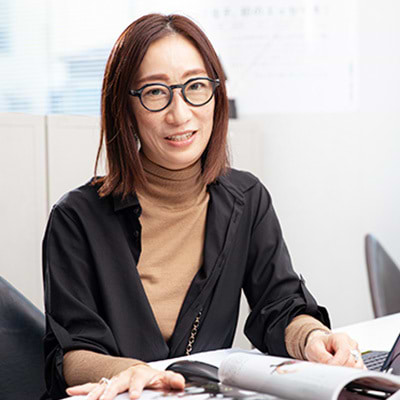
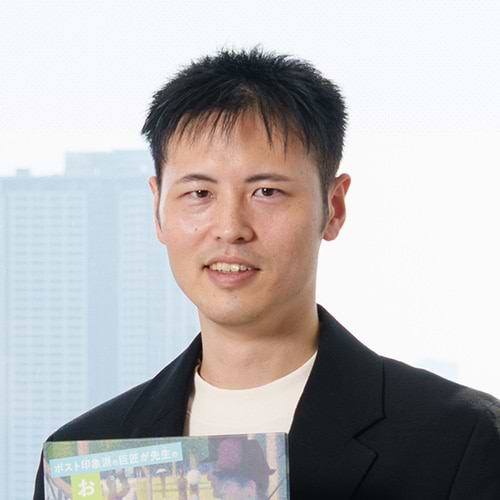
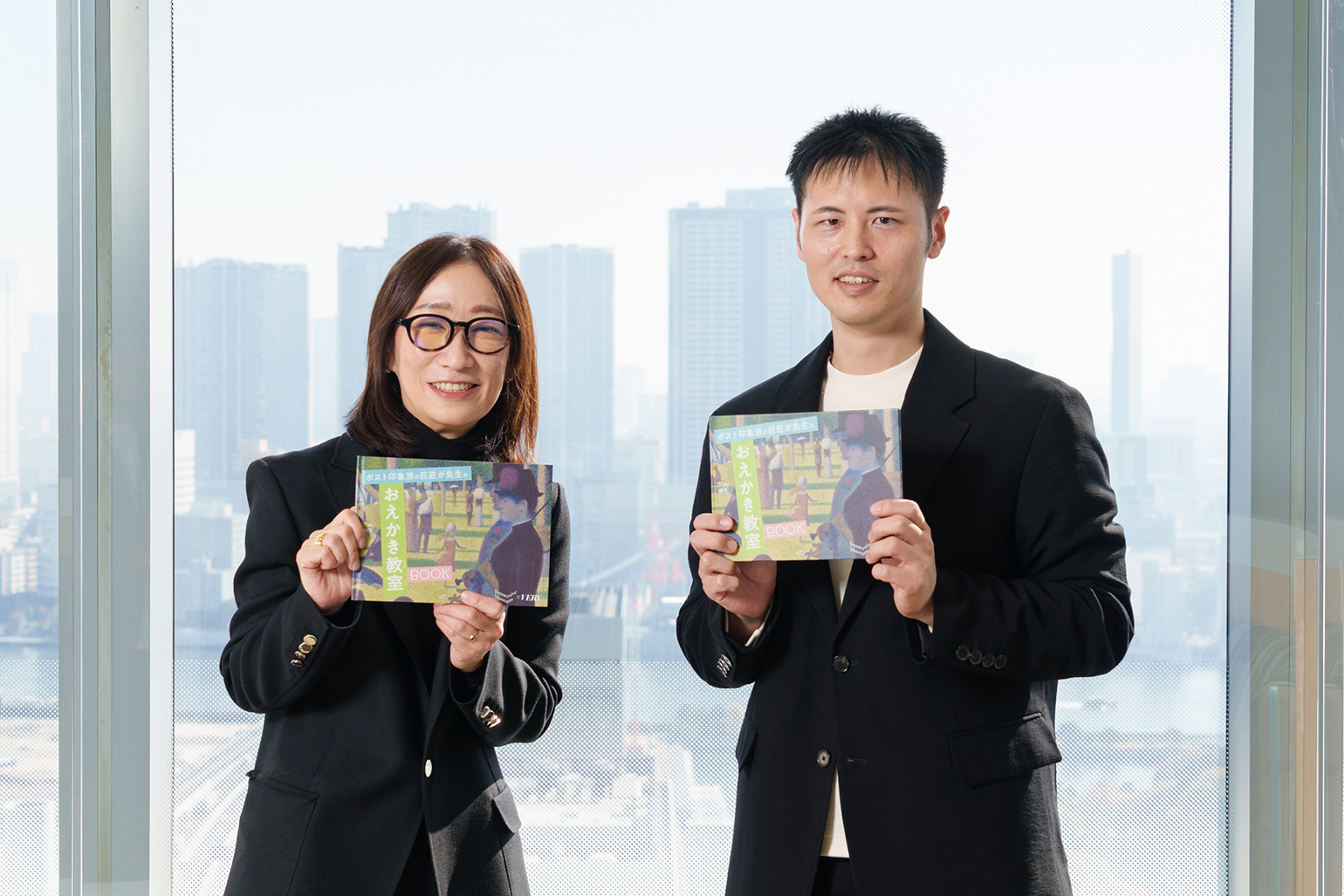
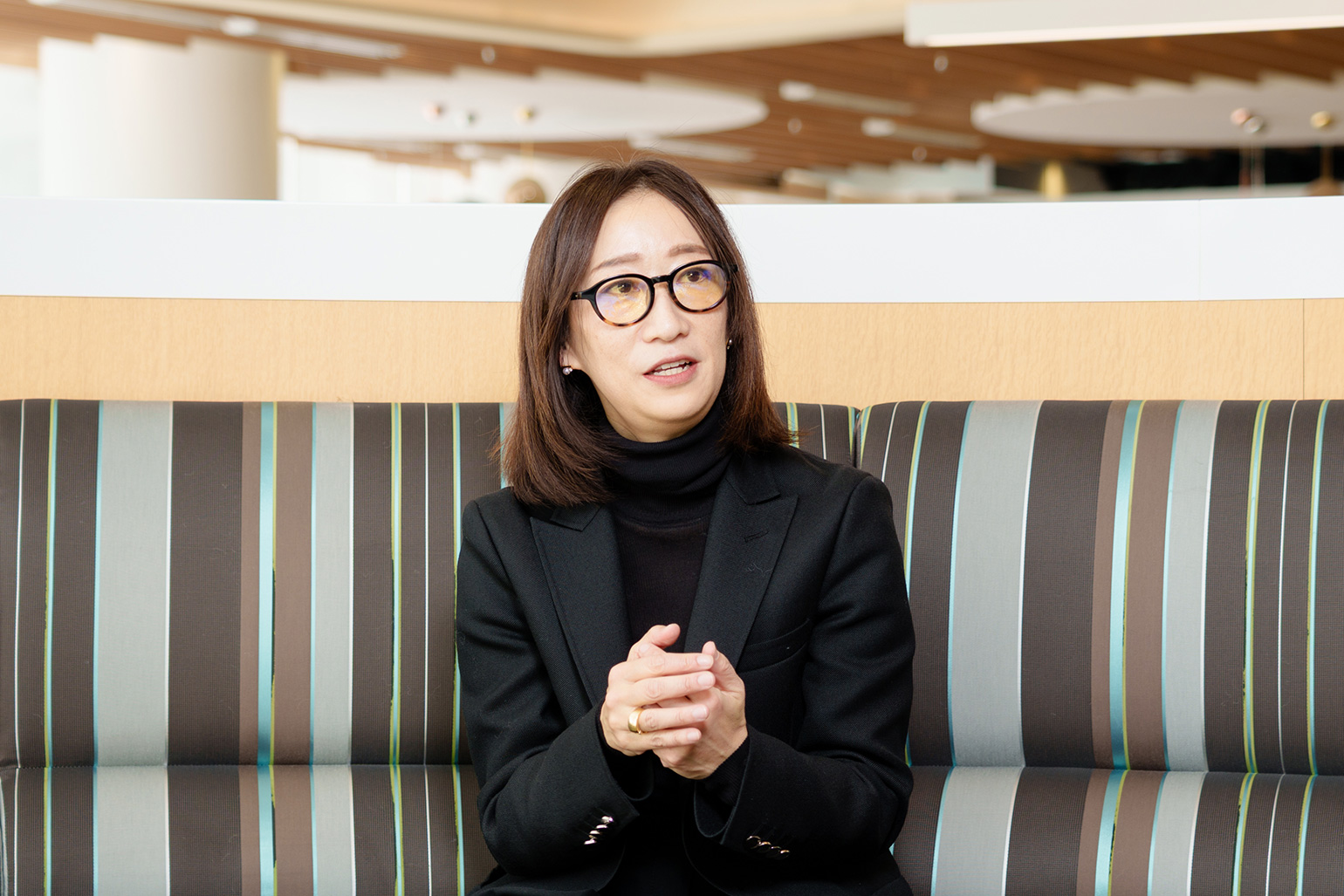
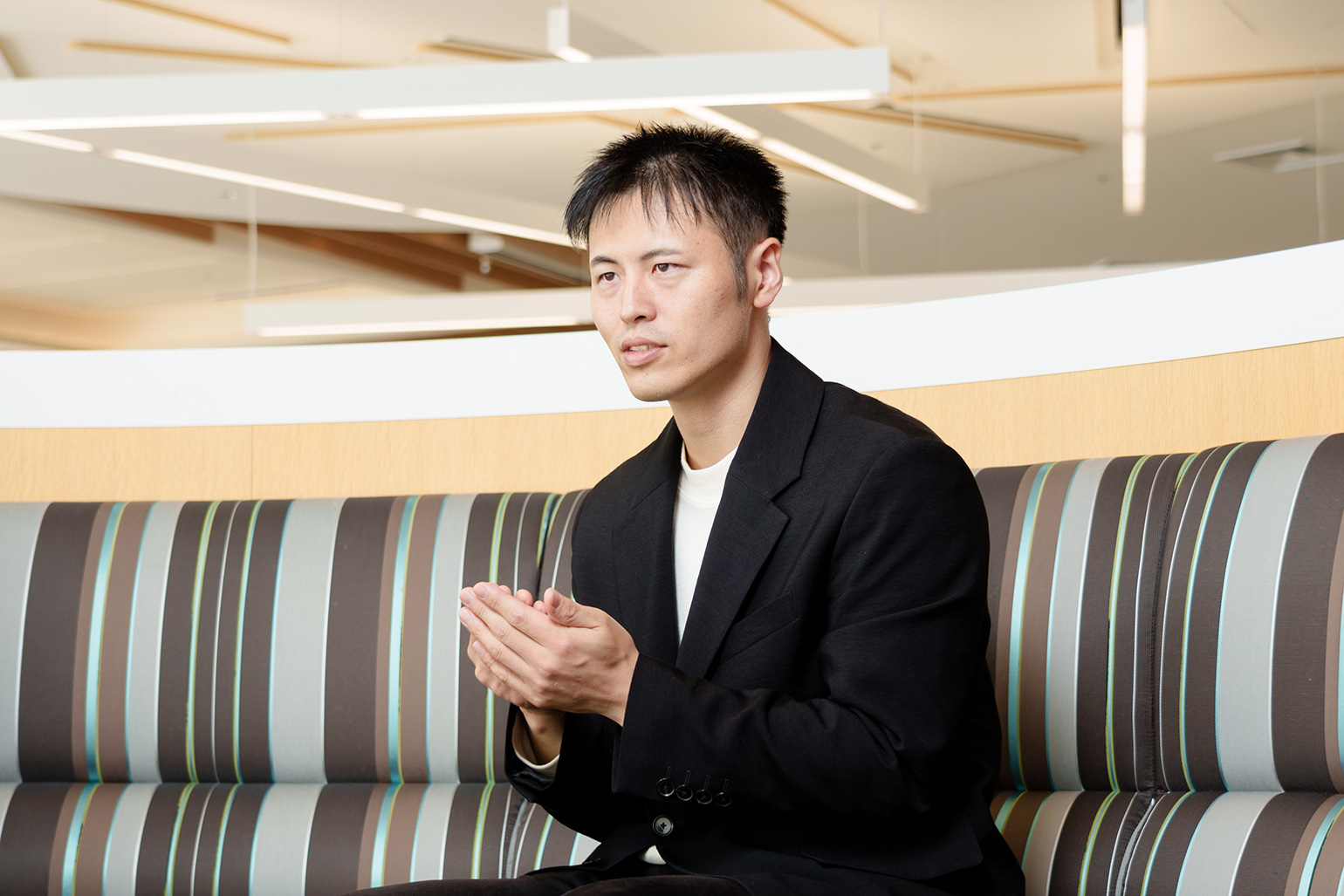
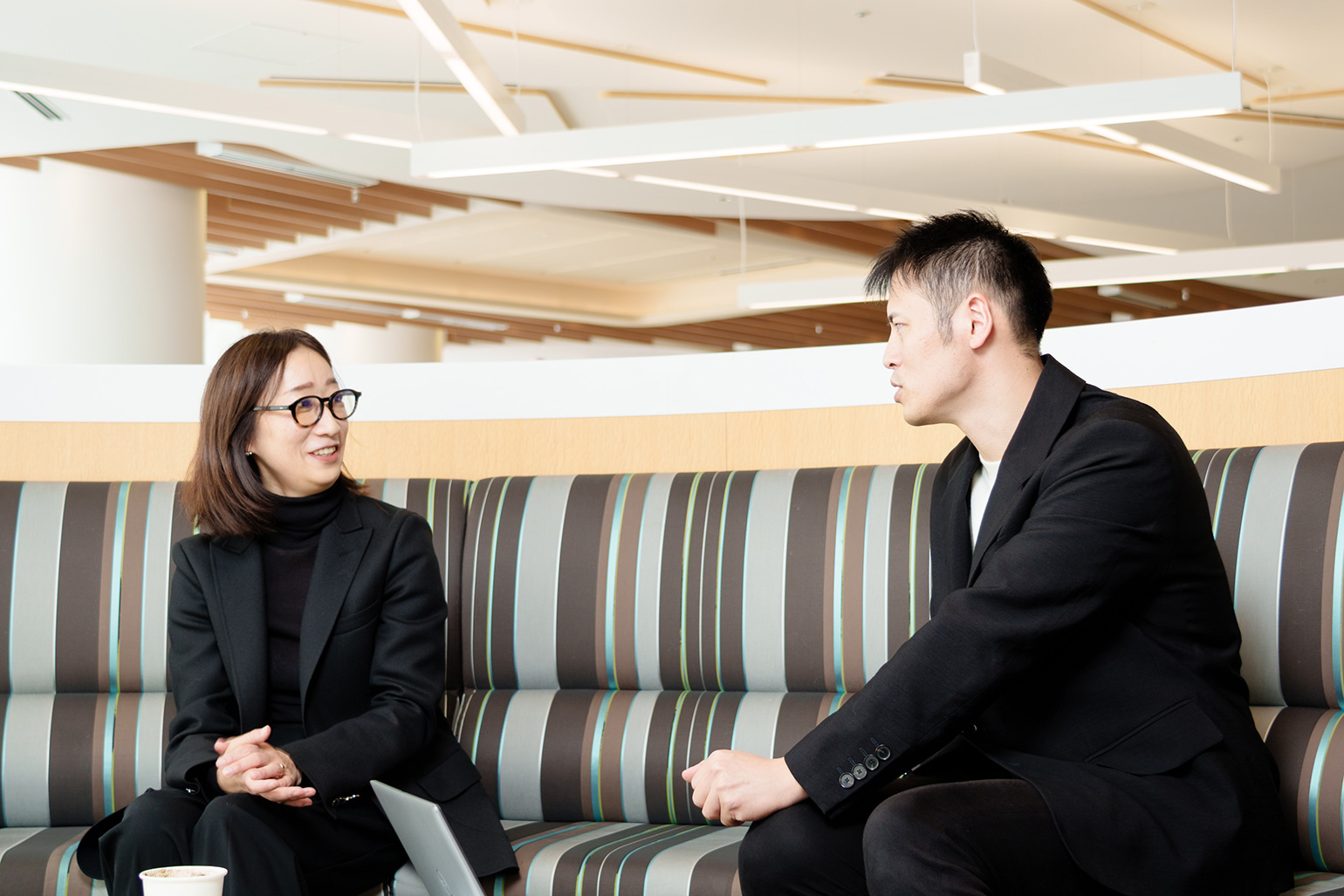
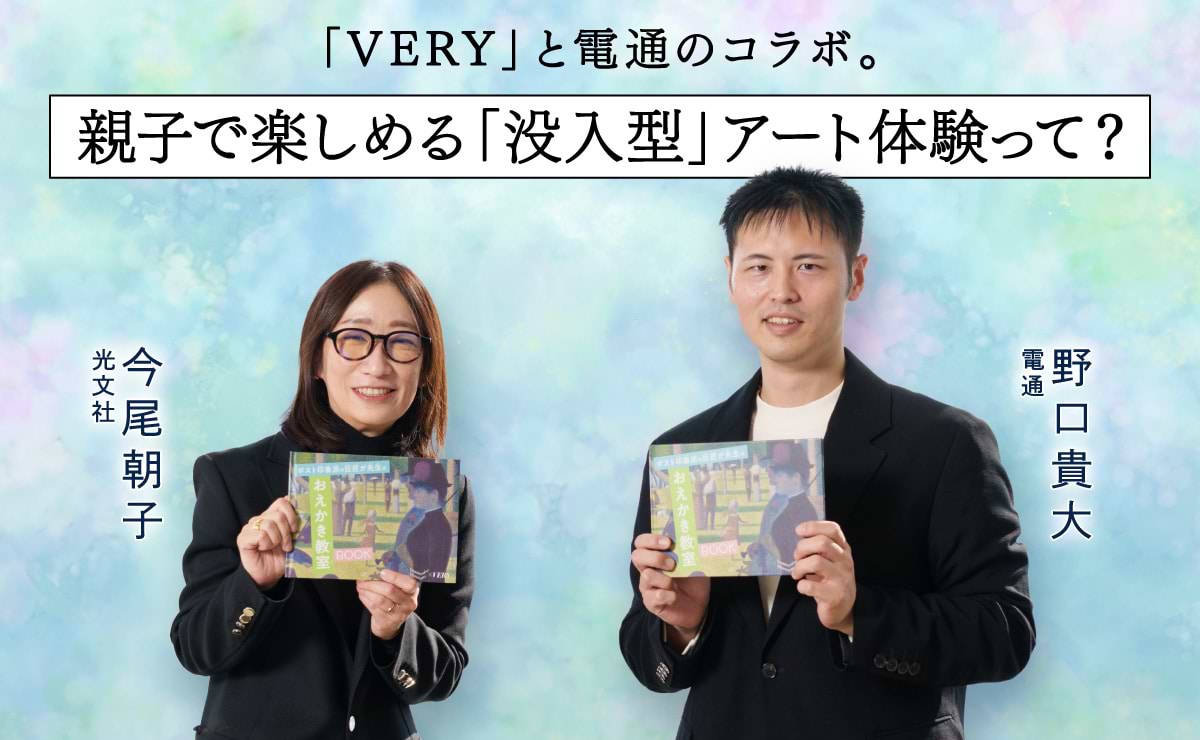
From left: Kobunsha's Asako Imao, Dentsu Inc.'s Takahiro Noguchi
Art has become an accessible presence that can be experienced not only in museums but through various opportunities.
Amidst this trend, Dentsu Inc. and Dentsu Live Inc. have launched " dentsu Exhibition Value Design," which produces exhibitions from the perspective of creating "new spaces for experiencing content." This series introduces examples of various exhibitions handled by Dentsu Inc. and Dentsu Live Inc.
This installment focuses on the "Impressionism" (held in 2022) and "Post-Impressionism" (held in 2023) exhibitions from the immersive digital art exhibition "Immersive Museum," planned and hosted by Dentsu Inc.
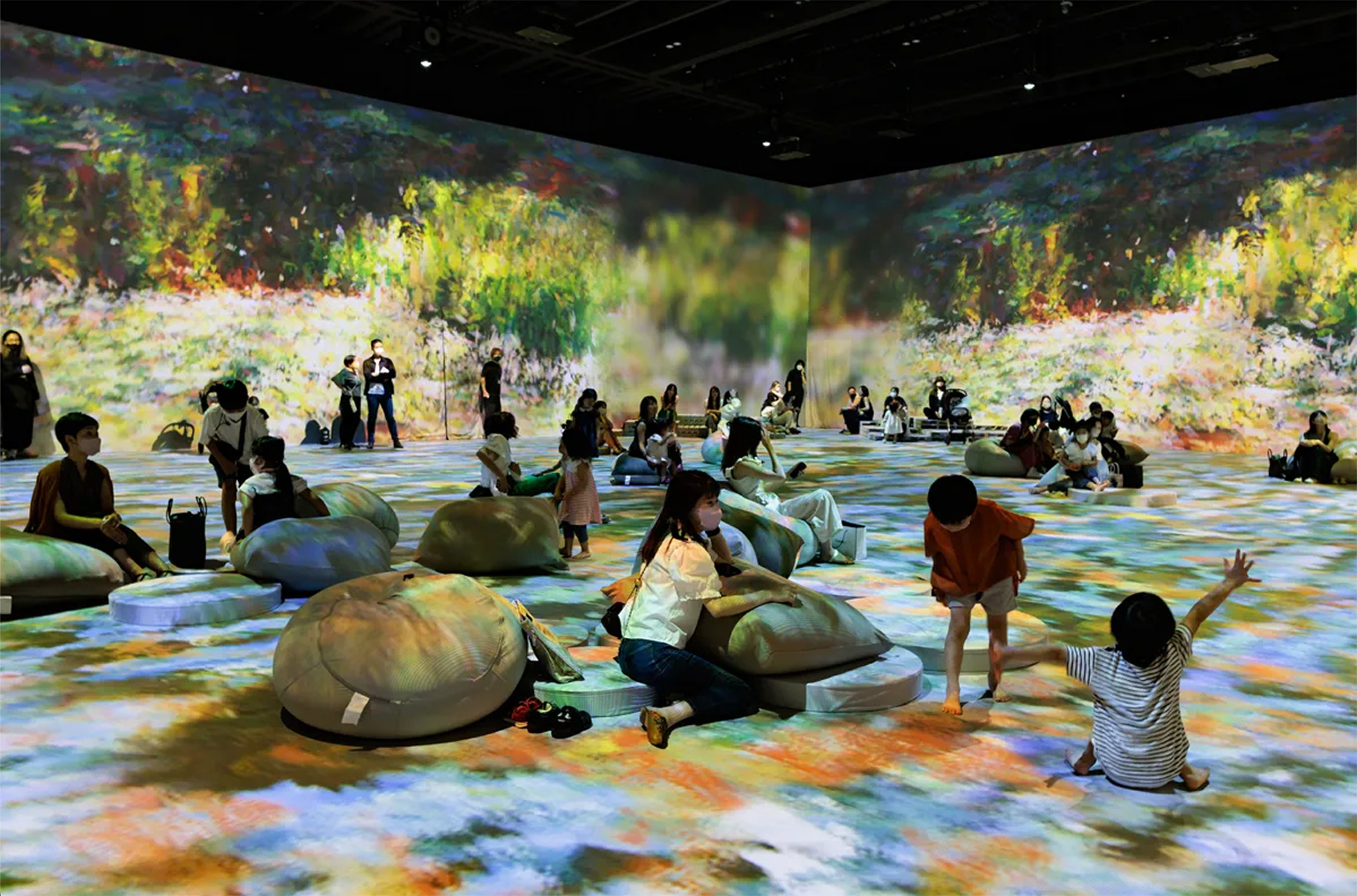
The Immersive Museum offers an immersive experience surrounded by sound and visuals, featuring paintings by universally recognized masters like Van Gogh and Monet.
We spoke with Takahiro Noguchi of Dentsu Inc., who handled the total production, and Asako Imao of Kobunsha, then Editor-in-Chief of the fashion lifestyle magazine "VERY," which collaborated on the exhibition. The exhibition was particularly popular with families with children.
Why an Immersive Digital Art Exhibition for Families Was Born
――First, please introduce yourselves.
Noguchi: As the Executive Producer for the Immersive Museum, I oversaw the entire project from business design to promotion.
Imao: I'm Imao from Kobunsha's First Editorial Department. Mr. Noguchi approached me regarding the promotion to introduce the Immersive Museum to the parenting moms who are the core readers of Kobunsha's magazine "VERY."
――What prompted the decision to launch the Immersive Museum?
Noguchi: At the Entertainment Business Center where I work, we were exploring new ventures with a focus on the art sector. We looked at various art initiatives—art fairs like Basel and Frieze, contemporary art, and immersive digital art exhibitions like Paris's Atelier des Lumières, which inspired this project. Ultimately, the format that most captivated me and that I wanted to pursue was the digital art exhibition.
The typical art experience in Japan is at a museum, where adults quietly view works from a distance, right? But at Atelier des Lumières, children were lying down, enjoying massive digital reproductions of famous paintings. This experience design, where the art actively engages you, was truly excellent. I was determined to bring it to Japan and proceeded with planning in collaboration with Dentsu Group's Drill Inc.
――You mentioned that "VERY" handled the promotion. Could you tell us how you approached "VERY"?
Noguchi: We identified two main target demographics for the immersive museum. The first was young women, specifically those in their late teens to twenties. The second was families with children. This was exactly the scene I witnessed in Paris—young children enjoying art alongside their mothers. So, we focused on these two groups.
While we had some insights into the young female demographic, we were uncertain about the mothers raising children. After discussing it internally, we heard that Ms. Imao, who was the Editor-in-Chief of Kobunsha's "VERY," would be the ideal person for the role, so we reached out to her.
――What were your initial thoughts when you first heard about this project, Ms. Imao?
Imou: At that time, I was just learning with our readers how art can support parenting. I remember thinking, "Immersive museums connect art and moms, and they might become more accessible than traditional art museums."
You see, just before Ms. Noguchi approached me, I had interviewed Ms. Ayumi Suenaga, author of "Art Thinking for Ages 13 and Up," and had just created an article titled "How to Cultivate Art Thinking from Age 3" for moms of preschoolers.
This conversation came at a time when we were learning together with our readers that "art empowers children to develop their own perspectives" and "art lends its power to nurturing individuals who value expressing 'this is how I feel.'"
Experience historical masterpieces through each child's free imagination
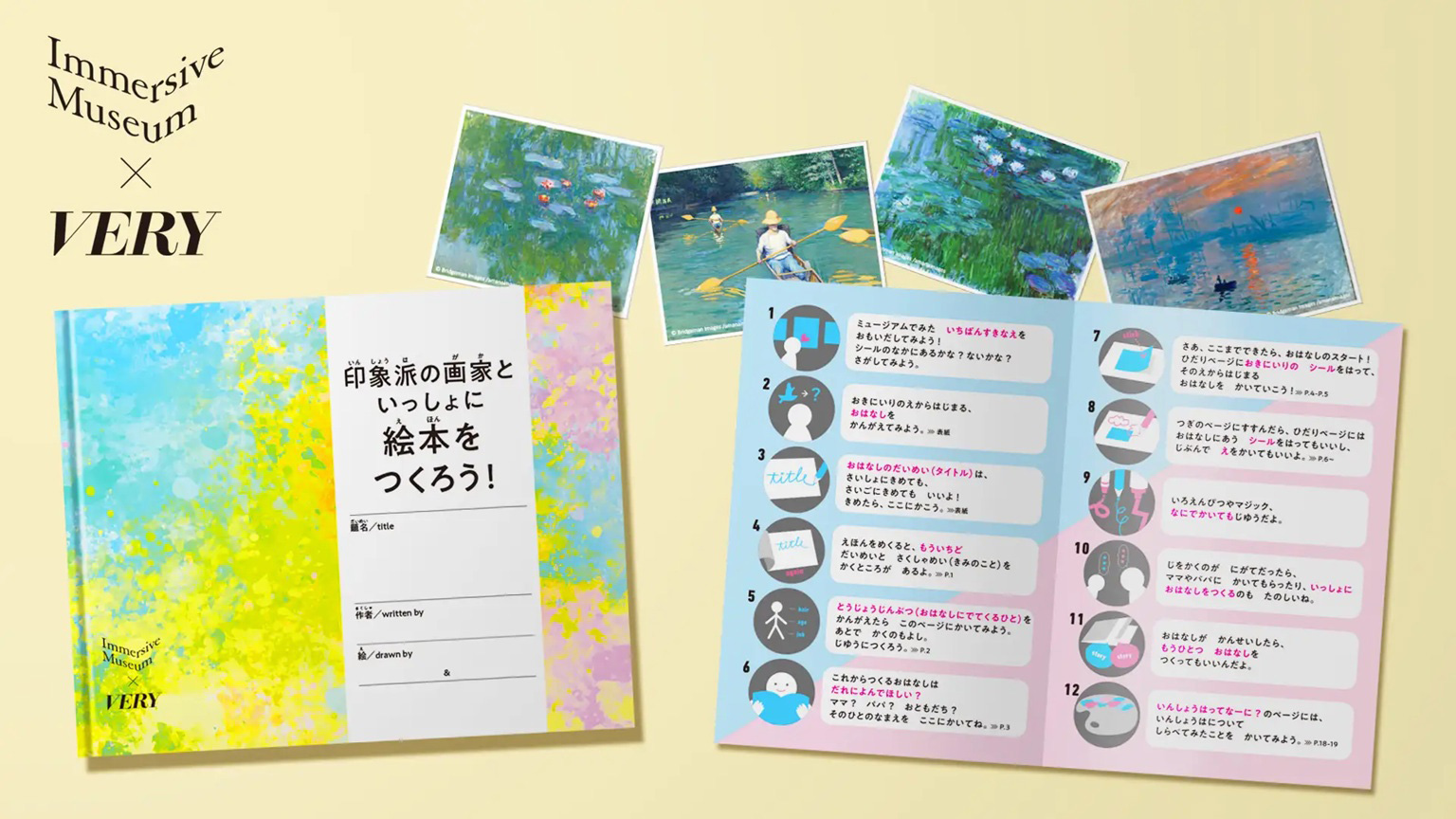
In 2022, they created the "Drawing Picture Book BOOK" (top photo), where children made original picture books by sticking Impressionist painting stickers. In 2023, they produced the "Drawing Class BOOK," teaching the techniques of Post-Impressionist masters like Van Gogh, Seurat, and Gauguin. These were distributed free to elementary school-aged visitors and younger.
──At the Immersive Museum, as a collaboration project with "VERY," you distributed free kits allowing visiting children to create their own picture books. How did this project come about?
Noguchi: From the very beginning of planning, we were determined to make it enjoyable for children. While many adults love museums, we often heard comments like "Kids can't enjoy it" or "We can't go because kids might get noisy." We believed that even those children could develop an interest in art within the immersive museum, surrounded by large-scale sound and visuals. We hoped that even one more child would experience art with their whole body and feel "This is fun!"
That's why I asked Mr. Imao, "Could we create something together to give to children?" I also wanted it to be something that didn't end when the child received it, but something they could enjoy and continue their art experience with even after returning home.
Imao: Creating something like this distribution kit was a first for us, but we pride ourselves on print content and have confidence in our paper-based expression. That aspect was very rewarding.
──How did you progress from the initial concept to the final design?
Noguchi: We decided from the start that it would be distributed free to all visitors under elementary school age. Then we explored ideas that would excite children from their perspective—something they'd want to try immediately upon returning home. We settled on a booklet where children could take action themselves, using Monet's works like "Impression, Sunrise" and "Water Lilies."
──So this picture book was planned from the initial idea by the "VERY" editorial department?
Imao: Yes. It might sound biased coming from the proposal side, but we had rights issues. We never imagined we'd actually be able to use such iconic Impressionist paintings. We thought we'd have to clear some incredibly high hurdles... But when I consulted Noguchi, she said, "Don't worry, I'll negotiate." I was like, "Seriously?" (laughs).
Then I consulted him about things like, "If there are only two or three works included, it won't feel like creating your own story, so I want to choose from at least a dozen or so," or "I want to pick paintings that seem easy to build a story around." I thought it might be difficult, but I discussed various ideas, and I was surprised that almost everything became possible. What we ultimately created is a book where you use famous painting stickers to learn about various artistic techniques, draw what you feel, and build your very own picture book.
──What was the request from Dentsu Inc. to "VERY"?
Imao: Before starting the project, Mr. Noguchi gave us this theme: "Not just something handed to them, but something that lets them build on the experience—something they can take home and output in a different form."
Noguchi: We discussed wanting it to be like a "free research project" – something enjoyable rather than rigid.
Imao: Since it was summer vacation, we included pages in the latter part of the book encouraging kids to research the pictures and artists they chose. In terms of deepening their interest, it was truly like a free research project. Fortunately, many children made and enjoyed them. On a personal note, my own daughter also had fun creating hers at the time.
Noguchi: I remember very clearly how much Imao-san's daughter enjoyed it. It made me happy.
──Was there anything you were particularly particular about in creating the picture book?
Noguchi: That was very clear: "allowing children to think for themselves." Creating their own stories from a child's perspective. While creating a story from a blank page is quite difficult, we aimed for them to collaborate with famous paintings and artists to create their own unique stories.
Imao: We designed it so that famous painters, not as complex art forms but as familiar figures, could feel like "friends" to the children.
The first kit featured multiple stickers of Impressionist paintings. Kids could freely choose and stick their favorite stickers to create a story. It was a picture book kit where they could create their "own unique story" alongside the artists, adding pictures and words. We experimented a lot—like letting kids choose pictures that seemed easier for them to create stories with, or creating a separate, easy-to-understand instruction manual for kids specifically for making the picture book.
An immersive art experience that perfectly resonated with parents
──The Immersive Museum received an overwhelming response. What outcomes did you achieve by holding it?
Noguchi: There are multiple perspectives. From a corporate standpoint, it was a success for Dentsu Inc. to establish a new B2C business model focused on art projects for customers. Personally, though, I felt immense joy in bringing immersive digital art exhibitions I'd seen overseas to Japan and seeing people of all ages enjoy them. It was such a significant achievement—or rather, a shift in my mindset—that it solidified my decision to pursue a career in the entertainment world.
Imao: At "VERY," we received tremendous feedback from moms who visited wanting their children to experience it. They themselves felt inspired, experienced a detox effect, or found healing. It's amazing that it became a place where both parents and children could each find their own stimulation.
I think parents of young children are looking for events and outing spots they can enjoy together. Word of mouth from attendees spread quickly, with comments like, "It's so nice they let you bring strollers right in," or "It's okay if they cry or run around." I realized how crucial it is for organizers to send a message that lowers moms' barriers – like "It's okay if kids aren't perfectly well-behaved" or "It's not a bother if they cry or run around." The time frame, shorter than a movie, was also perfect for families with kids.
Noguchi: When we first held it in 2022, it was during the COVID-19 state of emergency. We were worried about attendance, but once we opened, more people came than expected—not just the young people we targeted, but even older folks. Seeing them enjoy themselves and overhearing their conversations made me confident right on the first day: "This is going to be okay."
──Seeing the visitors' reactions to the exhibition, what else did you feel?
Noguchi: Above all, I was deeply moved that the scene I witnessed in Paris could be realized here in Japan. Seeing children happily touching the walls and interacting with the moving paintings, I realized this is how they engage with things—it's a truly childlike perspective.
Imao: It was also impressive to hear directly from visitors who enjoyed the immersive experience that, while they'd had teamLab-style visual experiences before, this was their first time feeling like they'd time-slip into the world of a famous painting and stepped inside it. What made me happiest was hearing people say, "I came hoping my child would enjoy it, but I ended up thoroughly enjoying it myself and feeling inspired."
The corner where visitors could get their portrait drawn by AI Van Gogh after viewing the exhibition was also very popular.
We needed to convey the message that families with children were welcome.
──What do you think are the reasons behind the current focus on art experiences?
Noguchi: From the perspective of intellectual and emotional development, it's clear that parents' attitudes have changed. Today's children, especially elementary school students, all have digital devices like iPads. Some elementary schools even incorporate digital art creation into their lessons. We've been invited to elementary schools as lecturers to talk about digital art, too.
I feel our project has successfully connected with this broader societal trend toward digitalization.
Imao: I sense that many parents today hold educational philosophies like "excelling in one particular skill" or "wanting to nurture their child's strengths and interests."Sports are one example, but art is another. If a child enjoys drawing or crafts, parents likely want to help them deepen that interest. That's why workshops and painting classes of this kind are popular, and I think learning is starting at younger ages. Beyond museums, there are more places and opportunities to engage with art in our cities, right?
──So art is becoming more accessible even for the mom demographic who read "VERY."
Imao: Yes. However, back in 2022 when the Immersive Museum first started, many moms still felt things like "art is too early for kids" or "I've never taken my kids to a museum because I'm afraid they'll get noisy." What Mr. Noguchi saw in Paris—that environment where kids can lie down and enjoy art, that sense of wonder—bringing that to Japan was huge.
──So for the promotion in "VERY," you focused on conveying to moms that "it's okay if the kids aren't perfectly quiet the whole time."
Imao: For the promotion, our primary focus was lowering the barrier for moms. Just before that, in the spring of 2022, there was an exhibition of British contemporary artist Damien Hirst at the National Art Center, Tokyo. We heard feedback from our mom readers saying, "They had a junior guide pamphlet for kids, and it felt welcoming to families with children, which was great." We wanted to learn from that approach and PR strategy.
In other words, they clearly conveyed the message: "It's okay to enjoy this with your kids. Please come with your children." Photography was also allowed. We actually heard reader feedback like, "The Hirst exhibition felt accessible and enjoyable," so we felt that sense of accessibility was essential and used it as a reference.
Noguchi: At the Immersive Museum venue, visitors enjoy video content in an environment with loud sound, so it's no problem if a child cries. You can bring strollers inside, and moving around to see paintings that catch your interest is completely fine.
For the collaboration with "VERY," besides the "Drawing Picture Book BOOK" mentioned earlier, we also coordinated with the magazine pages and held "VERY DAY" events. We invited mom readers to come, letting their children run around and enjoy themselves while we featured those scenes in articles.
──Could you tell us about the subsequent developments for the Immersive Museum?
Noguchi: First, since we succeeded with art as the theme, in 2024 we expanded it into the music domain and held an exhibition where visitors could experience the process of creating YOASOBI's songs. From the start, I felt that immersive experiences could be multiplied not just with art, but also with anime, movies, and music. We're currently working on the next development.
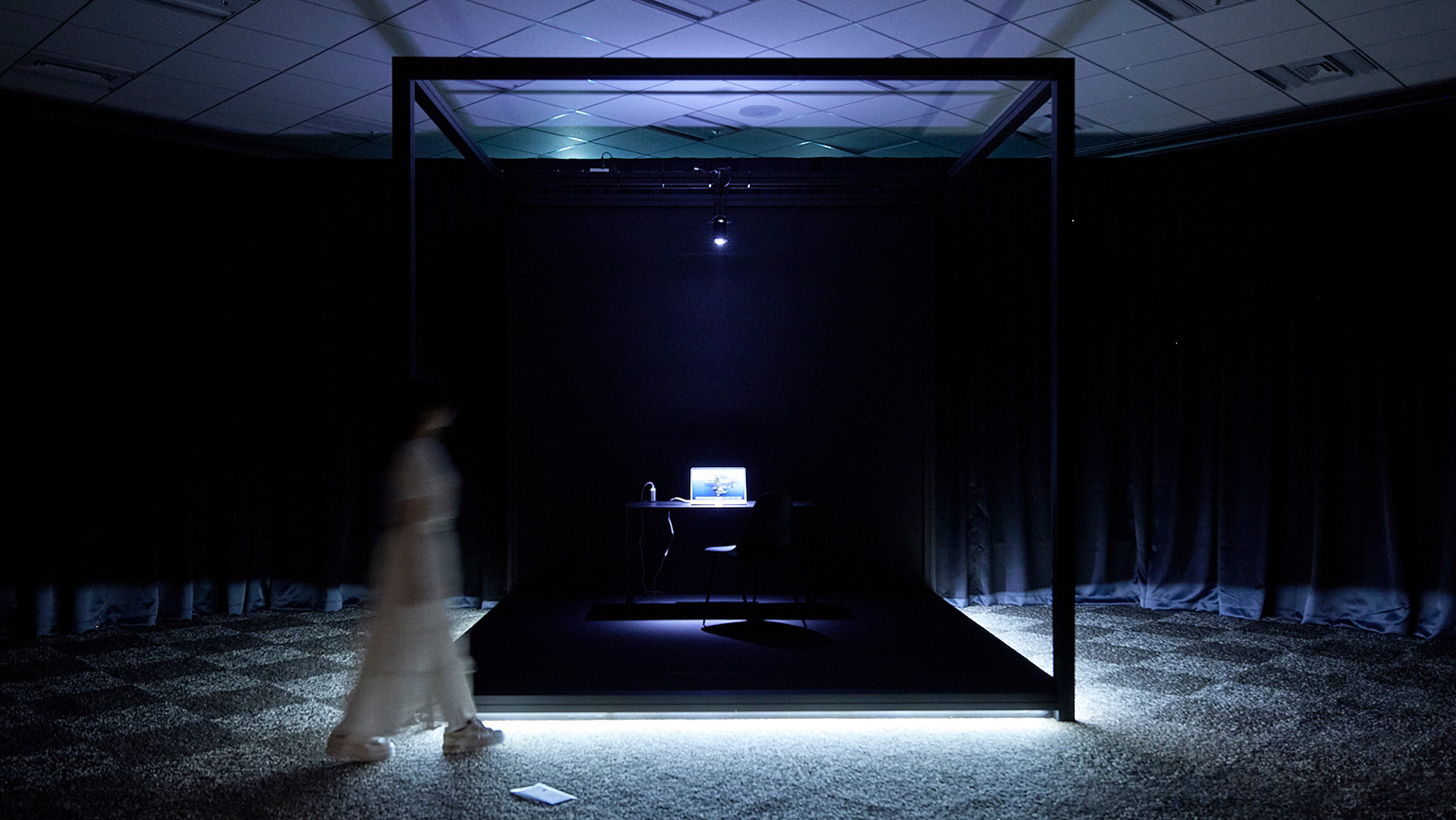
From the Immersive Museum YOASOBI Exhibition: "Ayase Room"
──Are there any future collaborations you'd like to pursue with Dentsu Inc. and "VERY"?
Noguchi: Working together in 2022 and 2023, I was truly impressed by how deeply "VERY" understands the mom generation and parenting demographics—an audience we knew almost nothing about. Moving forward, if there are any projects targeting moms or from a female perspective, I'd love to be the first to consult with you and collaborate on them.
Imao: The immersive museum was an event that provided input for moms and motivated them in their parenting. We'd be thrilled if you could reach out to us again for such valuable events. I currently oversee six women's media outlets at Kobunsha, and if you find them appealing...
While this "VERY" generation primarily features moms with preschoolers or lower elementary school children, we also have "STORY," a media outlet mainly for moms with children in their teens. I truly believe we're well-suited for projects that support not just the children but the moms themselves, so I'd very much like to collaborate.
Joined Kobunsha in 1998. Served on the editorial team of "VERY," was a founding member for the launch of the new magazine "STORY," and became deputy editor-in-chief of "STORY." Appointed editor-in-chief of "VERY" in 2007, a position she held for 16 years.In 2024, she became Director and Executive Officer of the First Editorial Bureau, overseeing women's magazines CLASSY., VERY, VERY NaVY, STORY, BIS, and BIS. She became Director in charge of the First Editorial Bureau in August 2025.
Takahiro Noguchi
Dentsu Inc.
Entertainment Business Center
Producer
After joining Dentsu Inc., she worked at the Media Services / Radio,TV Division handling the TV Tokyo network. After transferring to the Entertainment Business Center in 2019, she launched the Immersive Museum, an immersive digital art museum featuring masterpieces. The museum has welcomed over 750,000 visitors nationwide. She is currently seconded to Dentsu Music and Entertainment Inc., where she oversees the music division.

 How to Create an Exhibition. What is an Exhibition in the "Content × Experience" Era? [3/5]