dentsu Japan (the domestic Dentsu Group) has established the role of Growth Officer (GO) to create case studies that break new ground in priority areas; seven individuals have been selected from various fields for the fiscal year ending in 2026. In this series, we explore the perspectives and thinking of the GOs—who embody Dentsu Inc.’s vision of being a “True Integrated Growth Partner”—as they look toward the future.
Featured in this installment is Hatsunao Yamamoto, a Growth Officer who drives client growth and business transformation across dentsu Japan. Spanning multiple domains—including delivering value to companies through the dentsu Japan Strategic Client Room, AI-driven marketing and business transformation, co-creation with startups, and talent development—he explores how to combine dentsu Japan’s diverse capabilities to drive growth. What is his current position, and what are his plans?
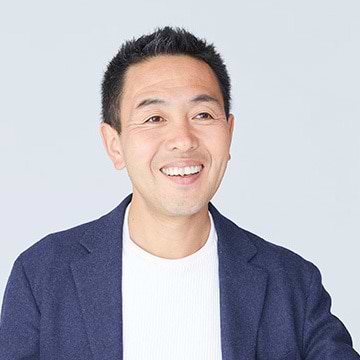
Hatsunao Yamamoto, Growth Officer at dentsu Japan. After joining Dentsu Inc., he managed accounts for major cosmetics companies and pharmaceutical firms.In June 2019, he was seconded to D2C Inc., a joint venture between NTT Docomo and Dentsu Inc., where he served as Representative Director and Executive Vice President, overseeing business operations. Starting in January 2022, as Director of Startup Growth Partners, he promoted growth support and business co-creation with over 100 startups. He has held his current position since January 2026.Currently, with a focus on supporting client growth across dentsu Japan, he is driving initiatives across multiple domains, including the dentsu Japan Strategic Client Room, AI-driven marketing and business transformation, co-creation with startups, and talent development.
“Creating” New Value by Integrating Across dentsu Japan
──First, could you tell us about your current role as a Growth Officer (GO)?
Yamamoto: I believe the role of a Growth Officer is not just to focus on Dentsu Inc. as a single entity, but to envision and execute how we can provide new value to clients by combining the strengths of all dentsu Japan companies. Personally, I place the greatest emphasis on creating concrete examples of how we can contribute to corporate growth at the implementation level by leveraging the diverse capabilities of dentsu Japan.
I’m currently involved in a wide range of projects, one of which is leading the “dentsu Japan Strategic Client Room.” This is an initiative where Dentsu Inc., Dentsu Digital Inc., DENTSU SOKEN INC., SEPTENI CO.,LTD, Ignition Point Inc., and others come together to create value by further strengthening cross-group collaboration and contributing to our clients’ business growth and problem-solving.
In addition, I’m constantly juggling five to six projects simultaneously, including business innovation driven by AI and talent development in the startup sector.
──Would you say that initiatives with startups are also part of this growth support?
Yamamoto: Yes, that’s correct. The startup sector is one of the key areas I’ve been deeply involved in. However, my current role as Growth Officer isn’t limited to startups alone. Both large corporations and startups need growth and transformation. While addressing the needs of both, I’m considering how Dentsu Japan can provide value.
Co-creation with startups has two main meanings. The first is building relationships with future stakeholders. This involves collaborating early on with startups that have the potential to become leading Japanese companies in the future and establishing relationships with them as co-creation partners. The second is innovation within dentsu Japan itself. I believe that by incorporating the cutting-edge technologies and capabilities that startups possess, we can create new business opportunities that wouldn’t emerge from within dentsu Japan alone.
At the same time, we have initiatives—such as the dentsu Japan Strategic Client Room—that aim to maximize the value we provide to clients through cross-group collaboration. Furthermore, we are advancing initiatives that leverage AI to move further upstream in our clients’ value chains, contributing not only to marketing but also to the transformation of their businesses themselves.
The “Ability to Drive Growth”—Essential for Both Startups and Large Corporations
—How do you feel the environment surrounding startups has changed over the past few years?
Yamamoto: Looking back over the past decade or so, I feel that the environment surrounding Japanese startups has definitely improved. Government support systems have been put in place, and the ecosystem has gradually gained depth. I think it’s very significant that there is now a broad societal momentum to “nurture startups.” *Reference: Keidanren “Startup Advancement Vision Review Book 2026”
However, on the other hand, challenges have also come to light. While the number of startups is increasing, it’s still not enough to say they’re achieving truly significant growth. The number of unicorn companies in Japan remains limited, and there are many cases where companies fail to scale fully after an IPO. Going public has become something of a “goal” in itself, and quite a few companies struggle with how to increase their corporate value beyond that point. Even when a startup possesses excellent technology, there are often cases where it hasn’t been sufficiently articulated how that technology will translate into a business, whose problems it will solve, and how it will build a market.Amid pressure from the capital markets, the question is how to chart a sustainable growth trajectory. I feel that this “post-IPO growth” is one of the major hurdles facing startups today.
──How does dentsu Japan’s unique “side-by-side support” approach address these challenges?
Yamamoto: The side-by-side support we provide is not merely advice or a business plan. It involves standing alongside the CEO, working together to identify “what needs to be solved” from a medium- to long-term perspective, and tackling each challenge head-on.
Business leaders must simultaneously navigate three distinct markets: the “capital market” for raising funds, the “labor market” for attracting top talent, and the “product market” for engaging customers. We integrate these three perspectives to prioritize the questions that need to be addressed right now. Building on that, we don’t just devise strategies—we see them through to execution. I believe this is where dentsu Japan’s strength lies.
Startups vary widely in both their stage of development and industry. In the seed stage, designing a narrative that effectively communicates a company’s value and potential can be crucial. In the later stages, however, the ability to implement strategy is what matters most. In the intermediate phases—such as scaling from 1 to 10 or from 10 to 100—GTM (Go-to-Market), or how to enter the market, is the key.dentsu Japan possesses a wide range of assets capable of addressing each of these phases.
And this isn’t limited to startups. The same challenges arise in new business ventures and transformation initiatives at large corporations. That’s precisely why we believe the insights we’ve cultivated through supporting startups will also contribute to the growth of dentsu Japan as a whole.
—Where do you see the challenges in collaboration between large corporations and startups?
Yamamoto: Both large corporations and startups are interested in each other. There are many events, and corporate venture capital (CVC) is on the rise. However, there still aren’t many cases where these collaborations actually progress to commercialization. I think the biggest factor is that they get stuck at the proof-of-concept (PoC) stage.
When I ask myself what’s missing, I ultimately believe it comes down to “people.” On the corporate side, there are people who genuinely want to transform their businesses. On the startup side, there are people who genuinely want to change the world. The question is whether these passionate individuals can meet and have discussions that lead to actual decision-making. Without that, it inevitably ends with just “we gave it a try.” If conducting a PoC becomes the goal in itself, it won’t lead to true innovation.
──What kind of environment is needed to overcome that barrier?
Yamamoto: I believe we need communities or platforms where passionate individuals can continuously exchange ideas. Many of the existing events are able to create initial connections, but they lack the mechanisms to support commercialization beyond that point. That’s precisely why I think we should create a space—even if it’s just a small, elite group—where decision-makers, investors, and people who truly want to launch a business can come together.
At the same time, to move forward with commercialization, large corporations must also understand the pace of startups and their culture of moving forward through agile trial and error, and adopt a mindset that adapts to that reality. Regardless of whether dentsu Japan takes the lead on all of this, I believe it has the potential to at least serve as a hub.It has a network within large corporations, connections with startups, and an understanding of the logic behind both. That is precisely why I want to shape a form of collaboration that goes beyond mere introductions and takes into account the entire process of launching a business.
Business Producers in the AI Era Will Evolve into “Mixed Martial Arts-Style Talent”
—How do you think the collaboration between startups and large corporations will change in Japan’s industrial sector going forward?
Yamamoto: I believe the presence of startups will continue to grow even larger in the future. However, it won’t just be about them growing on their own; how they connect with large corporations will become increasingly important. Large corporations have customer bases and business assets, while startups have technology and agility. If both sides can collaborate effectively, more new businesses should emerge. This isn’t just about capital, such as M&A. Rather, I believe we need to provide support that extends to how to build the business afterward and how to shape the future.
Startups with technology and large corporations with customer touchpoints and business implementation capabilities will form deep partnerships to create examples that redefine industry standards. I believe that, at that point, dentsu Japan can serve as the hub that connects the two and brings these initiatives to fruition as viable businesses.
──With the advent of AI, how do you think the role of the business producer will evolve in the future?
Yamamoto: I believe that business producers of the future will play an even greater role in creating value at both the beginning and the end of the process.
In other words, this means first defining “what question needs to be solved” together with the client, and then, ultimately, bringing that vision to life and seeing it through to completion. Some of the intermediate tasks may be streamlined by AI and technology in the future. However, the value of formulating the question and steering the project to implementation while balancing complex stakeholder interests is likely to increase.
I think the proportion of work that involves “receiving a brief, creating something, and delivering it” will decrease relatively. Instead, what will be required is the ability to stand in a strategic position on the same level as the client, think together about what needs to be done, and see it through to implementation. In a sense, I view this as the role of a “mixed martial arts-style professional.”
In addition, the value of generalists will likely rise. AI makes it easier to access specialized knowledge. However, this doesn’t mean that people’s roles will diminish simply because AI provides the answers. Rather, what will become crucial is taking questions arising from the field as a starting point, leveraging AI to the fullest while collaborating with experts who possess insights and ideas that AI alone cannot provide, and guiding the process toward a solution.
Rather than simply lining up experts in isolation, we’ll combine the strengths of people and AI to transform questions into value. We’ll need people who can engage multiple stakeholders and drive progress forward. In that sense, I believe the role of a business producer will become even more exciting in the future.
──Finally, as a Growth Officer, how do you envision your role moving forward?
Yamamoto: First, there are two core principles I value when making decisions and moving forward.
One is to consistently adopt the customer’s perspective. I believe that, ultimately, it is the customer who determines the value of our work. So when I’m unsure about something, I make a point of stepping back and considering not only what’s best for the customer right in front of me, but also what the truly correct decision is from the perspective of the consumers and society at large.
The other is to conduct my work in a way that allows me to confidently present everything—including the process—to our customers. What was my mindset? With which team members did I discuss the matter? What process did I go through to bring it to fruition? I believe that doing work I’m not ashamed to disclose—inside and out, with no hidden agenda—forms the foundation of trust.
Building on that, I believe what will be required of Growth Officers going forward is to combine people and capabilities to give concrete form to new value that has never existed before. Rather than letting it end with mere slogans, we will steadily increase the number of cases where we can say, “We actually did it.” I believe it is our role as Growth Officers to demonstrate, through concrete examples, the transformation into an organization that “creates” value.
Our goal is to make dentsu Japan a more tangible presence as an Integrated Growth Partner that walks side-by-side with our clients’ business growth itself. We will go beyond simply providing advertising and marketing support to offer comprehensive support from conception to implementation by combining strategy, data, technology, creativity, and business development. We believe that accumulating concrete examples of this will lead to the future value of dentsu Japan.
At the same time, the starting point for all of this is, of course, earning the trust of the clients right in front of us. No matter how much the times change, it is trust that leads to new business opportunities. Building on that trust strengthens companies and, ultimately, contributes value back to society. Precisely because we are living in an era of taking on new challenges, we want to cherish the trust we have built—right here and now—more than ever before.
“Ultimately, I think it comes down to people,” says GO Yamamoto. “Creating” business growth by connecting startups and large corporations, executives and frontline staff—bridging different positions and functions. Though his tone remained calm throughout, there was a palpable passion behind his words. This attitude is clearly evident in his story of building relationships with young entrepreneurs through tennis. Before business, first get to know the other person and cultivate trust. It may seem like a detour, but in reality, that is what forms the strongest foundation.He doesn’t put on airs, yet he never loses sight of what truly matters. I felt that his personality shines through in his work.
After holding positions managing major cosmetics and pharmaceutical companies, he went on to support the growth of over 20 startups. In June 2019, he was seconded to D2C Inc., a joint venture between NTT Docomo and Dentsu Inc., where he oversaw business operations as Executive Vice President. In January 2022, he was appointed Head of the Startup Growth Partners Office. Since January 2026, he has served as Growth Officer at Dentsu Japan.

 GO Future: Growth Officer, Speaking of the Future [5/5]