dentsu Japan (the domestic Dentsu Group) has established the position of Growth Officer (GO) to spearhead case creation in key focus areas. For fiscal year 2025, seven individuals were selected from various domains. This series explores the future-oriented perspectives and thinking of the GOs who embody Dentsu Inc.'s vision of being a "True Integrated Growth Partner."
This installment features Susumu Namikawa, GO responsible for the AI/Creative domain. How does this key figure leading the domestic Dentsu Group's AI strategy perceive the current state of AI? What kind of AI transformation does he envision for the future?
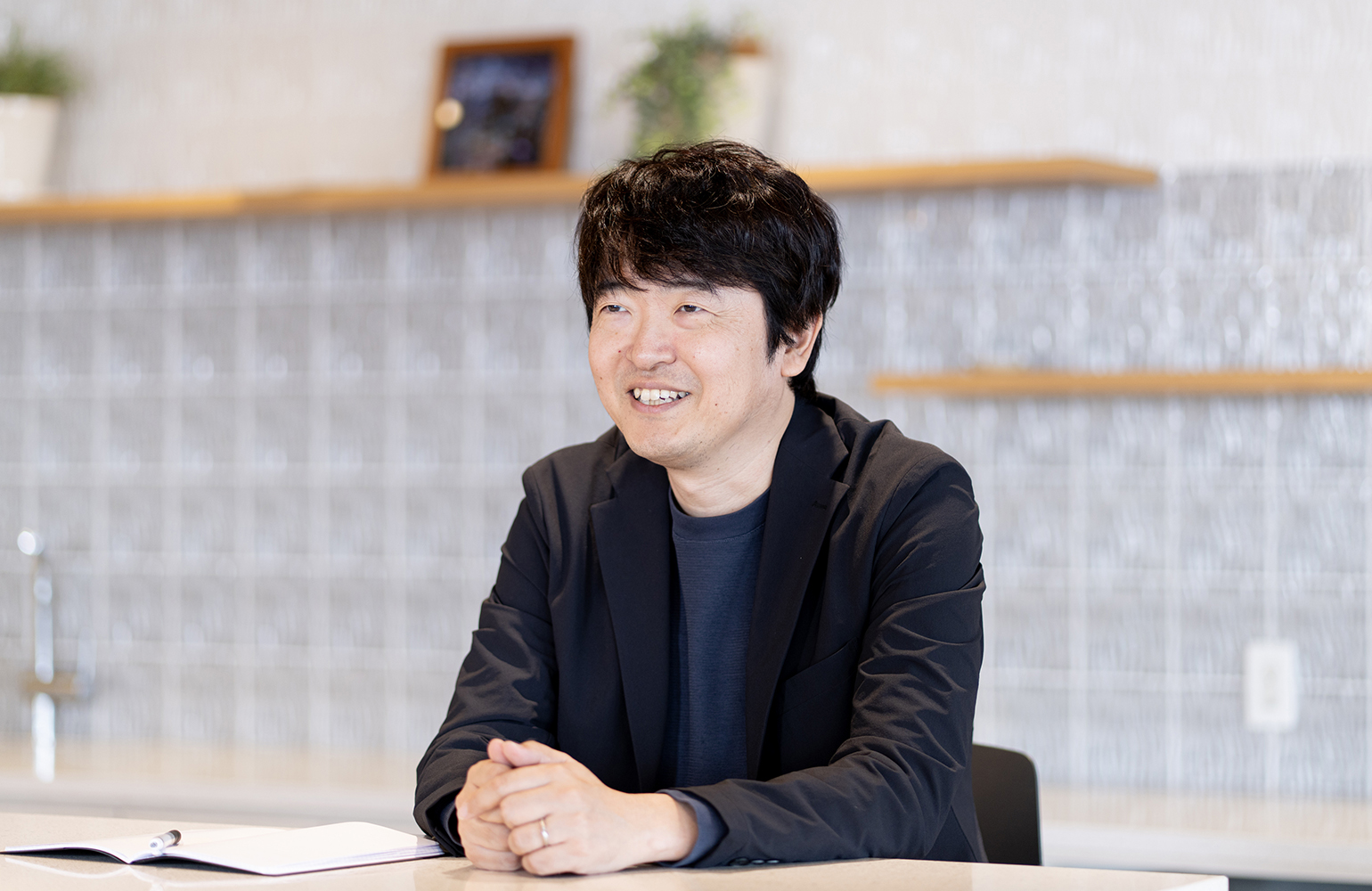
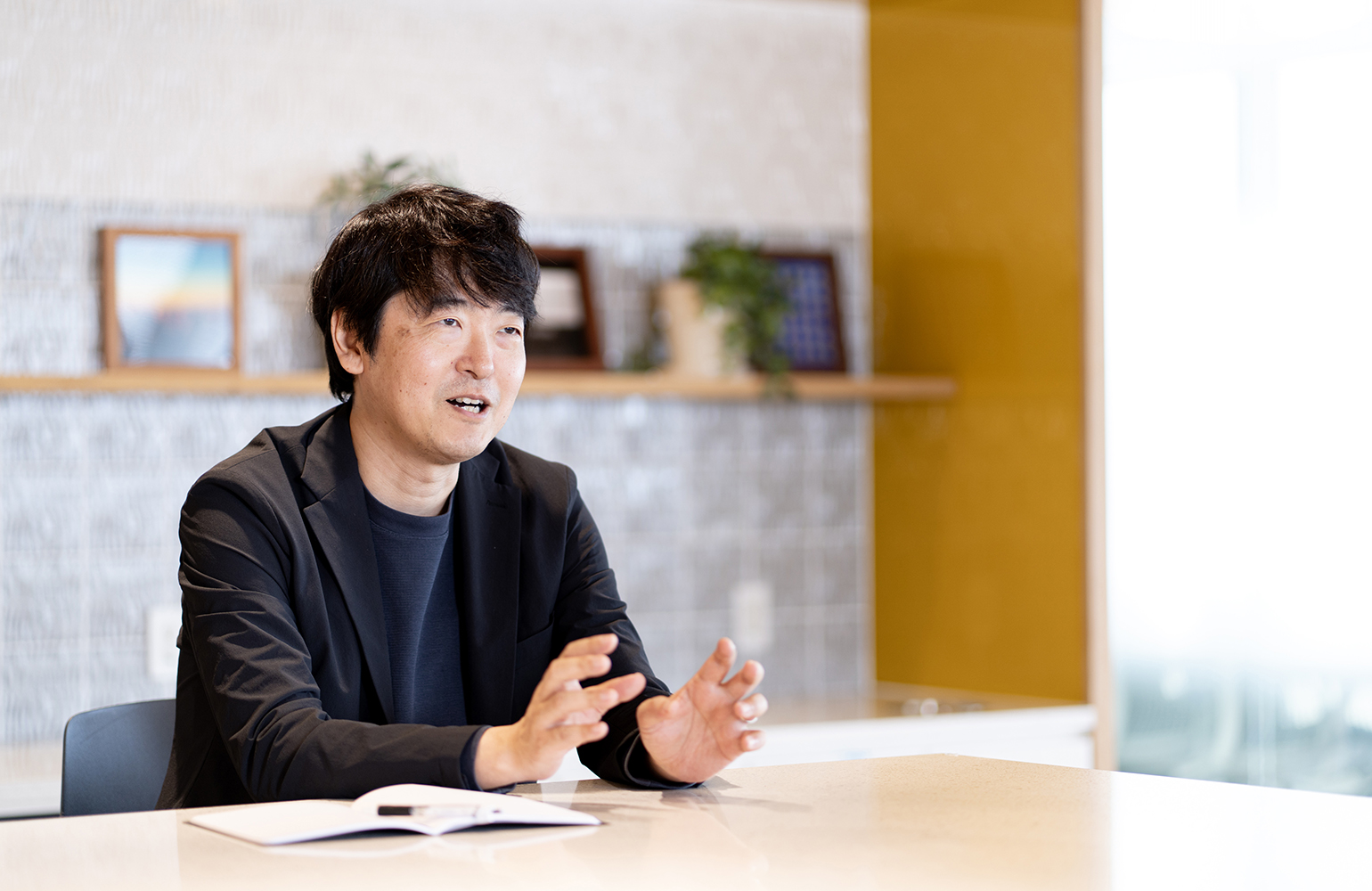
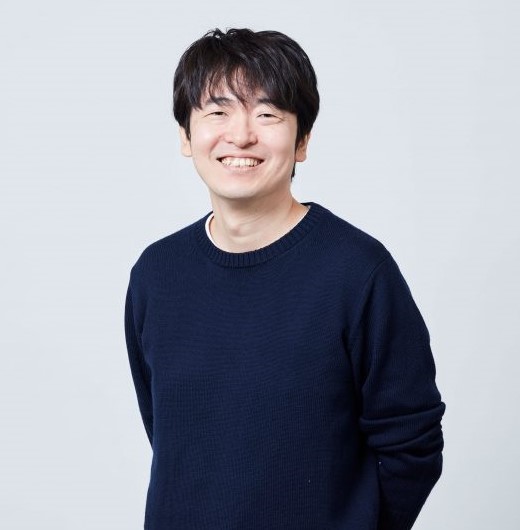
Susumu Namikawa: Growth Officer , Dentsu Japan. After joining Dentsu Inc., he worked as a copywriter, creative director, and programmer. In 2017, he was seconded to Dentsu Digital Inc., aiming to fuse AI/data with creativity.In 2021, he became Director of the newly established Dentsu Inc. Customer Experience Creative Center. He develops experiences utilizing generative AI. In 2022, he launched Dentsu Creative Intelligence and initiated joint research with the University of Tokyo AI Center. He serves as Unit Leader of the Augmented Creativity Unit. He has held his current position since 2025.Leads the Dentsu Group's domestic initiatives in "AI Strategy," "AI Development," "Research on Expanding Creativity through AI," "Advancing Marketing and Creativity with AI," and "Supporting Corporate AI Transformation." Recent publication: "AI Native Marketing: Creating a Happy Relationship Between People, Companies, and AI" (Sendenkaigi).
Generating Business Growth and Innovation Through AI
──First, please tell us about your current role as Growth Officer (GO).
Namikawa: I spearhead AI promotion and lead creative efforts for dentsu Japan, encompassing the entire domestic Dentsu Group.
My work currently falls into two main areas. One is developing various AI tools as needed and promoting their utilization to advance AI adoption within dentsu Japan. The other is accompanying clients as their focus shifts from AI technology itself to "what challenges can AI solve?"—providing support and proposals unique to dentsu Japan.
dentsu Japan announced "AI for Growth 2.0 " in May this year, an updated version of its AI strategy "AI For Growth " unveiled last year. Furthermore, in July, it launched the " dentsu Japan AI Center," a cross-organizational unit spanning 1,000 members.
──Could you explain the core elements and characteristics of the AI For Growth strategy?
Namikawa: The unique vision of AI For Growth lies in its declaration that AI, often discussed solely in the context of efficiency, will also be leveraged to drive business growth and innovation. Underpinning this is the philosophy that "people and AI grow together."
Furthermore, AI For Growth 2.0 proclaims "making all marketing AI-native." In other words, it means "evolving marketing to one where AI is used as a matter of course." We aim to evolve every aspect of the marketing process—including research, planning, creative execution, and measurement of results—using AI.
The key to this lies in two types of "imagination."
The first is "imagination." In marketing, the ability to imagine people's feelings is crucial. Marketing insights emerge from imagining the lives of consumers and customers, pondering questions like "What challenges might they face?" and "What would make them happy?"
The other is "creative power." Once we can imagine the joys and struggles of consumers and customers, we expand our thinking: "If so, wouldn't providing this kind of experience make them happy?" or "Wouldn't launching this kind of business solve their problems?" This is the power to create something new that didn't exist before.
"Imagination" and "creativity." I believe the key challenge lies in how AI can enhance and expand these two capabilities.
──Specifically, how can AI be leveraged to enhance and expand "imagination" and "creativity"?
Namikawa: Regarding "imagination," we announced the "People Model," an AI model that virtually recreates high-resolution personas at a scale of 100 million people, based on vast amounts of consumer data.
On the other hand, for "creativity," we've introduced tools embodying the "Creative Thinking Model": the AI copywriter "AICO2" and the "AI Art Director," which generates visual ideas by learning the thought processes of art directors. Both tools were developed by training AI with diverse insights from dentsu Japan, including those of copywriters, planners, and art directors.We believe this expertise is the source of our competitive edge in the rapidly evolving world of AI, where technology advances at a dizzying pace.
The range from "strikeouts" to "home runs" is fascinating
──Please tell us about the development intent and features of AI tools like AICO2 and the AI Art Director.
Namikawa: Whether it's copywriting or visual ideas, if you ask a generic LLM (Large Language Model) to "write copy" or "come up with an ad visual," it will produce something. However, the problem was that the results tended to be average or overly conventional. To solve this, we fine-tuned the LLM, which led to the creation of AICO2 and the AI Art Director.
If the copy or visual ideas generated by AI stay within predictable boundaries, you might think, "Well, humans could just do that." That's why I've always wanted to create AI that occasionally produces something beyond our imagination, inspiring humans to create something new. The copy generated by AICO2 might sometimes miss the mark, but it also hits singles and even homeruns. I find that range fascinating.
In marketing work, there isn't always just one right answer. When you want to drive innovation, having many options actually broadens possibilities more than clinging to a single solution. That's one of the core intentions behind developing AICO2 and the AI Art Director.
──Please tell us about the purpose behind establishing the dentsu Japan AI Center and its activities.
Namikawa: An organization or hub that concentrates top talent, technology, and know-how in a specific field to rapidly advance that domain is called a "Center of Excellence." The dentsu Japan AI Center was launched precisely as such a Center of Excellence in the AI domain.
AI development is like a comprehensive art form. It requires expertise not only in AI itself but also in various other domains: knowledge of the client's or company's business operations, systems, engineering, and more.
Fortunately, dentsu Japan comprises companies with distinct strengths across different business domains: Dentsu Inc., handling everything from advertising to business transformation; Dentsu Digital Inc., strong in digital marketing; and DENTSU SOKEN INC., skilled in system integration. These entities possess rich expertise and outstanding talent. The dentsu Japan AI Center serves as a hub to connect these points, forming lines and surfaces.
The dentsu Japan AI Center is composed of several units. Each unit has distinct activities: one unit provides solutions by fully leveraging AI to address client challenges.Proposals may take the form of traditional presentations, or involve collaborative sessions with clients, incorporating AI to jointly explore solutions. Another unit works alongside clients in their marketing operations, developing AI agents and similar tools. While supporting such marketing transformation, other units develop AI agents specifically for sales support or HR support, outside the marketing domain.
──While AI brings benefits to companies, concerns have been raised about phenomena like generating incorrect information (hallucination) and copyright issues.
Namikawa: To address these AI challenges, dentsu Japan has established an "AI Governance Committee," creating a system that checks from multiple perspectives.
AI risks are multifaceted. They include "concerns about training data" related to copyright issues, "concerns about input data" regarding the safety of inputting proprietary company data, and "concerns about output" such as whether AI-generated content could spark controversy on social media. Therefore, it's crucial not to view AI risks vaguely but to break them down and understand them systematically. The AI Governance Committee constantly checks from these perspectives.
We want to build a good relationship within the "ABC Triangle"
──What initiatives are you undertaking for AI talent development?
Namikawa: The "Data & Technology Committee" established within dentsu Japan is responsible for developing AI talent across the entire group. Employees are categorized into three ranks based on their AI proficiency level: "AI Basic," "AI Facilitator," and "AI Master."
First, AI Basic. All employees start at this level. To help them share AI knowledge and improve their proficiency, we hold a monthly online study session called "AI Base Camp," open to all dentsu Japan employees. Around 700 to 800 people participate each time, sharing techniques like "you can do this with AI."
Next is AI Facilitator. This includes those who have passed the "Generalist Certification (G Certification)" exam administered by the Japan Deep Learning Association (JDLA) to acquire AI and deep learning application literacy. Currently, there are approximately 1,000 people at this level.
Then, AI Masters. These are individuals with actual experience in AI-driven projects and promotion activities, currently numbering just over 100. Among them, those possessing particularly high skills are called "Chief AI Masters," of which there are currently six. I am one of them.
──How do you envision a future where humans coexist with AI?
Namikawa: According to a survey conducted by Dentsu Inc. (*), 64.9% of respondents felt they could share emotions with "conversational AI" (combining those who said "very much," "somewhat," and "a little"). This suggests AI is becoming a "third companion," alongside "best friends" and "mothers." Some might even feel AI is "easier to confide in" or "understands them better" than their friends.
(※) Respondent criteria: Ages 12–69 who use conversational AI at least once a week.
On the other hand, as mentioned earlier, companies are increasingly utilizing AI across all operational areas, starting with marketing.
This signifies that "AI is present alongside consumers, and AI is also present alongside businesses." I refer to this as the "ABC Triangle" (taking the initial letters of AI, Business, and Consumer). The traditional linear "B to C" relationship between businesses and consumers is evolving into a triangular relationship that includes AI.
Ideally, this triangular relationship should ultimately improve the connection between companies and consumers. However, situations where communication breaks down due to AI mediating between companies and consumers will surely arise in the future.
I believe how this ABC relationship evolves represents a crucial turning point not only for business but for human society as a whole. Ultimately, I believe people's happiness is paramount. Through my work, I want to contribute to building a positive ABC relationship for the future.
──Finally, as the Growth Officer in charge of AI/Creative, how do you envision your work moving forward?
Namikawa: I think finding joy in the work is key.
If you only work by using AI to find answers and then selecting the option with the highest probability of success from the results, you start to wonder whether you're using AI or being used by it. The answers AI provides aren't the only answers. On the other hand, when AI says something different from what you expected, it's also important to think, "Well, that's interesting." Introducing a single tool won't magically solve all problems overnight.Ultimately, I believe it's crucial to explore and evolve how we use AI in ways that foster human growth, while aligning with the company's culture.
When envisioning the future, discussions often lean toward two extremes: "AI supremacy," where everything is solved by AI, or "AI and human division of labor," which acknowledges that AI's strengths differ from humans'. But I believe neither is the answer. Instead, I hope we can aim for a future where AI and humans work together, finding joy in each other's strengths, stimulating each other, and evolving together.
"AI Native Marketing: Creating Happy Relationships Between People, Companies, and AI" by Susumu Namikawa This book systematically outlines how companies and people should build relationships with AI and reconstruct marketing in a society where AI is deeply integrated into daily life.It also explains "AI-Native People" who use AI as a matter of course, "AI-Native Marketing" where business processes are dynamically restructured, and "AI-Native Society" where AI connects people through its own algorithms.
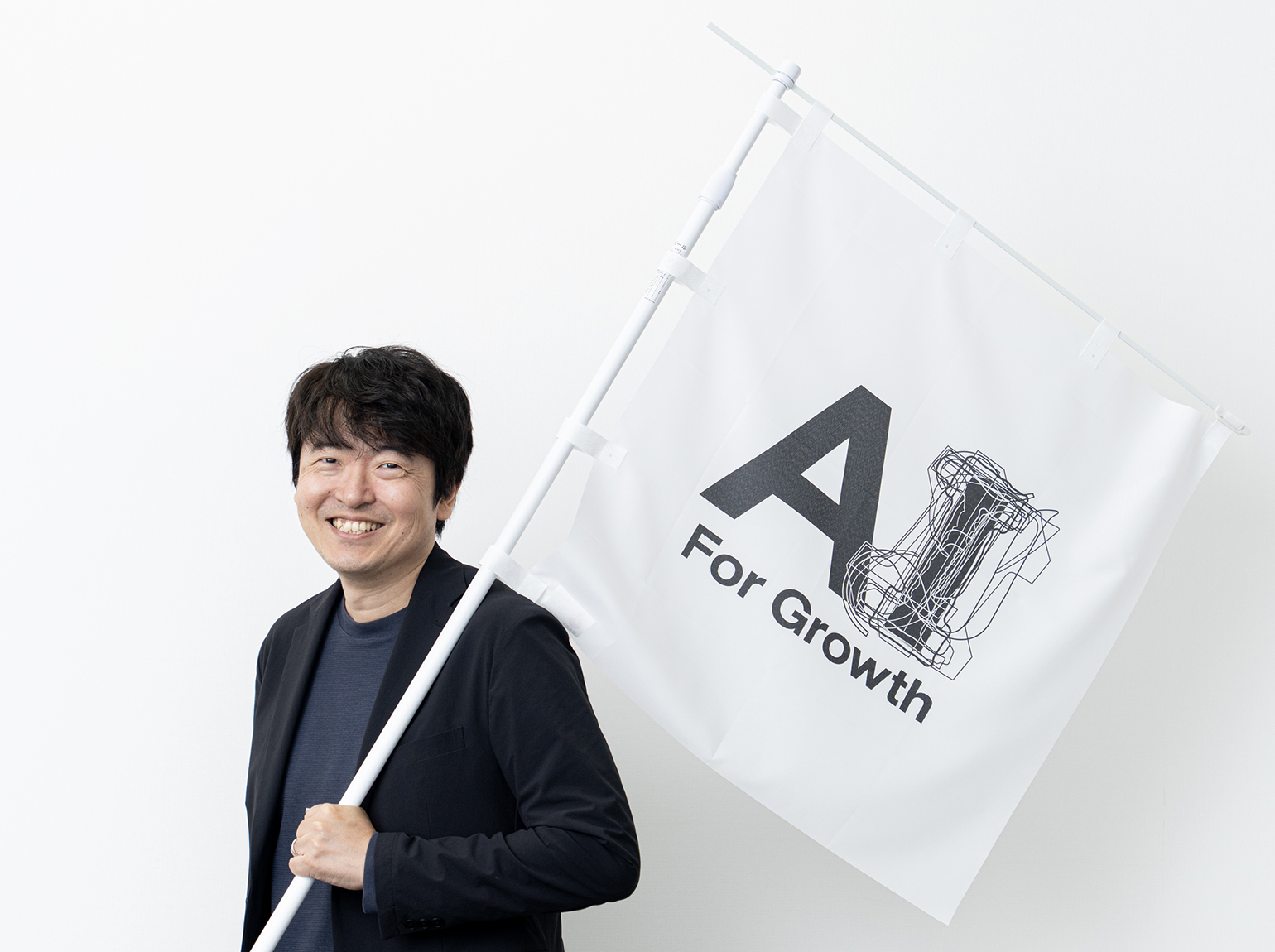
Nami River GO, who calls himself a "Growth Officer who goes out to meet AI," makes a point of visiting various departments within the group companies to listen to employees. He says ideas often emerge from the raw, on-the-ground voices expressing thoughts like "I'd like to try this" or "It would be great if we could do this," and these can become the starting point for AI utilization.During the interview photo shoot, he actually waved a flag as the AI cheerleader. While he might seem like a digital person, he also has an analog side and a playful spirit.
Chief AI Officer / Executive Creative Director / Chief AI Master
Specializes in AI-driven projects and social initiatives connecting businesses and society. Launched Dentsu Creative Intelligence in September 2022. Initiated joint research with the University of Tokyo AI Center. Serves as Unit Leader of the Augmented Creativity Unit. Author of numerous publications including "Social Design" (Kiraku-sha) and "Communication Shift" (Hatori Shoten). Recipient of multiple awards including the Yomiuri Advertising Grand Prize and the Dentsu Advertising Award.

 GO Future: Growth Officer, Speaking of the Future [4/5]