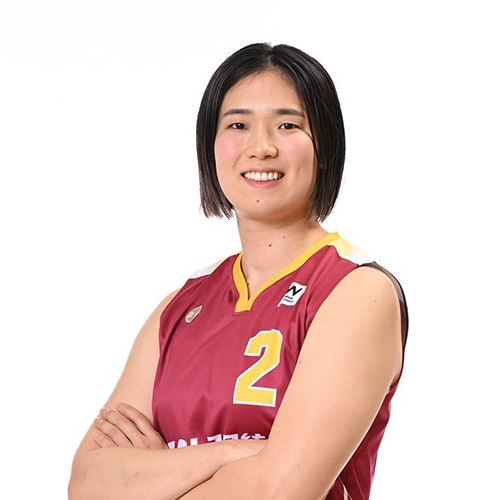
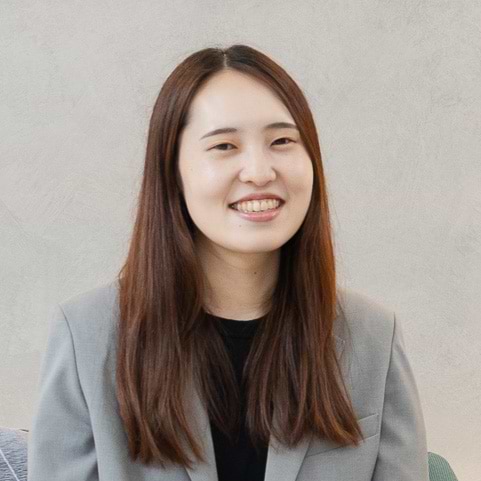
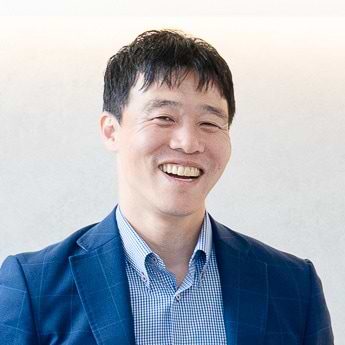
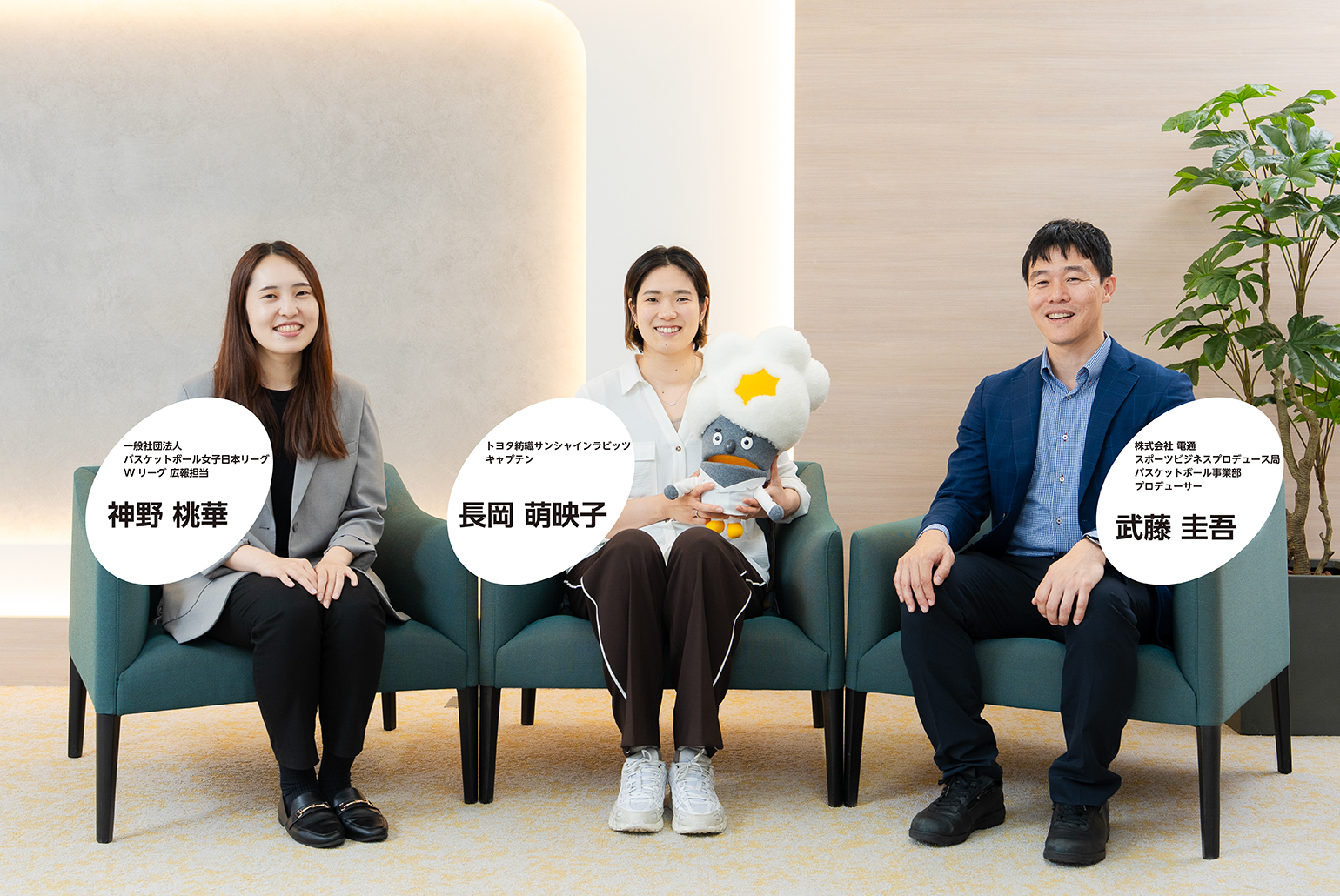
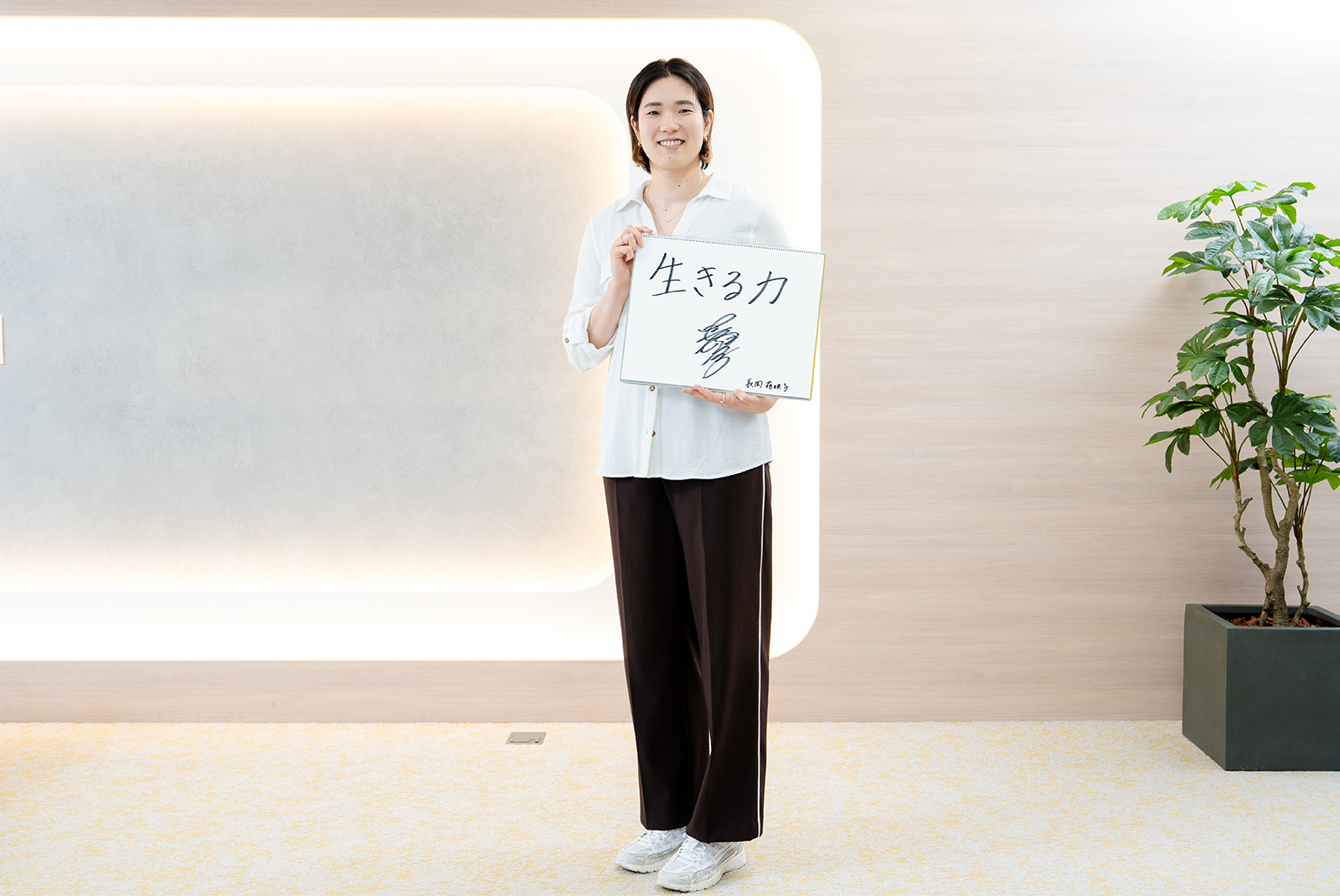
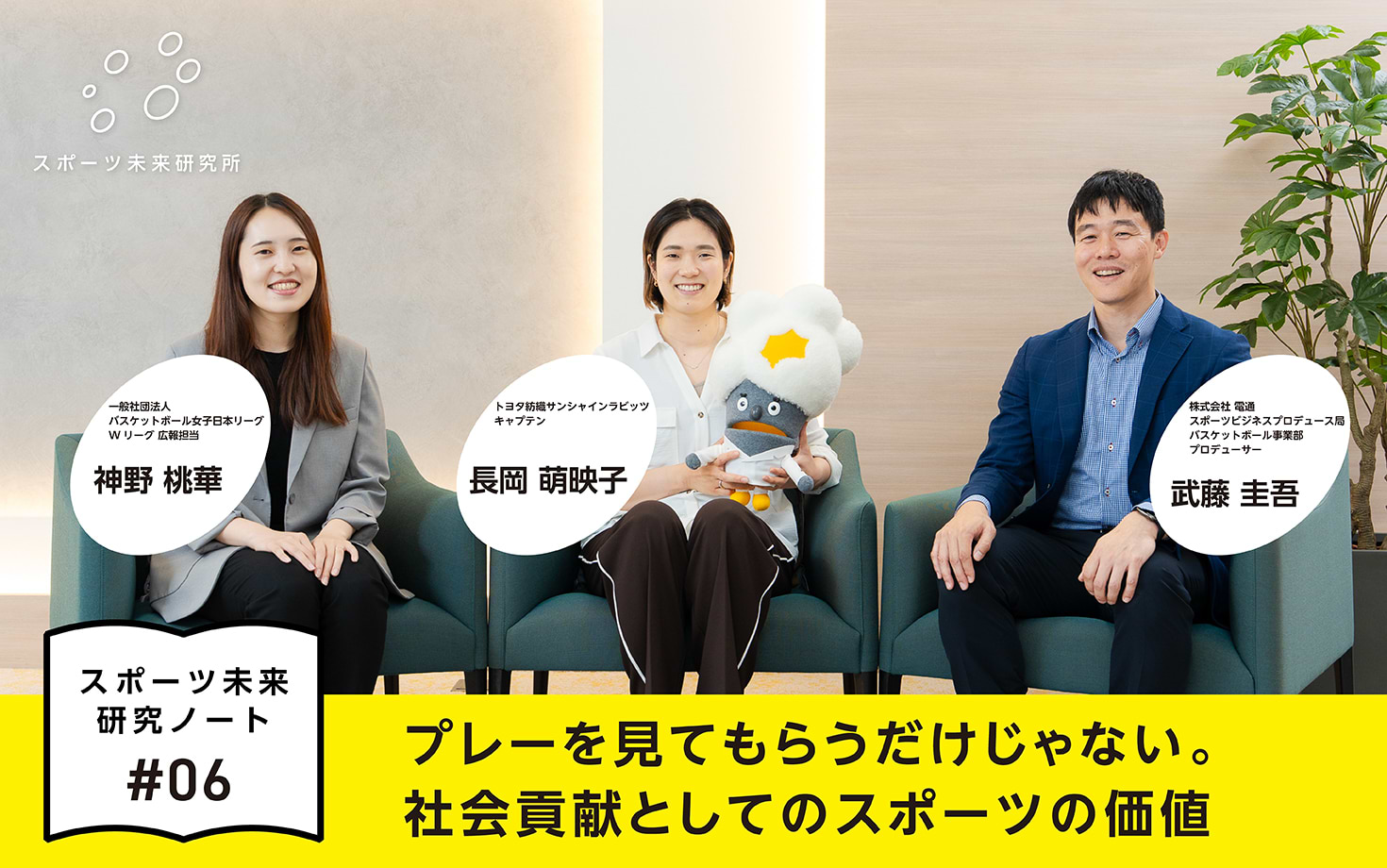
“Sports Future Research Notes” explores the “value of sports” from both qualitative and quantitative perspectives. In this installment, we feature women’s basketball player Moeko Nagaoka and Momoka Kamino, a public relations representative for the Women’s Basketball Japan League (W League).
Together with Keigo Muto, a researcher at the Sports Future Research Institute, they look back on the activities of the “Children’s Future Project,” which aims to bring smiles to children facing illness or disabilities and their families through the power of sports.
What is the Children’s Future Project? The Children’s Future Project is an initiative launched with the goal of bringing smiles and strength to children facing illness or disabilities, as well as the families who support them, through sports. Amid long hospital stays and rehabilitation that seems to have no end in sight, the daily lives of these children and their families are often shrouded in anxiety and loneliness. By bringing encounters with athletes into their daily lives, the project creates opportunities for them to look forward with optimism.
We want children facing illness or disabilities—and their families—to find joy and smile
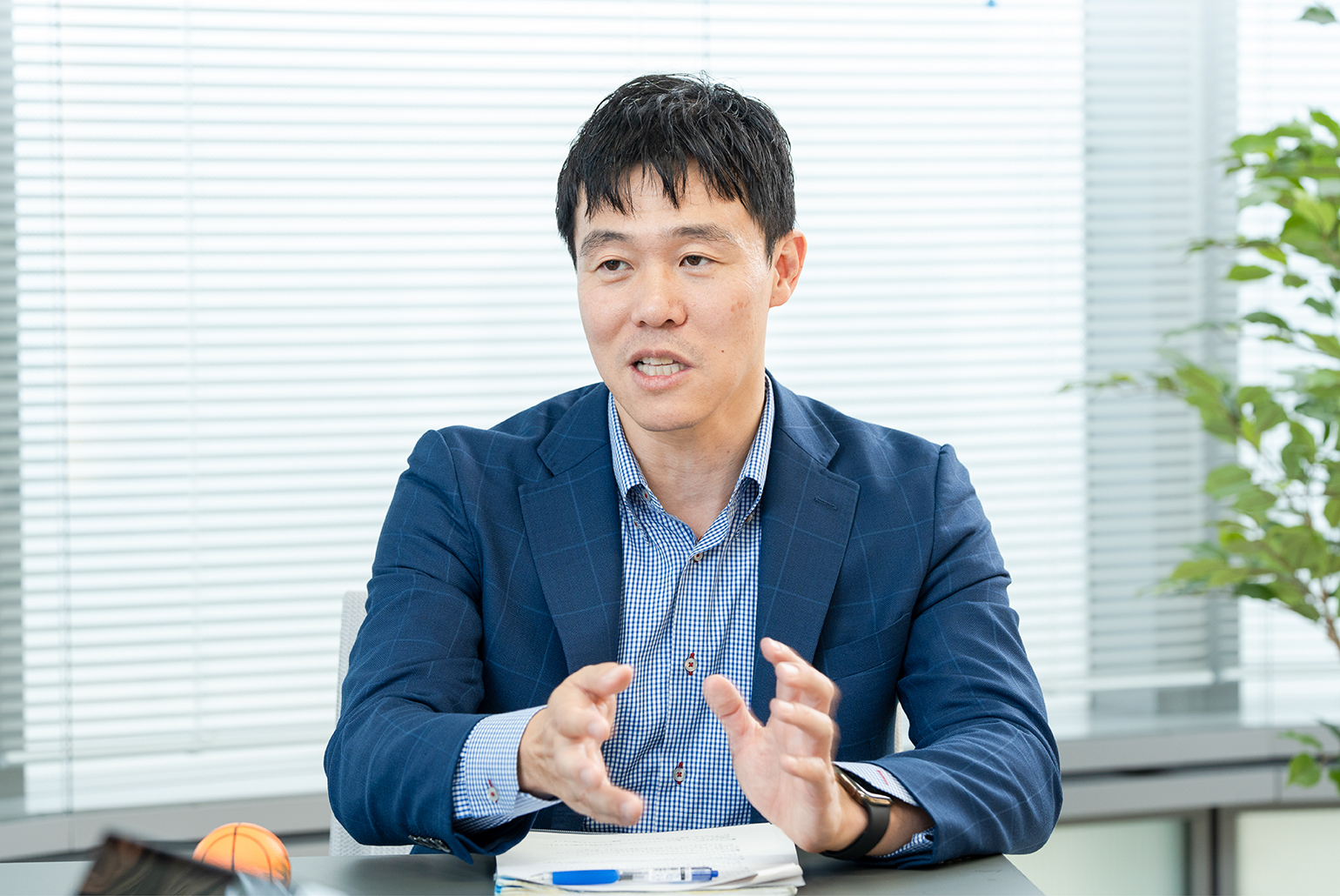
Muto: The “Children’s Future Project” was born from our desire to help children facing illness or disabilities—and their families—find joy and smile. We wanted to achieve this through the power of sports.
It all started two years ago. My child was suffering from an illness that required a long-term hospital stay, and there was a time when I was practically living at the hospital while working. Characters from media franchises and professional athletes would sometimes visit the ward, and whenever they did, the usually quiet ward would instantly light up.Seeing the children’s joyful expressions—so different from their usual selves—I felt the immense power of sports, a power that even parents often struggle to bring out. That experience was the starting point for this initiative.
Since I work in the sports division at Dentsu Inc., I began to wonder if I could be the one to create such opportunities myself—and if doing so might further enhance the value of sports. That’s when colleagues with similar backgrounds who shared this vision came together, and we launched the “Children’s Future Project.”
Since I’m in charge of basketball, I reached out to the W League, and this time, we invited player Moeko Nagaoka to visit the pediatric ward at the National Center for Child Health and Development. What were your initial thoughts when you first heard about this?
Kanno: As the W League, we were actually at a turning point—a time when we were discussing the need to reevaluate the direction the league should take based on our philosophy and vision. We were thinking about how to enhance the W League’s value and what we could do to make more people aware of it. It was right in the midst of these discussions that we received this proposal. I thought that through social contribution—or rather, by demonstrating our commitment to supporting those facing difficult circumstances—we could showcase the W League’s value, so I was eager to make this happen.
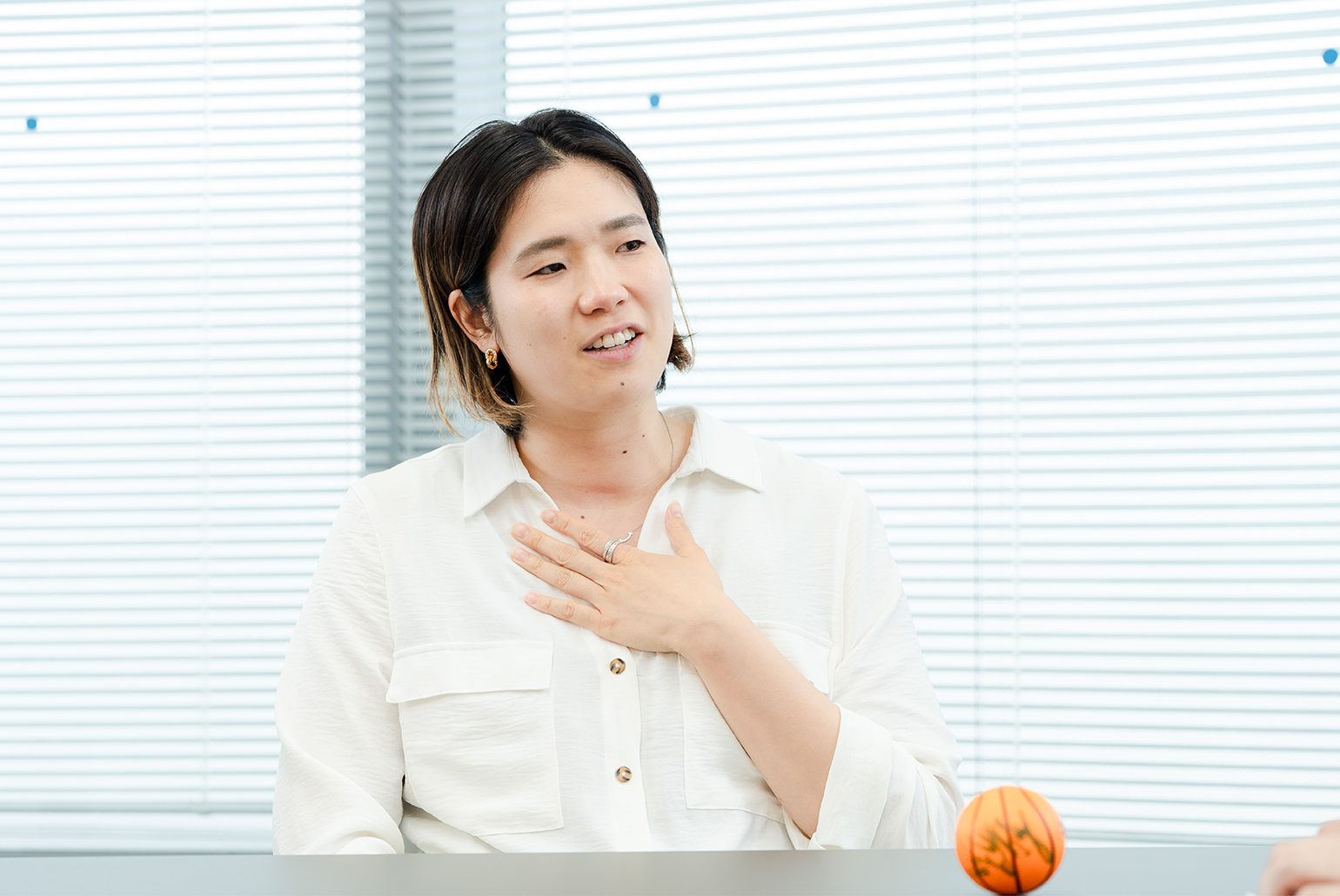
Nagaoka: I didn’t originally have any particular interest in this kind of activity. However, after my older sister passed away from cancer three years ago, I began to reflect deeply on my own life. At the time, my sister had been battling the disease for about two years. My mother and the rest of the family were by her side supporting her, and I would go home whenever I had even half a day off. After she passed away, I felt a strong urge to make my own life meaningful.
I also started thinking seriously about my career after retiring as a basketball player. Saying “I want to carry on my sister’s legacy” might sound like a cliché, but as I reflected on the time I spent with her and considered what I could do—and what only I could do—supporting cancer patients came to mind. However, since I’d only ever played basketball, I knew nothing about business or the wider world.I hadn’t been able to find the right opportunity, but when I received this offer, I saw it as a chance and decided to step forward.
Connecting athletes and leagues across sports and facilitating partnerships with medical institutions
Muto: As Mr. Nagaoka just mentioned, there may be many athletes out there who want to engage in this kind of activity. However, when it comes to actually making it happen, they often lack the know-how. In fact, when we interviewed athletes during our preliminary consultations, we heard similar concerns.
We also heard from hospitals that “We’d love for them to come, but it’s difficult for us to reach out—we simply don’t have the connections.” There are many cases where both sides want to do this but can’t make it happen, resulting in children who need encouragement not receiving it. I believe that bridging this gap is one of our key roles.We aim to connect athletes and leagues across different sports and facilitate partnerships with medical institutions. Ultimately, we hope to develop this into a social contribution initiative undertaken by the sports community as a whole. However, I get the impression that such activities are inevitably less common in the Japanese sports world compared to Europe and the United States. Why do you think that is?
Kanno: To be honest, from a league’s perspective, there are other priorities that must come first in order to ensure its survival. Because of this, I think these kinds of activities inevitably tend to be put on the back burner. Furthermore, such initiatives are often viewed more as volunteer work than as something done for financial compensation. I believe that’s another reason why it’s difficult to take the first step.
Nagaoka: Of course, the primary premise of our job is to play well in games. However, we tend to focus solely on that. Perhaps the players themselves also feel that their job is limited to playing on the court and putting on a good game.
But after actually visiting the hospital wards and experiencing firsthand just how happy it made people, I was reminded that there is value in the very act of athletes making these visits. I believe there’s a culture overseas where athletes engage in these activities with a clear understanding of their own value, but that culture hasn’t really taken root in Japan yet. Perhaps the value of sports is still limited to having people watch the games or to the act of playing itself.
Through this visit and seeing how happy people were, I realized that there are moments off the court when I can truly feel, “I’m glad I play basketball” and “I’m glad I’m an athlete.” Perhaps people simply aren’t aware of these moments yet.
Expanding Opportunities to Experience the Value of Sports Off the Court
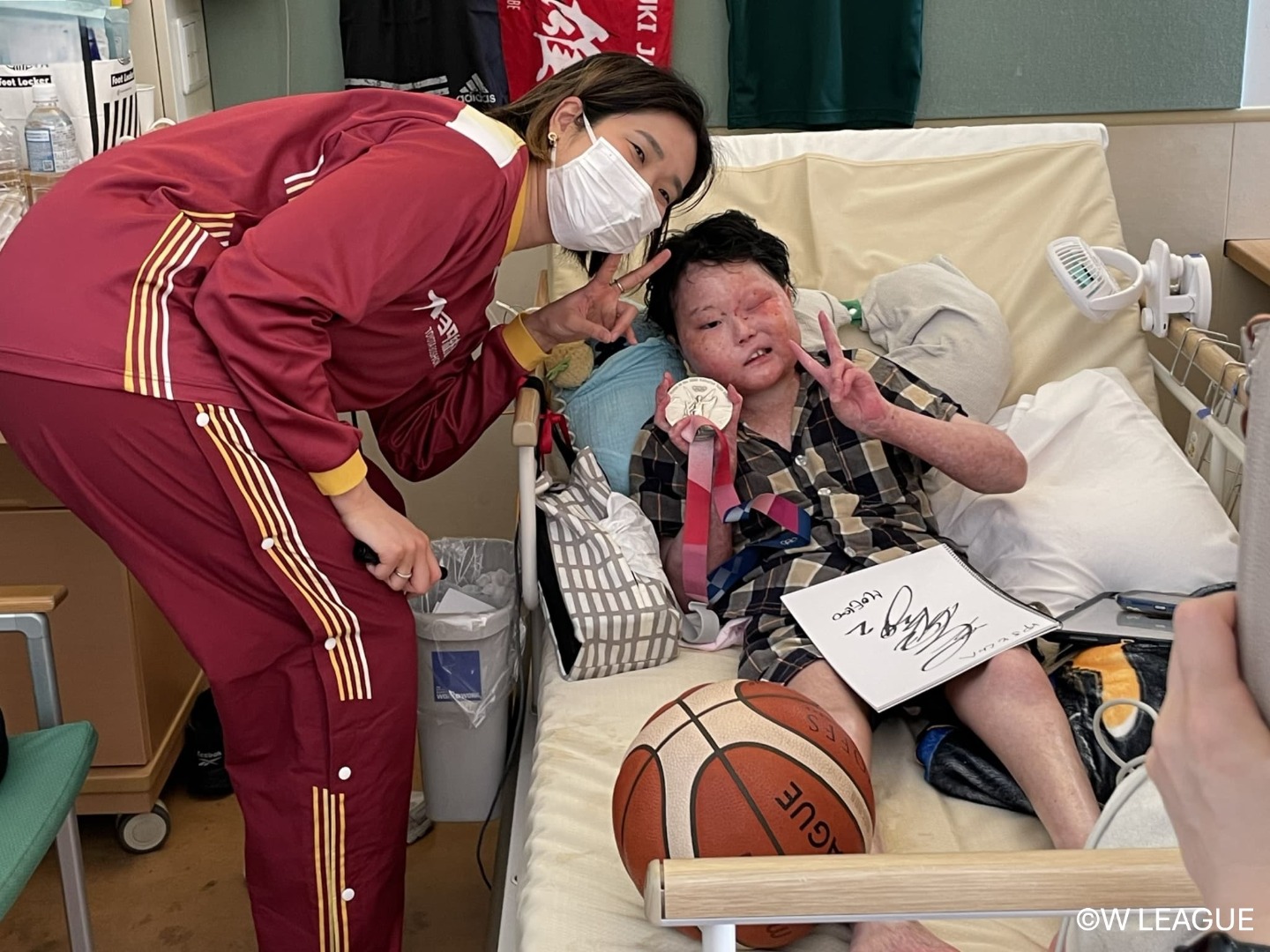
Muto: This time, we visited the pediatric ward at the National Center for Child Health and Development, where we toured the hospital-based classroom (*) and the ward. Thanks to the hospital’s tremendous cooperation, everything went smoothly, and we’re relieved. Thank you once again. Mr. Nagaoka, you mentioned that although you have experience leading basketball clinics, this was your first time visiting a hospital. What were your feelings going into the visit?
*A special education class set up within the hospital for children and students requiring long-term hospitalization due to injury or illness.
Nagaoka: Since I have a niece, I’ve had opportunities to interact with children around 5 or 6 years old. So, I wasn’t nervous about interacting with children per se. However, I was unsure about how to speak to children who are dealing with illness—that was the part I was anxious about.
Muto:That’s true. With children who come to regular events or basketball clinics, there’s a certain common ground—they like basketball or want to meet the players. But this time, not only were their ages different, but their medical conditions varied, and their physical condition and moods differed from child to child that day. On the day of the visit, we prepared soft balls that the children could handle safely, let them play with small basketball hoops, and there were even moments when they showed us the medals they’d brought along. Given all that, what was it like actually interacting with the children?
Nagaoka: You can’t tell a child’s true condition just by looking at them, but there were moments when I thought, “There are kids who can play with such energy.” I’m really glad they were able to be so cheerful. In particular, there was one boy who loved basketball, and I was especially struck by how happy he was as we talked about various things.
On the other hand, I found it very difficult to interact with the teenage girls and boys. There were times when they were all quiet and I rarely saw them smile, so figuring out how to help those children have fun remains one of my challenges for the future.
Kanno: The 7th-floor ward had parents present and many young children, so it had a lively atmosphere. Also, when Player Nagaoka entered the 10th-floor ward, the mood instantly brightened and took on a sparkling quality.
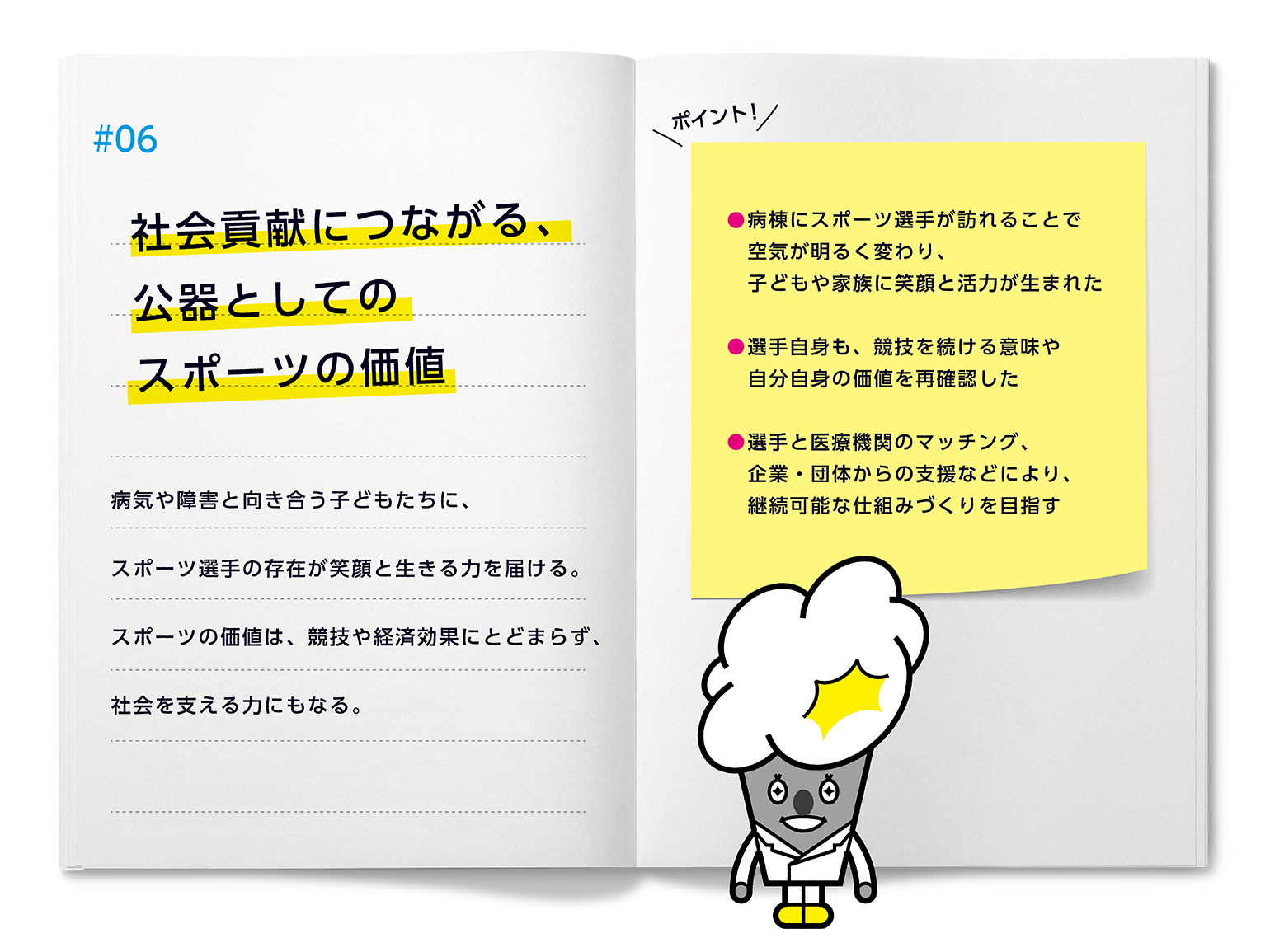
Muto: It really made an impact—I thought, “It can change this much?” It really does make a difference when someone from outside—other than a parent—comes to visit. I realized that, regardless of whether they like basketball or even know what it is, the mere fact that someone like a professional athlete—who brings a unique energy—visits is incredibly meaningful. The hospital staff said the same thing, and as a parent myself, I’m truly grateful for that; it really feels like a lifeline.Sports have the power not only to generate economic value but also, as a public resource, to enrich people’s hearts. I’ve come to recognize that value anew.
Nagaoka: Since basketball isn’t as mainstream as baseball, when I heard that everyone—including the hospital staff—was so delighted, I felt, “This really was meaningful.” Going back to the earlier discussion about why there are so few initiatives like this involving professional athletes in Japan, this is just my personal impression, but I think many Japanese people have this feeling of, “Who am I to go there?”I myself couldn’t completely shake that feeling until the day of the event, and even now, I still find myself thinking that way at times. Still, seeing how happy people were made me feel that “it was worth doing this.” I believe that as these kinds of experiences increase, there will be more opportunities to truly appreciate the value of sports even off the court.
Delivering Not Just Smiles, but “The Strength to Live”
Muto: In the future, we hope to make this project run more smoothly and sustainably with support from companies and organizations that share our philosophy. What kind of systems or initiatives do you think are necessary to get as many athletes as possible to participate in these activities?
Nagaoka: What I can do right now is, first of all, to reach out directly to the players around me and gradually get them involved. Also, in this day and age, I think it’s important to keep sharing updates on social media. By continuing to share these updates, perhaps the teams themselves will come to sympathize with our activities, which could lead to them sending players as a team. I hope we can gradually build that kind of momentum.
Kanno: I think it’s necessary for the league to take the lead in involving the players. It’s important to carry out these kinds of initiatives on an ongoing basis, and one possible approach might be to create an award to recognize players or teams that have participated in these activities. I believe it’s crucial for the league to consider various approaches and take actions that can engage the wider community.
Muto: Finally, could you share your thoughts on the value and potential of sports that you felt through this initiative?
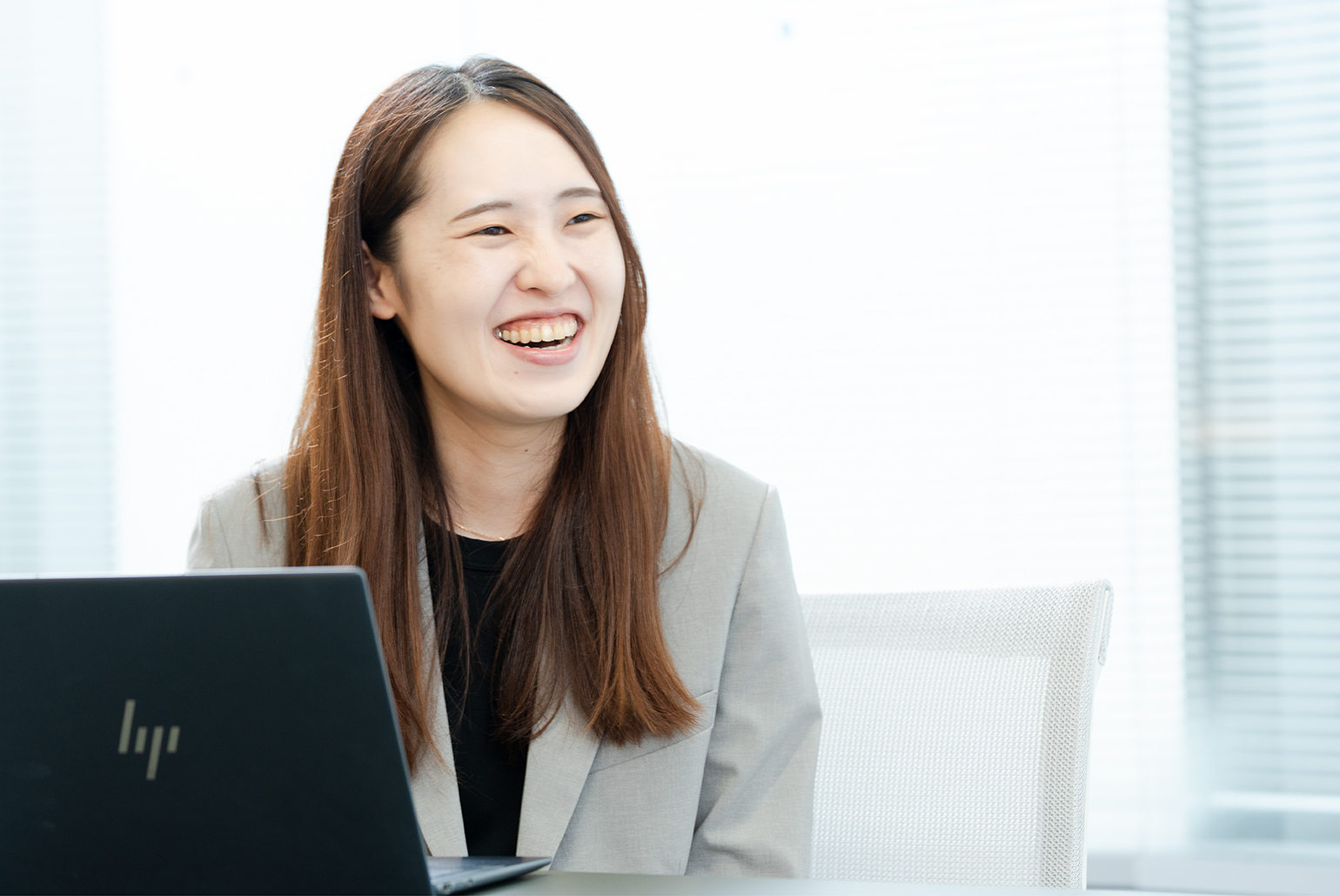
Kamino: For me, the most important thing is that “I’m glad we were able to bring smiles to their faces.” The children looked like they were having so much fun playing with the small balls we brought as gifts, didn’t they? Even kids who weren’t familiar with basketball were completely engrossed in playing.
You might not say that sports are absolutely essential to daily life. But seeing the children like that this time made me think, “I’m glad we visited,” and I felt that sports might be providing at least a little bit of vitality to everyone’s lives.
Nagaoka: We went there intending to give them energy, but we ended up receiving so much in return, didn’t we? To see such young children living their lives with such determination—it really makes me think about what I can do to help. My older sister also found meaning in life by cheering me on during my games. That’s why I felt there’s real value in showing them that kind of dedication, and I feel like this experience taught me that, for me personally, it’s also what gives me the energy to keep stepping onto the court.
What became clear to me through this experience—to put it a bit more poetically—is that I can share the “will to live” with children who are battling illness. I felt that this is the true value and potential of sports. Seeing the children smile made me feel, “I’m glad I play basketball” and “I’m glad I’m an athlete,” and I think it also helped me realize my own worth.
Japan Women’s Basketball League (General Incorporated Association)
W League Public Relations
I joined the W League—the administrative office for women’s basketball—in 2021. My main responsibility is public relations. I’m juggling a wide range of tasks within our small but highly capable office.
Keigo Muto
Dentsu Inc.
Sports Business Produce Division, Basketball Division
Producer
After working in the Human Resources Development Bureau and the Sales Bureau, he transferred to his current bureau in 2015. He is involved in sponsorship sales, sports branding, planning and implementing activations, event management and operations, and creative production. Through the “Children’s Future Project,” he explores new possibilities in sports and works to create new value. He is the father of two children.

 Visualizing the value of sports. "Sports Future Research Notes" [6/7]