“How can we incorporate the perspectives of those directly affected into our business and translate them into business results?”
In this series, we will unravel these questions from a practical perspective, incorporating insights from experts working on the “implementation” of inclusive design and voices from the field, to offer guidance on the challenges of inclusion.
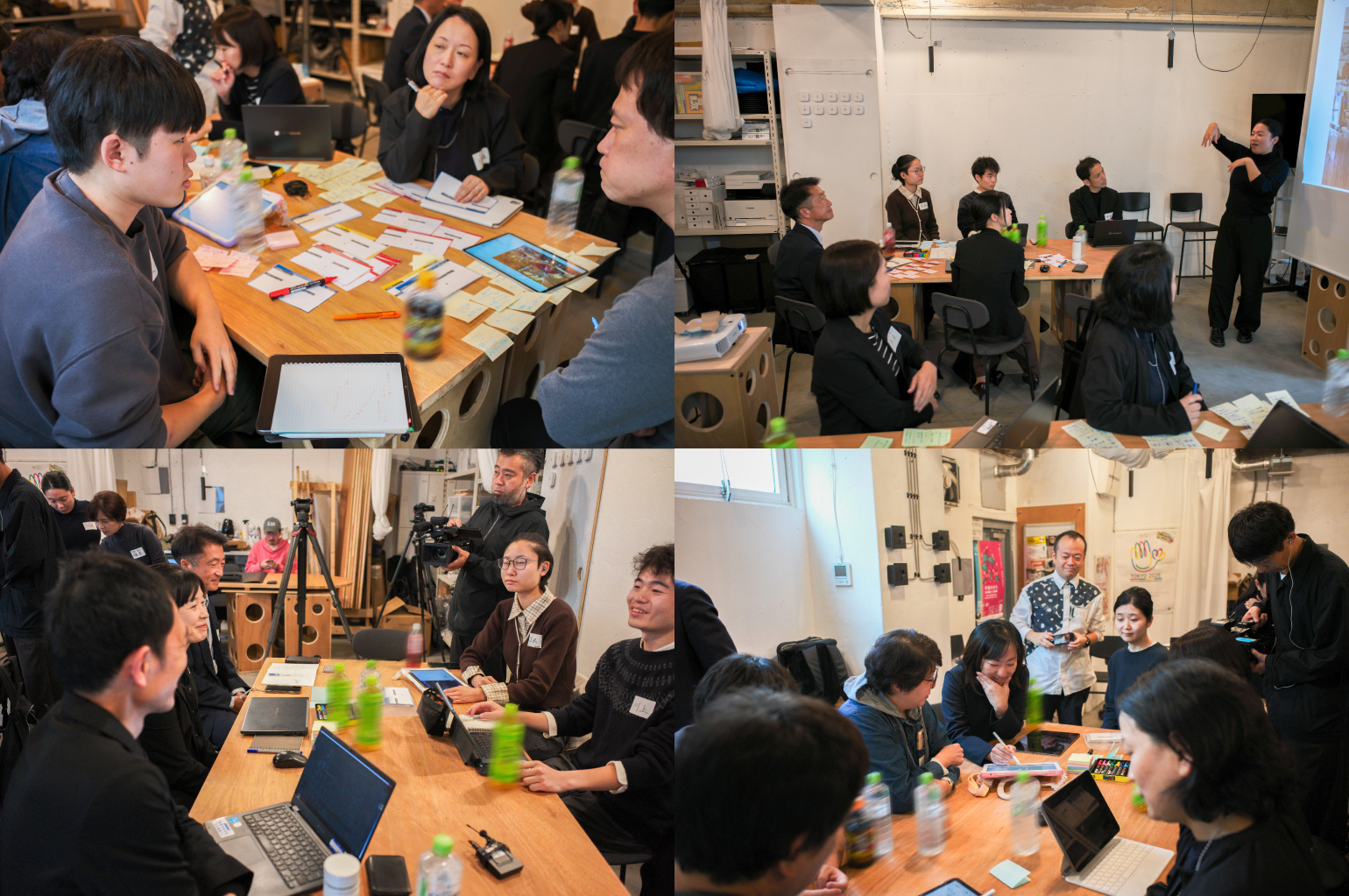
Tsukuba University of Technology and Dentsu Inc., both engaged in research and development on the theme of “inclusive design,” held a workshop in collaboration with Asahi Kasei Homes’ LONGLIFE Research Institute. Together with students who are deaf or hard of hearing, they explored “comfortable ways to connect in the future.”
In this article, we present a roundtable discussion featuring Maiko Umemoto, Associate Professor at Tsukuba University of Technology; Shinichiro Kawai, Director of the Asahi Kasei Homes LONGLIFE Research Institute; and Kento Yamada of Dentsu Inc., all of whom participated in the workshop. We explore what co-creation with those directly affected can change for companies, and what is necessary for future lifestyles where people from diverse backgrounds live together.
University of Technology, Tsukuba A national university for people who are deaf or hard of hearing, and those who are blind or visually impaired. In addition to the “Faculty of Industrial Technology,” where students with hearing impairments study, and the “Faculty of Health Sciences,” where students with visual impairments study, the “Faculty of Creating an Inclusive Society” was newly established in 2025. Here, students with both types of disabilities study information science and the sociology of disability with a focus on information accessibility.
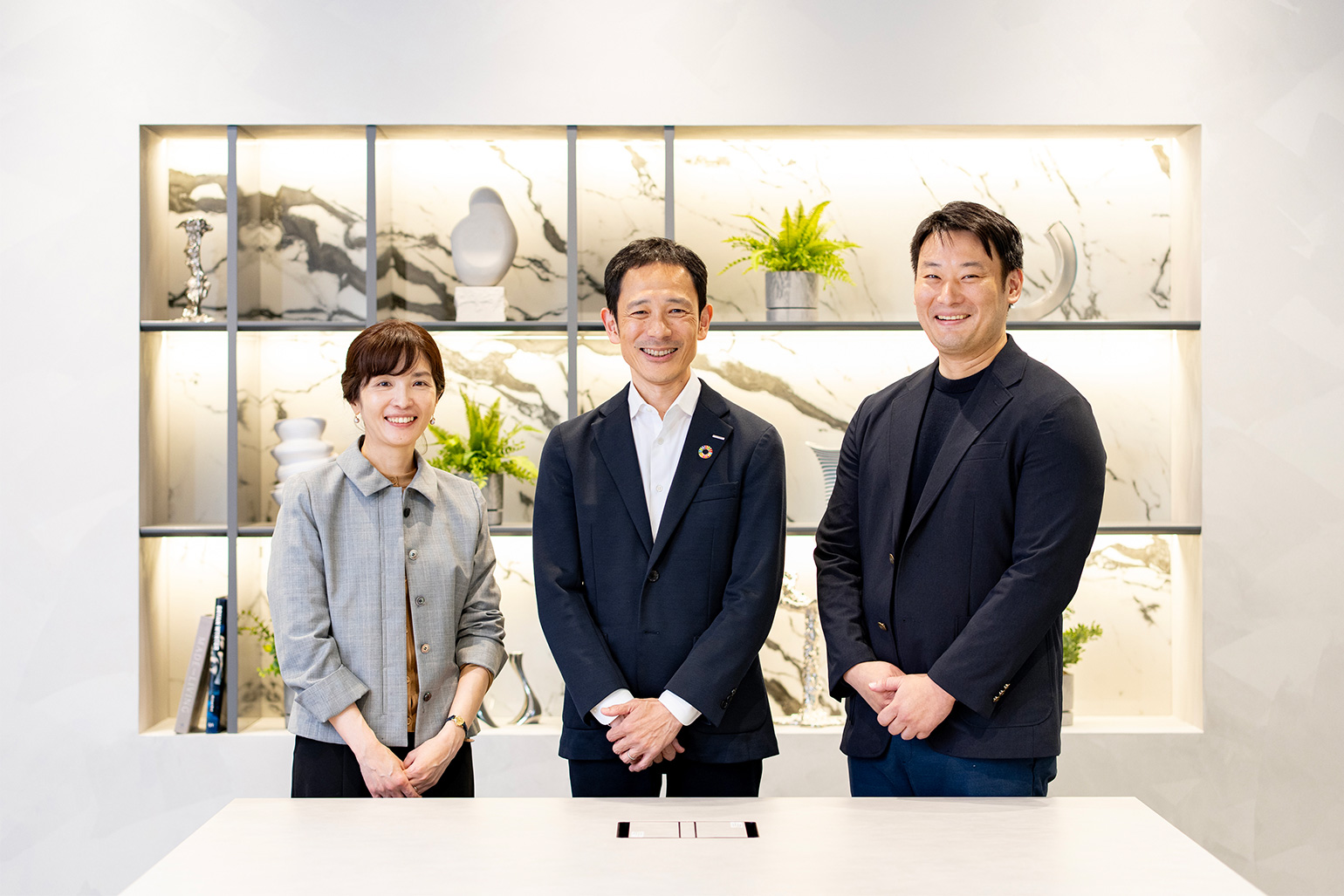
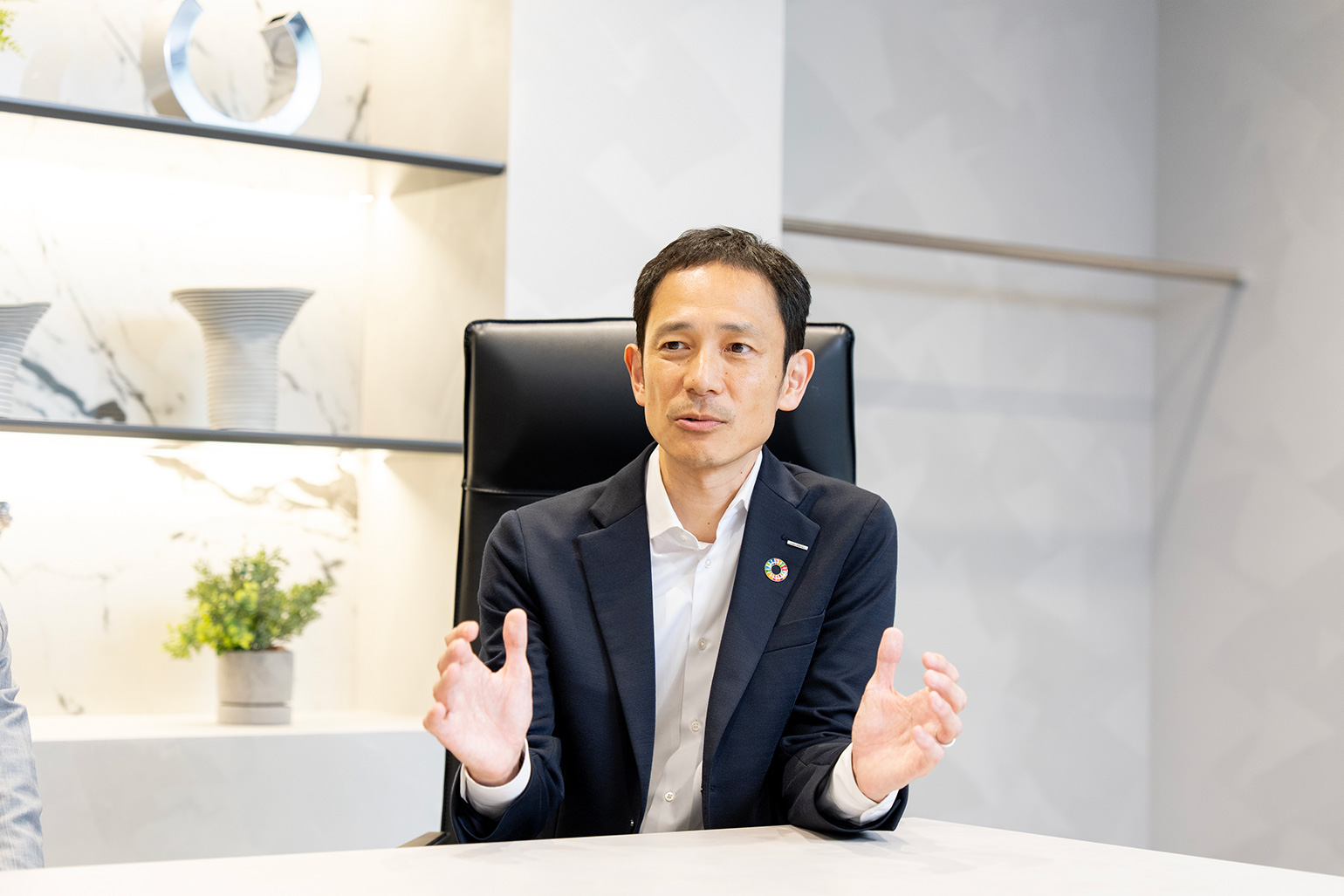
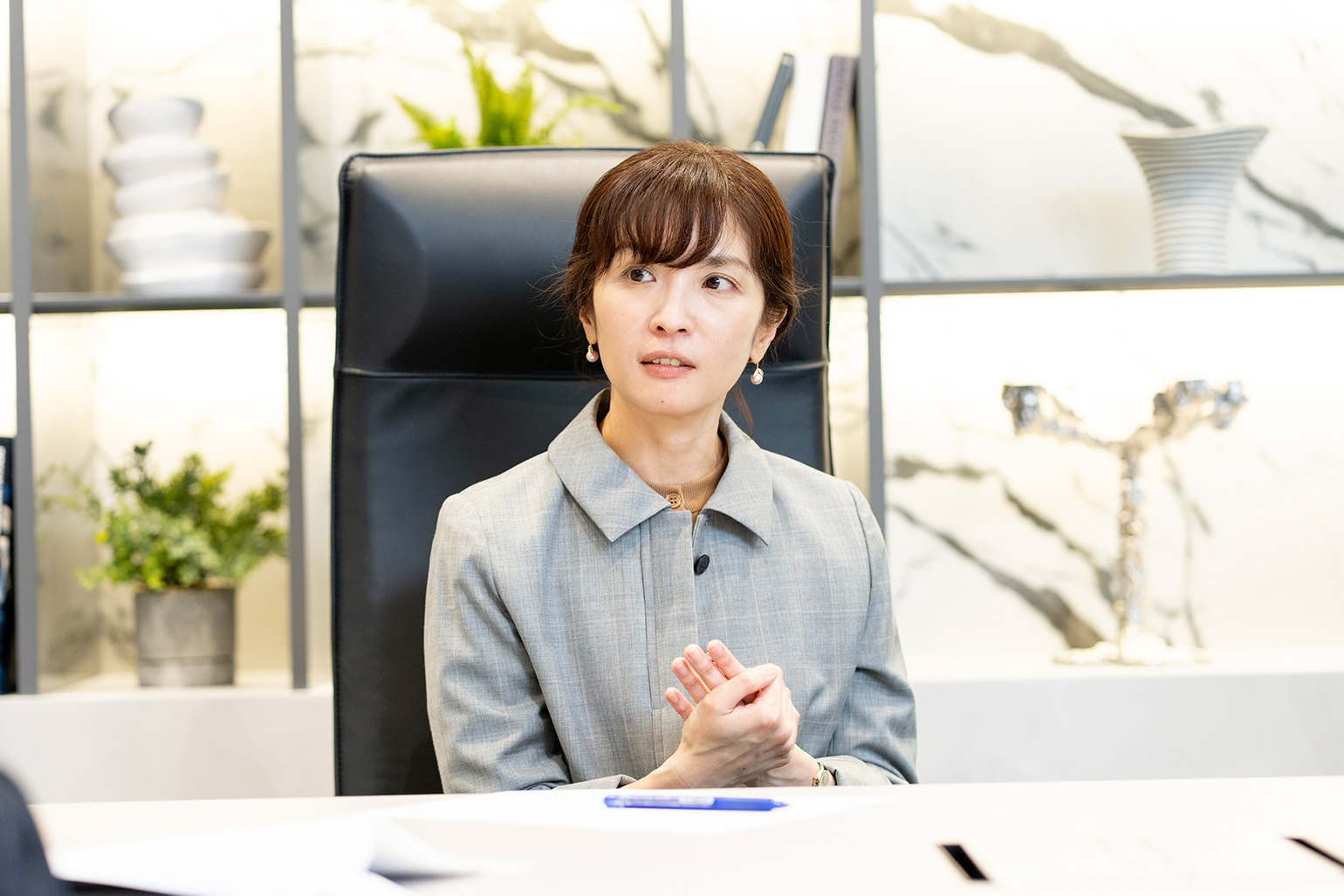
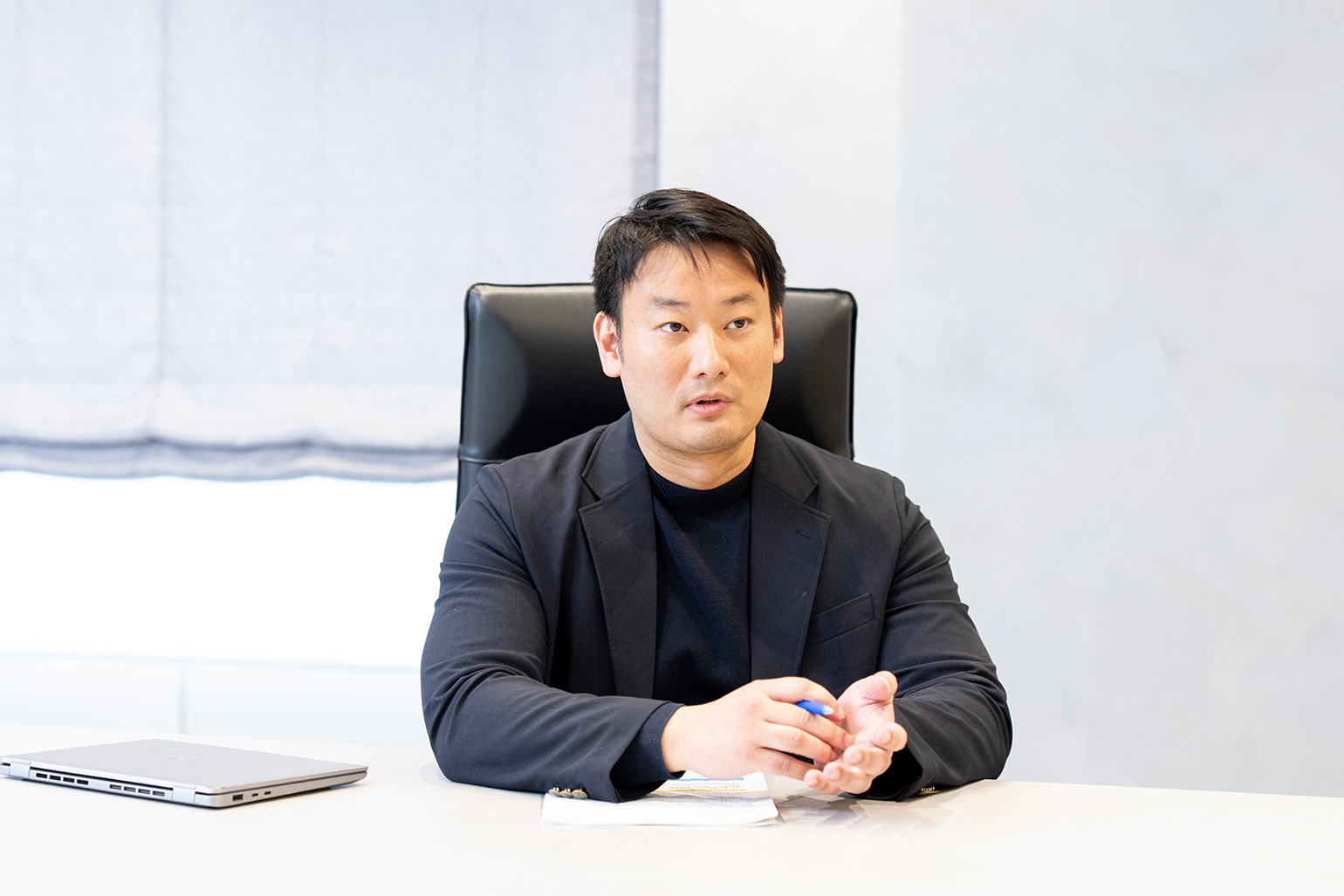
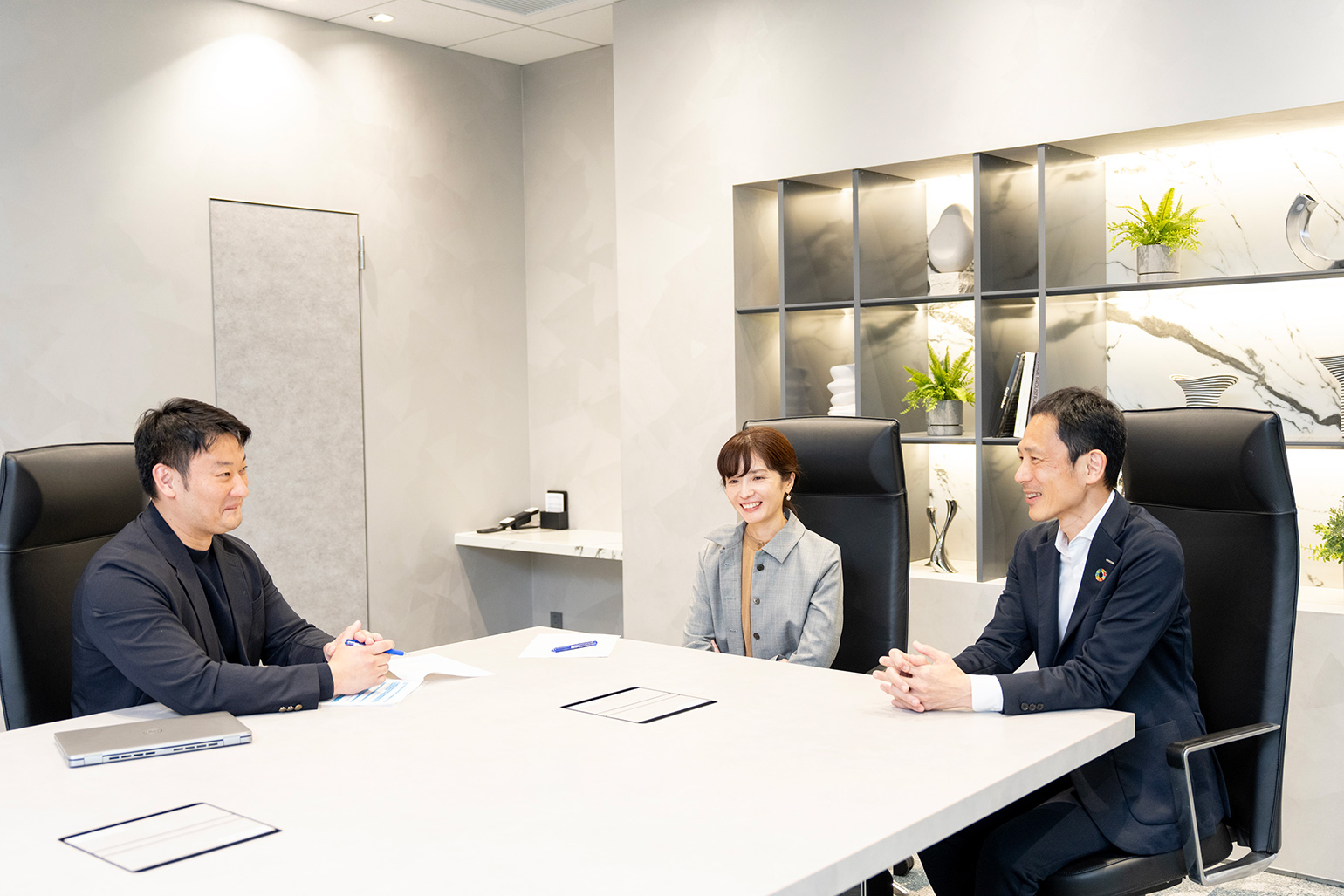
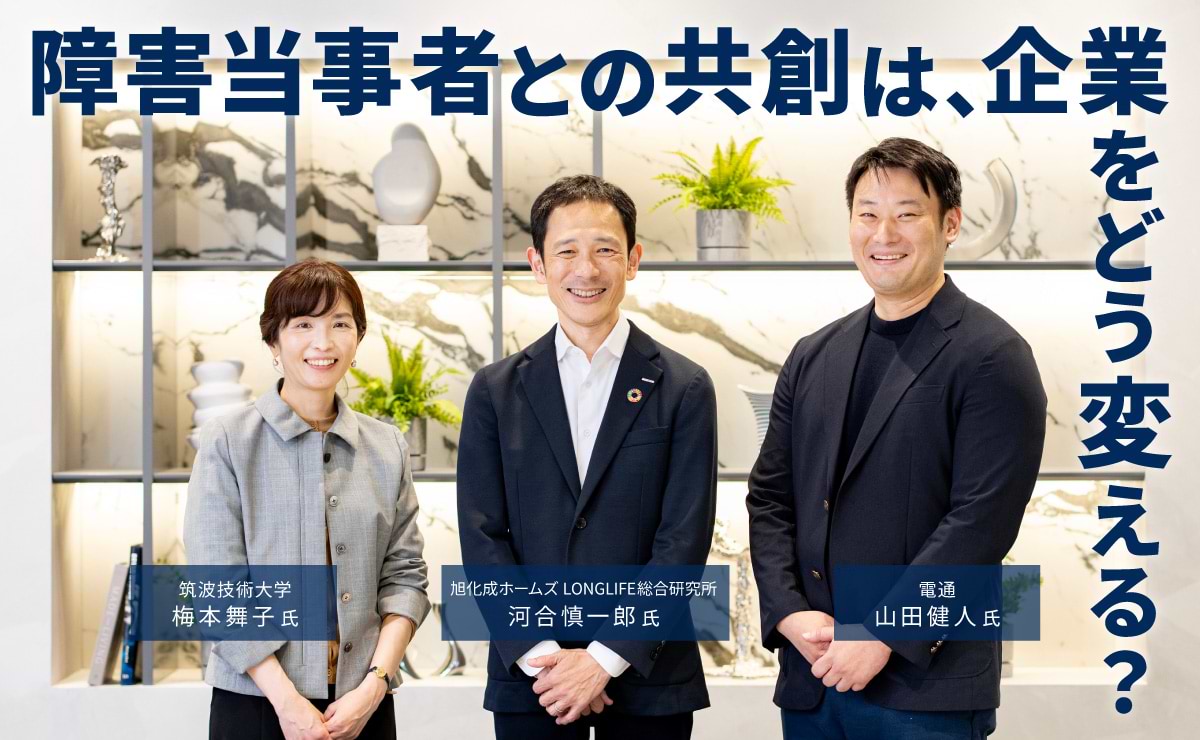
(From left) Maiko Umemoto, University of Technology, Tsukuba; Shinichiro Kawai, Asahi Kasei Homes LONGLIFE Research Institute; Kento Yamada, Dentsu Inc.
Workshop: Envisioning Future Lifestyles Together with People with Disabilities
Yamada: Let’s start with some self-introductions. I work in Dentsu Inc.’s Sustainability Consulting Office, where I support corporate business growth by addressing various sustainability challenges.
In our previous article, we discussed the themes of “inclusion” and “co-creation with people with disabilities” with Takayuki Tani, Vice President of Tsukuba University of Technology, and members of the Dentsu Group. This time, we’d like to take it a step further and delve into the insights gained from actual collaborative efforts between companies and universities.
Kawai: I serve as Director of the Asahi Kasei Homes LONGLIFE Research Institute (hereinafter “LL Research Institute”). Originally, I worked as an architect and have been involved in the design of approximately 400 single-family homes and apartment buildings. While design is often thought of as “the work of creating forms,” I personally view it more as a job that involves listening to customers’ voices, observing their lifestyles, and interpreting the changes taking place in their lives.
At the LL Research Institute, we place great importance not only on accumulating research based on these observed changes in people’s lives but also on implementing them into the structures of housing and daily life. This workshop was planned and designed from a LONGLIFE perspective as part of those efforts.
Yamada: Would it be accurate to say that LL Research Institute focuses less on the housing itself and more on understanding “how people’s lives continue over the long term”?
Kawai: That’s right. Of course, we build homes, but what matters most is that “lifestyles continue over the long term.” When people hear “LONGLIFE,” they often think of a building’s lifespan, but what we’re really focused on is “how people’s lives continue.” This includes parent-child relationships, living with pets, and connections to the local community. “How can people from diverse backgrounds live together comfortably?”—that is the research theme of LL Research Institute.
Yamada: Thank you. Next, Professor Umemoto, please.
Uemoto: I teach architecture at the Faculty of Industrial Technology at Tsukuba University of Technology, where students who are deaf or hard of hearing gather. I’ve continued the housing research I began as a student, visiting actual homes to observe the relationship between “lifestyle” and “space.” Recently, however, my research has shifted its focus from the housing itself to the “community and living environment” that make a person’s life possible. At the university, I feel as though I’m living within a community centered around sign language.
Yamada: So there are moments when you yourself find yourself on the “minority side,” too.
Uemoto: That’s right. When conversations proceed entirely in sign language, there are moments when I can’t quite keep up with the content and end up pretending to understand—moments when I feel a bit left behind.
Yamada: This workshop was attended by four students from Tsukuba University of Technology, seven researchers from LL Research Institute, three representatives from Dentsu Inc., and a guest lecturer. On the day of the event, we split into two teams, and people from different backgrounds worked together to consider how we can connect and live together comfortably.
Click here for the workshop introduction page on the Tsukuba University of Technology website
Why Are a Housing Manufacturer’s Research Institute and Tsukuba University of Technology Collaborating?
Yamada: Moving forward, I’d like to ask about what you’ve observed from actually working together. Mr. Kawai, how did you personally interpret the significance of this initiative?
Kawai: The concept of “LONGLIFE” we’re exploring isn’t simply about making buildings last longer; it’s a way of thinking about “how people’s lives continue over the long term.” Over the course of a long life, age, family structure, physical condition, and environment all change. When viewed this way, it becomes a theme that’s relevant to everyone—not just “someone else’s story.”
For this initiative, we posed the question of how these “sensations of change” and “diverse ways of living” affect actual daily life and physical spaces, and we designed the workshop as a venue to explore this. In that sense, I feel it was highly meaningful to collaborate with the team from Tsukuba University of Technology, who engage with the perspectives of those directly involved on a daily basis.
Yamada: Professor Umemoto, from the university’s perspective, how did you view this workshop? In particular, what kind of experience did you think it would be for the students?
Uemoto: The most important thing was that I wanted the students to truly feel that “their own perceptions hold value in society.” The students understand their own challenges very well. However, they still don’t quite realize that those perceptions “might also be useful to others.” So, I thought that by holding this workshop together with LL Research Institute, the students themselves might come to realize the significance of their own perceptions.
Yamada: Sensibilities that were taken for granted within the university are only articulated as value once they’re connected to an external context. That’s the key point of this co-creation initiative.
Umeko: Exactly. For students, the experience of hearing from professionals with extensive research experience in the corporate world—people who tell them, “That has value”—is incredibly significant. It enables them to communicate to society the insights they haven’t yet been able to put into words. I hoped this would be an opportunity for them to do just that.
Yamada: Were there any specific instances where you felt the students’ insights actually held value for the companies?
Umeimoto: There have been many. For example, as a common accommodation for people with hearing impairments, you often see signs at the reception desks of public facilities or stores that say, “We can communicate in writing” or “Communication boards are available.” At first glance, this seems like universal design, but from the students’ perspective, they ask, “Why does it say ‘are available’?” The fact that it says “are available” means you have to ask, “Please bring one out.” They point out that this creates a psychological barrier and ask, “Why make it an option?”
Yamada: That’s true. Even when we “think we’re being considerate,” our underlying assumptions are actually off the mark.
Uemoto: Exactly. I was really struck by that myself when I heard it. Ultimately, we tend to view things solely through the lens of our own life experiences. There are so many biases like that.
I, too, still get feedback from students and often find myself reflecting on things. We’ve held several workshops with companies in the past, and we’ve brought in both sign language interpreters and text interpreters, proceeding under the assumption that “this should ensure the message gets across properly.” But afterward, people tell us, “I felt really left out.”
Kawai: Could it be that the pace was too fast?
Umeko: The pace being too fast is part of it, but there’s a huge difference between “seeing information” through sign language or text and truly “empathizing” with one another, isn’t there? Empathizing with the person you’re discussing things with means exchanging opinions while reading each other’s tone of voice and facial expressions, and reaching mutual understanding on that basis. However, when you’re in a situation where you have to keep your eyes glued to the sign language or text interpreter, you can’t do that. I’ve also been told that people wish I’d take more pauses and make the interaction more thoughtful.
Yamada: Even if you think the general direction of your consideration is correct, just a slight misalignment in the details can result in a completely different experience.
Kawai: This is a bit of a tangent, but the students this time were truly outstanding, weren’t they? By the time the workshop ended, our researchers and the students had become very close.
Umeko: Their bonds really deepened, didn’t they?
Yamada: The distance between them at the start suddenly closed at some point during the workshop. It was really fascinating—I found myself wondering, “Wait, what just happened?”
Kawai: We could really dig deeper into that. If we analyzed that aspect, I feel like it could lead to insights anyone could use—like “how to get along with people you’ve just met.”
Changing the Premise of “Creating Something with People with Disabilities”
Kawai: I think this workshop offered a lot of lessons that went beyond architecture and spatial design.
Yamada: When companies hold workshops like this, people often get too caught up in thinking, “I have to interact the right way” or “I can’t be rude.” But I think it’s more important to create experiences together, even if there’s a little friction along the way. What do you think?
Umeko: I believe friction is necessary. When you hear the word “disability,” you tend to overthink things—wondering, “Will this hurt their feelings?” or “Is this a topic I shouldn’t bring up?”I, too, sometimes clash with students, and there are even exchanges that bring me to tears. But I believe we can’t build trust without going through that kind of friction. And without trust, people’s true needs won’t come to light. So, I think co-creation is about building relationships together—even if that means clashing or arguing at times.
Yamada: In this workshop, I felt that while our focus was initially on “differences,” as we spent time together, our perspective gradually shifted toward seeing “what we have in common.” During that process, I feel it became a space where the assumptions that companies and society took for granted were significantly challenged. What are your thoughts on that, Professor Umemoto?
Uemoto: Naturally, at first, our attention is drawn to “differences.” Our means of communication are different, and it seems the worlds we perceive are different as well. But as we spend time together, we begin to realize that we actually share many “common sensibilities.” I feel that once we’re able to do this together with corporate representatives, the very premise of “creating something with people with disabilities” begins to shift.
Yamada: That was exactly what we were aiming for with this workshop, wasn’t it? Not just learning about “the challenges faced by people who are deaf,” but seeing the stories and perspectives behind them. When you do that, it shifts from being about “design for people with hearing impairments” to a more universal theme: how people from different backgrounds can connect comfortably with one another.
Kawai: This workshop offered insights that went beyond architecture and spatial design. What I find particularly important is that we’re not treating this as merely an opportunity for awareness, but rather as a “prototype” to be developed into future research and business initiatives.
How can we make these insights reproducible? How can we apply them to other themes and projects? We designed this initiative with those perspectives in mind. Furthermore, I don’t see this as merely a CSR effort where we simply “do a good deed” and call it a day; I believe it has the potential to uncover value that wasn’t visible in traditional market segments and to lead to the discovery of new customer value.
Different Perspectives Shed Light on the Essence of Future Lifestyles
Yamada: With co-creation initiatives like this one, while they feel rewarding when we actually carry them out, there’s also the challenge of not letting them end with just a “That’s a nice activity” within the company, but rather connecting them to research and business themes. How do you feel about that, Mr. Kawai?
Kawai: I think the key is to ensure that the insights generated here don’t remain a one-off—we need to keep them circulating. In other words, we implement the insights gained through research into housing and services, and then feed the resulting changes in daily life and new challenges back into the research cycle. Creating this kind of circular mechanism is crucial.
At LL Research Institute, we intend to continuously develop this initiative while keeping this “research → implementation → daily life → back to research” cycle in mind.
Yamada: It’s important not to let this end with a simple “That’s a nice initiative,” but to properly position it as a theme for research and business, isn’t it?
Kawai: Exactly. The term “making a profit” can sometimes sound negative, but it’s really “compensation for being helpful to someone and receiving their gratitude.” So, isn’t this really about how we create “value that makes someone say ‘thank you’”?
Yamada: That’s exactly what we were talking about in the first installment of this series—“placing it within an economic context.” Creating a situation where the people directly involved can fully participate in economic activities. As initiatives like this continue in the future, do you sense the potential for this theme to expand further into daily life, housing, or business?
Kawai: There are still many aspects of this field that no one has yet systematized, and that’s precisely why it holds such great potential. On the other hand, it’s not something that can be achieved by a single company alone.
This initiative wasn’t just about keeping inclusive design as a concept; it was also an “experiment to implement it into daily life” within the context of LONGLIFE. To further develop these efforts, we hope to expand our circle of co-creation by collaborating with people from various backgrounds, including universities and companies.
Yamada: Especially since your company has always valued the “LONGLIFE” philosophy, it’s easier for you to consider these themes within the context of daily life and business, rather than treating them as separate “good causes,” isn’t it?
Kawai: I definitely think that’s a major factor.
Uemoto: I also think the key is “how to integrate this theme into economic activities.” In other words, we must ensure it isn’t confined to being “an issue solely for people with hearing or visual impairments.”
In that sense, the perspective of one student who participated in this workshop was very symbolic. It’s often said that “deaf people take in information visually, so they prefer spaces with good visibility.” But he said, “That’s not quite right.” He explained that “good visibility” means you’re being watched, and that the content of your sign language is also being read. He wants to explore the balance between “seeing” and “being seen” more deeply.
Furthermore, he reasoned that this sensation isn’t unique to people with hearing impairments; he wondered if there might be hearing people who also feel that “being watched too much by those around them is tiring.” This led him to the concept of “environmental sensitivity,” which he recently came across. This is defined as individual differences in the processing and perception of positive and negative environmental stimuli. For example, even in the same environment, there are individual differences in how people are affected—some may find it difficult to concentrate if too much movement enters their field of vision or if surrounding sounds are too loud.
I feel that people with hearing or visual impairments have senses other than hearing and sight that are quite acute. The students with hearing impairments I interact with on a daily basis are sensitive to visual cues like others’ gazes, shadows, and light, as well as to smells and vibrations. These sensations aren’t unique to people with hearing or visual impairments; I suspect there’s a significant number of people who experience them. Incidentally, looking at society as a whole, it’s said that about 30 percent of people have a high level of environmental sensitivity.
Yamada: So, rather than viewing this as a sense unique to people with hearing impairments, it connects to a broader discussion of how people are influenced by their environment, doesn’t it?
Umeko: Exactly. When thinking about LONGLIFE, I believe there are opportunities to leverage the sensory perceptions of those with the keenest sensitivity. Right now, that student is conducting research focused on office environments.
Yamada: Hearing you speak now, I’m reminded once again that it’s not enough to simply view these students as “people with hearing impairments” participating in the project. What we valued most this time was involving them as people who already possess senses and ingenuity that are often overlooked. I think what you just said illustrates that point very well.
Umeimoto: Yes. They have life experiences I’ve never had, and their senses are different from mine. So even when looking at the same thing, their interpretations are completely different. I believe this has the potential to lead to the next wave of innovation for companies—the discovery of value that isn’t yet visible.
Yamada: Mr. Kawai, I felt that what Professor Umemoto just said—using the sensibilities of the deaf community as a starting point—actually involves reexamining human sensibilities and living conditions more broadly. Do you think this perspective could offer insights applicable to LL Research Institute’s research?
Kawai: I completely agree with what you said about “environmental sensitivity.” Our senses change over time, don’t they? For example, when we’re young, we tend to like hiding in tight spaces, don’t we? But as we get older, we actually feel more at ease in open spaces with good visibility, or feel safer in places with fewer blind spots. So I think there’s value in simply observing these changes in our senses.
Working with the team at Tsukuba University of Technology on this project, I was once again struck by their exceptional ability to capture sensations that haven’t yet been fully articulated within society. I believe that it is only when we combine the ability to extract those sensations with the “curatorial skill” to organize them within relationships and over time, and then communicate their value to society, that they can truly spread as new forms of value.
At LL Research Institute, we also feel it is important to take on this editorial role while leveraging the long-term data and insights on daily life that we have accumulated over the years.
Yamada: I believe that is precisely where our role comes in. It’s important not to let the insights and innovations discovered by the students remain isolated individual stories, but rather to organize them into arguments that can be communicated to businesses and society.
Co-creation begins not with final confirmation, but with formulating the initial question together
Yamada: When considering co-creation with those directly involved, I think many companies struggle with determining the best stage at which to involve them. In fact, it’s not uncommon for the process to end with simply gathering their opinions at the very end. However, with this initiative, we moved forward by thinking together from the very early stages.
Umeko: When you get involved from the very beginning, the very way you frame the “question” changes. For example, there was a previous project aimed at “creating a space where horses and people can spend time together.” At first, we only thought along the lines of, “If we have a space slightly larger than a typical home, maybe people could spend time next to large, powerful horses.”
But when students joined that project from the very beginning and proposed spatial designs while learning to communicate with the horses alongside us, completely different ideas emerged. What the students proposed wasn’t a “space to get close,” but rather a “space to maintain distance.”
This concept has parallels with sign language communication, where you can’t see the other person’s signs or facial expressions unless there’s a certain amount of distance. Furthermore, people who are deaf or hard of hearing constantly use their vision to check their surroundings—while signing—to see “who’s around” or “if there’s any imminent danger.”So, when we considered a space that would facilitate communication with horses, the fundamental way we framed the question shifted from “how can we be close together?” to “how can we maintain a distance that allows us to see each other clearly?” This was a huge shift. From there, our approach evolved into carefully designing the “interval” between horses and people.
Yamada: When you bring in people directly affected by the issue—even partway through the process—the end result is completely different, isn’t it? On the other hand, I don’t think it’s right for them to be involved every step of the way. I believe what’s important is designing how they engage—specifically, determining the timing and form of their involvement that will be most meaningful.
Kawai: Ultimately, I see this as a “co-creation community.” We often hear things like, “Let’s join hands with various partners to realize LONGLIFE.” Of course, that’s important too, but we’re moving away from an era where companies can create value on their own. Therefore, we’re bringing services and products to market while creating value together with a diverse group of people.
Also, in the 2030 Vision we’ve set forth, “LONGLIFE” is at the center, but it’s surrounded by the environment, customers, and employees—and the keyword connecting them all is “With,” meaning “together.” Whether it’s an aging population, environmental issues, or sustainability, no social challenge can be solved alone. So, ultimately, “working together” becomes incredibly important.
Umeko: It’s not just about “getting people to participate,” is it? If one side ends up being the one “allowed to participate,” it’s no longer co-creation.
Yamada: That’s exactly the difference between “participation” and “co-creation.” I think the degree of involvement will naturally vary throughout the process. Even so, it’s crucial to maintain that sense of “With” throughout.
Kawai: I actually think students are particularly good at maintaining that sense of “with.” After all, today’s young people have grown up with values like “creating together” and “thinking together,” haven’t they?
Umeko: However, speaking specifically about our university’s students, there are still many who feel a sense of hesitation about “working alongside people with normal hearing.” I don’t want to frame this as a binary opposition, but it’s because they’ve experienced difficulties and anxieties in a world where “people with normal hearing are the majority.” That’s precisely why it’s so valuable for them to gain experience working “on an equal footing” with people from companies while they’re still in college, and to explore ways to build comfortable connections with one another in that collaborative process.
Repeated practice, even on a small scale, leads to the next phase of co-creation
Yamada: I believe the value of this kind of co-creation lies not only in changing the internal atmosphere of a company, but also in reexamining assumptions that companies took for granted and applying those insights to research and business development.
Kawai: With activities like this, it’s still hard to see exactly what kind of value they generate. After all, there are few precedents. But conversely, once concrete examples emerge, I think companies will suddenly say, “We want to do that too.” So, figuring out how to create those examples is the most challenging part.
Yamada: It’s not just about “getting feedback”—it’s about whether we can reexamine our fundamental assumptions and use that to drive improvement, isn’t it?
Kawai: Exactly. Even if we don’t get to the point where the flower is fully bloomed, if we can just get it to the stage where a bud is starting to emerge, I think many people will understand.
Yamada: I think companies, as they grapple with research and business day in and day out, tend to unconsciously entrench their own assumptions. That’s precisely why thinking together with people from different backgrounds provides an opportunity to reexamine whether those assumptions are truly valid.
Kawai: That said, even in this workshop, we’ve already generated quite a few hints for “spaces where people can live a LONGLIFE.” But if that’s all we have, I feel like it’ll just end with an “Oh, I see.” Actually, I feel like we’re starting to see something beyond that—a “way of thinking that can be applied in various situations.” A kind of framework, if you will. However, if we talk about that, people—not just internally but externally as well—will definitely ask, “Will that make money?”
It’s just that the value is hard to see because it doesn’t exist in the world yet, but I think it’s actually incredibly important. We haven’t fully systematized it yet, but we’re getting a solid sense of its potential. That’s precisely why I think the “curation” we were talking about earlier is necessary.
Yamada: If we’re not careful, we immediately slip back into talking about “space design limited to people with hearing impairments,” don’t we?
Kawai: Exactly. That happened over and over again in the workshops, too. The students work really hard to share their “problems,” but before we know it, the conversation drifts toward “solutions tailored to that specific group.”
In the workshops, I emphasized, “It’s meaningless unless you organize that experience in your own words—thinking about how to apply it to your usual research or work—and actually try it out, even if you fail.” To ensure this experience doesn’t end as isolated insights but can be applied to other projects, we at LL Research Institute are also working on developing a framework for “how to connect co-creation activities to business.” It’s still a work in progress, but we’re refining it through practice while sharing it with our researchers.
Going forward, we hope to share these insights and methodologies with external partners and apply them across a broader range of fields.
Yamada: There isn’t a finished model yet, is there? That’s precisely why I think the central theme of this initiative is how to build up these co-creation efforts through practical experience.
Kawai: That’s why we need to just give it a try first. We need to be willing to fail. I think it’s important to build on those experiences. This initiative was also an experiment aimed at ensuring that inclusive design doesn’t remain merely a concept, but is actually implemented within the context of LONGLIFE.
Yamada: I think the most significant aspect of this initiative was not so much gathering the voices of those directly affected, but rather that it created an opportunity for the corporate side to reexamine its own assumptions through the underlying sensibilities and ingenuity. The value of this co-creation does not end with a single workshop; it lies in how we can connect it to further research and practical application. That’s why we invited the students to participate not merely as “people whose opinions we listen to,” but as partners in envisioning the future of society and business.Next time, we’ll have students from Tsukuba University of Technology join us as well, and we’ll share more about what comes next.
Born in Nara Prefecture in 1972. As a First-Class Architect, he has designed approximately 450 single-family homes and apartment buildings. Based on consumer research, he promotes the social implementation of the LONGLIFE philosophy through industry-government-academia collaboration, as well as the creation and dissemination of new lifestyle values.
Maiko Umemoto
Tsukuba University of Technology
Faculty of Industrial Technology
Associate Professor / Ph.D. (Engineering) · First-Class Architect
My areas of expertise are housing planning and residential environment planning. While teaching architecture to students with hearing impairments at the university level, I’ve also engaged in research and practical work exploring the relationship between residential environment planning and various communities, including caregivers, foreign residents, and support for retired racehorses. In recent years, I’ve also been involved in improving the environments of public facilities and offices as the workforce becomes increasingly diverse.
Kento Yamada
Dentsu Inc.
Sustainability Consulting Office Corporate Value Consulting Department
dentsu DEI innovationsメンバー/プランナー
After joining Dentsu Inc., I worked primarily with food manufacturers and real estate developers, focusing on brand strategy and integrated communications support.Since 2016, he has driven information architecture and brand restructuring based on sustainability perspectives within the real estate industry. He joined the Sustainability Consulting Office in 2023. Focusing on "Business × DEI," he supports sustainable value creation by introducing inclusive design to companies and designing co-creation workshops.

 How should companies approach the "implementation" of inclusion? [2/2]