Note: This website was automatically translated, so some terms or nuances may not be completely accurate.
 Signs of Food Trends in 2026 Revealed by Our Survey [2/2]
As People Turn Away from Alcohol, “Small Pleasures” Are on the Rise
—Dopa, Chill, Chewing: Forms of Pleasure Scattered Throughout Daily Life
The “Dentsu Inc. Food Lifestyle Lab” (hereinafter referred to as the Food Lab) tracks trends in Japanese dietary habits and considers the future. This series will analyze emerging trends in food based on the Food Lab’s survey data and other sources.
“Young people, in particular, are increasingly turning away from alcohol”—this has been a common refrain for quite some time.
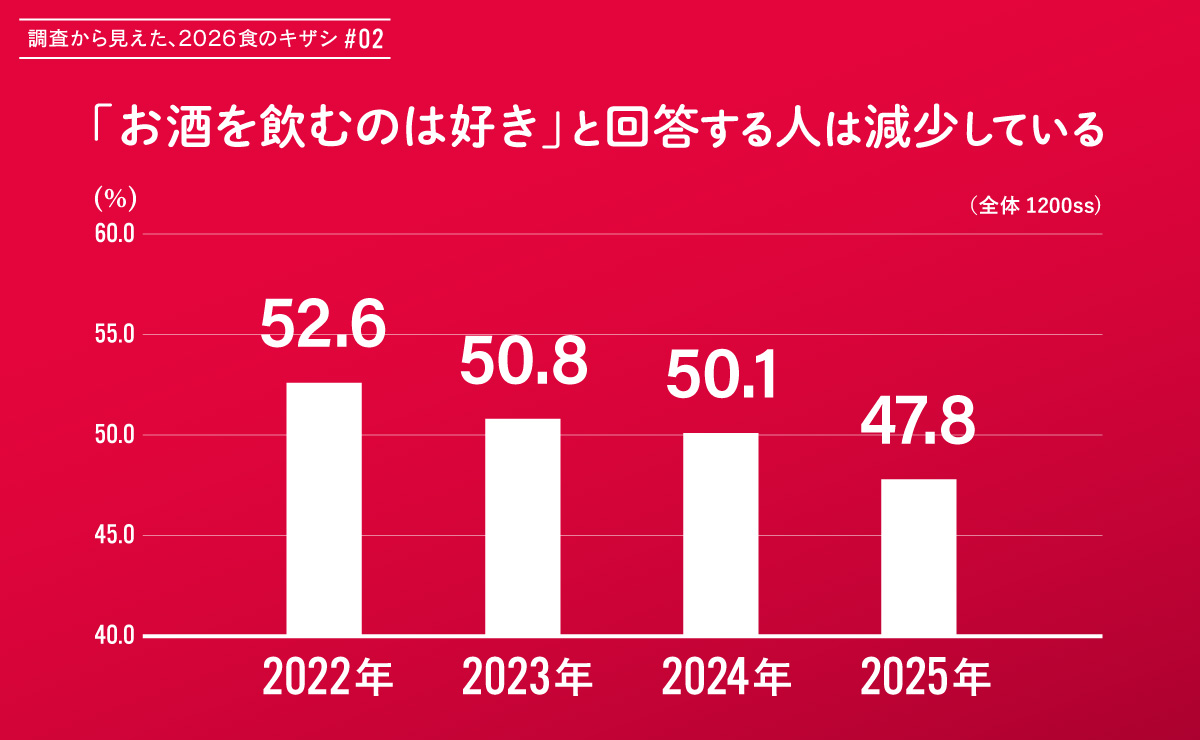
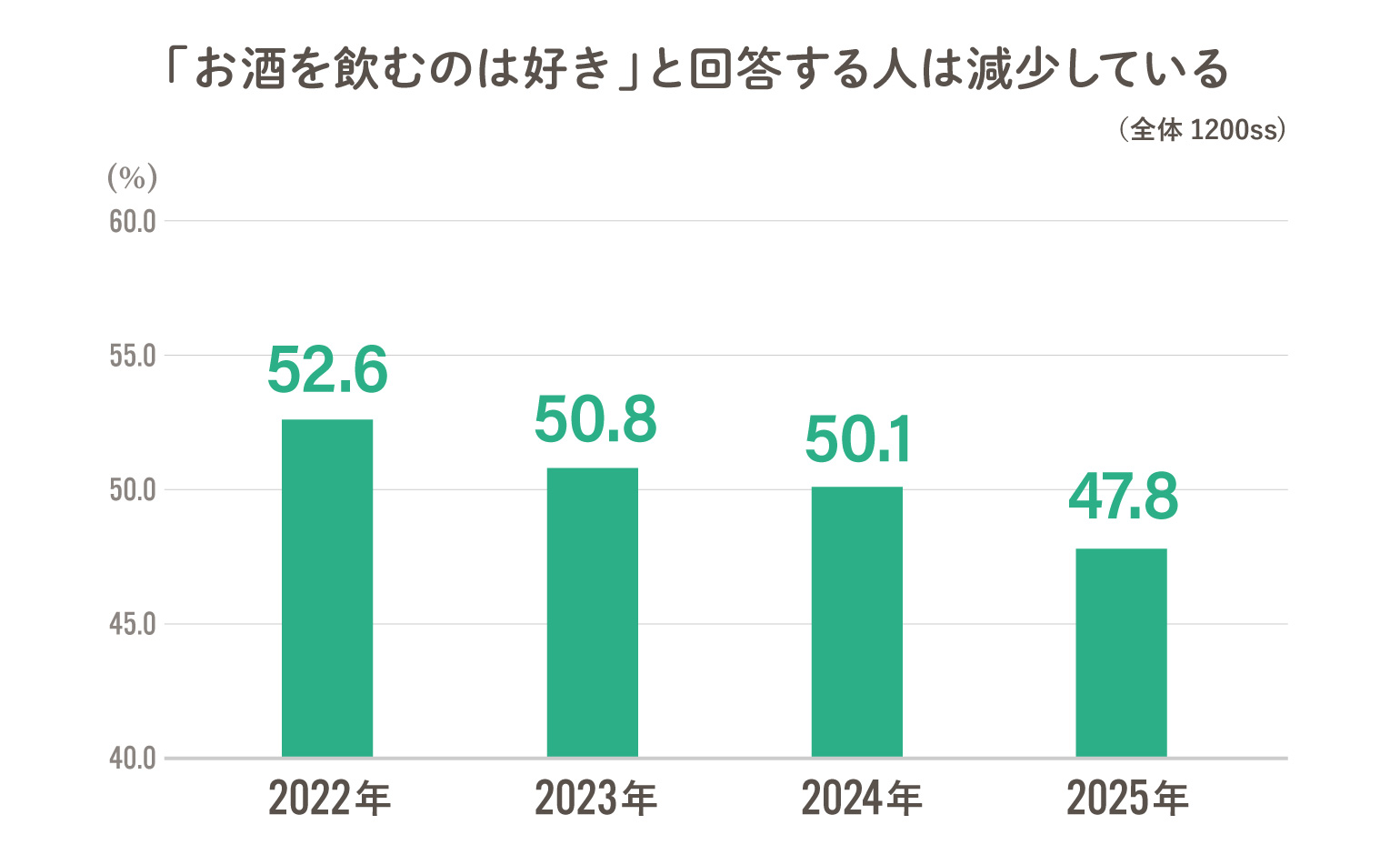
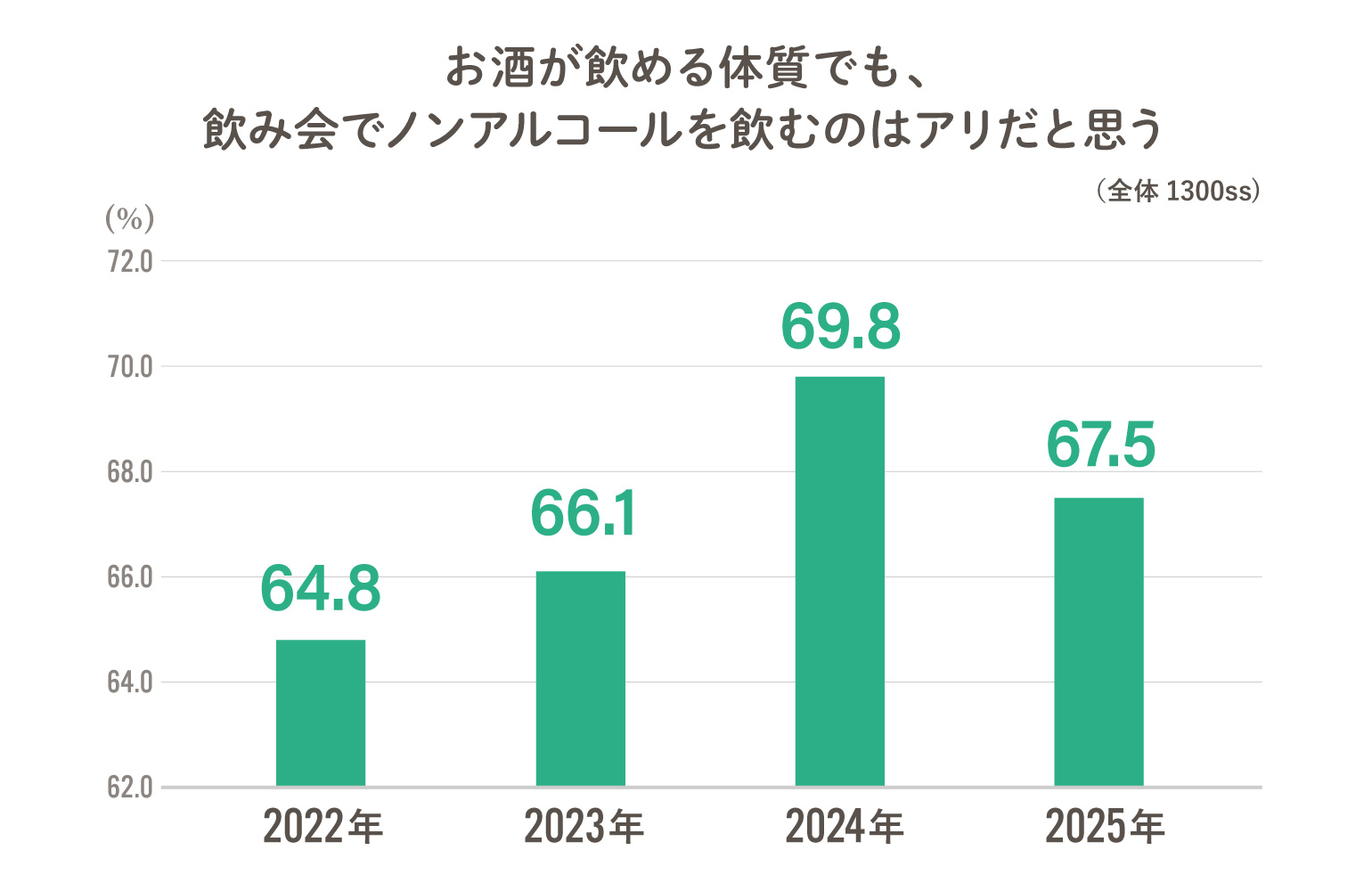
In fact, looking at the longitudinal data from the “Consumer Survey on Dietary Habits” (hereinafter referred to as the Dietary Habits Survey) conducted by the Food Lab, the percentage of people who answered that they “enjoy drinking alcohol” fell from 52.6% in 2022 to 47.8% in 2025, finally dropping below the 50% mark. Furthermore, 67.5% of respondents said, “Even if I can handle alcohol, it’s okay to drink non-alcoholic beverages at social gatherings.”
As someone who enjoys alcohol, a simple question arises: “How on earth are people who don’t drink much anymore relaxing their minds?” Even though health consciousness has increased, has the desire for the “intoxication” that alcohol provides—the pleasure of stepping away from the tensions of daily life and letting one’s guard down—truly vanished? A closer look at the data from the Dietary Survey reveals a completely different reality.Modern people haven’t abandoned “intoxication” or “pleasure.”
Rather, the role of “resetting” that alcohol once played has simply been dispersed among lighter, lower-risk “small pleasures.”
In this article, we’ll explore the changes in consumers’ lifestyles revealed by the survey data and unravel the structural background behind why “small pleasures” have become the preferred choice today.
<Table of Contents>
▼In an Era of Constant “On” Mode, the Desire to Relax
▼ Why has the focus shifted from alcohol to “small pleasures”?
▼The Reality of Consumption Revealed by Data on “Those Who Don’t Drink Alcohol Regularly”
▼A New Marketing Perspective That Goes Beyond “Intoxicating Alcohol vs. Non-Intoxicating Non-Alcoholic Beverages”
In an Era of Constant “On” Mode, the Desire to Still Let Loose
Today, a smart approach to eating has taken root, where people refer to data and word-of-mouth to avoid disappointments—such as food that doesn’t meet their expectations (e.g., doesn’t taste good or offers poor value for money). Awareness of self-management is also high; according to a Shoku Lab survey, 61.4% of people say they “usually eat with health in mind.”
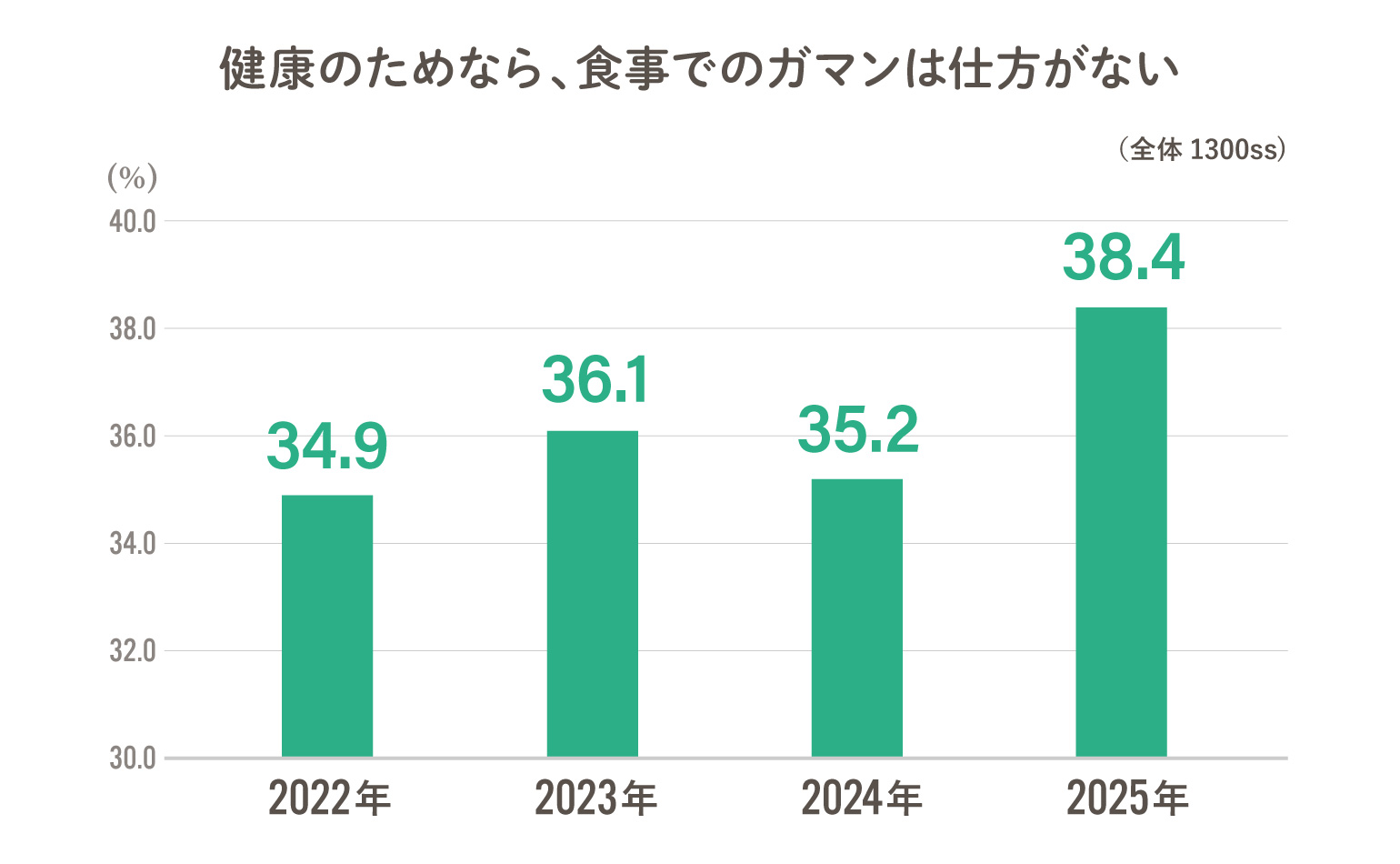
This mindset of “making better choices” is also reflected in the growing emphasis on self-management when it comes to food. The percentage of people who believe “it’s unavoidable to make dietary sacrifices for the sake of health” increased from 34.9% in 2022 to 38.4% in 2025. Additionally, the percentage of people who “feel guilty when eating greasy or sweet foods” rose from 45.3% to 49.1%.
Furthermore, with the widespread use of smartphones and computers, information is constantly available, creating an era of “perpetual low-level connectivity” where one can never let their guard down. Precisely because we remain “on” constantly—whether at work or in daily life—we sometimes want to step away from it all and let ourselves relax without worrying about reasons or what’s “right.”
There is a tension between the desire to be rational and the desire to be liberated from that rationality at times. Modern consumers, navigating this tension, are likely seeking ways to relax their “online selves” without drastically disrupting their daily lives.
Why has the focus shifted from alcohol to “small pleasures”?
This raises a question. Alcohol used to symbolize the “reset” at the end of the day. But as alcohol consumption declines, what are modern people using to relax their “on” selves?
In the past, the standard routine was: “Once you clock out, work is over. Head to an izakaya or open a can at home with a ‘pop’ to wrap up the day.” Drinking alcohol itself was the clearest signal of a sharp shift from work (on) to personal life (off).
However, in today’s world, where we’re constantly connected to information via smartphones and computers, and with concerns about how we’ll perform the next morning, some people may feel that alcohol—which, once consumed, leaves you unable to get back to a sober state for several hours and renders you incapable of doing anything—is a bit too much of a burden for a quick daily mood booster.
That’s why people are turning to “little pleasures” that can be quickly enjoyed during spare moments.Delicious non-alcoholic beverages, chocolate and chilled drinks, gummies and snacks that offer a satisfying chew and texture, as well as short videos and supporting favorite idols—even without drinking alcohol, the number of “affordable, hangover-free, and quick options to briefly unwind” has skyrocketed around us. What these have in common is that, through taste, texture, or immersion in content, they allow us to relax for a short time without significantly disrupting our daily routines.
It’s not that people have come to dislike alcohol. Rather, as the number of moments in a day when people “want to give their minds a quick break” has increased, the “reset” function that was once concentrated on alcohol may be dispersing toward these small “little pleasures.”
The Reality of Consumption Revealed by Data on “People Who Don’t Drink Alcohol Regularly”
When considering this hypothesis of a “shift toward small pleasures,” the behavioral trends of the “group that does not drink alcohol regularly” are particularly interesting. A closer look at the dietary habits of the group that answered “I do not drink alcohol (not on a regular basis)” in the survey data reveals that their lives are by no means devoid of stimulation or pleasure.
As a general rule, “those who drink alcohol regularly” tend to score higher on most items related to seeking mood changes or enjoyment from meals.
Amid this, “weekday snacking” deserves special attention. Contrary to the overall trend, on the item “I want to eat meals that lift my spirits, ” the group that does not drink alcohol on a regular basis slightly outnumbers the group that does (non-drinkers: 5.8% > drinkers: 4.0%).Looking at actual dietary habit data, a higher percentage of non-drinkers say they “like sweets” (41.9%), and the proportion who eat “snacks”—such as Western-style and Japanese sweets, as well as potato chips and other snacks—also exceeds that of drinkers.
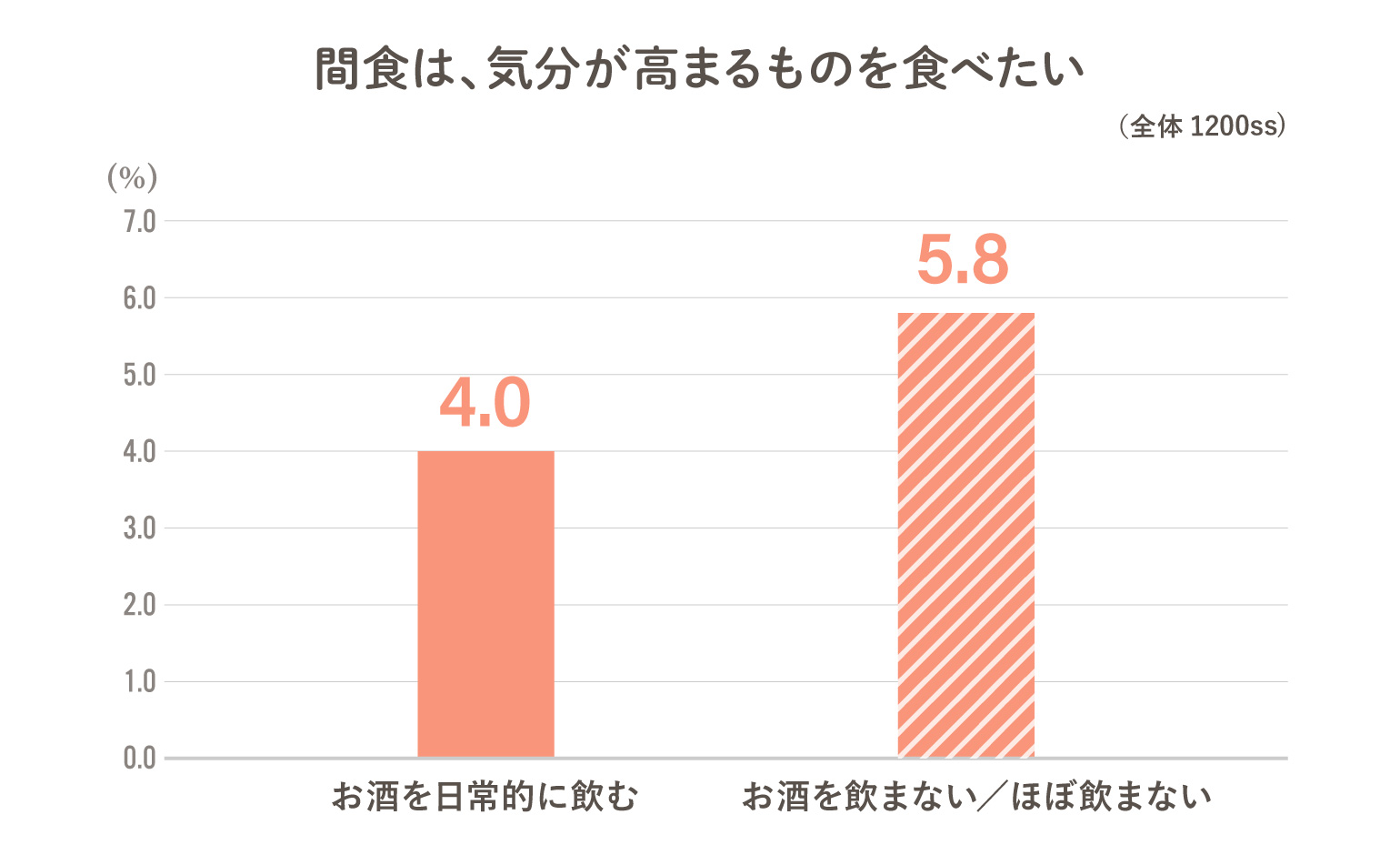
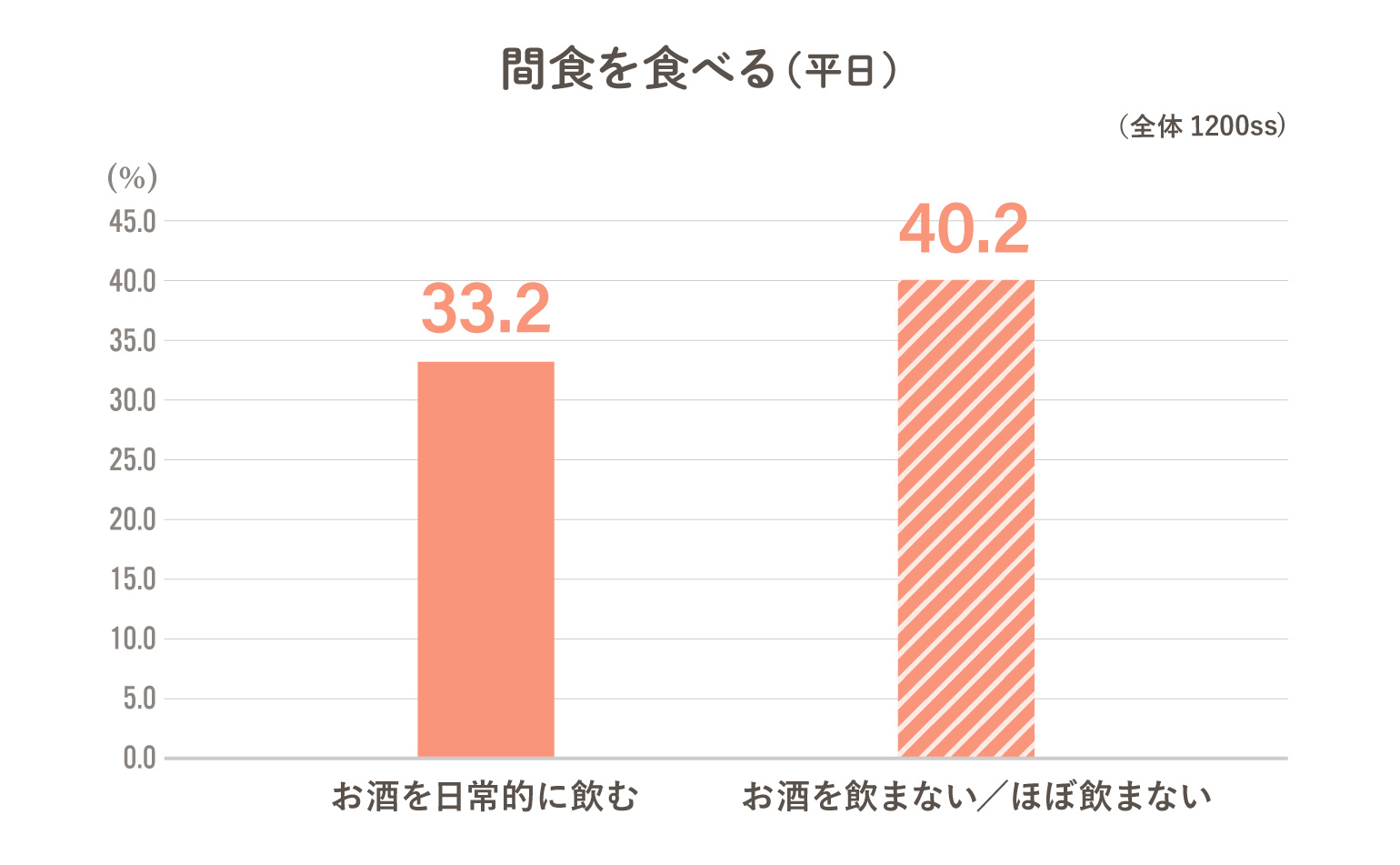
Weekdays are filled with a constant, low-level tension from using smartphones and computers. For those who don’t use an evening drink to instantly “switch off,” weekday snacking may mean more than just satisfying a minor hunger. It may function as a small “mood reset”—a “little pleasure”—that instantly eases a stagnant mood with something sweet.
Specifically, the hypothesis emerges that they may be using a diverse range of “small pleasures” like the cards in a deck, switching between them as needed.
(Examples)
• Mini-pleasures from euphoria and stimulation: They briefly lift their mood through sweets, snacks, and “dopamine food”—such as foods with intense flavors, a sense of indulgence, or an element of the unknown.
• Mini-pleasures through chewing and sensory experiences: Chewing gummy candies or foods with interesting textures, or opening and savoring chilled drinks, non-alcoholic beverages, or low-alcohol drinks—focusing on the sensations and the act itself to shift one’s mood.
• Small pleasures through visual stimulation and shared experiences: Briefly immersing oneself in another subject—such as through fandom activities or short videos—to temporarily escape everyday thoughts.
In this way, a pattern emerges: consumers skillfully manage when to “switch their minds on and off” by selecting from their “toolkit” the methods that pose the least risk and burden, tailored to their own daily rhythms.
A New Marketing Perspective Beyond “Alcohol That Gets You Drunk vs. Non-Alcoholic Beverages That Don’t”
What this survey data reveals is that consumers’ needs to “switch their mood” or “unwind” have not disappeared. Precisely because they lead daily lives focused on avoiding failure and acting smartly, the desire to switch gears remains deeply ingrained; however, the means to achieve this have expanded from a “reliance on alcohol alone” to “selective use of small pleasures,” such as weekday snacking and digital content.
Rather than being trapped by an alcohol-centric binary opposition like “alcohol that gets you drunk vs. non-alcoholic drinks that don’t,” the key to creating new hits in future marketing may lie in deciphering social trends and consumer behavior from the perspective of “small pleasures”—specifically, the ways consumers use various tools (sweet treats, snacks, videos, and supporting their favorite idols) to relieve daily stress.
At Food Lab, we conduct ongoing research and analysis to gain a multifaceted understanding of the “real changes in consumers’ emotions and behaviors” underlying these figures. In our survey scheduled for 2026, we will continue to uncover and share insights behind the rapidly changing eating habits.
We plan to continue delving deeper into how to interpret the “power of food and drink to enrich consumers’ senses”—a power inherent to these products—and translate that understanding into effective marketing strategies.
[2025 Consumer Survey on Dietary Habits: Survey Overview]
・Purpose: To understand consumer attitudes, actual behaviors, satisfaction levels, and trends regarding dietary habits in Japan
・Target Area: Nationwide
・Eligibility Criteria: Ages 15–79
・Sample Size: 1,300 (1,200 in some cases)
・Survey Method: Online survey
・Survey Period: September 2–4, 2025
・Survey Organization: Dentsu Macromill Insight, Inc.
Was this article helpful?
Share this article


Newsletter registration and delivery are temporarily suspended
For inquiries about this article
Author
Eriko Okada
Dentsu Inc.
Marketing Division 2
Integrated Marketing Consultant / Food Lab Member