
Note: This website was automatically translated, so some terms or nuances may not be completely accurate.
 Premium consumers "working moms" are driving the market [1/2]
Don't give up on "parenting" or "work"! Premium consumers "working moms" are driving the market.
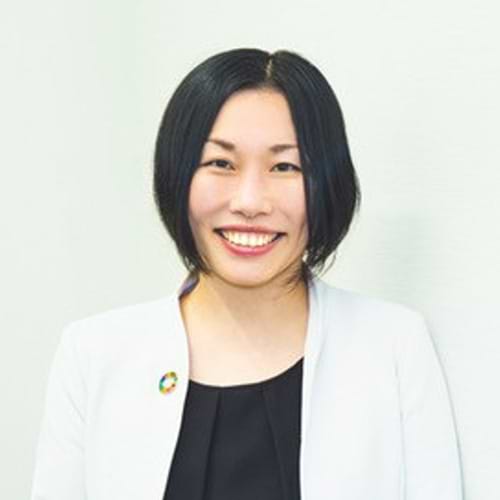
Rie Tanaka
株式会社電通ライブ

Misato Fujimura

The average age for first-time mothers is 30.4, and birth rates among women in their 30s are rising. Working mothers raising young children—known as "working moms"—now make up over half of women in their 30s. Working moms, whose numbers will surely continue to grow, are premium consumers who, despite their lack of time, spare no expense to solve problems. Dentsu Inc. Mama Lab, featuring Misato Fujimura, an expert with deep insights into working moms, thoroughly dissects the lives of full-time working moms.
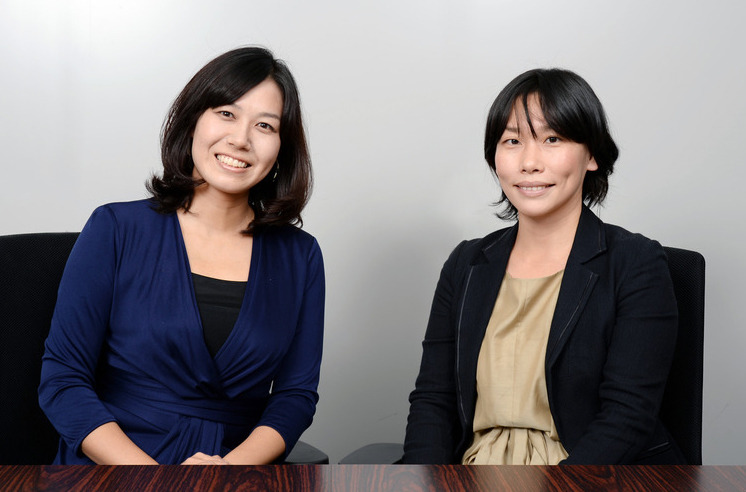
Smartphones and SNS are essential information sources for working moms
Tanaka: You're serializing "Misato Fujimura's 1,000 Working Moms Interviews" in Nikkei DUAL. As a TV director, why did you choose to start this series online rather than on television?
Fujimura: For working moms, the internet—accessible on smartphones during spare moments—is more suitable than TV, which has limited viewing time. But text and photos alone can feel too polished, making it hard to convey the unique realism of working moms, like their "incredibly fast speech" or "powerful vibe." That's why video's appeal is significant; I consciously incorporate it.
Tanaka: I see. Working moms certainly use the internet extensively.
Fujimura: Unlike stay-at-home moms, working moms rarely have time to share childcare information or concerns with mom friends. But precisely because they spend so much time away from their children, I feel they crave childcare information and knowledge even more than stay-at-home moms. So they binge-consume information: on their smartphones during commutes, and on their home computers after putting the kids to bed and finishing chores.
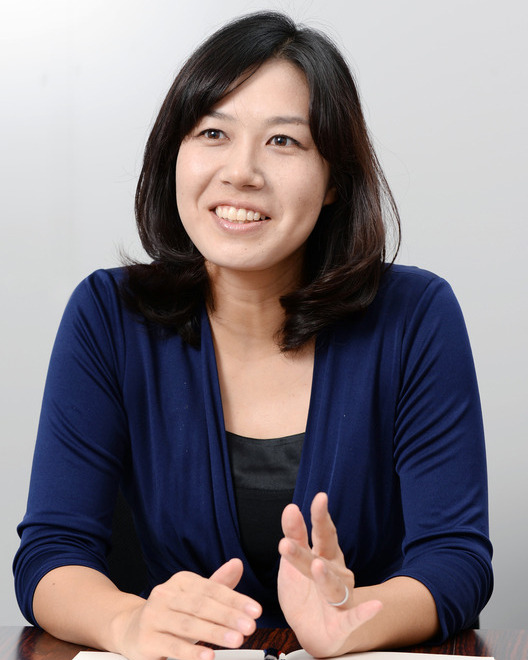
Tanaka: Ms. Fujimura, you also host the "Working Mom Party," a networking event for working moms across different industries. What kind of working moms attend?
Fujimura: Their occupations and children's ages vary, but most come alone. They find our SNS through online searches and actively apply to join.
Tanaka: Bringing your child to a party where you don't know anyone takes real initiative.
Fujimura: Afterwards, participants connect with each other on social media like Facebook. I feel that working moms, myself included, are seeking someone to talk to. While struggling to balance childcare and work, there are moments when you just feel overwhelmed. You desperately want someone to listen. But you hesitate to confide in coworkers, and it's hard to speak honestly with moms from the same daycare. Perhaps what fills that loneliness is the connection with working mom friends via SNS, which offers just the right distance. It's like having distant "comrades" who can empathize during each other's free time.
Tanaka: That SNS-level distance is just right. You can casually vent and share useful info about working mom life. There seems to be a real need for moms to connect in that space between work and private life, neither one nor the other.
To solve problems, don't skimp on money
Tanaka: Even among working moms, there's a wide range in work styles, lifestyles, and income. Reading your series, it's clear the types are incredibly diverse.
Fujimura: There are career-driven managers who want to work hard, those seeking reduced hours, freelancers, the self-employed... Plus, having one child versus two changes how they work, so it's hard to lump all working moms into one category. In our interviews, we make a point to feature various types to maintain balance.
Tanaka: Even so, are there spending tendencies unique to working moms?
Fujimura: When we asked participants at our working moms' parties what they bought when returning to work, many mentioned time-saving household items like robot vacuums, dishwashers, and washer-dryer combos. Because they're busy, if they judge something useful, they'll make a quick decision and buy it even if it's a bit pricey. Other areas include children's education and housekeeping services. Investment in themselves, like fashion or language learning... What's distinctive is the rise of private after-school care services. Services meeting working moms' needs—like including dinner and transportation, or offering lessons like English during childcare—have surged in recent years. That's where I feel the money is being spent lately.
Tanaka: Indeed, features like dinner and pick-up/drop-off are top priorities specifically for full-time working moms.
Fujimura: Since they spend less time with their children, they're more susceptible to the "for the child's sake" justification. They want to provide valuable experiences and make their children happy. Many are willing to spend generously for that.
Tanaka: It's a way of spending money to show affection for their children.
The underlying "guilt" working moms carry
Fujimura: Furthermore, I feel working moms carry an inescapable sense of guilt. They can't give their children the same upbringing they received from stay-at-home mothers. Sometimes they feel like they're substituting money for household chores and education. No matter how much they affirm their work, that guilt doesn't disappear. I think they seek things or services that can ease that guilt.
Tanaka: There seems to be a business opportunity in providing that extra reason or motivation to ease that guilt.
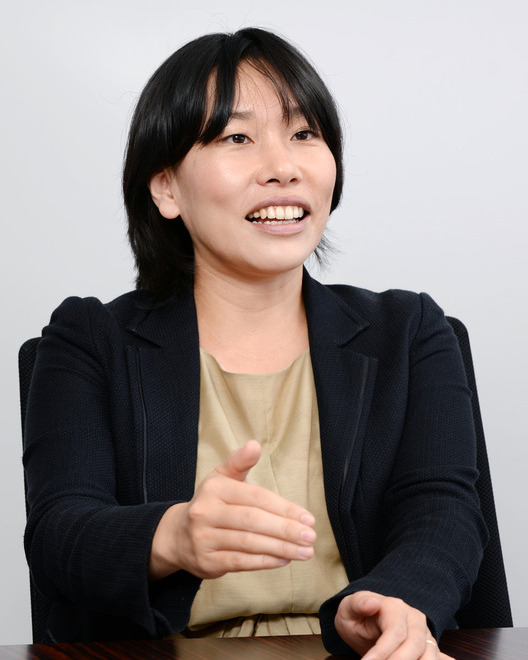
Fujimura: For example, I feel more single women lately want to understand "the reality of becoming a working mom." Among working moms, a service where college students intern in dual-income households to care for children is gaining attention. We used it too. My child eagerly awaited the college students who genuinely engaged with them, and my role advising those students on job hunting eased my guilt. It made me feel I was contributing to society, even a little.
Tanaka: It's good that it's not just about leaving your child for your own convenience, but feels linked to social activities, like nurturing the next generation of working moms.
Fujimura: Still, if society could embrace a more positive view of using housekeeping or babysitting services, those who need them wouldn't feel guilty and could use them more freely.
Tanaka: Absolutely. Today's conversation revealed moms' true feelings—that they don't want to strictly separate public and private, society and self, through things like social media and community activities, but rather seek balance and "want to stay connected."

Founded in 2008 with the belief that "When moms smile, Japan smiles. We want to increase organic connections between moms and their families, and between moms and society." As a work tank that sincerely engages with the true feelings of moms and children, we propose solutions based on real insights. We provide consulting and planning for marketing strategy development across various industries and business models.


Dentsu Inc. Mama Lab, Rie Tanaka
Our conversation with Ms. Fujimura, who is also a working mom, was very lively. Here are three key takeaways that hint at the future, which we couldn't fully cover during our discussion.
● Working moms seek role models in their 20s, not 30s.
Working moms vary widely in income and profession. Furthermore, even among working moms, there are high-achievers and those pursuing more relaxed careers, with diversity rapidly increasing. In this context, isn't a "role model" to be copied wholesale no longer what's needed? When I murmured this, Ms. Fujimura commented, "While they might not be necessary for those in their 30s, students in their 20s are eager to know about them," and I thought, "Ah, that makes sense." The need isn't for working moms currently in the thick of it, but for the "working mom hopefuls." Events and magazine features that provide working mom role models, targeting students planning their future—what to prioritize, what to give up, how to balance it all—would likely resonate.
● Services that help stay-at-home moms will emerge, sparked by working moms.
While working moms typically spend more on education, investing in education is less about occupation and more about mindset. There will be demand for "education services" that offer added value, encompassing not just education but also lifestyle support. Furthermore, for stay-at-home moms who face their children daily, as using services including childcare becomes commonplace, they might learn new approaches from childcare professionals that differ from their usual methods. This could also provide fresh stimulation for the children and offer a reliable resource when childcare feels challenging. While preferences vary on which household or childcare tasks to delegate, the rise of working mothers is shifting the burden beyond just dads and grandparents. Changes in social infrastructure, service infrastructure, and mindset are fostering a new norm where mutual support is expected. Tasks like housework and childcare, often considered shadow work, are increasingly recognized as professional domains where methods can be learned and shared.
● Business opportunities lie between social contribution and service.
From the perspective of a customer "using a service," the focus is on getting high-quality professional services at a good cost-performance ratio. However, from the perspective of participating in a social support system, the focus shifts away from money and efficiency toward seeking emotional satisfaction. Even if the quality is just decent, using that system feels like it helps not just oneself, but someone else too. Matching services that feel worth paying for—non-uniform, closer to the neighborhood communities of the past. These might not become large-scale services used by everyone, but rather numerous thoughtful services catering to smaller groups. This cluster of small-scale, viable businesses will support diverse working mothers. Women want to connect with society not just as working individuals, but as "mothers." Movements appealing to this desire are emerging, not only through communication platforms like SNS but also through matching services.
Related Articles:
Media Initiatives Focusing on "Working Moms": "AERA" and "Nikkei DUAL" [2014.12.02]
Was this article helpful?
Share this article


Newsletter registration is here
We select and publish important news every day
For inquiries about this article
Author
Rie Tanaka
株式会社電通ライブ
シニアディレクター
![[SB 2026 Tokyo] What Is Required of Corporate Sustainability Communicationsのサムネイル](https://cdn.speedsize.com/e7df76a9-4406-40f5-bc97-57e7c2c2d99d/https://cdn.dentsu-ho.com/834def09-4013-422a-a14f-45c659fd7b82/gbc33_top.jpg/f_auto,w_3840)
Misato Fujimura
TV Director/Writer