Note: This website was automatically translated, so some terms or nuances may not be completely accurate.
 How to Find That One Phrase [6/10]
I'm keeping my failed writing samples here.
I keep every piece of copy I've ever written. Not just digital files, but I scan handwritten copies too and save them as PDFs.
Looking back occasionally, I see things like, "Oh, this is what I was thinking five years ago," or "Three years ago, I wrote this copy for that job." It helps me understand my current position and how much I've grown. This broadens my perspective and adds to my points of view.
Advertising work may come from the same client, but the same copy job is basically a one-time thing.
"It might be hard to believe, but the same copy can never be crafted twice. It's custom-made for the times and the company," wrote Shigesato Itoi, a master copywriter. This is the blurb copy for 'Japan's Best 500 Copy' (published by Sendenkaigi), selected by ten renowned copywriters. In other words, copywriting is a once-in-a-lifetime encounter. So why is it necessary to look back at past work?
Reviewing your own failed copy reveals why it wasn't published or why the creative director didn't understand it. Furthermore, you can reconfirm the historical context, consider how you might present this copy differently today, and thoroughly reexamine the reasons for the failure.
In shogi, there's a practice called "post-game analysis." After a match ends, the opponents replay the entire game from the beginning to analyze where the winning (or losing) factors lay.
I believe people could grow tremendously if they could incorporate this post-game review into their daily work.
People learn from failure. Therefore, rather than pretending failures never happened, I believe it's better to deliberately preserve them for personal growth.
For example, keep things like rejected proposals or emails your boss pointed out as mistakes. Then, create opportunities to review them every few months. Reviewing your failed writing takes just five minutes. You'll be surprised how much you can discover in such a short time.
This technique works even for routine tasks like general office work. Why not make it a habit to record tasks that didn't go well and review them?
Improving old methods or discovering efficiencies can boost your motivation. After all, whether you actively engage with your work or not makes a big difference in how fulfilling it feels.
Work without any failures is boring.
I firmly believe that if you keep challenging yourself without fear, failures will transform into valuable assets.
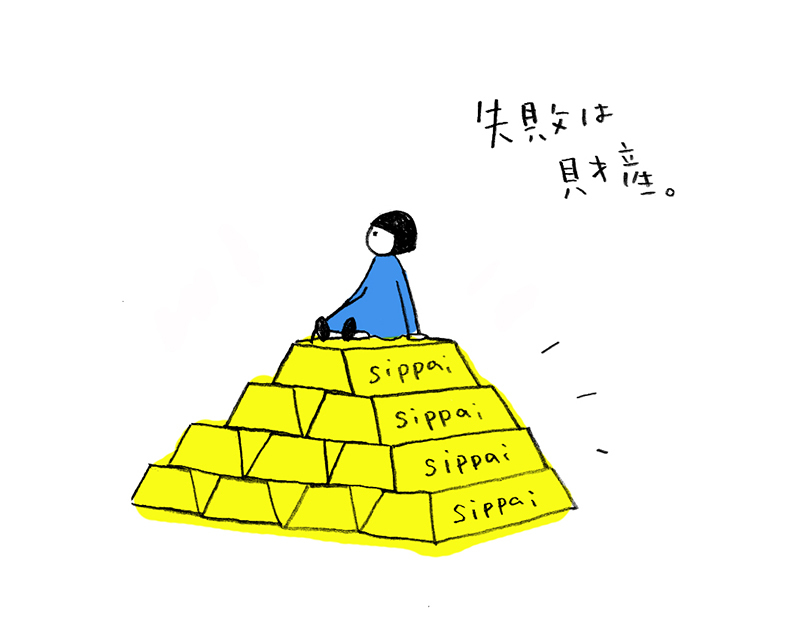 |
Illustration: Shoko Kudo (Dentsu Inc., Creative Planning Division 1) |
Was this article helpful?
Share this article


Newsletter registration is here
We select and publish important news every day
For inquiries about this article
Back Numbers
Author

Yosuke Watanabe
Dentsu Inc.
4th CR Planning Bureau (on assignment to Dentsu Inc. Isobar)