Note: This website was automatically translated, so some terms or nuances may not be completely accurate.
 How to Find That One Phrase [5/10]
Take as much time to choose as you do to write.
With practice, anyone can learn to write a lot. If you put in the training, you will definitely become able to write a lot.
But the act of choosing—selecting just one thing from the base of the pyramid—is incredibly difficult. It involves blending a person's sense of taste with the spirit of the times and many other factors to pick just one thing.
The only method I can recommend is to spend as much time selecting as you do writing.
Don't settle for easy choices like "I guess this one works." Don't decide in five seconds.
The key is to avoid such shortcuts and make sure you spend as much time selecting as you did writing.
It's not that you shouldn't choose based on inspiration.
But even inspiration has its reasons. There's a reason behind that "just because."
The act of choosing might be about verbalizing that "just because" feeling—essentially, "adding a reason to something without one." You can't persuade anyone with just "This is it, period!"
This applies to any work situation. Suppose you assign a task to someone. The work delivered doesn't meet your expectations. You then need to request revisions.
But simply saying "Do it like this!" makes it hard for people to act. Can you say, "I have this intention and expect this result, so please revise this part"? It's a small thing, but just that makes the other person listen.
Choosing requires resolve.
One business leader said, "Management is 51 to 49." If there's an overwhelming difference like 7 to 3, anyone can choose. But management often forces you to pick one option from a range that's practically within the margin of error, like 51 to 49. It truly requires resolve, and without self-belief, it's impossible.
Even when the margin isn't that narrow, choosing inherently means discarding other options. Therefore, honing your discernment takes time and yields better results.
In my case, I have an internal coordinate system: "What kind of copy has been well-received in the past?" I carefully consider how the copy before me measures up against that. That's my standard for selection.
That said, relying solely on past comparisons might not align with the current zeitgeist. So I don't just look to the past; I also imagine the reactions of those around me. I picture a friend who's just an ordinary consumer, completely unrelated to the advertising industry, and ponder how they might perceive it.
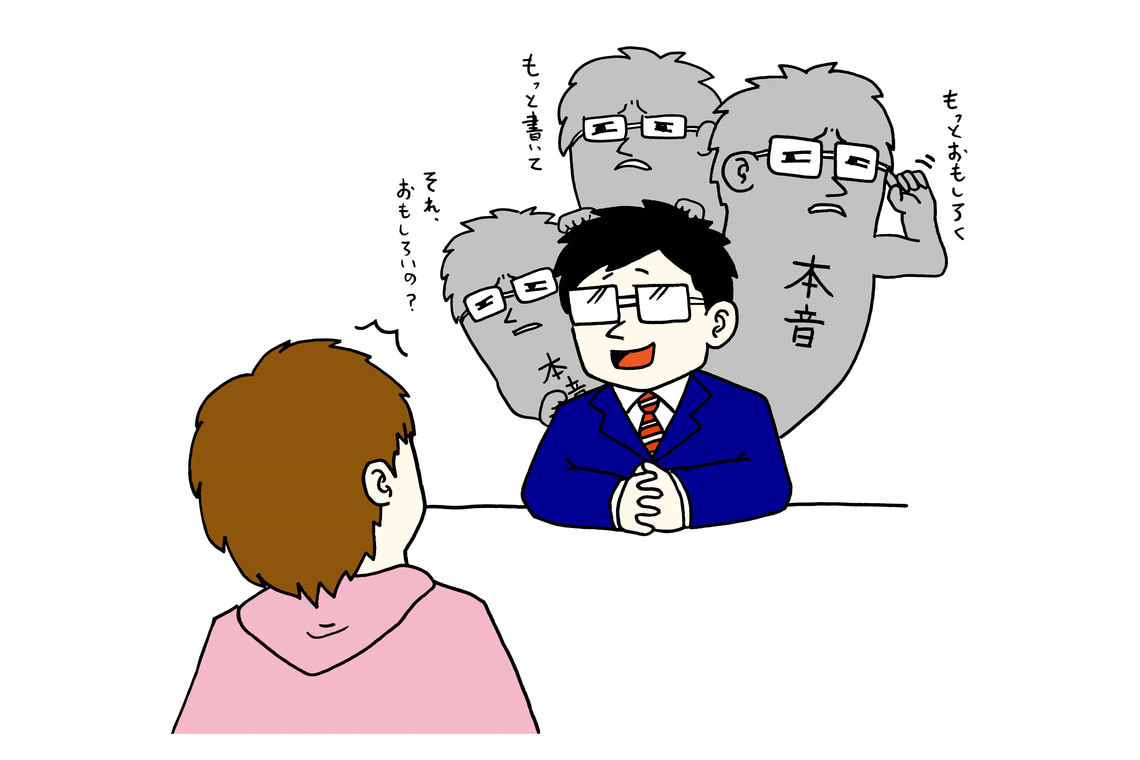
Even after taking time to carefully select something this way, it often happens that the creative director says, "No, not this one, that one over there." If they explain, "The reason is ~~," then I can understand and learn.
If I accept their reasoning, I submit that version. If I don't, I refine my original copy and resubmit it with a revised explanation.
I don't think many people can view their own ideas 100% objectively.
But honing that objectivity is what makes you a pro, and with effort, you can improve your precision.
I'll say it again: take the time to make a careful selection.
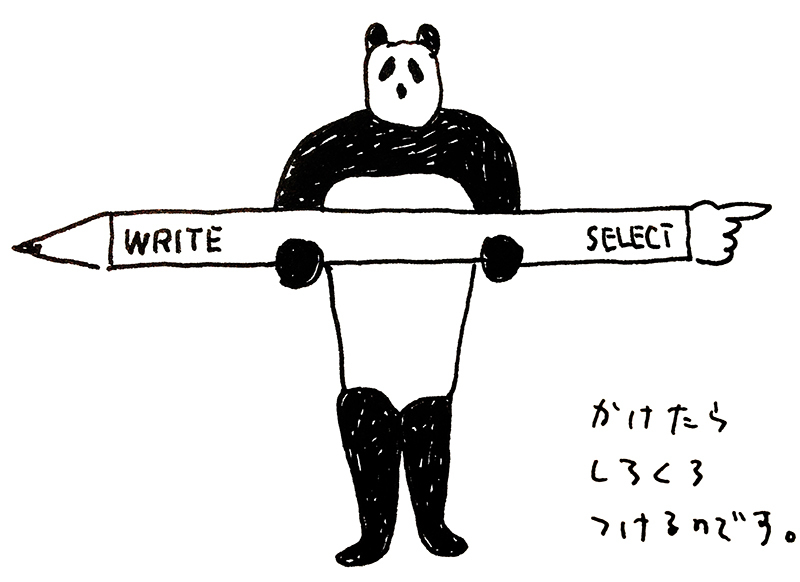 |
Illustration: Yuki Tsutsumi (Dentsu Inc., Creative Planning Division 4) |
Was this article helpful?
Share this article


Newsletter registration is here
We select and publish important news every day
For inquiries about this article
Back Numbers

Author
Yosuke Watanabe
Dentsu Inc.
4th CR Planning Bureau (on assignment to Dentsu Inc. Isobar)