Note: This website was automatically translated, so some terms or nuances may not be completely accurate.
 How to Find That One Phrase [10/10]
Look at the hidden truth. Look. Look.
This marks the final installment of this column.
To everyone who has read this far, thank you very much.
While I've focused on techniques for communication, ultimately, those are merely means to convey intrinsic value. I believe the most important thing is first discovering the essence and value of something.
To grasp that essence, you must keep looking into the hidden truths.
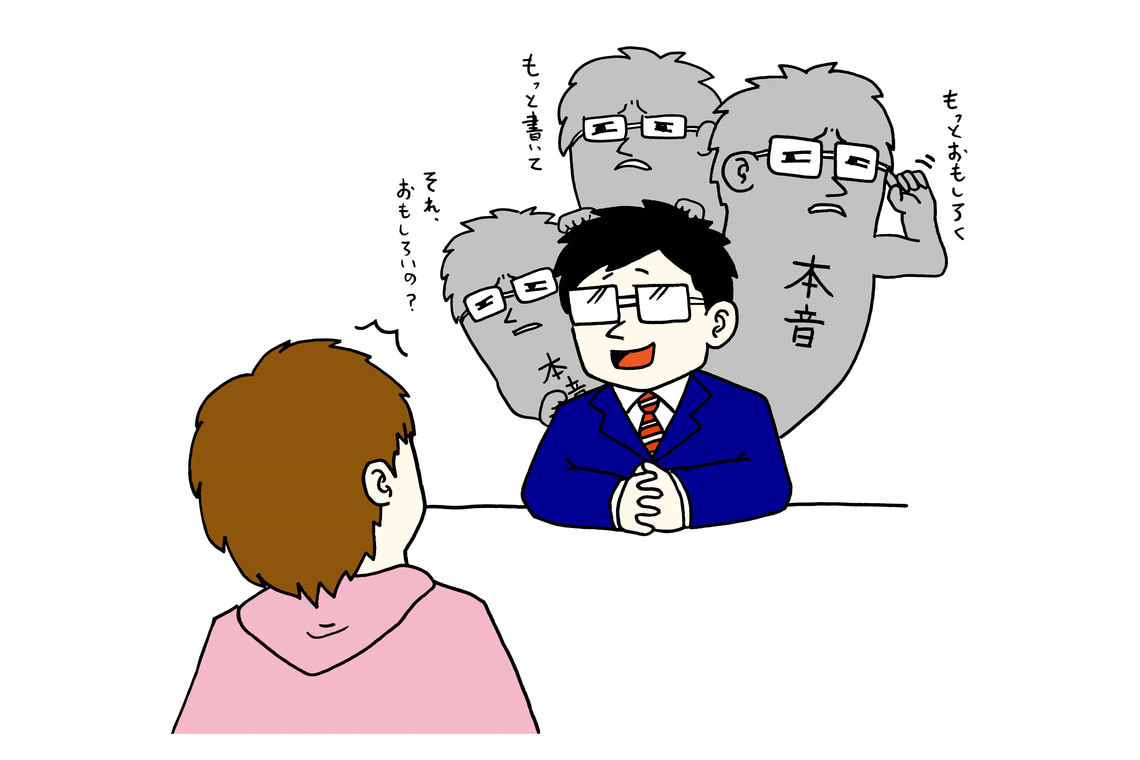
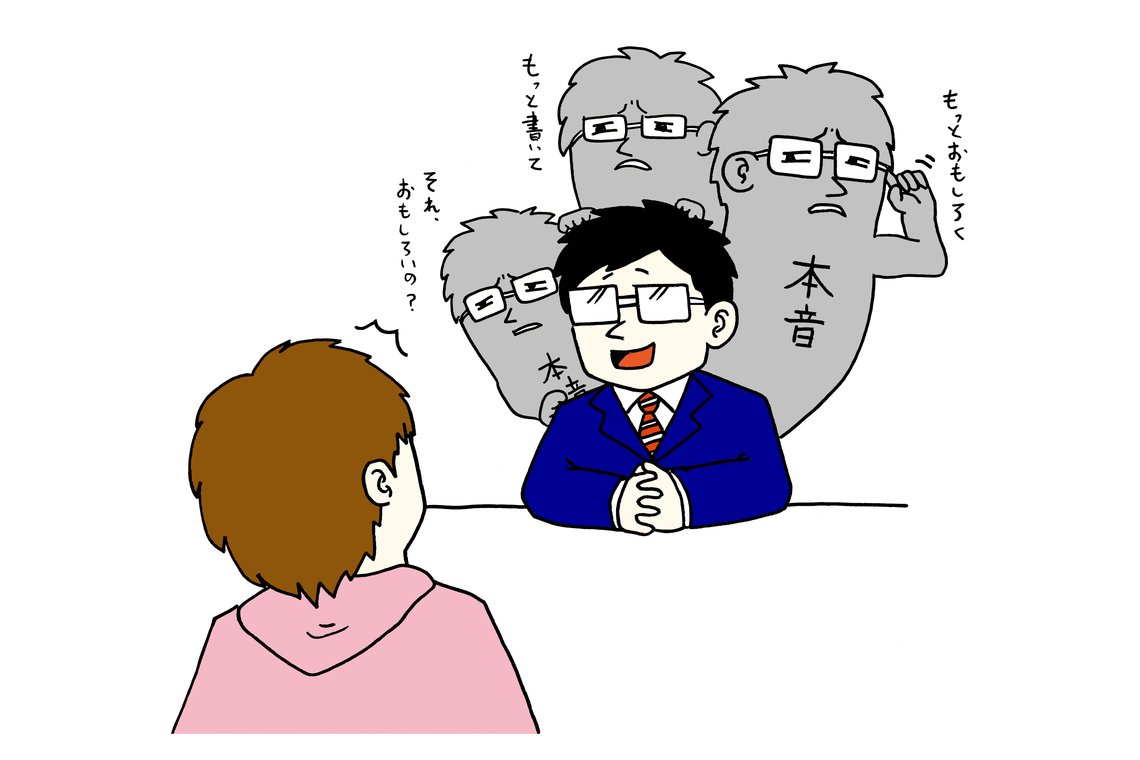
When communicating, what is the other person thinking? What do they want? Where are they struggling? What emotions are they carrying? These aren't always visible on the surface. Shine a light on the hidden truths lurking in the deepest shadows of their heart – truths they themselves may not even recognize – and you will always find the answer. But simply "looking at the hidden truths" isn't enough. You must "look" at least three times before you can truly find the essence.
The hidden truths are crucial for business ideas and proposals too.
The hidden truth behind the proposal, the hidden truth behind the client, the hidden truth behind yourself, the hidden truth behind the situation. Unless you grasp precisely what emotions the people involved should have, what emotions they carry while facing challenges, and what emotions would enable them to solve those challenges—down to the level of the subconscious—any technique you employ will ultimately feel shallow.
Doing this seriously is incredibly difficult. But I believe those who do it earnestly ultimately prevail. I think outstanding creative directors, art directors, and copywriters are valued precisely because they excel at grasping the essence of everything, including their own inner selves. In other words, they are people capable of thinking thoroughly.
Animation director Hayao Miyazaki once said in an interview:
"When you think deeply enough, you can smell the scent of blood in the back of your nose. Thinking only with the brain's superficial consciousness or the latent unconscious that doesn't surface isn't enough. True stories only emerge from the deeper, darker parts of the brain. You have to think until you smell the scent of blood."
When writing copy, there comes a moment when you think, "I've got it." But that isn't the shadow truth that synthesizes everything. In that case, it's merely the first step. So, you need to take a physical step back to observe it, or sleep on it and review it the next morning. You need to have several criteria to judge whether it's truly good. By illuminating things with multiple perspectives, not relying solely on your own viewpoint, you grasp the essence of things.
We live in an efficiency-driven world.
Bookstores overflow with books touting time-saving and convenience, promising things like "Speak English in 3 minutes a day for 3 months" or "Lose 20 kilos in 5 minutes a day."
But if I may be so bold, I'll say this: the more time you invest, the more substantial the results. Especially with language—it polishes itself in direct proportion to the time you pour into it.
I'm still a rookie in the copywriter hierarchy, so I can only compete by investing time. The only way I can beat those copywriters who work like gods is by relentlessly dedicating time. I believe that what emerges from that process will one day become words that move your heart.
Complete 10-Part Series "How to Find That One Phrase" (End)
Was this article helpful?
Share this article


Newsletter registration is here
We select and publish important news every day
For inquiries about this article
Back Numbers

Author

Yosuke Watanabe
Dentsu Inc.
4th CR Planning Bureau (on assignment to Dentsu Inc. Isobar)