
Note: This website was automatically translated, so some terms or nuances may not be completely accurate.
 New Smartphone Advertising Experience BRAND SCREEN [2/2]
How exactly can this be used for advertising?

Saeka Komiya
Accelmark Co., Ltd.

Ichikawa Shuma
Accelmark Co., Ltd.

Rai Keisho
Dentsu Inc.

Seitaro Miyaji
Dentsu Inc.
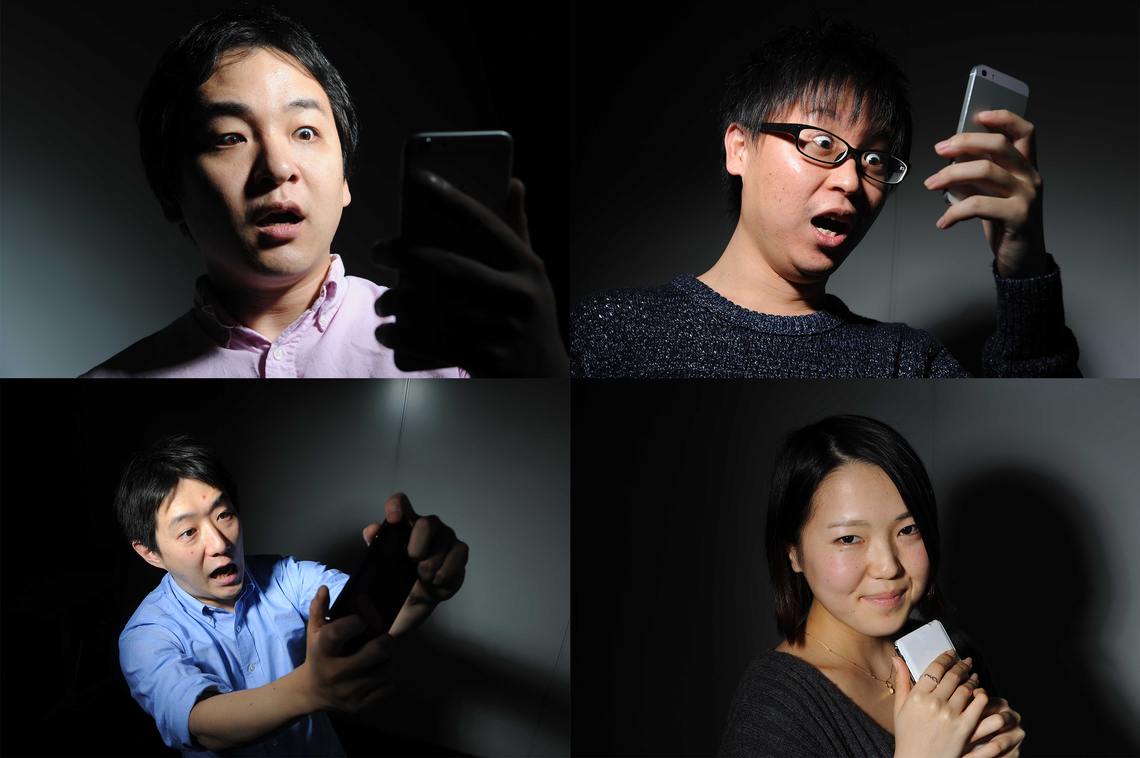
How exactly is the new smartphone ad product "BRAND SCREEN" intended to be used? What are the benefits for advertisers? We spoke with Mr. Shuma Ichikawa and Ms. Saeka Komiya from Axelmark, responsible for the ad network and technical development of this product, as well as Mr. Seitaro Miyaji from Dentsu Inc., handling creative, and Mr. Keisho Rai, in charge of media development.
Aiming for Ads That Are "Interesting" Rather Than "Annoying"
――Smartphone advertising is at a major turning point. While it's no exaggeration to say web media cannot survive without ads, from the user perspective, there seems to be a growing sentiment that ad displays are unpleasant. Particularly within the limited screen size, there has been a persistent lack of ingenious solutions for how to handle ads, hasn't there?
Komiyama: Yes, the idea for "BRAND SCREEN" originated from AXEL MARK's challenge to address the frustrations we actually heard from the ad network sales floor.
We identified key reasons why current web ads are often perceived as intrusive: "accidental clicks or misoperations" and "suddenly and forcibly taking over the article screen without context." This makes them difficult for users unfamiliar with the interface and annoying even for those who are. The idea that mobile ads could break free from being "intrusive" if they took a different form was the origin of this project.
Consequently, the System Development Department tasked with proposing the new ad format developed a demo that took the concept to an almost exaggerated extreme, leveraging JavaScript to expand expressive possibilities.
Ichikawa: I believe traditional mobile ads simply couldn't pull off anything truly interesting. To break free from that, our approach is to deliberately propose expressions unconstrained by existing banner concepts. With BRAND SCREEN, technically, it can extend beyond the bottom banner area or even utilize the entire screen.
Toward creative that sticks in everyone's memory, like a commercial
――We believe those who saw the BRAND SCREEN demonstration fully grasped its impact. However, many likely wondered, "How can we use this for our ads?" or "Is it suitable for our media?"
Komiyama: We also get questions like, "Won't readers criticize it for making articles harder to read?" or "Won't they just close the page?" But fundamentally, it can be displayed within the scope that aligns with each media outlet's policies. Think of it as advertising that integrates with the medium.
Miyaji: To put it very simply, I see it as TV commercials for the smartphone era. With BRAND SCREEN, you can create diverse expressions without forcing users to navigate away from the page. This enables advertising that makes an immediate impression, much like a TV commercial.
――I see. So users can experience it without clicking, allowing them to view both the ad creative and the article without page transitions? If we can place ads that deliver memorable experiences or impact within the page, it seems like a win-win for both the media and advertisers.
Miyaji: Until now , if you wanted to create web ads that were both meaningful and engaging, you often had to launch a campaign site or brand site. And then you needed promotions just to get people to visit that site... That paradox of having to run "ads for the sake of ads" is a challenge current web promotions face. I think BRAND SCREEN could be the solution to that.
Komiyama: I believe many people have favorite commercials or memorable commercials. Similarly, we want to provide something memorable online, something that makes people say, "That BRAND SCREEN ad was really interesting."
For advertisers, it's about brand development.
――I understand BRAND SCREEN can be distributed through Axelmark as a hub to newspaper-affiliated media, major women's media, IT/technology media, and others.
Yorimasa: Yes. So we can package distribution across media that best suits the product and advertising intent. Also, BRAND SCREEN is sold on an impression basis. It's easiest to imagine using it for branding initiatives aimed at getting products seen in a memorable way.
――As shown in the demo, for interactive ads like those requiring user actions (e.g., wiping the entire screen), the cost per impression remains the same regardless of whether the user interacts or not.
Yoroi: Yes. Precisely because it's something entirely new, we believe it's crucial to create content that makes users want to interact with it. Starting with the home appliance and daily goods sectors, the ability to execute bold creative expressions has already attracted inquiries from the entertainment industry recently.
――I understand actual ads will be released soon. What kind of expressions can we expect?
Miyaji: This isn't unique to BRAND SCREEN, but it's fascinating how people feel a sense of control when they physically interact with something. This makes them naturally watch the content to the end. It reduces the feeling of being "forced to watch ads" like with passive, self-moving content, leading to higher favorability.
With that in mind, we're preparing various patterns. For example, some ads change only a portion of the bottom of the screen when scrolled, rather than the entire screen. Others deliver manga-like content via pop-ups that can be closed immediately.
BRAND SCREEN aims to create enjoyable, memorable advertising experiences, so we focus on usability in production—considering display area, timing, and more.
Komiyama: That's right . At BRAND SCREEN's core is the desire to move beyond being perceived as merely intrusive. We also adjust the tone and manner for each media platform, considering its specific user base through collaboration with media partners. This means creatives must be customized per project rather than being routine work, but we already have various exciting projects planned that users will look forward to seeing.
――I see. This new collaboration between advertisers, creatives, and ad network technology seems poised to create exciting "smartphone-era commercials." So, if someone wants to try advertising on BRAND SCREEN, what should they do?
Everyone: First, please contact Dentsu Inc.

Was this article helpful?
Share this article


Newsletter registration is here
We select and publish important news every day
For inquiries about this article

Author
Saeka Komiya
Accelmark Co., Ltd.
Ad Platform Business Division / BS Unit
Unit Leader
Ichikawa Shuma
Accelmark Co., Ltd.
System Development Department
Unit Leader
Rai Keisho
Dentsu Inc.
Digital Business Bureau, Media Planning Department
Producer
Articles by this person
Seitaro Miyaji
Dentsu Inc.
Third CR Planning Bureau
Creative Technologist