Note: This website was automatically translated, so some terms or nuances may not be completely accurate.
 MOM meets MOM project [1/1]
A Peek into Parenting Around the World. Mom's Anonymous Interviews: <USA & France Edition>
Worldwide, approximately 800 women lose their lives every single day due to pregnancy or childbirth. To improve this situation, JOICFP, an international NGO supporting women in developing countries , and Dentsu Inc. Gal Lab, which handles communication for women, have jointly launched the "MOM meets MOM Project" as part of the global White Ribbon Campaign to protect mothers and newborns worldwide. Saraya's skincare brand, Lactoferrin Lab, provides full sponsorship support.
By raising awareness among Japanese mothers about the realities faced by mothers and mothers-to-be globally, we aim to foster mutual understanding and expand the circle of support. In this series, project member and author Ikumi Togasaki reflects on the state of maternal and child health in Tanzania, which she visited for an inspection in June. She explores the challenges and future possibilities for mothers in Japan and around the world.
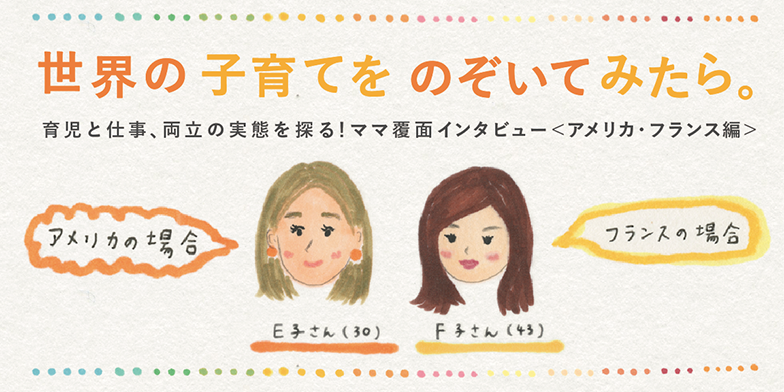
Last time, we conducted masked interviews with Japanese mothers. Of course, since each person's lifestyle and way of thinking differs, we cannot make sweeping generalizations based solely on the commonality of being a "mom." However, broadening our perspective just a little surely reveals new insights. With that in mind, this time we interviewed a mother living in the United States and a mother living in France. Both are Japanese, but they are mothers living abroad with foreign husbands, raising children while also working.
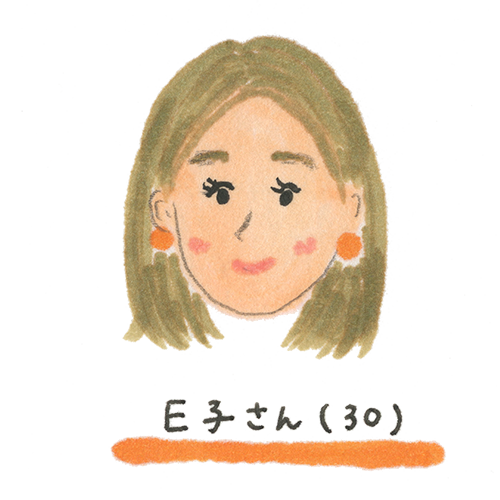
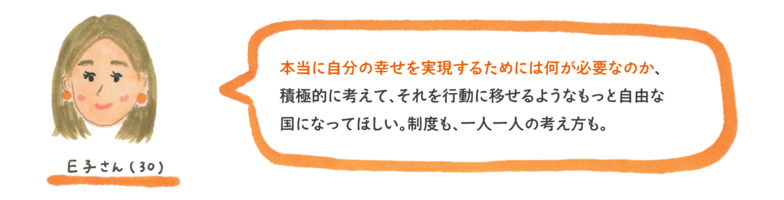
E-san (30 years old)
【Profile】
Resides in Seattle, USA. Works for a nonprofit organization. Family consists of her husband (American, 33, works for a consulting firm), and their eldest daughter (1.5 years old). Their son would be 4 years old if he were alive (stillborn).
Eko's Mind
Work: 60%, Daughter: 20%, Next week's meal plan: 20%
[Overview]
First pregnancy at age 26, six months after marriage. Living in Rwanda due to husband's work, struggled to find a hospital. Medical costs were high in the US, and in Japan, it was difficult to find a hospital willing to accept her just for delivery, leading to days of making countless international calls.
Ultimately, she decided to give birth in Japan and returned home as her due date approached. She finally completed all tests with an obstetrician in Tokyo, obtained her maternity handbook at the ward office, and was just finishing up buying newborn supplies when, two weeks before her due date, the fetal movements suddenly stopped.
I went to the hospital in the middle of the night, where the fetal death was confirmed. After that, labor pains started, and I gave birth naturally.
Stillbirth. It was determined the cause was the umbilical cord becoming entangled around the neck and ankle.
Later, while on assignment at a Japanese company from a private consulting firm, I became pregnant for the second time at age 28. When I informed my boss of the pregnancy, I was unexpectedly fired a few days later.
At age 29, she safely gave birth to her first daughter in Tokyo. Devastated by the dismissal, she concluded it was impossible to happily balance work and family life in Japan. She moved to Seattle when her daughter was about a month and a half old.
Q. You became pregnant for the first time while living in Rwanda. What was life like then?
Eko: I got pregnant while job hunting, but I kept looking and started a new job fairly quickly. I worked on editing publications with colleagues from Rwanda and Kenya. It was a short-term job, and since I didn't experience any physical changes, I never told the company I was pregnant until the very end! So, there was no special consideration from anyone, and I was able to work normally, which was good.
Q. Did you notice differences compared to Japan?
Eko: Personally, I didn't cut back on exercise or change my diet because of the pregnancy. I commuted using the same buses as regular Rwandans and even attended belly dance classes. Neither the Rwandans around me nor other Westerners treated me specially just because I was pregnant, so I lived a completely normal life. If I'd been in Japan, I bet there would have been an overload of information and more restrictions or obligations specific to being pregnant?
Q. Your second pregnancy was in Japan. How was that?
Eko: I didn't experience any physical changes, but planned business trips were prohibited. I was barred from attending my yoga class, and the hospital where I had checkups forbade me from wearing heels. I also received very detailed dietary instructions. It was quite different from my first pregnancy, so I was surprised.
Q. Please tell us about when you were given notice of dismissal in Japan due to your pregnancy.
Eko: After entering the stable period and informing my boss about the pregnancy, I was given a dismissal notice a few days later. The reason given was " because you're pregnant and can't go on business trips." I was a contract employee with a fixed term, and at the time, I had only six months left on my contract. I had built a good relationship with the team at my assigned workplace, and the project was in its final sprint phase. I was completely baffled...
Q. Did you take any action afterward?
Eko: As I talked it over with my husband and friends, I gradually realized this was illegal... It's what's now called (?) "maternity harassment." It happened right around the time the term "maternity harassment" first appeared in newspapers. I called a hotline for advice, and ultimately got my employer to withdraw the dismissal notice. ...Still, this incident was a huge shock. It became the decisive blow that led me to conclude, " It's just too difficult to happily balance work and family in this country (Japan). I really need to leave."
Q. How was raising children after moving to Seattle?
Eko: I gave birth to my eldest daughter in Tokyo and moved to Seattle when she was about a month and a half old. I lived as a full-time homemaker for a year until I found my current job. What surprised me most about being a homemaker in Seattle was the number of men with children at the park during the day! In the parks of ordinary residential neighborhoods, there were lots of dads looking after their kids.
And right in the middle of the weekday!
Q. Is that kind of scene common in America?
Eko: I kept asking my American husband, "Are these guys not working?" and "Are there really that many stay-at-home dads in America?" He said, "Maybe they work from home orhave shift work?
It's common for women to do it, but men do it too because daycare is expensive. I bet there are quite a few families where the wife has a good job and the husband stays home to take care of the kids?"
Q. So it was surprising for E-ko too.
Eko: It really made me realize how biased my image of "moms are the ones at the park" was (laughs). In fact, among my American friends, there's a family where the mom returned to work three months after giving birth, and the dad, who was job hunting, put his job search on hold to focus solely on childcare for a year. Now that I'm used to the Seattle parks overflowing with dads, it actually feels a bit strange to see Japanese parks filled mostly with moms and kids.
Q. How would you rate your husband's childcare and housework after childbirth?
Eko:
【Childcare: 100 points】He absolutely loves kids, so he might even do more childcare than I do. He handles everything: dropping off and picking up from daycare, nighttime baths and bedtime routines, even waking up in the middle of the night. Sometimes I wonder if he wants to play more than our daughter does... they play together so often. Maybe it's because I don't have strong opinions about "how childcare should be done," and I'm okay with his approach and his laid-back style?
【Housework 80 points】Unlike childcare, I handle almost all the housework. But unlike in Japan, we have a dishwasher and dryer, so the overall amount of housework is less. Also, I absolutely won't compromise on our diet! I make white rice, miso soup, and grilled fish, while my husband handles the financial tasks I dislike, like paying rent and filing taxes.
Q. Does his workplace understand or support him taking on childcare responsibilities?
Eko: If my husband blatantly prioritized work over household chores and childcare while having kids, he'd probably be treated like a traitor at work. Seattle's corporate culture is generally very supportive of family and individual lifestyles, so companies that aren't would stand out. They'd quickly get a reputation as a "bad company," and their business would be finished. Because he has to drop off and pick up our child from daycare, my husband works a schedule starting at 7:30 AM and finishing at 3:30 PM. I've heard that in the past year and a half, no one has complained about this.
Q. Can you share your experience returning to work in Seattle?
Eko:
[Job Hunting] I started job hunting in Seattle when my daughter was around 10 months old. That said, job hunting in the US is mostly emails and phone calls, so I rarely had to leave her behind. However, during phone interviews, my daughter would start crying loudly in the background. I'd end up carrying her on my back, pacing around while continuing the conversation – this happened every single time. At first, I worried if this would even get me through the interview... but most interviewers responded with things like, "I have three kids too, I totally get it! Don't worry about it!"
【Finding Daycare】In Seattle, you have three options: "hire a full-time babysitter," "share a babysitter with several families in the neighborhood," or "send your child to daycare. " I wanted the most affordable option, daycare, and after calling about ten places, I finally got a spot. All daycares in the US are private, so quality varies significantly. Honestly, the one that had openings was a bit questionable (kids kept their shoes on indoors, lunch was hamburgers, etc.), but I turned a blind eye. Later, I was able to transfer to my preferred daycare, and now my child attends one that offers Japanese language education and serves Japanese-style lunches.
【After Returning to Work】 Fortunately, my direct supervisor was a father of three, so he was understanding. I had almost no overtime and no major issues. Many colleagues around me were also pregnant or had young children. The company offers a sick child care service as a benefit. On days when my daughter suddenly gets sick and can't go to daycare, a babysitter comes to our home and looks after her for about an hour a day for a few hundred yen. Having a complete stranger come into our home feels a bit uncomfortable, but it's a very convenient service when there's no other option. Having it available is reassuring?
Q. What was your work style after returning to work in Seattle?
Eko:
6:30 AM: Family of three wakes up, gets dressed
6:45 a.m. Everyone leaves the house together
7:15 Arrive at work, eat breakfast while checking emails
3:45 PM: Leave the office
4:00 PM Arrive home, rush to make dinner
4:30 PM Daughter and husband return home
5:00 p.m. Family dinner
6:00 PM Play at the neighborhood park with the family
19:30 Daughter's bath, bedtime
8:00 PM - 10:00 PM Yoga, shopping, internet, TV, etc. Time for each spouse's hobbies.
10:30 PM Husband and wife go to bed
I think this current work style suits me well right now.
Q. Do you have parental leave in Seattle?
Eko:In the U.S ., there's no publicchildcare leavesystem like Japan's, so most companies offer none at all. Luckily, my current workplace gives both men and women three months, but it's still short compared to Japan. I'm worried about when we have another child.
Q. Did your relationship change after childbirth and through raising your child?
Eko:Not really. Our daughter always goes to bed early, before 8 PM, and after that it's just quiet time for us as a couple, so we don't really feel the need to go out alone (laughs).
Q. What are the challenges of working while raising children in Seattle?
Eko:In the U.S., all daycare centers are private, so in Seattle, it costs about ¥150,000 per child per month. It's quite expensive. But conversely, if you pay, you can definitely get into some daycare center, so there's no problem with waiting lists. If you have more children, you can hire a babysitter, share a babysitter with a family in the neighborhood, or join a childcare cooperative (Coop) where parents take turns being the teacher, so there are options besides daycare centers.
Q. What are the joys and hardships of parenting?
Eko: I used to think childcare was so hard it would be the end of my life... but actually doing it, it's been nothing but happiness. Having lost my first child, just having my daughter born alive and living healthily makes me feel that all the hardships are part of that happiness.
Q. If you have any hopes for how Japan should develop in the future, please share them.
Eko: I hope everyone—young and old alike—will venture out more and see the world. I want them to experience different ways of living, working, and thinking beyond Japan.
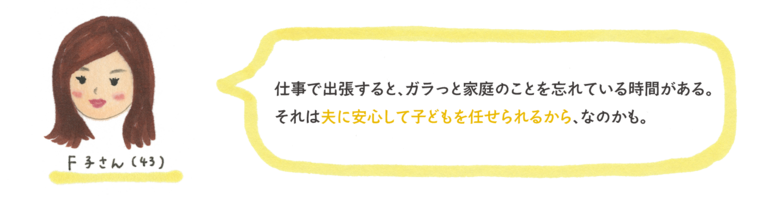
F-ko (43)
【profile】
Resides in Paris, France. Photography coordinator.
Lives with her husband (French, 45, self-employed), their eldest son (4), and her nephew (19), who is studying abroad and currently living with them.
Fuko's Mind
Children: 40%, Self: 30%, Work (and hobby): 20%, Husband: 10%
【Overview】
Divorced from her ex-husband after 10 years of marriage. Became pregnant for the first time with her current husband, whom she started dating the following year, after only 7 months of dating. She was 38 at the time.
She discovered she was pregnant immediately after returning from a demanding one-week business trip to Morocco. With another trip to Morocco scheduled in two weeks, and considering it was her first pregnancy and the work was physically demanding, she decided to delegate her tasks to a colleague. She assisted remotely.
Early pregnancy brought back pain, making me think I might have to stop working. However, the back pain subsided and I experienced absolutely no morning sickness, so I continued working right up until just before giving birth.
She safely gave birth to her first son. After delivery, she consulted with the company and decided to continue working from home. Even after returning from maternity leave and her child started daycare, she continued working without commuting for some time.
Q. Please share an episode from when you were pregnant.
Fuko: With my previous husband, we couldn't conceive for 10 years, so I had resigned myself to a childless life. Getting pregnant was a surprise. I'd heard that changing partners can make it happen, and that's exactly how it felt.
Q. Did you have any work-related concerns after becoming pregnant?
Fuko: Since this was my first child at 38, considered an advanced maternal age, I already felt I'd worked hard enough and wasn't worried about returning. But I felt strongly that I couldn't let down the clients who entrusted me with work. I started delegating tasks I'd previously taken on myself to colleagues, and pregnancy became an opportunity to change how I approached my work.
Q. How did you work after returning to the workplace?
Fuko:In France, maternity leave starts 6 weeks before delivery and lasts 10 weeks after, with benefits covered by health insurance during this period. I actually worked until about 6 weeks before delivery, continued working from home right up until the birth, and after maternity leave, I arranged with my company to primarily work from home. Securing childcare in France is also quite difficult, but my child attends a private daycare three days a week starting at age 2, and a municipal daycare every day starting at age 3. When I have business trips, I get help from family, like having my mother-in-law come over.
Q. How has your work style changed compared to before pregnancy?
Fuko: Without children, I tended to drag my feet at work. But now, I need to be home before my child sleeps, and I want weekends with my child. So, outside of business trips, I've set my own limits: "Basically, no work on weekends " or " During vacations, I don't bring my laptop and handle things only via smartphone." Ironically, because I'm raising a child, I'm now achieving an ideal work style. My income hasn't really changed much either, and I think I'm maintaining the same quality of work.
Q. Pregnant after only 7 months of dating. How did your French husband react?
F-ko: Since we were both divorced with no kids, he seemed a bit taken aback by the sudden development. He was kind, but there was a sense of distance. Apparently, a French man married to a Japanese woman had told him that " Japanese women become mothers when they marry, stop being women, and want to be full-time housewives." My husband subtly conveyed that he found such women completely unattractive.
Q. Now that your son is born, how would you rate your husband's childcare and housework?
Fuko: [100 points for doting on our child]
His attitude changed completely after our son was born; he became the father. His workplace was close to home, so he always helped out when needed. Then this year, when our child turned 4, we registered our marriage in April. At the same time, my husband injured his knee and needed surgery, leading to a lifestyle almost like he was on paternity leave. Right now, he's enjoying the joys of childcare more than work.
Q. Does his workplace understand and support him taking childcare leave?
Fuko: Since he's self-employed, I do feel he's imposing his childcare priorities on the male staff around him. More than the gaze of others , I wonder how many women would accept an environment where their husband takes childcare leave to focus on raising the child. While health reasons contributed to my husband becoming a doting dad, I've come to realize that the joy of childcare isn't exclusive to women.
Q. What differences do you notice between childcare in France and Japan?
Fuko: In France, many women continue working. At parks, about 80% of caregivers are babysitters, and on weekday afternoons, the vast majority of parents accompanying children are foreigners. I often feel it's a country where being a full-time homemaker isn't seen as appealing. When I returned to Japan and took my child to the park, 100% of the accompanying parents were moms, which was actually a culture shock.
Q. Did your relationship as a couple change after childbirth and through raising your child?
F-ko: Since we got pregnant and had the baby soon after starting our relationship, he still treats me like a woman even after childbirth, so our marital relationship is fairly harmonious. However, the family love that deepens precisely because we have a child is stronger, and I wonder if it's inevitable that it shifts away from being purely a romantic relationship. When I see French couples who are still very much in love, I feel anxious that my own attitude is becoming increasingly cold and distant. I realize this is something I need to work on.
Q. What do you think when you see Japanese moms?
Fuko: When I return to Japan and see groups of mom friends at the park, dressed casually and talking only about their kids, it makes me cringe a bit. It's not a scene I see in France, so I don't feel that kind of mom friend stress in my current life.
Q. What do you think men need to do for a mom's happiness?
Fuko: I think it's important to treat her as a woman, even after she becomes a mother.
Q. France has this image of being all about vacations. How is it really?
Fuko: France passed a law in 1936 granting two weeks of paid vacation. After a long history, it's now five weeks. And people actually take it—it's not just on paper. The workweek is 35 hours. Given this system was fought for and built by the French over a long history, overtime is rare in daily work. Around vacation time, conversations naturally turn to "Where are you going on vacation?" Auto-reply emails typically say, "I'm currently on vacation and will respond after X days. For urgent matters, please contact my colleague XXX." If working hours or conditions deteriorate even slightly, strikes happen.
Q. Are there aspects that could be applied in Japan?
Fuko:According to OECD international productivity comparisons, France ranks within the top 10, while Japan is below 20th. I think effective time use, ensuring adequate sleep, and refreshing through vacations are crucial. We can't copy everything from overseas, but if working hours and paid leave were respected not just on paper but by everyone, wouldn't it become possible to balance childcare and work, leading to a higher quality of life?
Q. If you have any hopes for how Japan should develop in the future, please share them.
Fuko: From a woman's perspective, I think we need to rethink the idea of viewing marriage and childbirth as the ultimate goals. I feel this mindset also puts pressure on men and society, becoming a factor that prevents women from maintaining an equal relationship with men after becoming mothers.
[Part 2 (USA & France Edition) Analysis]
I'd heard vague rumors, but this undercover interview really brought home how vastly different things are compared to Japan: the high rate of male childcare participation in the US edition, and the abundance of paid leave and high take-up rates in the France edition. What surprised me even more was the fact that Japan isn't actually lagging behind in terms of systems. The US lacks public parental leave systems, and securing childcare in France is notoriously difficult. So what does Japan—which actually seems quite well-endowed institutionally—need? To broaden our perspective on mothers' happiness, next time we'll discuss this with Asako Osaki, who has been involved in numerous women's empowerment initiatives around the world.
Was this article helpful?
Share this article


Newsletter registration is here
We select and publish important news every day
For inquiries about this article
Author

Ikumi Toga
Dentsu Inc.
Second CR Planning Bureau
クリエイティブディレクター/コピーライター
GIRL meets GIRL Project Beyond Advertising: What We Can Do for GirlsMOM meets MOM ProjectMOM meets MOM projectGirl Meets Girl Project Relay ColumnLearn business development from Finland!Signs of Reiwa GirlsCreating a Sustainable Era: Insights on Collaboration—Sustainable d Actions—The "New Standard" for Sustainable FashionTaking on the Challenge of "Intractable Diseases × Work" Through Creativity