
Note: This website was automatically translated, so some terms or nuances may not be completely accurate.
 Mirai College × Regional Revitalization Business [1/3]
Mirai College × Machiten: Regional Revitalization Starting with Excitement

Shugo Yanaka
BBT University School of Business Administration Department of Global Management Department Chair and Professor
Yumiko Hirose
Dentsu Inc.
Hideo Omura
Dentsu Inc.
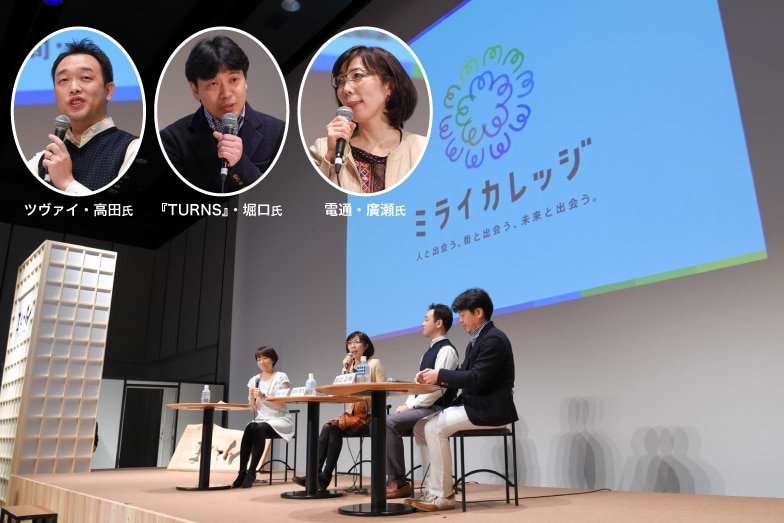
Launched as a joint project between Zwei, TURNS, and Dentsu Inc. , "Mirai College" operates under the concept of "Encountering people, encountering towns, encountering the future." It tackles regional revitalization from a life design perspective.
On November 28th and 29th, Mirai College will participate in "Machiten," Japan's largest regional revitalization and community building expo, held at Shibuya Hikarie. This event brings together innovators driving community development nationwide and companies/organizations supporting such efforts, offering a deep dive into the "now" of regional revitalization business.
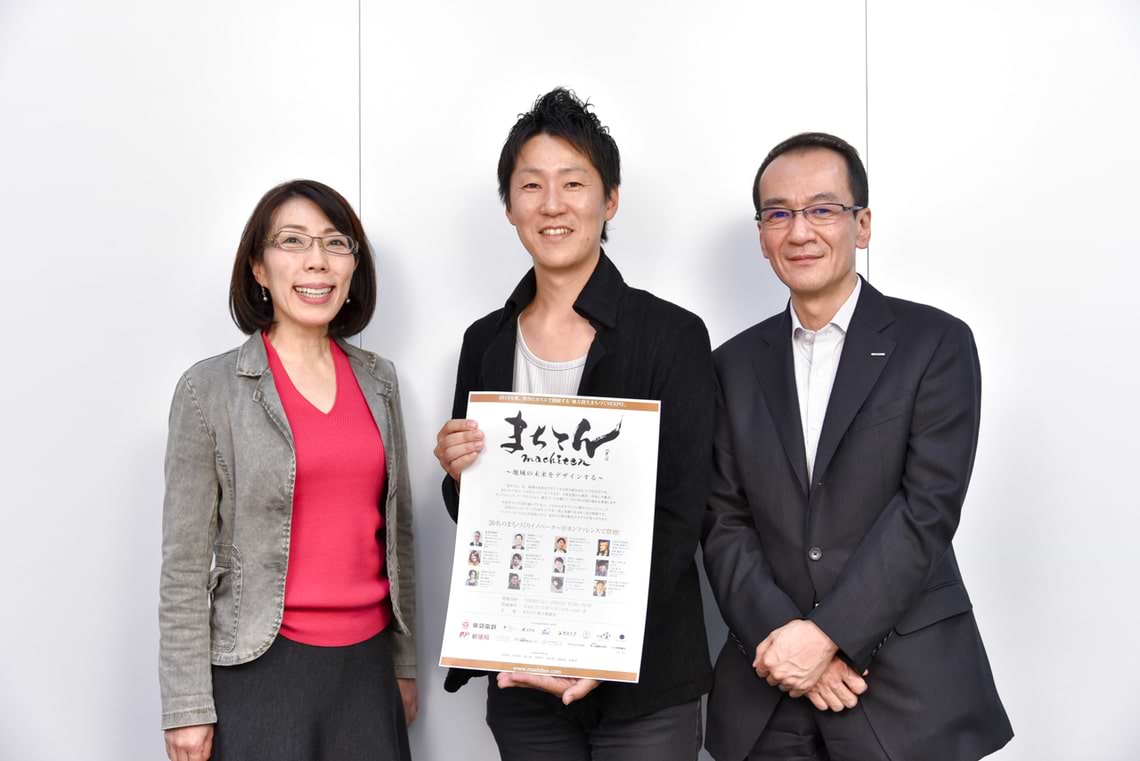
Shingo Yanaka, a business producer who serves as the executive committee chair and producer for Machiten, has created numerous social businesses that successfully balance commercial viability and public benefit. We present a roundtable discussion featuring Mr. Yanaka, along with Mirai College project members Yumiko Hirose from Dentsu Inc. and Shuji Omura, as they discuss the future of regional revitalization business.
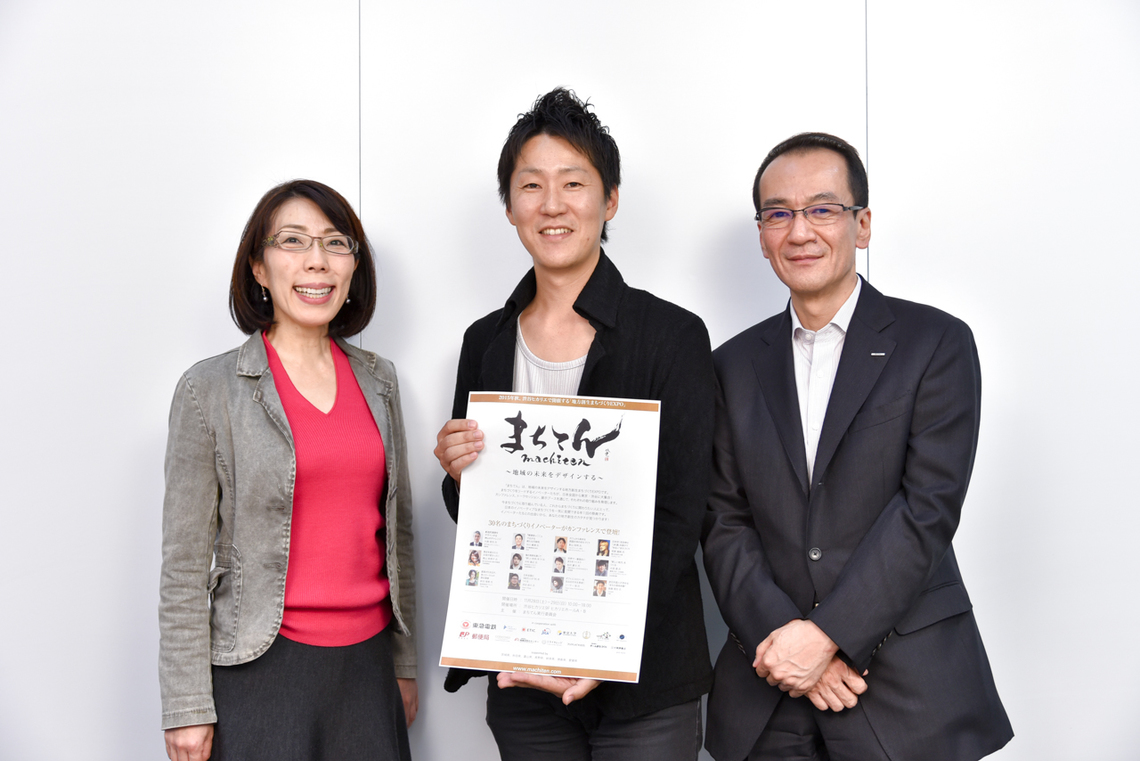
Regional revitalization begins with excitement—a positive spiral!
Hirose: Mr. Tanaka, you were involved in launching and operating "Roadside Cafes," a Great East Japan Earthquake recovery support project created through collaboration between Starbucks, Canon, and the Matsushita Institute of Government and Management. You've also seen many other regional revitalization business initiatives firsthand. Could you share some business trends that make regional revitalization exciting?
Yanaka: While "Roadside Cafe" is an activity rooted in the community since immediately after the Great East Japan Earthquake, we didn't conceive it solely as a disaster-specific project. Depopulation isn't unique to Tohoku; it's a problem many regions across Japan faced even before the disaster. However, in Tohoku's case, the earthquake accelerated it.
What challenges does increasing depopulation create? First, when the population declines, the region loses its vitality. When vitality fades, jobs disappear. These factors interact, starting a negative spiral.
In recent years, some regions have seen thriving local revitalization businesses, and there's always something exciting happening there. When there's that "excitement," people naturally gather, and eventually, vitality emerges. For example, someone who moves to the area (U-turn, I-turn, or J-turn) starts a business there. If it succeeds, it creates that "excitement," attracting more people.
Hirose: Indeed, that sense of excitement might be crucial. Plus, when businesses emerge, it naturally leads to job creation.
Yanaka: Another crucial factor is having places where people gather. Recently, we see "community places" – spaces where people of all ages can easily drop by. Vibrancy can emerge from these everyday gathering spots, sometimes even creating jobs.
Even without focusing solely on business, "creating excitement," "starting businesses locally to generate employment," and "building places where people gather" – I call these three elements a positive spiral. You can start with any one of them. Come to think of it, this resonates with what Mirai College is trying to do.
Hirose: That's right. "Mirai College" places great importance on building community. The word "college" itself comes from the idea of companions. To borrow Tanaka-san's words, the underlying desire is for people to discover new "excitement" amidst diverse values.
"Machiten" – Where You Can Experience Diverse Success Stories Up Close
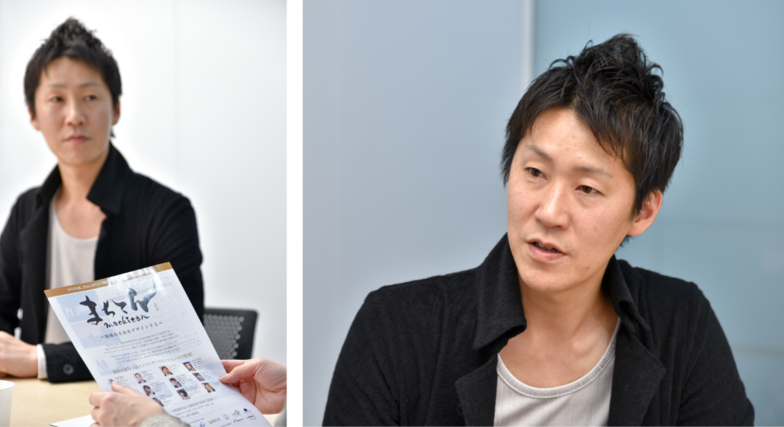
Omura: What's the background behind holding "Machiten"?
Yanaka: "Machiten" is the first gathering bringing together community development innovators from across Japan. The centerpiece is the "Conference," featuring presentations focused on cutting-edge examples of regional revitalization. Over two days, 30 presentations will be held, each delivered by leading innovators active at the forefront of their respective fields.
The Conference comprises six tracks: Community Place, Youth, Experience, Open Innovation, Sustainability, and New Wave. Each aligns with one of the three elements of the Positive Spiral.
All speakers at the conferences already possess solution models for regional challenges like depopulation. I view "Machiten" not as a trade show for regional revitalization businesses, but as a place to share insights.
However, simply applying a solution model directly to another region may not always work. While this "Machiten" brings together 30 successful regional revitalization cases, I believe that by layering and combining the essence of these examples, we can achieve the core concept of "Machiten": designing the future of regions.
Hirose: So combining each essence will increase the level of completion, right?
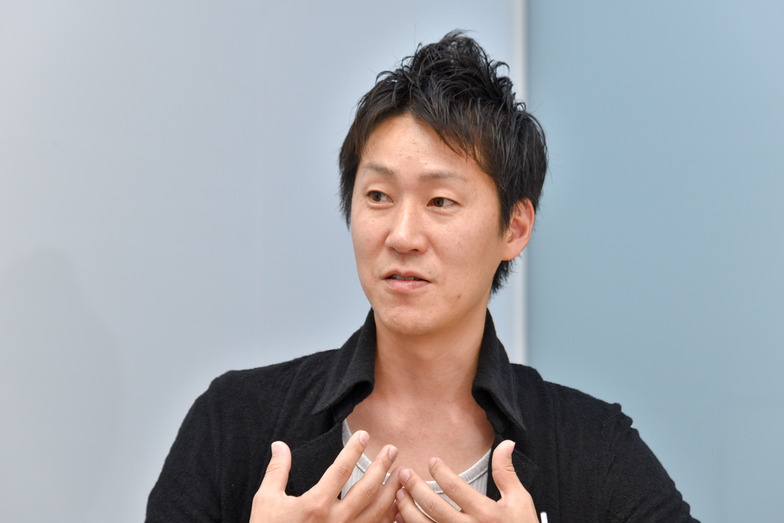
Yanaka: Exactly. We consider this crucial. Japan faces depopulation and an aging society at the fastest pace among developed nations. We must solve challenges no other country has encountered. We are, in a sense, a pioneer in facing these issues. By leveraging this position to solve various challenges, we could become a pioneer in community development.
With the Tokyo Olympics coming in 2020, Japan will increasingly draw global attention. I believe now is the perfect opportunity to showcase Japan's expertise and ideas in community development.
Hirose: We at Mirai College will be participating in the "Talk Session," and I'm already looking forward to everyone's reactions.
Yanaka: That's right. During the Talk Session, 14 companies and organizations will introduce their unique initiatives in regional revitalization. Mirai College, in particular, aligns well with Machiten's vision. I expect many people will want to participate in Mirai College's programs or collaborate with them in their own regions.
Hirose: That would be wonderful.
Omura: Is there a specific target audience you'd particularly like to see at Machiten?
Yanaka: Beyond those already involved in community development, we're targeting people interested in community development who are looking for an opportunity to get involved.
Of course, corporations are also an important target. "Machiten" is supported by various global companies, and they are seeking connections with local communities. They want to expand their core businesses by connecting with local innovators. You could call it hyper-local marketing for regions. They are trying to create more micro, unique businesses.
Community Development That Evolves with the Times
Omura: When we talk about community development, it tends to conjure images of the physical infrastructure side of things.
Yanaka: As you mentioned, Omura-san, traditional town development and urban planning focused almost entirely on the physical aspects – facilities, buildings, infrastructure. That was what was needed during the period of high economic growth, but now attention is shifting to other things.
Personally, I believe community development must encompass both the physical and intangible aspects, including values. The speakers at Machiten's "Conference" each hold different values. Some are consciously aiming for global connections from the start, while others are envisioning new ways of living in rural areas based on the premise of utilizing IT.
Town development today, in an era of declining birthrates and aging populations, and where IT advances enable diverse ways of working, must be different from the "just push forward!" approach of a generation ago. I believe it's crucial to take this into account.
Hirose: Indeed, values play a significant role. Though invisible, they form the core of community development and should eventually lead to a major wave of change.
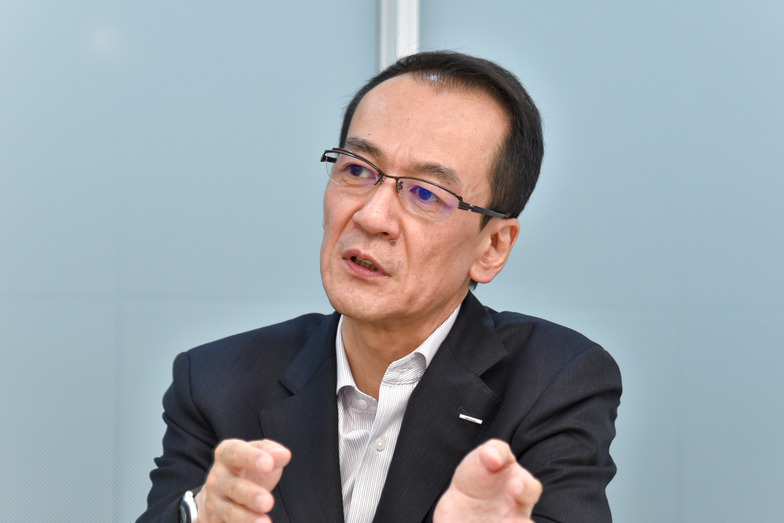
Omura: From the conceptual stage of "Mirai College," we believed modern society holds diverse values, and there are as many ways of living as there are values. We felt it was essential to design life holistically, considering where to live and what work to do. Participating in "Machiten" gives me great anticipation for encountering these varied values.
A new sensitivity particularly evident among today's youth
Yanaka: Mirai College's approach to life design feels very close to my own thinking. As Mr. Omura said, there are diverse values, and within them, many different ways of living. Money is part of those values, but I feel that in this era, the measure of wealth is no longer just money.
Hirose: That's true. Especially among the younger generation.
Yanaka: When you consider value not just as cash, but also as connections with people, new experiences, and such things, the variations of wealth become much broader.
The idea that "wealth equals money" probably emerged during Japan's period of high economic growth. Before that, it certainly wasn't the case. You could say we're returning to the roots now.
Hirose: While we can't completely erase traditional Japanese societal values, many young people today possess a sensitivity to this new era yet feel uncertain about how to proceed. It's about taking that first step. Places like Machiten might provide that spark.
Mirai College aims to provide real-world experiences where participants gain insights, think for themselves, and discover new possibilities. That's the spirit behind this project.
Yanaka: The speakers at Machiten's "Conference" come in various forms: people who started businesses during their student days and whose current activities stem from that, people who were originally business professionals but acquired specialized skills and returned to their communities to thrive, and so on.
Omura: I see. We want people to feel that the barriers aren't too high if they have the motivation and interest, based on these innovators' experiences.
Yanaka: Moving to a rural area right away is an option, but it's admittedly a high hurdle. Instead, I think it's important to start with what's possible—like visiting the area or listening to the stories of various people involved in regional revitalization.
Omura: I agree. If you fixate on "starting a business" or "relocating" from the start, you might give up before even trying.
Yanaka: There are many ways to get involved in community development—like regional internships, the Japan Overseas Cooperation Volunteers, or academic "community development studies." There's no single "right way" to do it.
This "Machiten" event features diverse companies and organizations partnering with us, and I believe it helps people understand that there are many ways to participate in community development. Actually visiting places often changes your perspective.
People, business, and government all move when they feel "excitement"
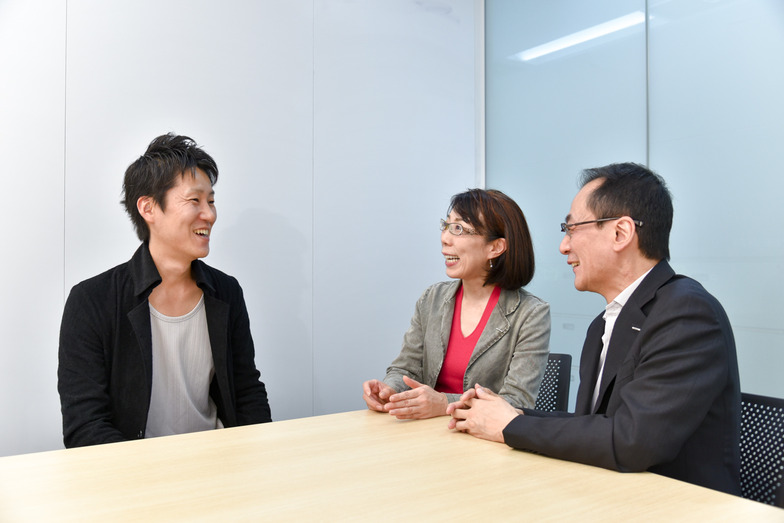
Omura: How will "Machiten" develop going forward?
Yanaka: The November 28th and 29th event is merely the kickoff for the Machiten project. We anticipate mobilizing approximately 2,000 people over the two days. We'll ask attendees to register for our email newsletter and Facebook page. We'll use this as a platform to continuously share the latest developments from our speakers and the participating companies and organizations. This means many people will constantly be able to catch the latest information on innovative community development from across Japan.
Hirose: That platform could spark something new. It seems likely to lead to the birth of unprecedented business models for regional revitalization. It also sounds like we'll encounter plenty of that "excitement" Mr. Yanaka mentioned.
Yanaka: I truly believe nothing starts without that "excitement." This holds true even when thinking business-centric; it's crucial that those involved can pour their passion into finding that "excitement" within the business itself.
Hirose: However, in community development, the stance of the administration also comes into play. How do you approach the administration, Mr. Yanaka?
Yanaka: Having worked in regional revitalization business for over a decade, my experience shows that skillfully leveraging the government's precedent-based approach often works well. When innovators in a community launch interesting initiatives and gain visibility, the government inevitably takes notice. So, sometimes it's about just going ahead and doing something interesting first.
Whether it's the government or citizens sharing interesting local activities, it's best to use cool media like free papers or area information magazines.
Depopulation is partly caused by young people leaving for education or jobs and not returning. But by sharing information about young people actively contributing locally, we can create opportunities for those who left to come back. If information isn't shared, people simply don't know, and even if they want to return, they lack the opportunity. I believe creating a foundation for sharing information about the diverse people involved is crucial.
Hirose: Whether it's pursuing interesting projects or gaining administrative support, meticulously crafting a business plan seems necessary.
Yanaka: From a business perspective, skills for drafting and creating business plans beforehand are certainly indispensable. However, things rarely proceed exactly as planned on the ground. I believe that excitement comes first; you act to realize that excitement, and only then does a concrete plan begin to take shape.
Another key point, if I had to name one, is valuing serendipity. While things sometimes proceed according to plan, in reality, many opportunities arise from chance encounters with key people or information. This often holds the potential to make the outcome more interesting than the original plan.
Hirose: Serendipity is indeed crucial. At Mirai College, our motto is "Meet people, meet the city, meet the future." Through diverse experiences and opportunities, we encounter unexpected things and open up new worlds. I hope such opportunities continue to grow.
Yanaka: "Encounters create the future" – that's exactly right.
Hirose: Finally, could you share something that personally excites you, Mr. Yanaka?
Yanaka: From the very start, I've wanted to share Machiten with the world. Next February, I'll finally get the chance to present it internationally. There are several social innovation platforms in the US, and I've been invited to speak about Japan's social innovation in community development. I'm really looking forward to it.
Was this article helpful?
Share this article


Newsletter registration is here
We select and publish important news every day
For inquiries about this article
Author
Shugo Yanaka
BBT University School of Business Administration Department of Global Management Department Chair and Professor
Yumiko Hirose
Dentsu Inc.
Business Development & Activation Division
Senior Manager
Hideo Omura
Dentsu Inc.
Business Development & Activation Division
Senior Planning Manager