Note: This website was automatically translated, so some terms or nuances may not be completely accurate.
 Mirai College × Regional Revitalization Business [2/3]
Pioneering a new future through a "life design perspective"!
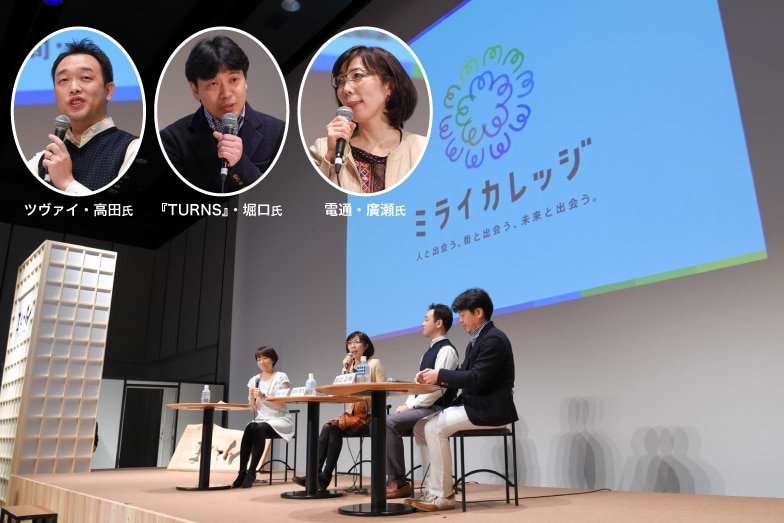
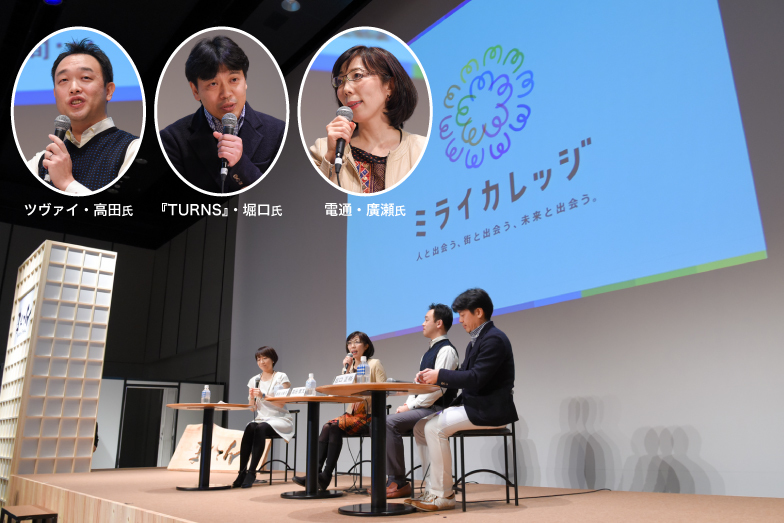
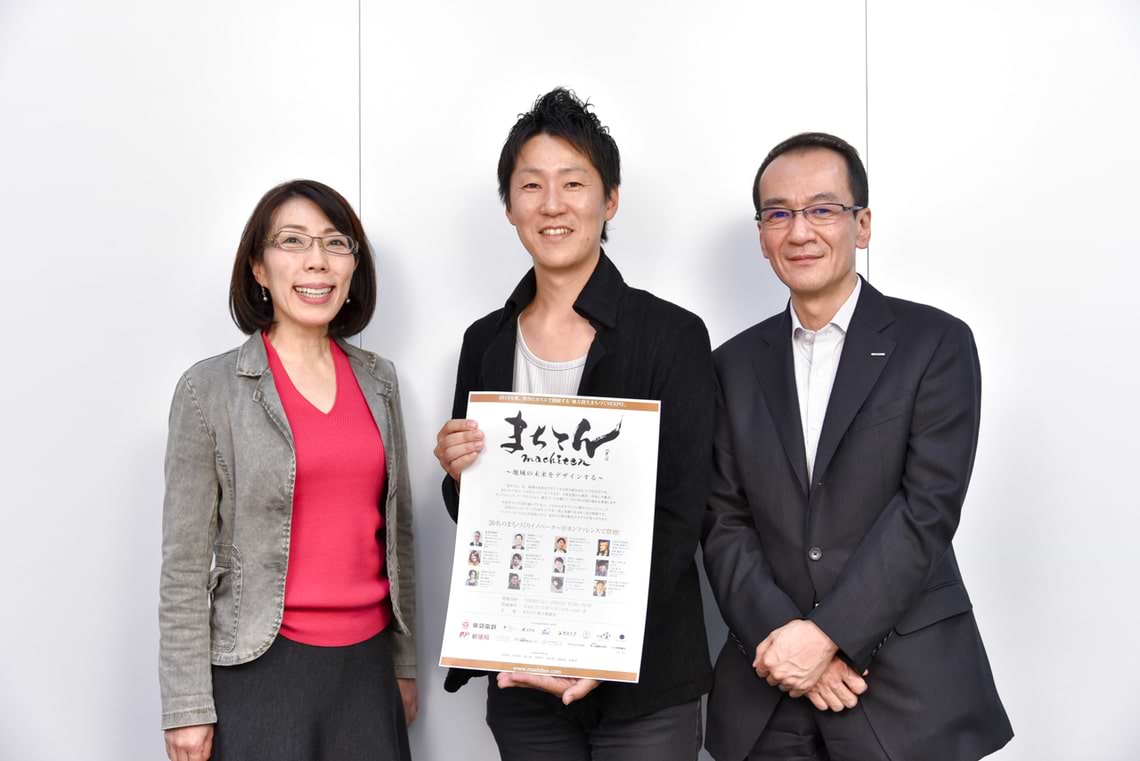
The joint project "Mirai College" by Zwei, TURNS, and Dentsu Inc. tackles social issues, including regional revitalization, through initiatives like community activation and marriage support. This installment covers the talk session held on November 28 at "Machiten," Japan's largest regional revitalization expo, held at Shibuya Hikarie in Tokyo. Three speakers—Kota Takada from Zwei, Masahiro Horiguchi from TURNS magazine, and Yumiko Hirose from Dentsu Inc.—discussed the project.
What is a "life design perspective" that breaks free from fixed notions?
MC: First, could you briefly outline the Mirai College project?
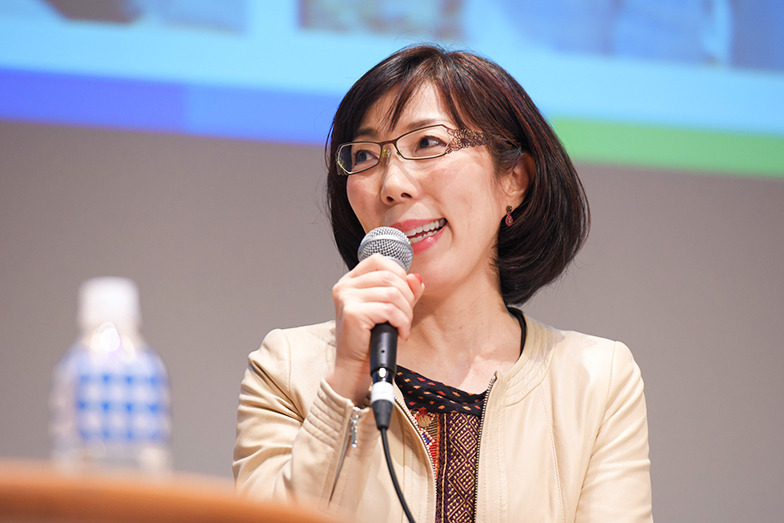
Hirose: Mirai College is a joint project between ZWEI, a marriage introduction service company; TURNS, a magazine promoting the appeal of rural living; and Dentsu Inc. We came together under the shared vision of "supporting diverse values and ways of life from a life design perspective." The strength of this project lies in synergistically leveraging each partner's expertise, track record, and resources.
What we value most is the "life design perspective." We call the process of envisioning one's own life based on individual values "life design." Mirai College offers programs that use a method of working backward from the end of life to help participants consider their purpose, work, relationships, and living environment from a medium-to-long-term perspective.
Life Design has three key questions.
First is "What do I want to do?" It asks what you truly want to achieve in life. Second is "With whom?" People cannot live without connections to others. And finally, the keyword is "Where?"
For example, do you want to live where you were born and raised, or seek new encounters somewhere else? In the city or the countryside? We encourage people to consider these questions based on their own values, free from fixed notions.
MC: It's easy to get caught up in preconceived notions, isn't it?
Hirose: Exactly. I believe breaking through that is Mirai College's role. It's hard to make new discoveries just by thinking within your own head, right? We provide those experiences and opportunities.
MC: What specific programs do you offer?
Hirose: As an example of a program incorporating a "life design perspective," let me outline our proposed "Relocation Experience Program." While it's called a relocation experience, it doesn't mean suddenly moving to a rural area to experience local life. First, participants build a foundation for appropriately envisioning their future through our "Life Design Seminar." Here, they learn essential medical knowledge about pregnancy and childbirth—information everyone should know, regardless of gender. We ensure they acquire accurate knowledge before providing opportunities to consider their individual life paths.
Next, we hold "Regional PR Events" in metropolitan areas to showcase the local lifestyle, culture, and industries. We then invite those who express interest to participate in "Exchange Tours & Experience Events" held locally. Furthermore, our "Relocation Support" offers job matching and marriage matching services tailored to each participant's goals.
MC: Even just looking at the "Relocation Experience Program," there are many processes involved. It's clear they aim to carefully support people and encourage diverse values and ways of life.
Creating local value by increasing the number of fans for the region
MC: When considering where to live, with whom, and what kind of work to do, "work" and "marriage" become essential elements. Next, we'd like to hear from Mr. Horiguchi of TURNS about "work" and Ms. Takada of ZWEI about "marriage." First, Mr. Horiguchi, could you tell us about the magazine TURNS?
Horiguchi: The magazine name 'TURNS' carries three meanings. First, "TURN" as in I-turn, U-turn, J-turn—recently there's also "grandchild-turn" for moving to live with grandparents. Second, "TURN" as in a turning point in life. Third, "It's Your Turn." Our readership is 90% people in their 20s to 40s. It's truly a magazine supporting young people's relocation. The main focus is job-related information, but we also share insights on housing and community building.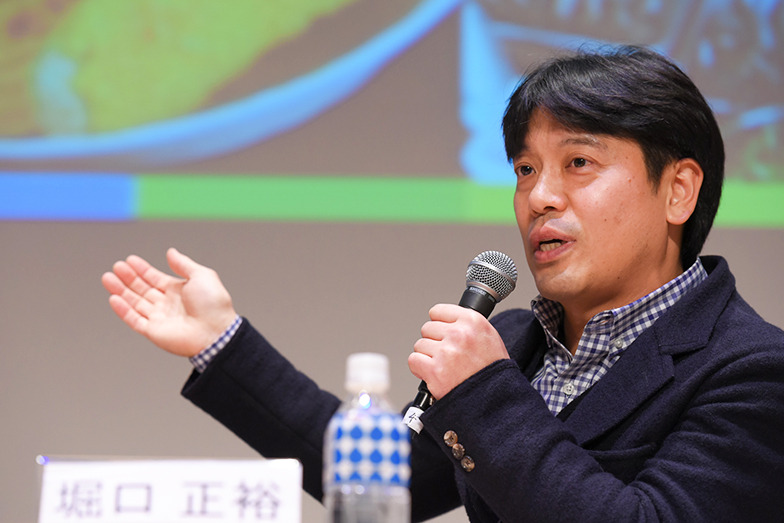
MC: When considering life, work is an inseparable topic, right? When moving to a new region, I wonder what kinds of work styles are available.
Horiguchi: Challenges vary by region, so it's hard to generalize, but what's most valuable for a community is entrepreneurship—bringing new jobs to the area. Of course, moving isn't limited to starting a business. Options include working for local companies or taking over traditional crafts and primary industries. There's also dual-region living between cities and rural areas, and lately, we're seeing triple or quadruple-region living.
MC: Four regions too!?
Horikuchi: Depending on how you work, it's an era where a four-region lifestyle is achievable. We share information about these diverse ways of working.
MC: Honestly, moving out of the city isn't easy, and local governments struggle with that too. I understand TURNS is pioneering new initiatives to bridge cities and rural areas.
Horiguchi: Yes. In Gujo City, Gifu Prefecture, there's a local information magazine called "Satoyama no Fukuro" (Satoyama's Bag), created with pride by both locals and newcomers. While a major trend toward regional revitalization is emerging, deciding to relocate suddenly is difficult. That's why we believe it's crucial to first get people in urban areas to become fans of the region.
So, we created a special edition of "Satoyama no Futo" as a project where TURNS readers visited Gujo City for a 2-night, 3-day trip. They conducted their own interviews and created an entire information magazine. The participants weren't professional editors, but they learned about Gujo's history and traditions, interacted with the people living there, and compiled their firsthand experiences into subjective articles.
MC: That sounds like a program that would foster affection for the covered area.
Horiguchi: Absolutely. Since they were entrusted with creating a special edition of a magazine cherished by locals, participants couldn't approach it half-heartedly. By taking their reporting responsibly and seriously, they experienced the region's true charm—something you'd never discover on a tour that just hits predetermined spots.
Hirose: It's great how people from the area and outsiders connect to create something together. I think there are three key points in this case. First, involving local residents. Second, re-editing local value. And third, effectively communicating the region's appeal.
At Mirai College, we run programs like the "Local Value Creation Program" based on these three points, as well as workshops where local youth develop ideas to solve regional challenges, shape them, and share them.
Matchmaking events are not just places to meet people, but opportunities to envision a better future
Takada: When local residents tackle challenges, the community becomes more vibrant and its appeal grows, right? This is also effective when promoting relocation marriages.
MC: I see. Mirai College's marriage support is already being rolled out nationwide, right?
Takada: This fiscal year, we're running programs in eight regions. The Iki Island tour we already held had 19 men and 18 women participate, resulting in 14 couples forming.
MC: That's an incredibly high match rate. Is there a secret to it?
Takada: Yes, there is a secret (laughs). First, I want to emphasize that simply holding exchange tours and having excitement only on the tour day won't yield the desired results. As Mr. Hirose mentioned, the essence of Mirai College lies in comprehensively implementing a series of programs, such as life design lectures and workshops, to achieve outcomes.
MC: So you place great importance on carefully following the steps.
Takada: The problems occurring in the marriage-seeking scene are mismatched expectations for marriage partners and a lack of "marriage readiness." If people could view marriage-seeking not just as creating opportunities to meet people, but as an opportunity to think about and act on future life events after marriage, I believe many would find the process less difficult. Marriage isn't the goal; it's the start.
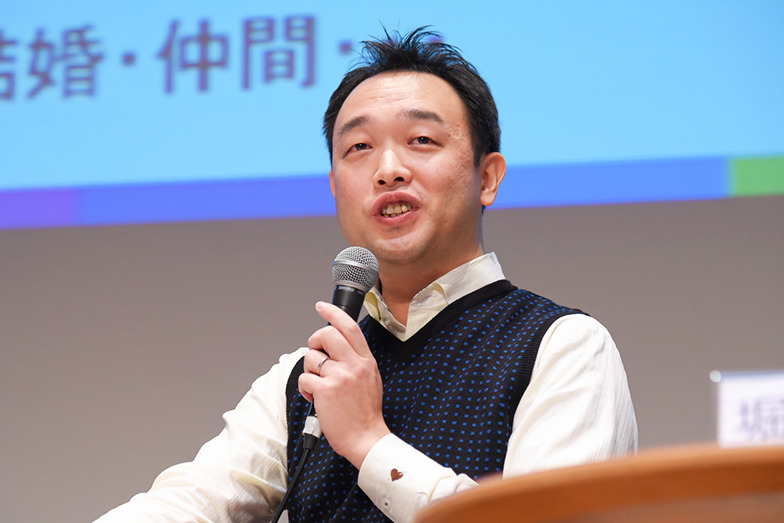
MC: Viewing marriage hunting as an opportunity to improve one's future life is precisely the kind of perspective that breaks free from fixed notions. That leads to new futures, the formation of couples, and ultimately, migration.
Hirose: It's a program that kills two birds with one stone—supporting marriage while simultaneously creating local value. It's a groundbreaking countermeasure against the declining birthrate and a policy that brings regional revitalization.
We want to turn "a new relationship between cities and regions" into a movement.
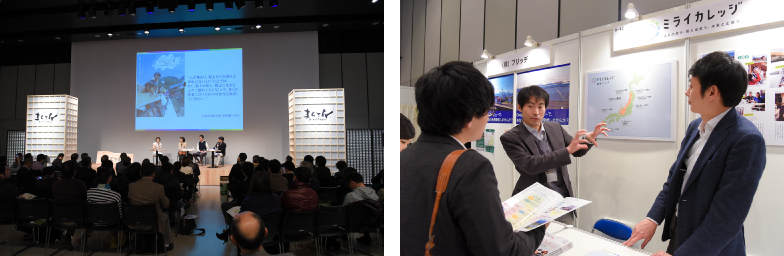
MC: So there are various ways to connect with regions—whether through relocation triggered by work or marriage, or by becoming a fan and supporting the region from urban areas.
Hirose: Exactly. Mirai College offers "experience and discovery programs" tailored to each person's goals. We hope that through these experiences, people will find their own unique relationship with the region and take action.
I believe there are truly diverse ways to engage: people moving from cities to rural areas, those staying in their hometowns to connect with their community, urban dwellers forming ties with a "second hometown," and even repeat visitors or supporters of a region. Mirai College also supports creating "new relationships between cities and regions."
MC: There are also people who want to engage in rural community development while living in the city. For example, the currently popular hometown tax donations and hometown funding, or more locally, purchasing regional products—these can all be considered ways to connect with a region.
Hirose: Exactly. But it's crucial to engage continuously, not just once. One-off actions hardly qualify as a relationship.
MC: Right. Finally, could you share each company's role in Mirai College and the areas you plan to focus on more going forward?
Takada: As I mentioned earlier, marriage isn't the goal—it's the start. So, I strongly feel the need to advance creating platforms that enable women to thrive in the community after relocation. For example, environments where women with skills and careers can find employment or start businesses in their new locations. Also, creating environments where they can actively participate as ambassadors for promoting the region. In this year's program, we're already experimenting with having women who have previously participated take on planning roles and become supporters for the new participants.
Hirose: Observing women in their 20s and 30s attending metropolitan events, I noticed many seem quite flexible in their thinking about work, marriage, and where to live. We want to support these women's success and work together to revitalize Japan and its regions, right?
Horikuchi: The vision of TURNS is "to revitalize Japan from the regions" and "to introduce many young people living rich lives in the regions, proposing ways of living free from rigid values like 'this is how it must be!'". Through our reporting and events, we've heard many real voices from actual migrants and local government officials. We want to incorporate that into Mirai College's activities.
Hirose: At Dentsu Inc., we will holistically design communication to respond to diverse ways of living from a life design perspective. Furthermore, by collaborating with various media outlets, companies, domestic and international partners, and even national and local governments, we aim to spark a movement for "new relationships between cities and regions."
MC: I feel that as diverse "new relationships between cities and regions" become increasingly active, each individual's life will also become richer and more meaningful.
Hirose: Yes. To support this, Mirai College will leverage the strengths of ZWEI, TURNS, and Dentsu Inc. to foster "encounters with people," "encounters with regions," and "the power to envision the future." Through diverse opportunities for discovery and experience, we aim to tackle social challenges like countering declining birthrates and revitalizing regions, supporting the lives of many people.
MC: Designing your future freely from a life design perspective—where, with whom, and what you want to do. Doing so allows you to discover a new version of yourself, and the possibilities for the future seem to expand endlessly. I look forward to Mirai College's future endeavors. Thank you very much for today.
Was this article helpful?
Share this article


Newsletter registration is here
We select and publish important news every day
For inquiries about this article
Back Numbers
Author
Kota Takada
Zwei Co., Ltd.
Life Design Division
Department Manager

Masahiro Horiguchi
『TURNS』
Producer
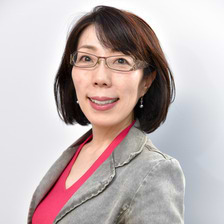
Yumiko Hirose
Dentsu Inc.
Business Development & Activation Division
Senior Manager