Note: This website was automatically translated, so some terms or nuances may not be completely accurate.
 Mirai College × Regional Revitalization Business [3/3]
Changing Local Communities with "Looseness"!?
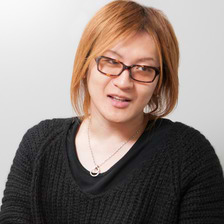
Yoshizumi Wakashin
Specially Appointed Assistant Professor, Keio University / Representative Director, NewYouth Inc.
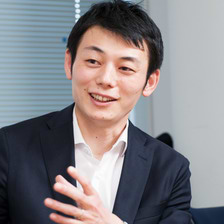
Tsuyoshi Osaka
Dentsu Inc.
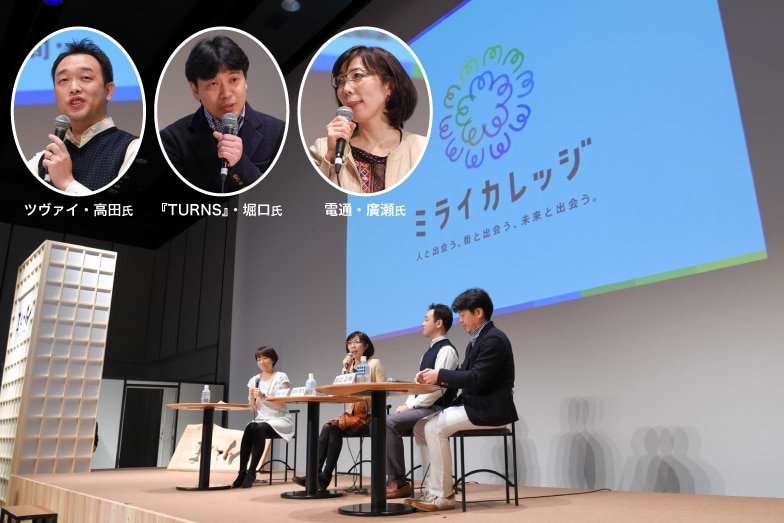
Mirai College is a joint project by Zwei, TURNS, and Dentsu Inc. Under the concept "Meet people, meet towns, meet the future," it works on regional revitalization. What does Mirai College need to further expand its activities as it explores new relationships with regions, responding to diversifying lifestyles and values?
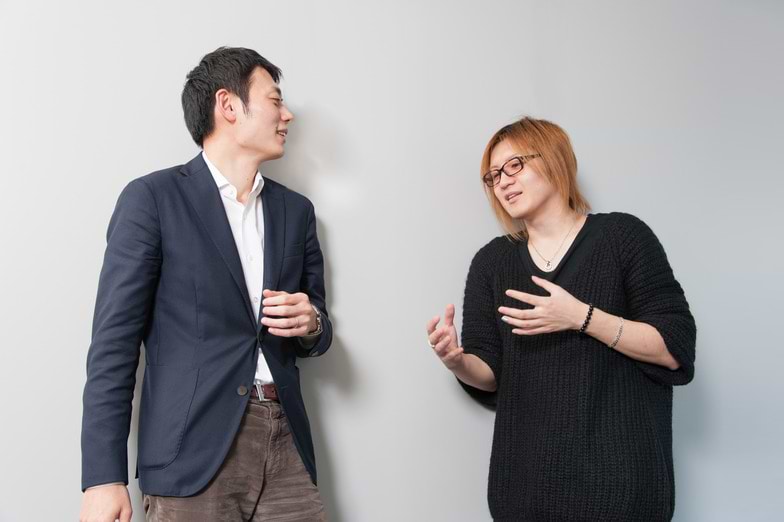
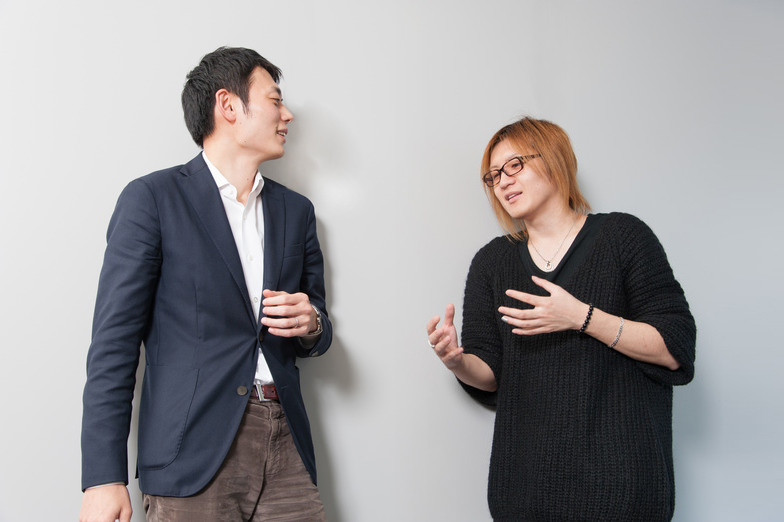
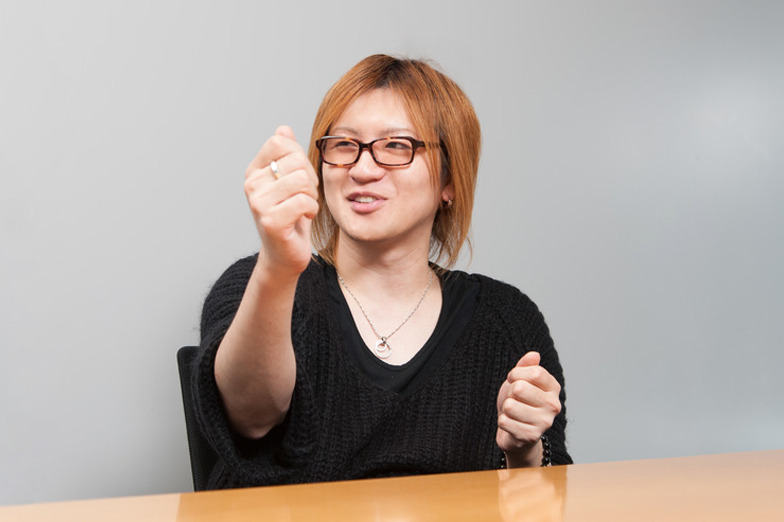
Our guest this time is Yujun Wakashin, who spearheads numerous experimental projects like the "Sabae City Hall JK Division" (where high school girls drive community development) and "Loose Relocation." Takanori Osaka of Dentsu Inc., a Mirai College project member, hears about Wakashin's unique approach and explores potential collaborations with Mirai College.
The "Sabae City Hall JK Division" that fostered creativity from "confusion" and "fluidity"
Oosaka: I feel Mr. Wakashin's initiatives, including the "Sabae City Hall JK Division" and "Relaxed Relocation," share many commonalities with Mirai College. First, could you tell us about the "Sabae City Hall JK Division"?
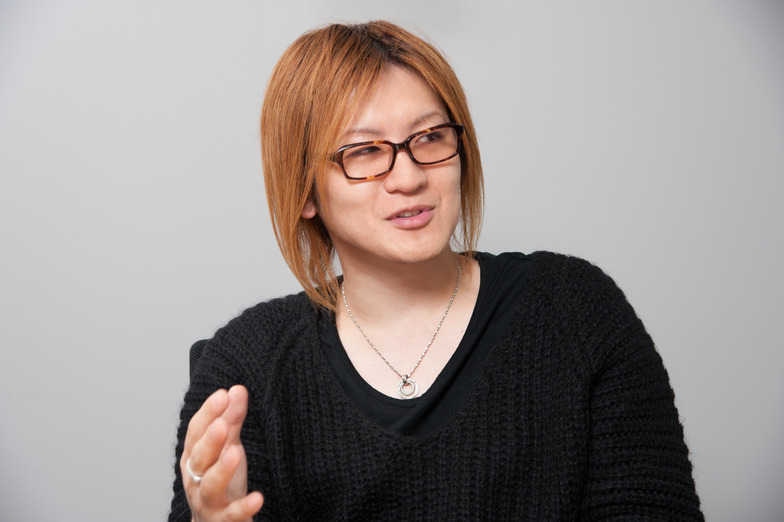
Wakashin: It's an experimental project launched in spring 2014 in Sabae City, Fukui Prefecture, where local high school girls (JK) take the lead in town development. We call people who've never thought about town development "casual citizens." The idea is: what happens when JKs, as representatives of these casual citizens, enter spaces previously dominated by closed discussions among a few adults and experts? How can the adults change?
Fundamentally, the mindset of casual citizens is expressed through everyday voices—like casually saying things like "What the hell?" "This is pointless," or "This is awesome" while watching TV. They have a vague sense of things, but it doesn't translate into coherent, organized opinions.
Aosaka: Exactly. You can't say things like "What the hell?" at a town planning meeting. You end up making model student-like comments.
Wakashin: Exactly. So, if you only gather model citizens interested in town planning, saying things like "We want to accept diverse citizens" or "We want to hear opinions on town planning," you won't hear the real voices of citizens. That's why the initial members of the JK Division were recruited by spreading word-of-mouth on Twitter. "Hey, apparently the city hall is starting a JK Division," "They're having an info session soon," "Seriously? That's hilarious!"
Aosaka: Without selecting ordinary high school girls.
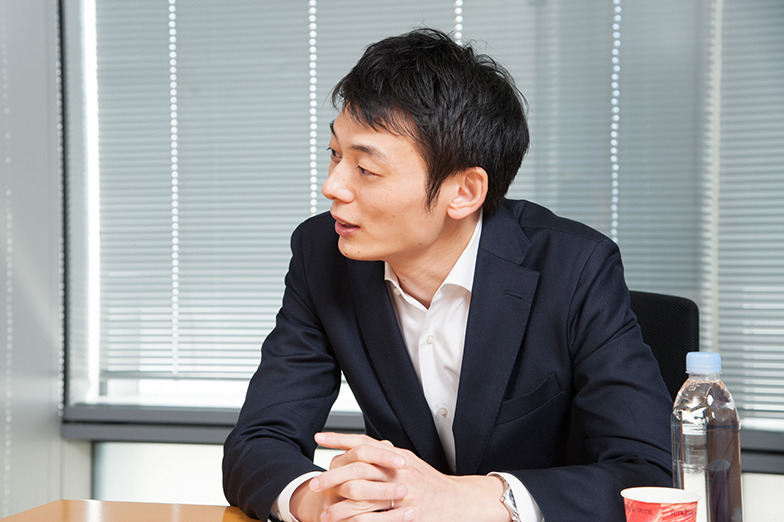
Wakashin: We wanted to create an atmosphere where they felt they could speak up even if their thoughts weren't fully formed. Everything was free—clothing, behavior, everything. Traditionally, only high school students recommended by their schools came to city hall. But the JK Division members would play with their phones during meetings, eat snacks, and even leave midway if they found it boring. Yet, the adults didn't reprimand them. "If we don't create something that makes them think, 'This meeting is important, so I should stop playing with my phone,' then it's meaningless."
Oosaka: How did the adults react when they saw these high school girls?
Wakashin: To put it coolly, it's "bewilderment" and "uncertainty." Adults are naturally bewildered at first by an atmosphere where high school girls can relax and chat freely. But we want to value the process of finding hints in the things they casually mention and creating something "new" that didn't exist before.
We want to create as many new things as possible—even if they seem small—by generating ideas on equal footing with adults. Of course, bigger is better, but every little bit counts.
One activity is the "JK Division Original Sweets," created in collaboration with local confectionery artisans. At first, the artisans were reluctantly involved at the city's request. But they gradually found joy in turning the girls' drawings into products. Later, the artisans themselves started suggesting, "How about planning something for Valentine's Day?"
Everyone became absorbed in creating something new. The JK Division doesn't cover transportation costs or pay wages, but that sense of fulfillment has become a new value that replaces money and rewards.
"Loose Migration" where loose communication was key
Osaka: Sabae City's other project, "Loose Relocation," has the same structure.
Wakashin: The concept is exactly the same. We invite interested people to live in Sabae City for six months, loosely interacting with locals while casually enjoying rural life. It's communal living, but rent is free. There's no obligation to work, and they can decide whether to officially relocate after six months.
But "loose" doesn't mean careless. It means leaving room for people to build their own lives from scratch. If we just gave them pre-prepared things, they wouldn't find the countryside appealing.
If you think about consumer culture, city > countryside. But if you think about creative culture, city < countryside. Even on a small scale, the value of experiencing "creation" in the countryside is incredibly high. So, to put it in cool terms, we figured "people with a high creative drive" would come.
Osaka: I hear people from all sorts of backgrounds actually gathered.
Wakashin: Elite graduates from Tokyo University, former pastry chefs, former pro baseball players, IT company presidents, and even NEETs. It's incredibly diverse.
Just like the JK Division, we don't screen for casual relocation at all, and there are no eligibility requirements. Precisely because there's this trust – "This town accepted us, even though we didn't know who we were" – it actually sparks the desire to do something here. That's the town's overwhelming appeal.
People who don't fit the "standard mold" create a gradient.
Osaka: Mirai College also runs relocation experience programs. We feel it's crucial to think about your life design before suddenly deciding black-and-white whether to relocate or not. Beyond relocation, there are many ways to deepen your connection with a region—like dual-base living, tourism, or simply becoming a fan of the area. The concept of "creating a gradient," which Wakashin-san advocates in his recent book Creative Relaxation, is precisely the direction Mirai College aims for.
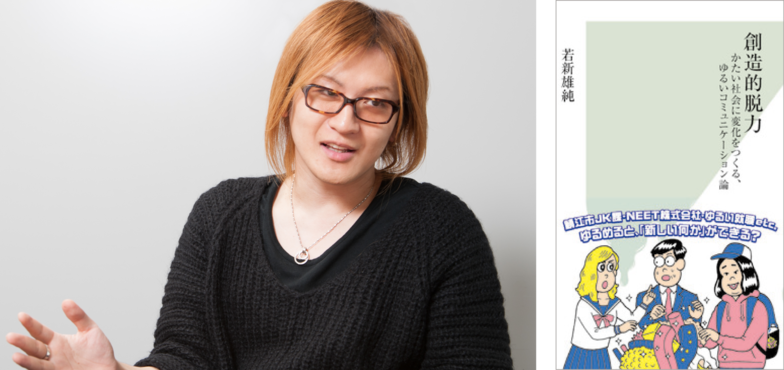
Wakashin: Surprisingly, many young people I interact with actually prefer a "standardized system" with clear-cut black-and-white answers. Or rather, they find it reassuring. Exams, training programs—everything has a score. Schools and society are standardized. But does following the standard really enrich daily life? Not necessarily in today's world. So they say things like, "I want my own style," but they're still anxious and struggle to step outside the lines.
That's why I'm focusing on people who step outside the standardized mold from the start. If we let them fully enjoy a liberating environment, maybe we'll start to see a faint "gradation" beyond just black and white.
Aosaka: But actually stepping outside the lines takes courage, doesn't it?
Wakashin: You can practice before the real thing. The actual moment might be scary, but if you have a few experimental opportunities outside the mainstream, you might feel okay about stepping out boldly once.
Both the JK Division and the relaxed relocation initiative are limited-scope, limited-duration "projects." They're experimental, serious play involving adults too. For example, if you make a hard investment like, "Let's spend 10 billion yen building a tower! Then lots of young people will come!" you can't afford to fail. But if you experiment softly and loosely, you can recover to some extent even if you fail.
The Potential of the Mirai College × Yujun Wakashin Collaboration
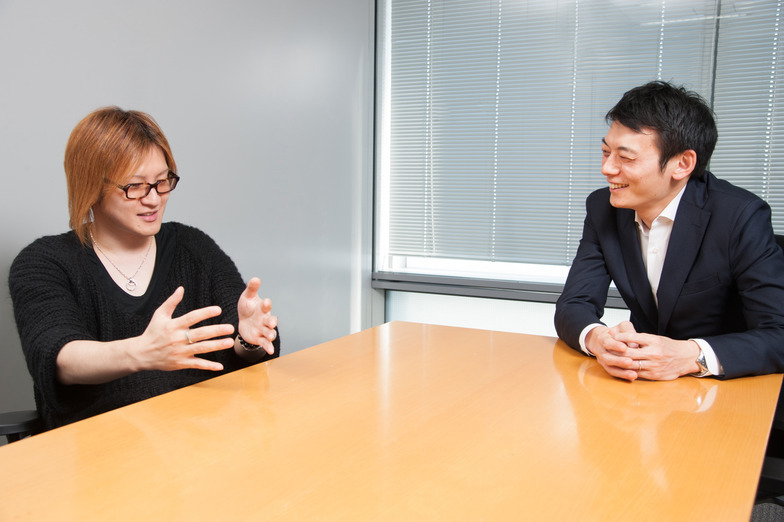
Wakashin: With traditional relocation policies, I think the first step is usually finding a job. However, most people coming through "loose relocation" haven't secured fixed employment yet.
Labor, in a way, is like currency—a standardized unit. It binds you to various concepts. Since you've made the effort to come to an unfamiliar rural area, I think it's important to let go of work for the first six months or so. Instead, engage with various local people, help out at events, participate in community activities together, and build trust.
Osaka: Being unemployed is unthinkable in the city.
Wakashin: With their newfound free time, they've started creating all sorts of initiatives. Recently, they began running something called "Open Housing Complex." More and more city residents are saying, "It looks fun, I want to visit the housing complex (where the migrants live) too." So, they started posting real-time updates online like, "Right now, [Person X] is at the housing complex," and opening up their rooms. It's a system where anyone can enter if they bring a small gift, so their migrant rooms are overflowing with food.
Osaka: Amazing! That's the true essence of casual communication. At Mirai College, we have many participants in their 20s and 30s. How do you approach this demographic?
Wakashin: Among the migrants, there's a woman in her 20s who quit her job as a pastry chef in Tokyo. She seems incredibly busy right now. What she's doing is updating a blog about "casual migration" every day. Plus, she says, "I might finally get my own show on community FM soon." As a job, it's zero income increase, though. "When I was in the city, saving money was my hobby. Now it's finally going to start decreasing!" she says happily.
Aosaka: That's quite a shift in values.
Wakashin: It's not just money. Where you live, your job, marriage, your whole way of life... all your values undergo a radical shift. The amazing thing about the countryside is how easily it relativizes values you thought were absolute in the city. That's why you start seeing all these different options.
Aosaka: So, how do we make city dwellers realize that different values exist outside the city, that regions offer those choices, and that there's a movement supporting those values?
Wakashin: "Making them realize" might not be the right approach. If city dwellers knew that people in rural areas are creating overwhelmingly attractive things they can't get in the city, they'd definitely want it too. To achieve that, rather than "making them realize" in some altruistic way, it's better for locals thoroughly enjoying their rural life to self-satisfiedly "show off" their life design perspective—the richness unavailable in cities and the potential to create incredible "something new." Those moved by what they see will naturally become interested.
Osaka: Showcasing new values from the countryside! That's great.
Was this article helpful?
Share this article


Newsletter registration is here
We select and publish important news every day
For inquiries about this article
Back Numbers
Author
Yoshizumi Wakashin
Specially Appointed Assistant Professor, Keio University / Representative Director, NewYouth Inc.
Tsuyoshi Osaka
Dentsu Inc.