
Note: This website was automatically translated, so some terms or nuances may not be completely accurate.
 9.America in Years 11 to 15: Leadership in an Age Without Charts [1/7]
What exactly is global leadership?
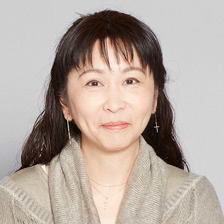
Kimié Morishita
I am currently participating in the McCain Institute*1's"Next Generation Leaders (NGL) Program" over the course of a year. In the coming issues, I would like to write about "Leadership for the Future Era," based on my observations of leaders from various fields during the NGL program. First, a brief introduction: After joining Dentsu Inc., I worked in planning and development for several years before leaving the company. Following a period studying abroad and working at a strategy consulting firm, I rejoined Dentsu Inc., where I have been involved in sales, marketing, and corporate strategy. Most recently, I have been responsible for the acquisition of the UK-based Aegis Group and its integration with Dentsu Inc. to create synergies.
The McCain Institute's Next Generation Leaders (NGL) Program
The NGL Program selects approximately 10 individuals annually from around the world, each with diverse backgrounds, characteristics, and potential. They are granted the opportunity to spend a year in the United States with the mission to "work at a designated company and develop a plan that benefits society." This year's cohort includes 12 members*2, including myself. Their countries of origin and professional backgrounds are remarkably diverse. While I had started working with colleagues from around the world over the past few years, having spent most of my career domestically and within private companies, this felt quite fresh... or rather, I was anxious about whether we'd even have common ground. It seems this is also the first time members from East Asia have been included.
Members are usually based in completely different locations. In my case, I was assigned to one of the world's leading technology companies. That said, the office isn't at the headquarters in Silicon Valley, but in Chandler, Arizona. With the question "Why Arizona?" lingering, I started looking for a place to live alone and commuting to this multinational corporation where I knew no one, had no connections, and no ties whatsoever... Everything about it is a daily experience I never imagined.
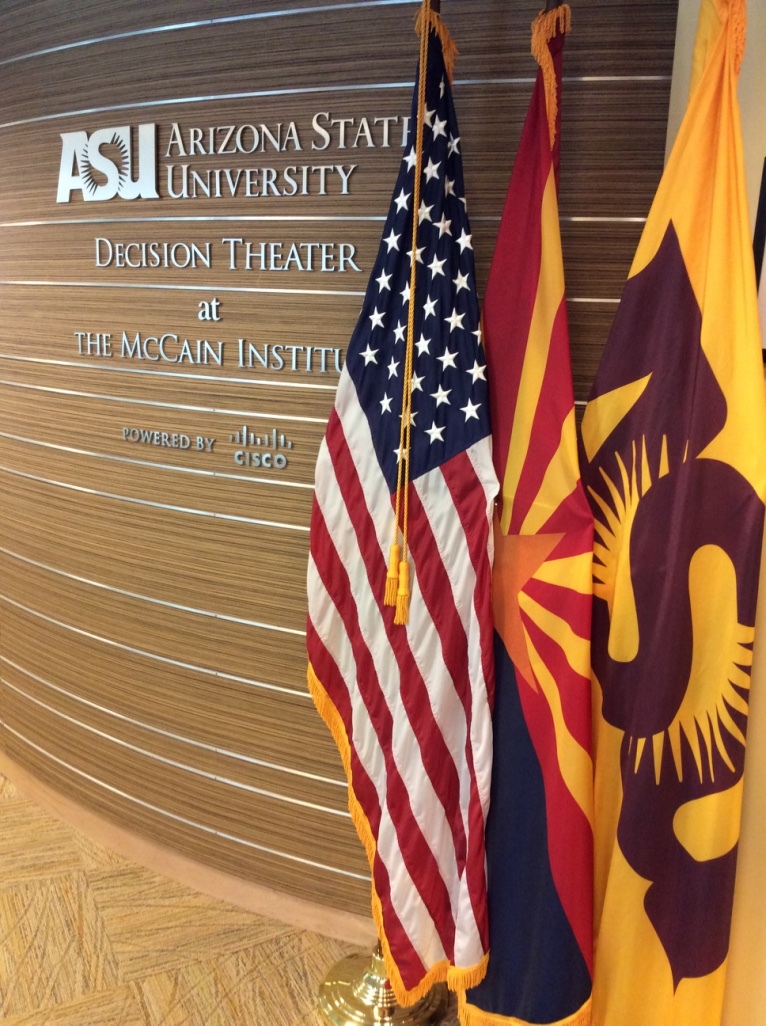
What image do young global leaders have of Japan?
Most participants hail from countries like Kosovo, Palestine, and Nigeria – places distant from Japan in many ways. What do you think their image of Japan is? And what expectations do they hold, compared to Western or other Asian nations?
When I asked several of them, these keywords emerged: sophistication, innovation, unconventional thinking, sushi... Above all, the names of Japanese products. Regarding Japanese people themselves: "unknown," "hard to imagine." Even though only one member had ever visited Japan, what had crossed that vast distance wasn't us personally, but the products we had created. You could say that's quintessentially Japanese.
Leadership for the Future: The Keyword is "The Power to Create Stories"
In March 2013, Dentsu Inc. acquired the Aegis Group and established Dentsu Aegis Network (DAN) as an overseas subsidiary. My own interactions with various parts of the world increased dramatically. This was due to our astonishingly rapid globalization: the group's overseas business profit (gross profit) share, which was about 15% in fiscal 2012, reached 54% by fiscal 2015, surpassing domestic operations. While observing interactions among leaders at various levels, from top management to the field, and becoming a key link between headquarters and overseas offices myself, I also found myself handling incidents and peculiar occurrences that made me think, "Why is this happening?!"
The daily frustration of "Differences are fine, even desirable—but if we can't communicate them properly..." became apparent, and I realized many clients and partner companies shared this same challenge. While learning much from DAN's leaders, I also began questioning: "Should Dentsu Inc. employees only benchmark leaders from the advertising industry?" These daily experiences crystallized into questions like: "What kind of global leadership can and should Japan, Japanese companies, and Japanese people adopt?" and "What defines a global leader in the first place?" This led me to participate in this program.
Incidentally, before joining the program, I defined "leadership" as "the ability or qualities to move a team most efficiently and effectively toward achieving goals." What I now perceive is entirely different—a "power to create stories" common across government, private, and nonprofit sectors.
For the past year, I've been working in Arizona. Alongside my team, I've met diplomats, politicians, business leaders, government officials, journalists, professors, and NPO heads. My days remain relentless, filled with constant ups and downs over matters big and small. Amidst this, I've begun to sense something vaguely—a tectonic shift occurring in America, and more broadly, across the world. Even at this very moment, lives continue to unfold in their own ways across different regions. Yet simultaneously, people are connecting across distances, and information is flowing freely. New ideas and beliefs are uniting specific groups and individuals who have never met, and before we know it, they form a wave that moves the world—transcending Japanese or American, women or men, and sometimes even region, race, or culture.
At the McCain Institute, within technology companies, and across the United States. Through our programs, I meet leaders, young leaders from other countries, and hear their words. These offer insights for me personally, for the communications industry, and for Japan and society as a whole... In this era where we don't even know where a clear map lies, I'd like to share my thoughts on the future of leadership from various angles. Next time, I plan to introduce how the concept of leadership seems to have changed significantly over the past 15 years.
Thank you!

*1 The McCain Institute is a "Do Tank" established to collaborate with and cultivate global leaders. Its mission is to foster "character-driven leadership" worldwide. Founder Senator McCain was born into a military family—his father and grandfather were both Navy admirals. After becoming a hero in the Vietnam War, he entered politics and is famously known for running against President Obama in the 2008 presidential election. Despite suffering from the aftereffects of torture during the Vietnam War, he worked tirelessly for the normalization of relations between Vietnam and the United States, becoming a prominent Republican figure active across party lines. After the presidential election, supporters requested he use the remaining campaign funds to establish a nonprofit organization, leading to the creation of the Institute.
*2 A Nigerian medical expert/obstetrician-gynecologist, a Hungarian anti-corruption specialist, an educator aiming to rebuild Cambodia through education, a Congolese anti-violence and women's rights activist in the Democratic Republic of the Congo, a researcher aiming to establish Kosovo's first multi-ethnic think tank, a U.S. State Department employee passionate about supporting Afghan women, an anti-trafficking activist in Pakistan, an NGO director seeking to develop leaders in Kenya, a former UN staff member in Ukraine planning to establish an environmental group, an activist in Trinidad and Tobago aiming to expand youth political participation, and a peace activist in Palestine.
Was this article helpful?
Share this article


Newsletter registration is here
We select and publish important news every day
For inquiries about this article
Author