
Note: This website was automatically translated, so some terms or nuances may not be completely accurate.
 Global Frontiers [1/3]
What You Need to Know: "The Depth of the Need" and "What the Product Replaces" ~Behind the Scenes of "Fever Relief Sheets," Selling Over 100 Million Units Annually Overseas~
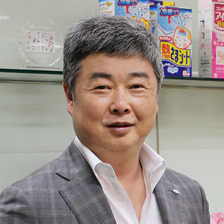
Kazuhito Miyanishi
Kobayashi Pharmaceutical Co., Ltd.
As globalization advances, the markets companies should target are expanding overseas. This feature interviews companies pursuing international expansion. Using concrete examples, it highlights the key points for success in global strategy.

Kobayashi Pharmaceutical's best-selling product, the "Fever Relief Sheet". Launched in Japan in 1994, it expanded overseas starting with Hong Kong two years later. Now sold in about 20 countries worldwide, from Southeast Asia to Europe and America, it generates over 100 million units in annual overseas sales. What's distinctive is that while the product itself is the same, the packaging, advertising, and sales methods are meticulously tailored for each country. What's the strategy behind this? We asked Kazuhito Miyanishi, Executive Officer and Head of the International Business Division at the company.
Researching local lifestyles reveals advertising appeal points
─Before discussing overseas expansion, could you first tell us about the background behind the creation of the Heat Relief Sheet product?
Miyanishi: The technology for gels that cool solely through evaporative cooling, and for applying them to non-woven fabric, already existed. This technology was very interesting, and I felt it had more potential applications. So, I considered, "In what situations might people want to cool their bodies?" In Japan, there's a long-standing custom of cooling the head with cooling packs or ice pillows when someone has a fever. The idea was to combine these elements.
So, while the gel technology and the practice of cooling the body already existed, I believe the concept of "using it when a child has a fever" was what made it unique.

─ The product launched domestically in 1994 and has remained a hit ever since. Starting with Hong Kong in 1996, it expanded overseas to 20 countries including Malaysia, Singapore, the US, and the Philippines. What was the journey behind this?
Miyanishi: It initially began with inquiries from overseas distributors. That's how the overseas expansion started, but as we actually sold the product, differences emerged in sales and usage patterns by country. Naturally, each country's circumstances and GDP levels vary. So, we dispatched employees locally to thoroughly refine market management and advertising communication strategies for each country.
─ Specifically, what kind of local research did you conduct, and how did you incorporate it?
Miyanishi: We needed to understand what the cooling sheet replaced for people in each country. So, we first investigated how locals typically handle a child's fever. They might give medicine, use natural remedies like wet towels or ginger tea, or take the child to the hospital immediately. Standard treatments vary by country.
We needed to identify which part of these routines the cooling sheet could replace. Finding that would reveal the key appeal points for advertising communication in each country. Equally important was determining how deep a need this replacement addressed. Shallow needs won't drive people to specifically buy a new product.
That said, finding it is difficult (laughs). In Japan, you can just recall your own childhood, but abroad, it's hard to imagine their daily lives. Researching this led to different advertising communications emerging for each country.

Countries that even changed product names. The "needs research" behind it
─ Can you give specific examples of how communication methods changed?
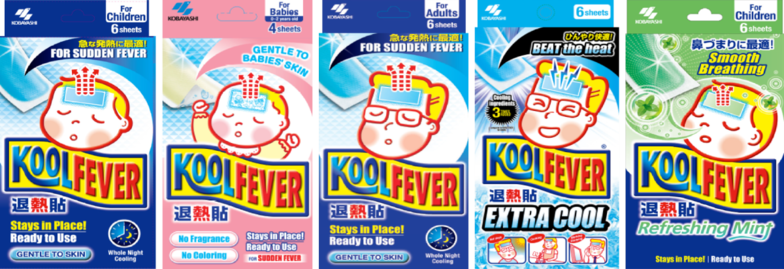
Miyanishi: For instance, in countries like Singapore and the Philippines, where healthcare costs are low, parents take their children to the hospital immediately if they develop a fever. Our ads in those markets featured scenarios like "Your child suddenly develops a fever at night." Parents couldn't go to the hospital but desperately wanted to help. Even after giving medicine, the child wouldn't fall asleep. So we appealed with the message: "Why not try applying a cooling sheet?"
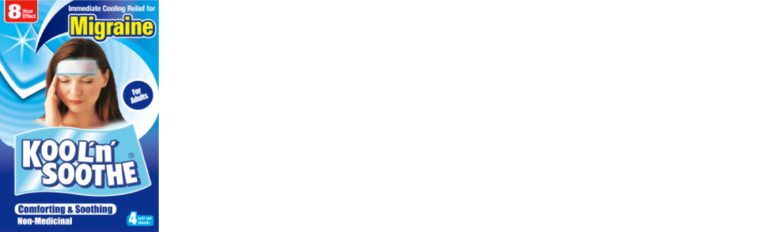
In Europe, taking medicine is very common; people take fever reducers as soon as they feel a slight fever. Since they immediately bring down fevers with fever reducers, the need for cooling sheets there isn't strong. On the other hand, many businesspeople suffer from migraines, and some even leave meetings to rest. Therefore, promoting it as a treatment for migraines seemed like a good approach. So in Europe, it was marketed with "Migraine" prominently displayed on the packaging.
Since the product format is fixed, the key was identifying deep needs where cooling sheets could be useful and communicating their value.
The ability to adapt flexibly will determine the success of global expansion.
─ Another distinctive feature of Fever Relief Sheet's overseas expansion is the varying sales approaches by country. While "box sales" like 12-packs are mainstream in Japan, overseas sales range from single-sheet to box sales, differing by country.
Miyanishi: First, the premise is that overseas product costs are higher than in Japan, leading to higher unit prices. Fever-reducing sheets use specialized processing technology, making local manufacturing difficult. This results in high shipping costs, pushing the sales price to 2-3 times that in Japan. Additionally, regions like Southeast Asia have lower GDP than Japan, so we needed to lower the price per purchase.
Furthermore, in places like the Philippines, when you buy cold medicine, they don't sell it in bottles with dozens of pills like in Japan. If you say, "Give me a three-day supply," and hold out your hand, they'll just hand you the pills individually (laughs). In countries with that kind of culture, selling by the box is a disadvantage. Selling individually or in pairs, which lowers the amount spent per purchase, is better.
However, while two-packs are mainstream in the Philippines, box sales dominate in neighboring Thailand. This is another characteristic of cooling sheets. While global expansion often follows a single brand and concept, our company adapts to each country's specific circumstances and lifestyle culture.
─ Speaking of which, in some countries, cooling sheets are marketed as "heat countermeasures." In Malaysia, where we entered the market in 1998, we started promoting them as heat countermeasure tools starting in 2013, right?
Miyanishi: When we conducted local research in Malaysia, we heard many people using them during restless nights or in traffic jams. So we decided to focus our appeal in that direction. For example, during Malaysia's general election period, as part of our promotion, we handed out free samples to people attending rallies to help them cool down. The response was great; everyone was sticking them on their foreheads.

─ In some countries, the ability to appeal to heat countermeasures is a strength.
Miyanishi: However, we don't promote it as a heat countermeasure tool from the start. Malaysia is a case in point—we only do that after several years. That's because the need for heat countermeasures is superficial. For example, Southeast Asia is inherently a hot region; people can endure the heat if they choose to. It's not a need worth paying extra money for, right? In contrast, "heat countermeasures for children" represents a deep-seated need. Therefore, when entering new countries, we deliberately avoid emphasizing heat countermeasures initially.
─ I understand the key points of your global expansion strategy. Finally, could you share your outlook for future overseas expansion?
Miyanishi: We have about 150 product brands. When researching these, we often find cases where "something taken for granted in Japan doesn't exist in this country." While each individual market may be small, adding them up creates a fairly large market.
Therefore, moving forward, we want to continue conducting local research to gain detailed insights into people's lives while expanding various products globally.
Was this article helpful?
Share this article


Newsletter registration is here
We select and publish important news every day
For inquiries about this article
Author
Kazuhito Miyanishi
Kobayashi Pharmaceutical Co., Ltd.
International Business Division
Executive Officer, Business Unit Head
Joined the company in 1986 and was assigned to the Tokyo Product Sales Department. After studying abroad in 1999, was stationed at Kobayashi Healthcare Europe in 2000. Served as General Manager of the International Business Department in 2011 and has held the current position since 2012.