
Note: This website was automatically translated, so some terms or nuances may not be completely accurate.
 Global Frontiers [2/3]
Business Connecting Japan and the World ~Waku Waku Japan: Broadcasting Japanese TV Programs Overseas~
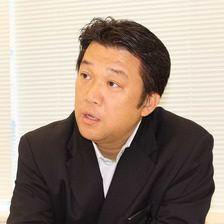
Yuji Yamaguchi
WAKUWAKU JAPAN Co., Ltd.
As globalization advances, the markets companies should target are expanding overseas. This feature interviews companies pursuing international expansion. Using concrete examples, it highlights the key points for success in global strategy.
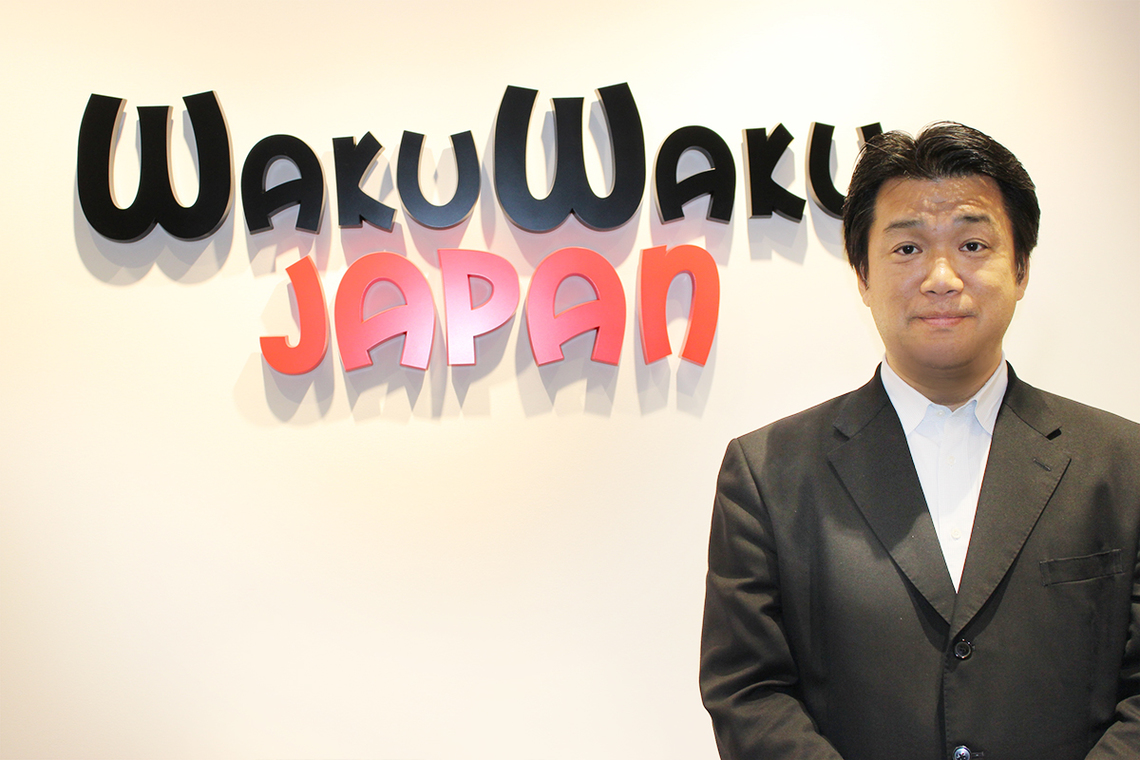
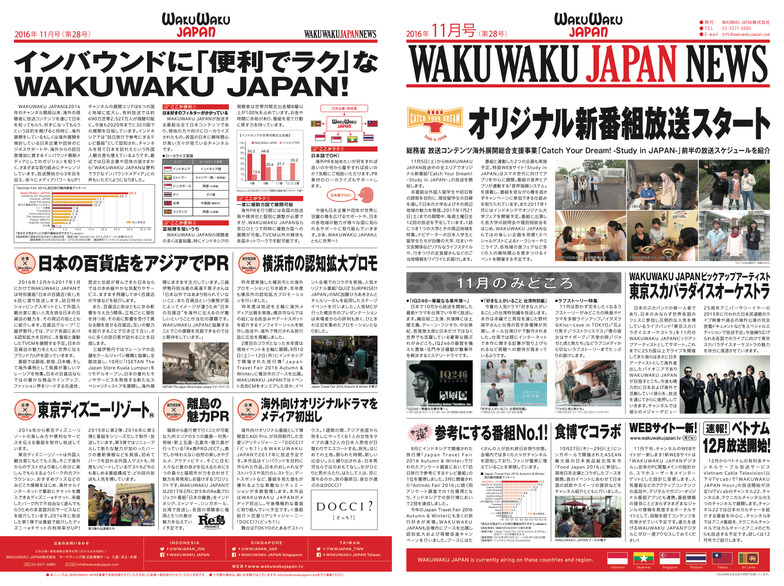
WakuWaku Japan reorganizes various TV programs broadcast domestically, from commercial networks to cable TV, into a single channel for overseas broadcast. Starting in Indonesia in 2014, it now broadcasts in six countries and regions (as of October 2016), primarily in Southeast Asia, and continues to expand. What mechanisms underpin the growing dissemination of Japanese content? We asked Yuji Yamaguchi, Marketing Director at WakuWaku Japan.
The Reason for Starting in Asia: "Needs on Both Sides"
─First, could you give us an overview of the Waku Waku Japan business?
Yamaguchi: It's a channel broadcasting Japanese content overseas 24 hours a day, 365 days a year. Programming varies by country, but fundamentally, we broadcast across all genres—from Japanese dramas to anime like "Chibi Maruko-chan," sports, and music programs. We don't limit dramas by production era. We also air NHK morning dramas, often in sets like "Oshin," "Amachan," and "Gochisousan."
─ So it gathers programs from all Japanese broadcasters.
Yamaguchi: Furthermore, the backbone of the channel consists of content that showcases Japan, such as programs from local Japanese stations, travel shows, and features on Kawaii culture. We also produce original programming.
─ I understand that Waku Waku Japan broadcasts all programs in the local language of each country.
Yamaguchi: For Indonesia, it's Indonesian; for Singapore, English; for Myanmar, Burmese—we deliver Japanese content in the local language. This is the most unique aspect and also the most challenging part of the business. Languages vary significantly across Asian countries, making localization costs high for languages like Indonesian and Burmese.
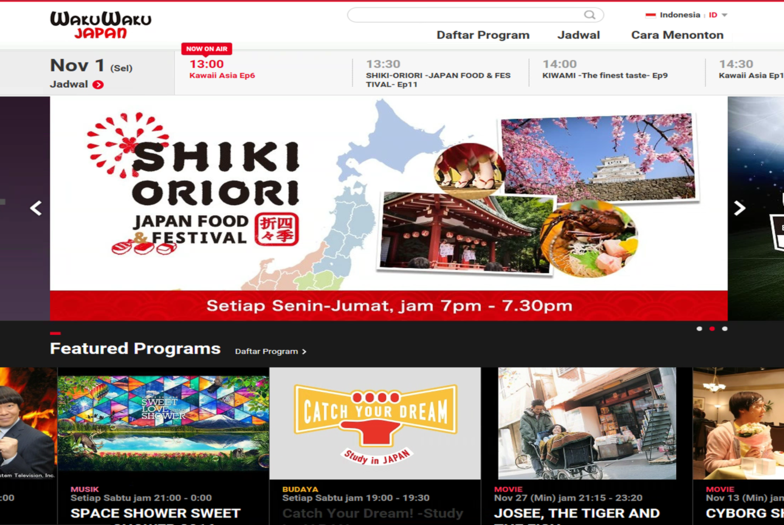
─ Looking back on our journey so far, we first began broadcasting in Indonesia in February 2014. We then expanded to Myanmar, Singapore, and Thailand, followed by Taiwan in September 2016 and Sri Lanka in October 2016.
Yamaguchi: While our focus is currently on Asia, we plan to expand broadcasting to Europe and the Americas in the future. However, we decided to start with Asia first.
─ You mentioned localization costs are high. Why start in Asia despite that?
Yamaguchi: One source of revenue for Waku Waku Japan is advertising. From that perspective, Asian countries showed strong interest and affection for Japan, creating inbound demand. This also aligns with the channel's goal of "increasing Japan fans." On the other hand, many Japanese companies expanding into Asia struggled because they lacked communication tools to reach local people. We also identified this outbound demand. Considering both factors, we started with Asia.
Why Wakuwaku Japan was convenient for companies and universities
─So there were both inbound and outbound needs across Asian countries. First, could you elaborate specifically on the inbound needs?
Yamaguchi: The demand continues to rise. While total inbound travelers reached 20 million, Taiwan alone accounted for 3.8 million. Indonesian travelers, too, increased from around 100,000 when Wakuwaku Japan launched in 2014 to 300,000–400,000 now.
That said, Wakuwaku Japan is a pay-TV channel, so it's certainly not watched by the majority of the population. However, people who pay to watch TV are typically the affluent class in that country. And it's also the affluent class who come to Japan, eat Japanese food, and form the core of inbound demand. In fact, our internal surveys show that Japanese local programming receives high ratings. This is because affluent individuals who want to learn about Japan before visiting are watching these shows, leading to such positive responses. This also connects to the outbound demand we'll discuss later.
─ Did you also conduct research on the TV landscape and local awareness in those countries?
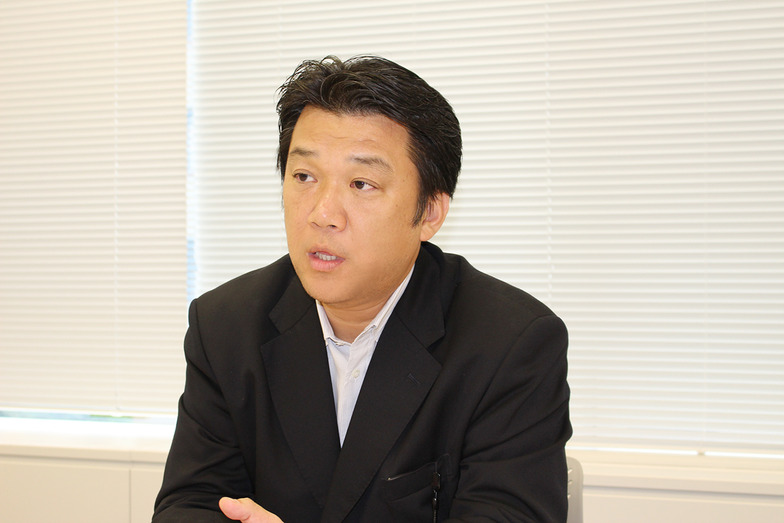
Yamaguchi: We conduct various surveys. We look at the platforms and content acceptance in each country. For example, in Taiwan, each program must have an age rating like "For ages X and up." Compared to Japan, regulations overseas are stricter. Restrictions based on religion and laws also differ by country.
Of course, marketing is crucial too. A notable example is Indonesia, our first market entry. Japan has unique broadcasting conditions—pay TV penetration is only around 10%. Globally, 40-50% is standard, rising to 70-80% in more developed countries. Indonesia also had only about 10%, so we saw potential for growth as its economy develops.
─ Regarding outbound needs, could you share specific initiatives?
Yamaguchi: When we spoke with Japanese municipalities and companies, we heard overwhelmingly that they wanted to promote overseas but found it "difficult to understand, troublesome, and unclear how to specifically choose partners by country." That's where WakuWaku Japan stepped in to reach local markets. We can simultaneously deploy one piece of content to multiple countries. One client even said, "This might sound rude, but it's easy and convenient" (laughs). But that's exactly what we aim for.
A notable initiative is our Japanese university introduction programs. We create original programs showcasing universities and their regions, broadcast locally to recruit international students. Demand for this project is high from universities, with bookings already filled through next year.
─ So you're connecting both inbound and outbound needs through television?
Yamaguchi: While it is television, I feel the video content itself is the solution. Today, there are many information sources, including the internet, but it's hard to know which ones are accurate. People in Asia sometimes have incorrect perceptions of Japan too. For example, thinking Akihabara culture represents the whole of Japan. Within this landscape, television occupies a position as a discerning and trusted medium. We believe we've created a structure where we apply a "Japan" filter to this medium, connecting the needs of both audiences.
The Need for "Cross-Functional Integration" and "Sharing Failures" Abroad
─ What measures did you take to raise the profile of Waku Waku Japan itself?
Yamaguchi: We conducted various local promotions and events to raise awareness. These included music festivals, Ultraman shows, and operating a café for three months as a space to enjoy Japan. We even airfreighted a famous producer's haunted house to install locally. It became so popular that people waited four and a half hours.

─ So you held events locally to introduce Japan, and within those events, people also learned about the channel?
Yamaguchi: We raised awareness by linking promotions, events, and our programs. The music agency was also very cooperative. This likely aligned with their outbound needs to expand overseas. While sensitivity varies by country, we believe it created a win-win situation with the music agency by incorporating local event promotions into our channel.
─ I understand WakuWaku Japan's business model well now. Finally, what would you say is key to advancing a global strategy?
Yamaguchi: First, it's about a whole-of-Japan approach. I think it's crucial not to get too caught up in domestic customs or competitive dynamics. This applies within companies too. It's difficult for just the overseas division to operate independently; the entire company needs to push forward together, requiring strong cross-functional collaboration.
─ So collaboration, both inside and outside the company, is crucial.
Yamaguchi: Another point is fostering tolerance for failure. If a business is guaranteed not to fail, someone else is already doing it. We fail all the time too (laughs). What matters is how we share those experiences and challenge ourselves to take the next step.
Was this article helpful?
Share this article


Newsletter registration is here
We select and publish important news every day
For inquiries about this article
Author
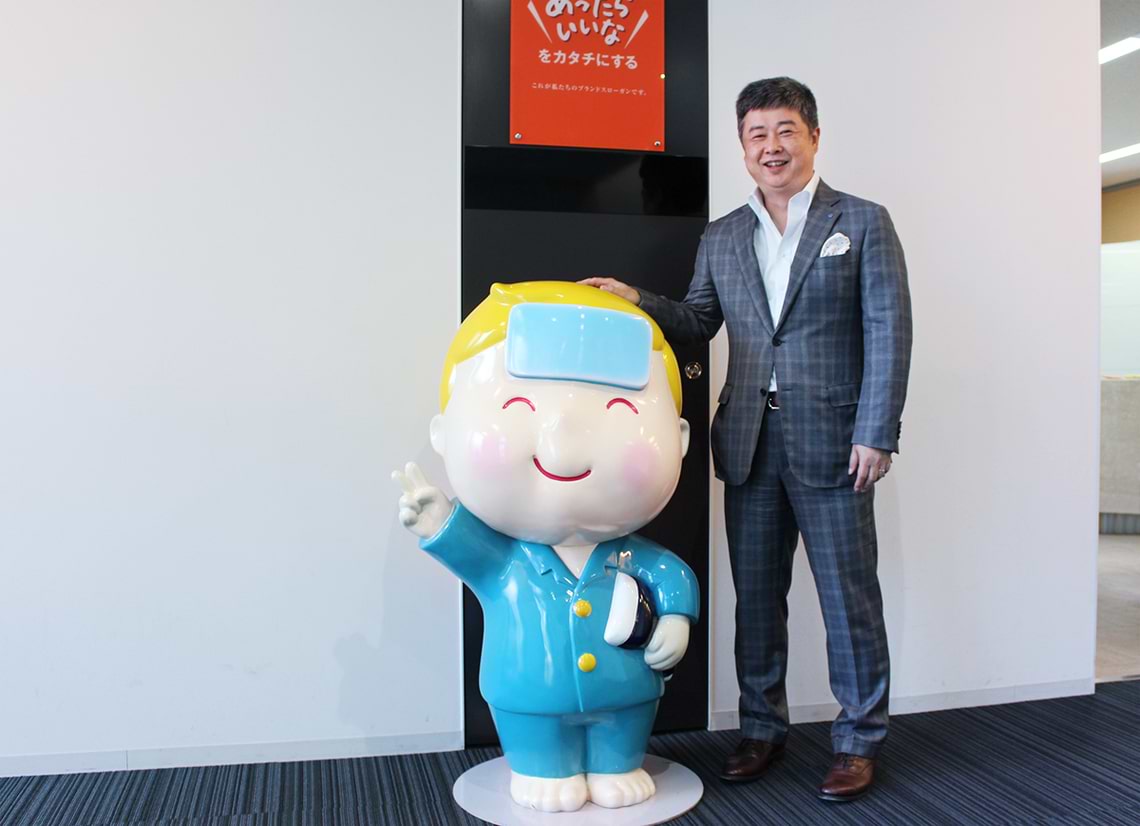
Yuji Yamaguchi
WAKUWAKU JAPAN Co., Ltd.
Marketing Department
Department Manager
After working at SKY Perfect JSAT, he has held his current position since 2015.