Note: This website was automatically translated, so some terms or nuances may not be completely accurate.
 Let's bring "farming" to the table [1/4]
Fresh cucumbers grown in healthy soil—can they stick back together if you cut them?
Are you aware of the "shift" happening in Japanese agriculture right now?
While working on a project to create new agriculture at Dentsu Inc., I encountered two examples of this "shift." I'd like to share them, hoping these initiatives might offer hints to many farmers and consumers. The keyword is simply "farmers connecting with diverse people."
Special cucumbers grown in soil teeming with microorganisms
When a farmer's story becomes a topic of conversation at the dinner table, it makes you want to eat that ingredient again. It sparks curiosity about how the vegetables were grown. You want to meet the farmer and share that excitement with others.
That's why Japanese agriculture can become more interesting and stronger by having farmers themselves share the "stories" behind their products.
The other day, at an open-air market (marche) held in the city center, I heard this story:
"This farmer's cucumbers will stick back together even if you cut them in half!"
Honestly, I was skeptical. But when they demonstrated it with a sample cucumber, wouldn't you know it... it snapped right back together.
"It's because they stay fresh longer than ordinary ones. These are special cucumbers grown in soil where microorganisms thrive," the vendor explained.
"Microbes? Healthy soil?..."
Questions kept popping up. A single cucumber held so many stories.
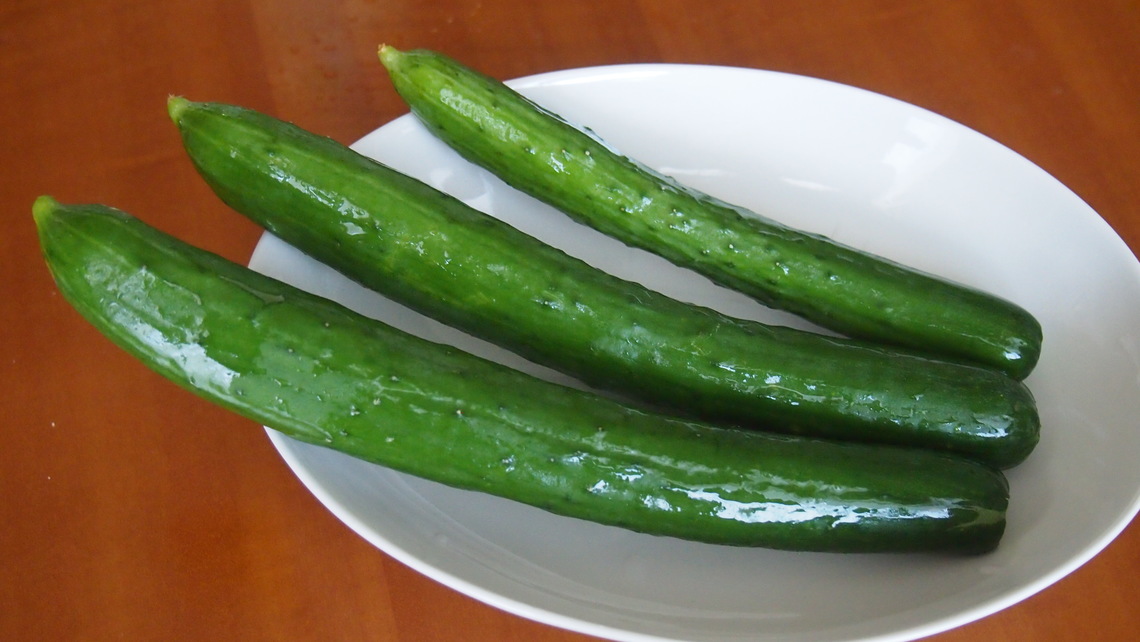
"Did you know, cucumbers can stick back together even after you cut them!" I proudly announced to my family. The dinner table buzzed with more excitement than usual. "Let's have this cucumber again sometime." Learning this surprising fact about cucumbers filled me with gratitude towards the farmer and shopkeeper, making it a deeply satisfying meal.
Since then, we've been buying this cucumber whenever possible. Someday, I hope to visit this farmer with my family, see the cucumber fields together, and even help with the harvest.
The Stories Farmers Tell: A Growing Role
Until now, few farmers actively shared their own stories. However, farmers are increasingly expected to operate with consumer needs in mind. Within this shift, the role of the stories farmers tell is growing significantly. Initiatives where farmers express their own thoughts and feelings in their own words have begun to emerge, hinting at this future. Here, we introduce two examples.
1.Komoro City, Nagano Prefecture: "KOMORO AGRI SHIFT" Project
・Establishment of the "Komoro Standard" – the world's first government-set production criteria based on soil microbial diversity and activity levels
・Branding products not by place name or crop, but as "Komoro Soil" products—symbolizing the city's vibrant soil
・Developing recipes for freshly harvested produce using "Komoro Soil"
・Developing therapeutic farm experiences where visitors can participate in creating "Komoro Soil"
From Tokyo, take the Shinkansen and transfer to a local train to reach Komoro in about 1 hour and 40 minutes. Komoro's farmland, characterized by volcanic ash soil originating from Mount Asama and rich, heavy clay soil high in organic matter, supports diverse crops and a varied agricultural landscape.
Against the backdrop of declining birthrates and globalization, Japanese agriculture faces an era of intense regional competition. Amidst concerns about whether "Komoro's agriculture can survive," Komoro City Hall staff engaged in dialogue with local farmers. They encountered the sentiment: "Just as consumers feel reassured seeing the faces of the farmers, farmers would also feel happy and reassured if they could see the faces of the people who eat their produce."
Inspired by this insight, Komoro City believed that connecting the smiles of "those who produce" with "those who consume" would revitalize local agriculture. This led to the launch of the "KOMORO AGRI SHIFT: From Farming to Connecting" project.
This project unites Komoro City and local farmers to promote "Connecting Agriculture" – an approach that doesn't end with harvesting crops, but goes the extra mile to convey the thoughts and feelings behind them to diverse people, aiming to gain fans for "Komoro's Agriculture." Details will be explained next time.
2.Organic Village Japan "ORGANIC SHIFT" Project
・Publishes the annual market report "Organic White Paper"
Organic Village Japan (OVJ) is an organization that disseminates information about organic products, conducts food education, and holds seminars. It publishes the magazine 'ORGANIC VISION' four times a year, covering various organic topics, and issues the 'Organic White Paper' annually, reporting on the organic market.
Organic products have now permeated not only food but also clothing, beauty, and other areas, beginning to be recognized as a lifestyle. However, from the consumer perspective, there is currently a lack of sufficient information. Therefore, OVJ aims to promote understanding of Japanese organic products and foster market growth both domestically and internationally by 2020.
OVJ defines organic as initiatives sustainable for the global environment and ecosystems. Earth-friendly agriculture produces vibrant ingredients. Vibrant ingredients taste delicious and contribute to our health. That's why OVJ believes organic should be enjoyed by more people, not just a select few. Consequently, OVJ launched the "Organic Shift: From 'Luxury Item' to 'Everyday Item'" project.
"ORGANIC SHIFT" believes that value lies not in "charging a premium because ingredients are grown without pesticides or chemical fertilizers," but in "the added value of the farmers' stories." It is a project that, together with producers and consumers, communicates the "farming that connects" – not just stopping at affixing the JAS organic certification mark, but fully conveying the stories born from these efforts to consumers.
Agriculture that seeks to connect with consumers, not just deliver ingredients
Coincidentally, both of these initiatives use the word "SHIFT" in their project names, with "connecting agriculture" as the keyword. According to business designer Shuji Hamaguchi, "SHIFT" is "an innovation method that enhances business value by redefining the nature of products or services using existing business domains or core members as the foundation, thereby gaining new market recognition" (Diamond Harvard Review, November 2016, p.123).
Agriculture that seeks to connect with consumers, rather than simply delivering ingredients and ending there, is precisely this "SHIFT." In this column, we will explore the "SHIFT" surrounding farmers and discover new possibilities for agriculture.
Next time, we'll feature the "KOMORO AGRI SHIFT" project. How does "Komoro's Agriculture" plan to realize "Connecting Agriculture"?
Was this article helpful?
Share this article


Newsletter registration is here
We select and publish important news every day
For inquiries about this article
Author
Yoshiaki Sugimura
Dentsu Inc.
CDC
Business Development Director
Joined Dentsu Inc. in 1998. Currently belongs to the CDC Future Business Tech Team at headquarters. Focusing on business development ideas, he challenges initiatives that solve social issues by leveraging various cutting-edge technologies ranging from IT to biotechnology.