Note: This website was automatically translated, so some terms or nuances may not be completely accurate.
 Let's bring "farming" to the table [3/4]
From Selfish Organic to Altruistic Organic
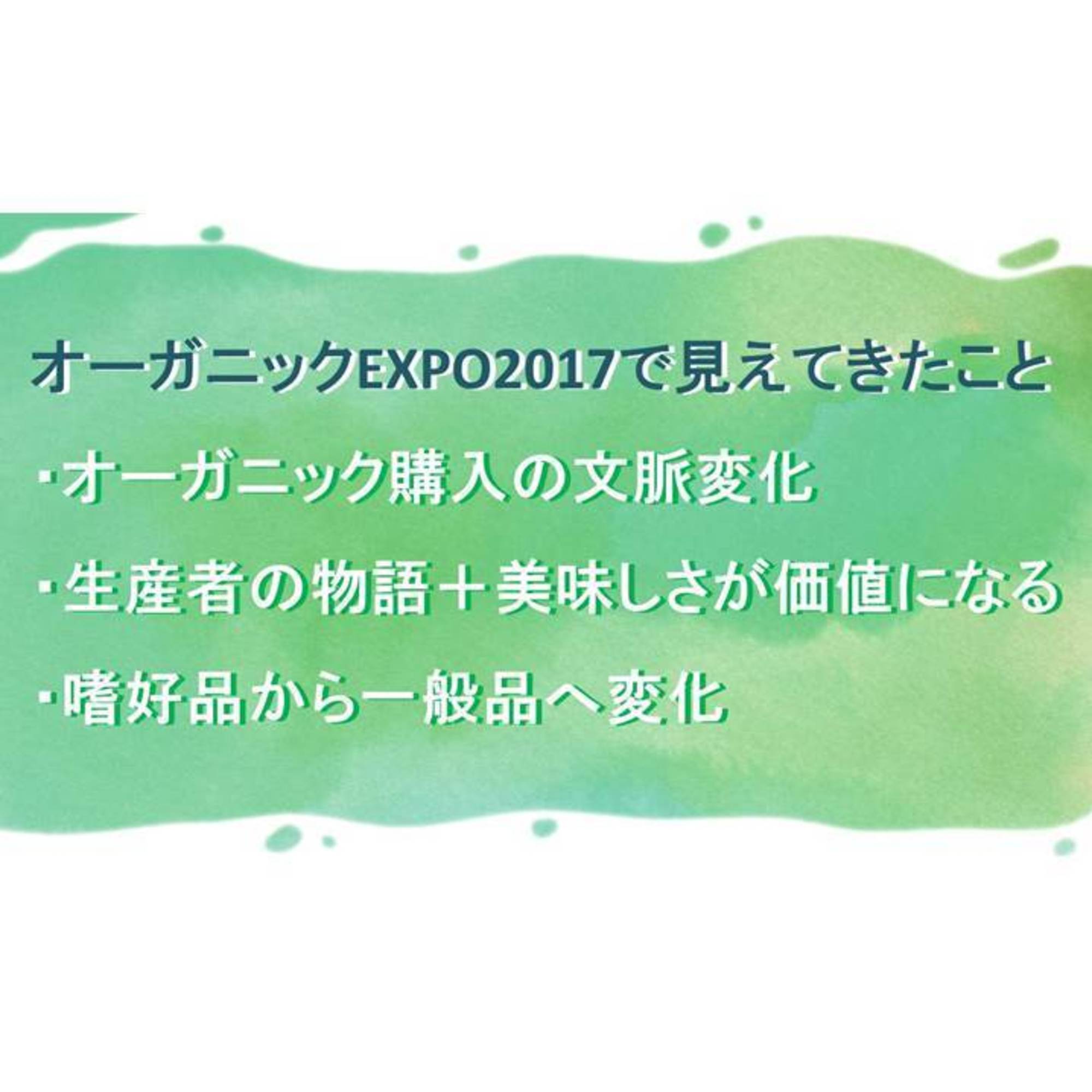
We visited the "International Organic EXPO 2017" held at Pacifico Yokohama from August 24th to 26th. In search of stories connecting farmers, we conducted direct interviews with producers at the "Organic Marche" – a place for gathering information that creates value beyond sales – and the "BioSAKE Village" – the first-ever gathering of Japan's organic alcoholic beverages. Here's what we found.
"Meet, Eat, Listen" – An Agricultural Experience
Upon entering the EXPO venue, instead of an exhibition, a market was being held.
"Even if a story exists, it doesn't create value unless it connects from the producer through distribution to the consumer. We need a place that connects everyone,"
This is from Mr. Taka Yamaguchi, Editor-in-Chief of the quarterly "ORGANICVISION" and the mastermind behind Organic Village Japan (OVJ), who planned this market overflowing with organic ingredients and processed goods.
"Creating a space where producers, distributors, and consumers connect requires two elements: ① Gathering delicious products and creating a comfortable space. ② Building relationships where everyone can see each other's faces. We focused on these aspects for this market."
Through Mr. Yamaguchi's insights, I learned that to convey the stories farmers hold, it's not enough to just share the story—people must also experience the "delicious!" Only when both are present can a genuine connection truly form.
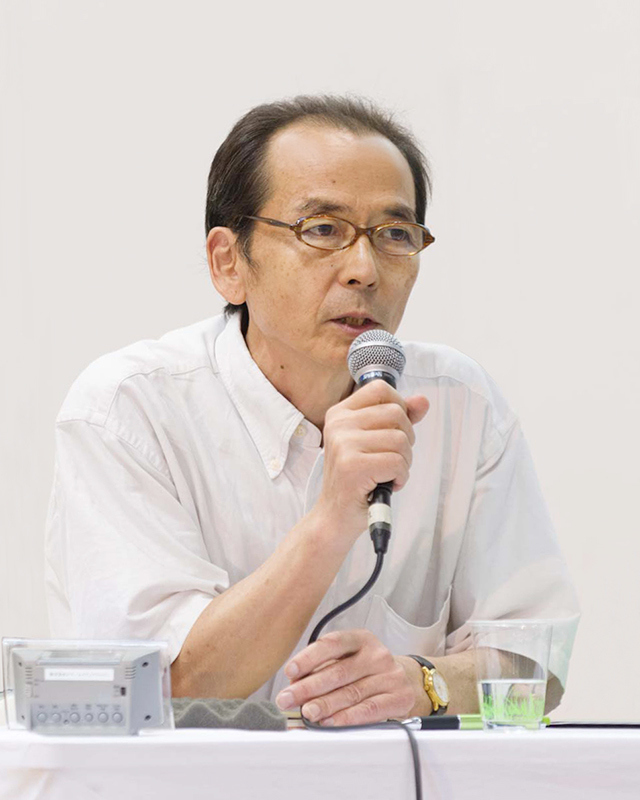
"When delicious products and engaging stories come together, business discussions naturally begin." While markets typically target consumers (to C), this event primarily targeted businesses (to B), such as department stores, supermarkets, and trading companies. Trying a to B market revealed shorter timeframes to business discussions and a higher volume of them. "There's no doubt the demand for organic products is growing," he felt.
Furthermore, he noted that while the volume of organic demand is growing, its nature is also changing.
"Previously, people tended to buy organic primarily for their own beauty or their family's health. But recently, more people are buying organic 'for the sake of the global environment and sustainable agriculture.' In other words, it's shifting from self-centered organic to altruistic organic."
This trend is particularly noticeable among younger people. Mr. Yamaguchi attributes this factor to the environmental education young people have received. "In altruistic organic consumption, the stories of farmers become increasingly rich, and their role grows ever more significant."
After hearing Mr. Yamaguchi's talk, I decided to speak with producers at the venue right away.
Sweet "Medicinal Stone Apples" were born from back pain!?
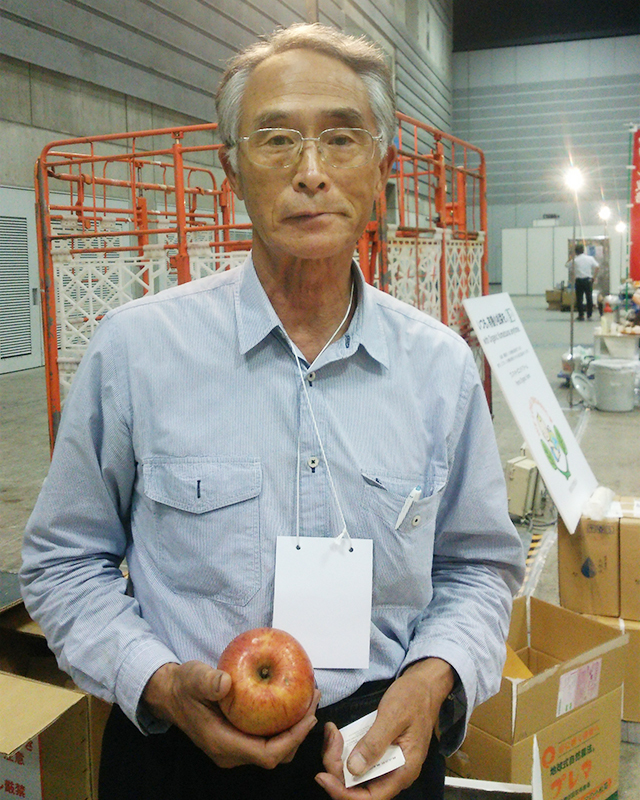
The juice made from the "Yakuseki Apple," cultivated by Mr. Masaaki Tomoe in Aomori Prefecture, tasted surprisingly sweet when I tried it – reminiscent of children's cold syrup. But this wasn't the kind of sweetness meant to mask the bitterness of medicine; it was a natural, not overly sweet flavor coming directly from the apple itself. I asked Mr. Tomoe how he achieves this sweetness.
"I give the apple tree roots what makes the human large intestine happy."
Making apples do what pleases people?
"When I studied human anatomy through acupuncture, which I learned after suffering from back pain during my student days, I realized that the human body and the apple tree are the same."
He explained that the structure for absorbing water and minerals is the same in both the human large intestine and apple roots.
"Apples grown in mineral-rich soil develop sweetness all the way to the fruit on the very tips of the branches." The secret to the sweetness of Mr. Tomoe's apples lies in enriching the soil with minerals. It's an approach only someone like Mr. Tomoe, trained in both Eastern medicine and agronomy, could conceive.
The story of "Dragon's Eye" began with earthworms
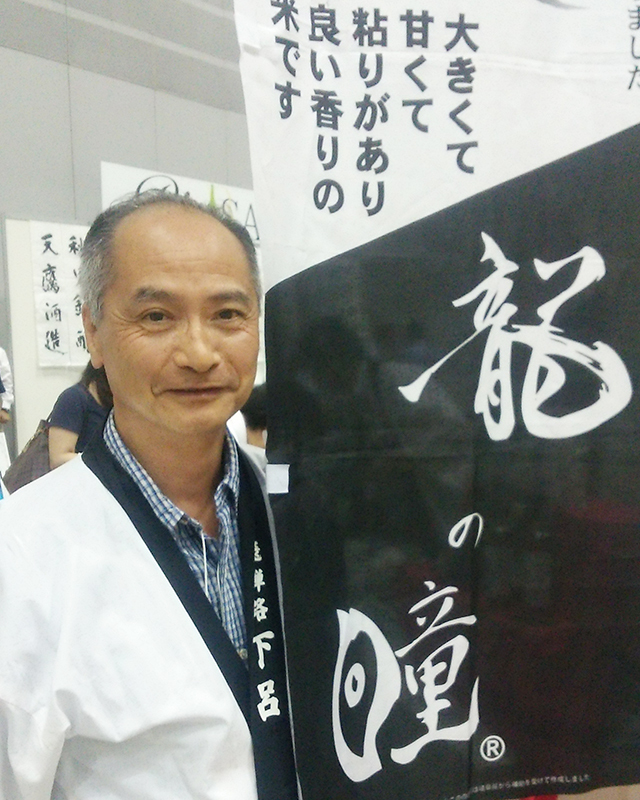
Discovered by chance in 2000 by Takashi Imai in Gero City, Gifu Prefecture, the brown rice "Dragon's Eye" has expanded its cultivation area through meticulous farming methods. It boasts a pleasantly chewy texture, tasting less like the coarse flavor of brown rice and more like eating delicate Japanese sweets.
"'Dragon's Eye' is a rice variety created by mutation,'"
Imai, who worked as a statistician at the Ministry of Agriculture, Forestry and Fisheries, was searching for delicious rice varieties. One day, he sensed an aura emanating from a rice plant in a field that stood much taller and heavier than the surrounding plants. He carefully propagated the seeds and, when he cooked and tasted it in 2002, it was incredibly delicious rice.
The story of Mr. Imai and "Dragon's Eye" began with earthworms. In his twenties, after finishing disinfecting his fields against rice blast disease and pests, he glanced at the paddies on his way home and saw a large earthworm writhing in agony. From then on, he began researching organic farming, wondering if he could reduce pesticides and return to the safe, nature-friendly rice cultivation methods cherished in Japanese agriculture since ancient times.
"Before I knew it, the fields became bustling with water fleas, fireflies, spiders, dragonflies, frogs, and more. Sure, weeds like chickweed started growing everywhere too. But they taste delicious! My dream is to sell these edible weeds that grow in the fields, like vegetables or wild mountain greens, as 'field greens' (densai)."
Seeing his rich imagination and drive, I couldn't help but wonder if Mr. Imai was some kind of farmer mutation.
Organic sake is gaining attention
Mr. Imai has also ventured into producing various processed goods from "Dragon's Eye" rice, including shochu, doburoku (unrefined sake), sake, various retort pouch foods, mixed grains, germinated brown rice, and rice crackers. His booth was located in the section selling sake. I heard from OVJ's Mr. Yamaguchi that organic sake has been gaining attention recently. I know sake is popular these days, and I know that when people talk about sake, they usually mean junmai ginjo, but I hadn't heard of organic sake.
"Leading sake breweries are looking ahead and starting to produce and sell organic-oriented sake. It seems this effort carries implications beyond just enhancing the value of their own sake, encompassing 'environmental conservation and regional revitalization'. In this way, the stories woven from the local nature and farmers are what truly drive the breweries' hearts toward organic sake."
Producers' stories unlock organic potential, driving the market for "BioSAKE" – organic sake that previously lacked a market or network.
The global trend of the "sharing" mindset
According to the "Organic White Paper 2016," Japan's domestic market for pesticide-free, chemical fertilizer-free, and additive-free foods is estimated at 38.14 billion yen. This represents a small share of the overall food market. However, interest in organic food is growing within the context of the 2020 Tokyo Olympics and Paralympics and regional revitalization.
"More than just awareness of organic, the global spread of the 'sharing' concept is a major factor," emphasizes OVJ's Yamaguchi.
"A growing awareness is emerging among many people—a desire to see the bigger picture, looking beyond just family and oneself, toward society, the future, the planet, and nature."
What sparked this shift?
"When it comes to food, I believe it stems from the grassroots efforts in food education and environmental education over the past 10 to 20 years. These efforts have fermented not in the market, but in consumers' consciousness. Now, that fermentation is beginning to take hold in the market itself."
Organic as a matter of course, organic before you know it
"From 'luxury item' to 'everyday item.'" The ORGANIC SHIFT is undoubtedly happening, and I sensed it's heading toward a future where the term "organic" itself disappears.
Our food will become organic as a matter of course, without needing to shout about it – organic will just be the norm, something you notice without thinking.
"To achieve this," says OVJ's Yamaguchi, "it's crucial to observe organic market trends more accurately and for not only consumers but also distributors to re-examine food education." Food education must evolve from consumer-focused (to C) to distributor-focused (to E) and business-focused (to B).
Through my reporting, I felt that "the deliciousness of ingredients" and "farmers' stories" will play crucial roles in our future food and lifestyles. When both are brought to the table, conversation naturally flows. A table filled with conversation surely brings people happiness. That's why we should bring farming to the table.
Was this article helpful?
Share this article


Newsletter registration is here
We select and publish important news every day
For inquiries about this article
Back Numbers

Author
Yoshiaki Sugimura
Dentsu Inc.
CDC
Business Development Director
Joined Dentsu Inc. in 1998. Currently belongs to the CDC Future Business Tech Team at headquarters. Focusing on business development ideas, he challenges initiatives that solve social issues by leveraging various cutting-edge technologies ranging from IT to biotechnology.