
Note: This website was automatically translated, so some terms or nuances may not be completely accurate.
 The Accelerating Evolution of E-Commerce: Lessons from Amazon and Rakuten's Business Models [2/2]
Online grocery shopping. Amazon Fresh is going all out!

Mizue Arakawa
Amazon Japan LLC

Junichi Kanno
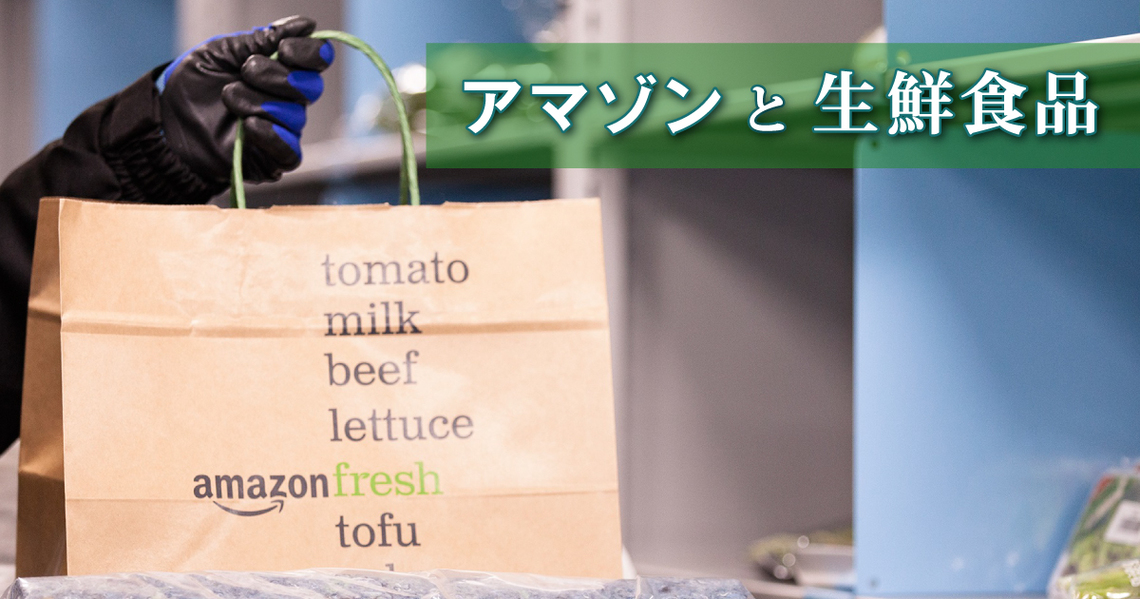
Even in a world where people buy almost anything online, e-commerce penetration remains stubbornly low for fresh food. Japan's overall food e-commerce rate is only about 2%, significantly lower than other categories, and fresh food in particular is still predominantly purchased in-store rather than online. Group interviews conducted by Dentsu Inc. cited "concerns about quality and freshness" as a key reason people avoid buying food online.
Amazon Fresh, launched by Amazon (Amazon.co.jp) this April, tackles this fresh food e-commerce challenge head-on. Will this new venture, launched by the e-commerce giant after careful preparation, change Japanese shopping habits? We spoke with Mizue Arakawa, Head of Retail Business at Amazon Japan's Amazon Fresh Business Division.
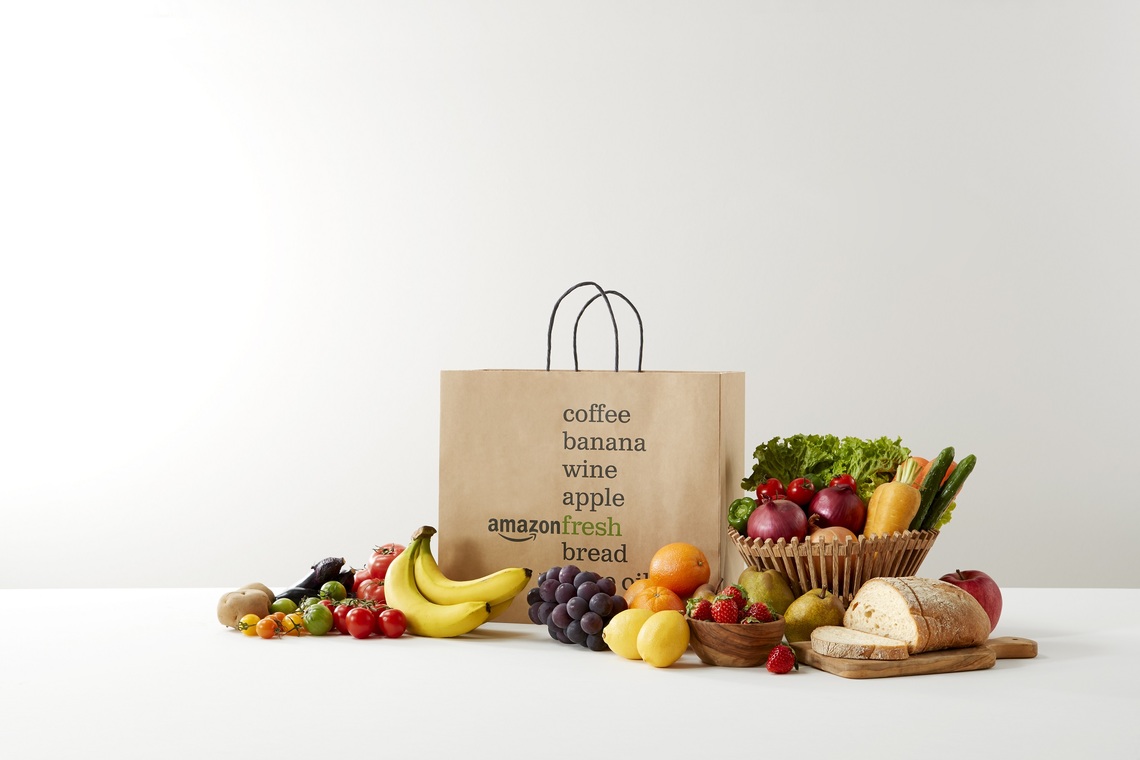
Ten years after its US launch. Why "this timing"?
Kanno: Could you briefly outline Amazon Fresh again?
Arakawa: It's a "fresh food and daily necessities home delivery service" for Amazon Prime members. Orders can be delivered as quickly as four hours after ordering. Pickup is available from 8:00 AM to 12:00 PM.
Kanno: In the U.S., it started in Seattle in 2007 and began expanding to other cities in 2013. Why did the launch in Japan happen this year?
Arakawa: We've been preparing the service in Japan for a long time, and everything finally came together this year. After careful testing and verification, we determined that we had reached the standards for quality, safety, and other aspects necessary to present it to customers. That's why we chose this timing to launch.
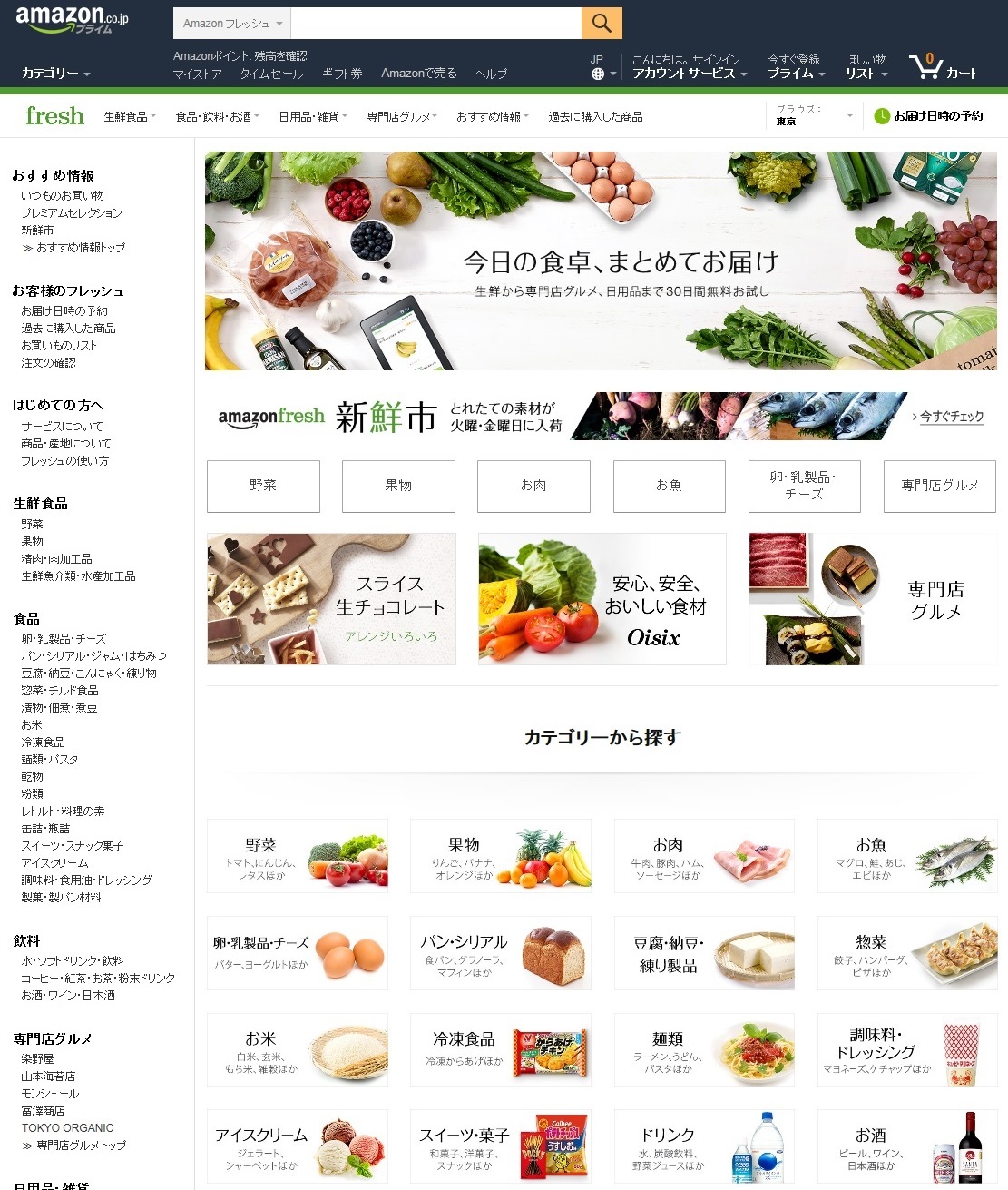
Kanno: So it was very meticulously prepared. What specific preparations were made?
Arakawa: We relentlessly focused on everything necessary to delight our customers. Rather than thinking solely from Amazon's perspective, we consulted in detail with partner companies—manufacturers and wholesalers who deeply understand the Japanese market—covering everything from product selection to logistics. We also conducted numerous storage tests and transportation tests.
Kanno: Especially important is the product selection unique to the Japanese market. Seasonal items vary by country, after all.
Arakawa: Product variety is always a top priority for Amazon. We've ensured not only seasonal items but also daily essentials like milk and tofu are readily available. For product rotation, our field staff consult closely with partner companies to quickly incorporate seasonal vegetables, fruits, fish, and more.
Maintaining freshness through temperature control, packaging, and delivery
Kanno: For fresh food e-commerce, specialized know-how must be essential. Did you base this on expertise from markets like the US, where the service launched earlier?
Arakawa: While we referenced transportation and warehouse operations in the US and UK, we developed unique solutions to meet Japan's stringent food hygiene standards and the particular freshness demands of Japanese customers. Before launching, we actually had Japanese customers help test processes like "ordering" and "receiving."
First, establishing a cold chain (low-temperature logistics system) to maintain product freshness during storage was essential. After trial and error, we achieved a system featuring "warehouses with six temperature zones and constant transportation across three temperature zones."
We also pay close attention to the packaging and boxes used for home delivery. Waterproofing the paper delivery bags and displaying the customer service phone number are unique Japanese innovations.
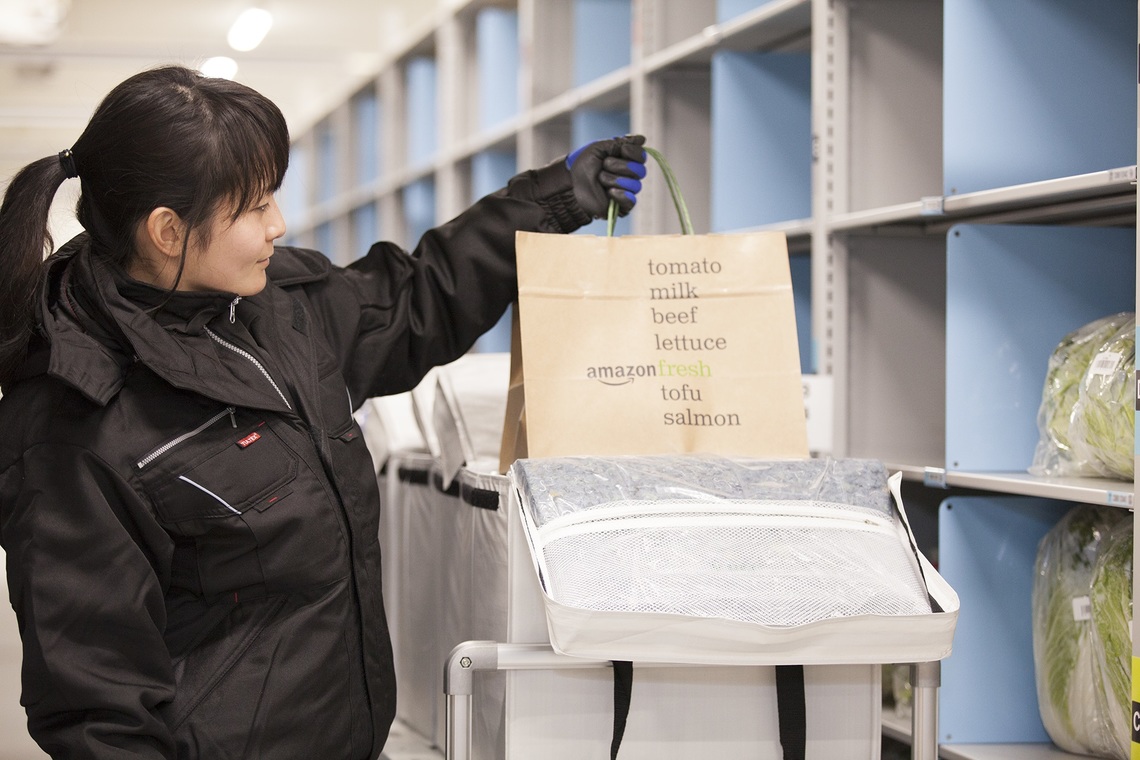
Kamiya: Japanese consumers, in particular, place strong emphasis on food quality and service. Are there other points you pay attention to on-site?
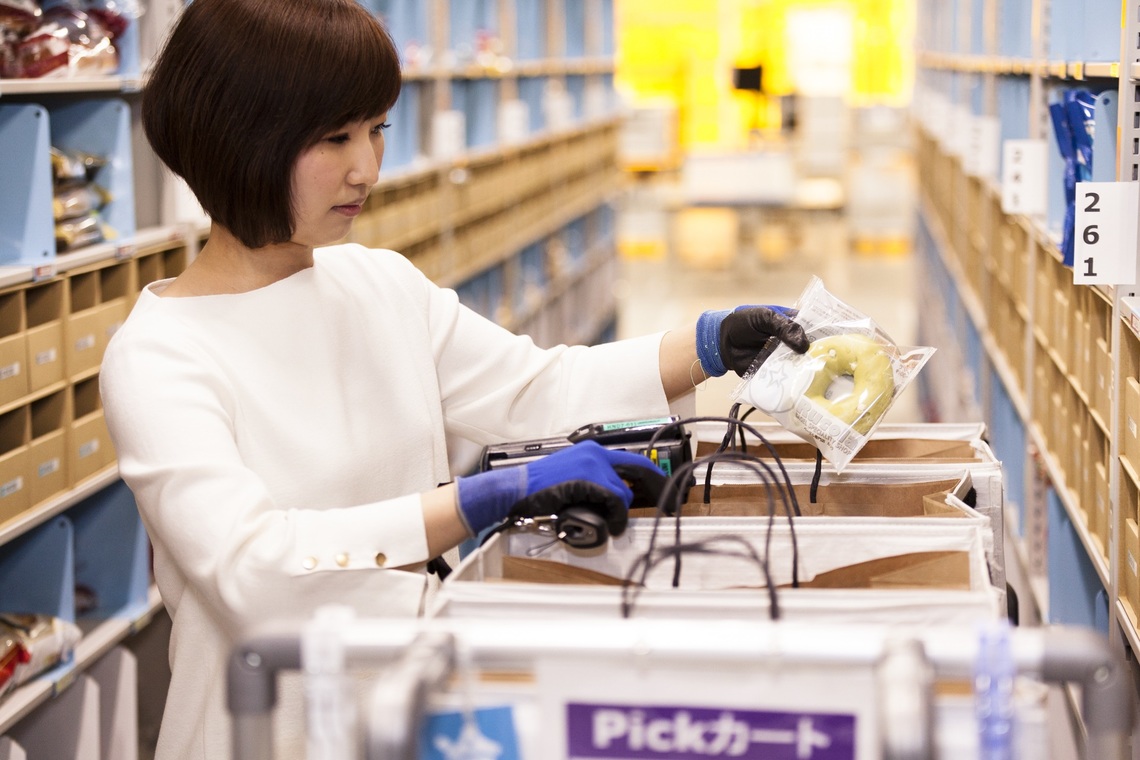
Arakawa: Unlike physical stores, customers can't see or touch the actual products. So warehouse staff act as the "customer's eyes" and inspect the goods. For perishable items like meat, fish, and fruit, we perform a "six-point inspection." We conduct strict checks upon arrival, and some products are returned. After arrival, specialized staff patrol daily to check items, and pickers perform a final check when taking products.
Additionally, to ensure pleasant delivery, we pack items thoughtfully: placing "heavy" and "hard" items on the bottom, and "light" and "soft" items on top. We pack exactly as customers naturally would when shopping at a supermarket.
"I can't believe I can get sashimi this delicious on Amazon!"
Kamiya: What demographic is Amazon Fresh targeting? Could you also tell us about the current user base?
Arakawa: It's not targeted at a specific demographic; all Prime members within the delivery area are the target. Actual usage is diverse. For example, busy professionals might buy a week's worth of groceries at once, or couples might purchase "Specialty Gourmet" items for a weekend treat.
Sales are broad across categories like vegetables, meat, fish, and daily necessities. There isn't one particular item that stands out as exceptionally popular. We believe we're meeting the diverse needs of our customers and are seeing positive results.
*Specialty Gourmet: A section where customers can purchase specialty ingredients, foods, and sweets from various specialty shops available on Amazon Fresh.
Delivery times are also evenly distributed throughout the day—morning, afternoon, and evening—rather than concentrated in specific slots. This accommodates various lifestyles, including homemakers, working individuals, and those with late return times.
Kamiya: So it was developed as a service for all customers and is being used by all segments. What kind of feedback have you received from customers?
Arakawa: One particularly heartening comment was, "I never imagined I could get such delicious sashimi on Amazon!" Amazon often carries a strong image of impersonal digital technology, and some might assume Amazon Fresh is entirely automated.
But in reality, from receiving the goods to delivery, multiple staff members handle it with a human touch and care. I wish that aspect could be communicated better.
Kanno: Hearing you describe it, I realize this service couldn't be achieved without highly skilled warehouse staff, from quality control to packaging.
Arakawa: We ask our warehouse staff to work with the mindset that they're not just working in a warehouse, but in a supermarket. We make daily improvements through close communication with our staff, and we also have partner companies hold "product study sessions" for our staff.
Kanno: So you really value input from the field. What kinds of improvements have come from warehouse staff suggestions?
Arakawa: For instance, we make daily adjustments based on staff feedback regarding shelf width and the flexibility of compartment layouts. Similarly, for temperature-sensitive delicate goods, we listen to staff input and adjust storage temperatures or locations accordingly.
Furthermore, since ice packs placed too close to produce can cause spoilage, we now insert buffer materials or protective sheets between the ice packs and the goods inside the transport containers we call "totes," preventing direct cold air contact. This innovation also originated from staff suggestions.
Above all, we want to keep innovating ways to make customers exclaim "Wow!" and feel "I'm so glad I bought this!" when their order arrives.
Cross-selling strategies distinct from in-store purchases
Kamiya: Regarding "procuring" fresh ingredients, where do you focus your efforts?
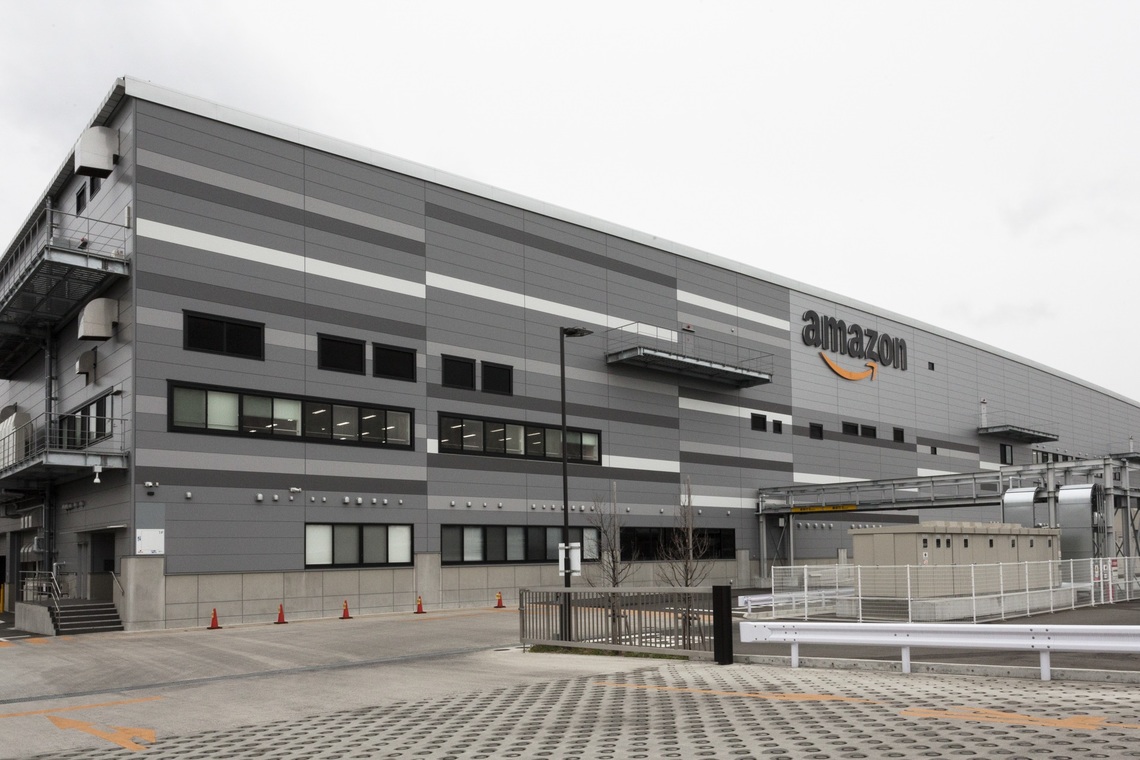
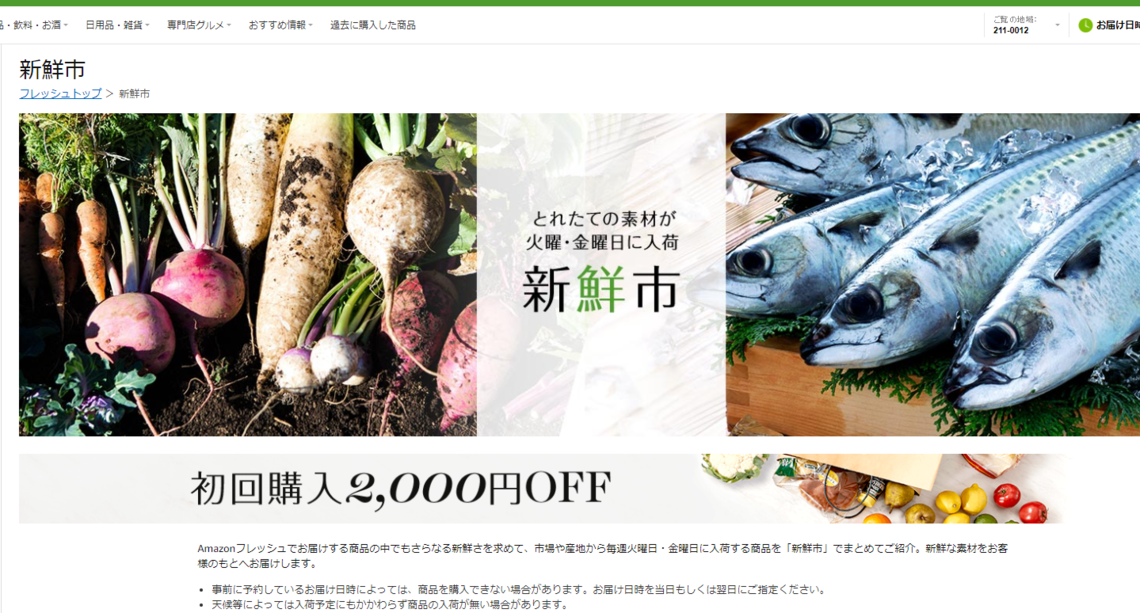
Arakawa: We've established partnerships with various producers, manufacturers, and wholesalers. Our Tuesday and Friday-only "Fresh Market" is a service built around this commitment to freshness. Vegetables are sourced as "morning-picked" produce from nearby farms near our dedicated fresh produce warehouse, and fish are freshly processed by our partners at Tsukiji that very morning.
Kanno: So Amazon sources the fresh ingredients from these partners, packages them at Amazon's warehouses, and then delivers them to customers.
Arakawa: Yes. Not just for Fresh Market, but for all fresh food packaging, we thoroughly discuss with our partner, who is an expert in ingredients, and insist on packaging that can withstand the demands of e-commerce requiring transportation.
Fish processing involves our specialized partners filleting it immediately and vacuum-packaging it. This prevents exposure to air, eliminates dripping, and ensures delivery while maintaining freshness. Similarly, for meat, we use gas-flushed packaging to preserve freshness and prevent dripping.
Kanno: It's clear you pay attention to every detail to achieve an experience equal to or better than buying in-store. Do you consciously differentiate yourselves from other brick-and-mortar stores or online supermarkets?
Arakawa: We don't focus specifically on competitors; our goal is simply the best selection and freshness. However, one unique advantage of e-commerce is the "richness of information." We can convey detailed producer information and their dedication—things like "Who grows these vegetables?"—through text and images, which is harder to do in-store.
Kanno: In physical supermarkets, customers often add non-food items like household goods to their carts alongside groceries. Cross-selling is likely important for e-commerce too.
Arakawa: Since the web allows us to track "how purchases were made," we can implement various cross-selling initiatives.
Currently popular is our "menu suggestions" for customers. For summer, for example, we have a "Cool & Refreshing Special" where you can buy somen noodles, myoga ginger, and shiso leaves together. We also offer "bulk purchase discounts," so please take advantage of them (laughs).
Kanno: One barrier in e-commerce was the difficulty of buying just one item, but Amazon Fresh addresses that, right?
Arakawa: Yes, you can buy even a single tomato. Taking tomatoes as an example, we offer 40 to 50 varieties, ranging from affordable options to premium selections—a wide assortment unique to Amazon Fresh.
The potential expansion enabled by Amazon covering fresh food
Kanno: Japan's e-commerce penetration rate for food is lower compared to other categories. How do you plan to increase e-commerce adoption for food?
Arakawa: We don't focus on the e-commerce penetration rate itself. Like with any other service, our core motivation is twofold: "We want customers using Amazon to gain access to items they couldn't get before," and "We want fresh food to be offered as naturally as anything else on the Amazon website."
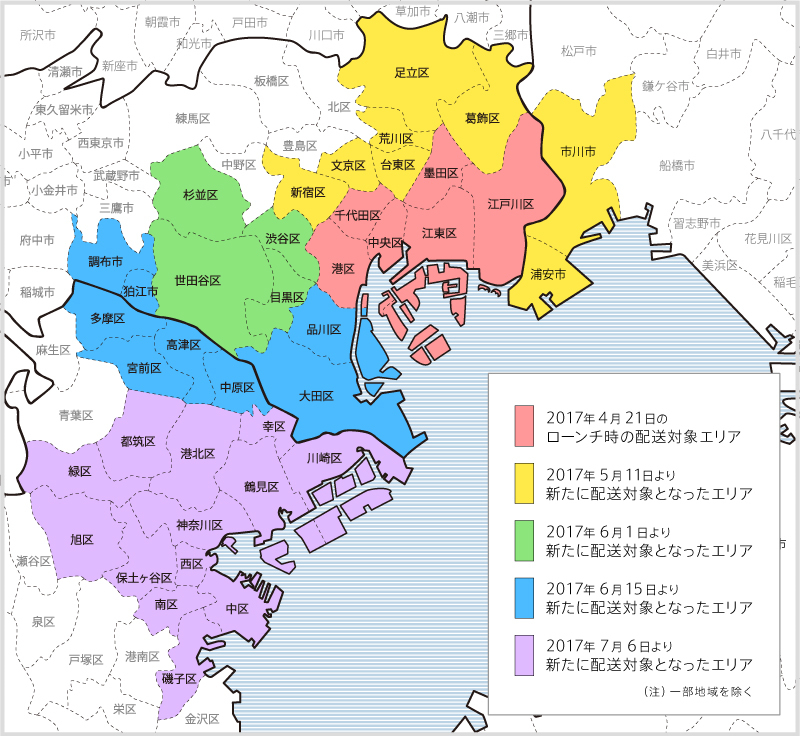
Kanno: Currently, the service is available in parts of Tokyo, Kanagawa, and Chiba. Are there plans to expand to more areas in the future?
Arakawa: Future plans are undecided, but as long as customer demand exists, we intend to expand into new areas as soon as preparations are complete.
Kanno: As exemplified by the " Nippon Store " featuring local gourmet foods, I believe there's significant potential for tie-up campaigns between Amazon Fresh and external partners. Could you share your outlook for the future?
Arakawa: I believe the possibilities opened up by handling fresh food will continue to grow. We are also collaborating on the " Fukushima Pride. Experience Campaign," which features Fukushima products on Amazon.co.jp, Rakuten Ichiba, and Yahoo! Shopping. We want to improve our service together with various partners.
Afterword: Amazon's Strength, the Real Secret
Speaking with Mr. Arakawa, who spoke with a gentle smile about the Fresh business he has carefully built, brought to mind Amazon's corporate principles: "The company that values customers most on Earth" and "The most extensive selection on Earth." Perhaps this stems from Mr. Arakawa himself having worked at Amazon for over a decade, understanding and practicing that philosophy.
This perspective resonates with what I heard last year from Mr. Ichikawa. At the time, as head of Amazon Prime in Japan, Mr. Ichikawa repeatedly emphasized the importance of "eliminating friction in the shopping experience." It's about refining services from the customer's viewpoint, even in seemingly mundane areas – a perspective Mr. Arakawa shares exactly.
By adopting this approach, Amazon builds its business relentlessly around the customer, unconstrained by existing structures or systems. This makes it seem like a "business from another dimension," often perceived as a threat to established players. However, we must recognize that this success is built on layers of meticulous preparation.
Amazon was once thought to wield the inherent strengths of the internet: "unlimited product selection (i.e., no physical shelf constraints)" and "effective recommendations based on purchasing behavior." Yet, these features are actually relatively easy to imitate.
On the other hand, the logistics infrastructure Amazon has painstakingly built over time represents what is known as General Purpose Technology (GPT) in commerce—something that cannot be achieved overnight. By integrating complementary service ideas and technologies that leverage the aforementioned online characteristics, synergistic effects are created, resulting in multiple services with competitive advantages.
Amazon Fresh is a cutting-edge commerce venture launched not only leveraging its own strengths but also through collaboration with partner companies. I believe it has significant potential to become the new standard: "Buying fresh food online."
Broadly speaking, Amazon Fresh faces three major challenges moving forward:
1.Sustainability and scalability of its extensive product selection
Currently, the Fresh warehouse stocks approximately 17,000 food items. When combined with non-perishable goods like daily necessities that can be "cross-shipped" from nearby warehouses, it enables the sale of over 170,000 items, far surpassing the typical product range of online supermarkets in terms of quantity.
Since product selection is the foundation of this business, strengthening procurement capabilities through partnerships with supplier companies remains a key ongoing challenge.
2.Expanding Delivery Areas
For "Amazon customers" (to borrow Mr. Arakawa's term) as a whole, making "buying fresh food online" commonplace hinges on how effectively we can expand the service nationwide.
Meanwhile, the retail industry faces the challenge of shrinking commercial catchment areas, making the development of "community-rooted services" as important an issue as price and product selection. The second challenge is designing online services that meet the diverse needs of local communities.
3.Changing Consumer Mindset
While Amazon Fresh carefully addresses the "reasons not to buy online" mentioned at the outset, no matter how well the purchasing infrastructure is set up, people won't buy if they aren't motivated to do so.
The third challenge is how to position fresh food purchasing as a "natural behavior" among Prime members—Amazon's most loyal and frequent shoppers. If "buying fresh food online" becomes ingrained among these active, affluent Prime members, it has significant potential to spread to consumers across Japan.
Since Amazon Fresh launched, I've noticed a tangible increase in consultations about e-commerce from food manufacturers I regularly work with. Keep an eye on Amazon Fresh—it has the potential to significantly impact Japan's food distribution landscape! (Kanno)
Was this article helpful?
Share this article


Newsletter registration is here
We select and publish important news every day
For inquiries about this article
Author
Mizue Arakawa
Amazon Japan LLC
Amazon Fresh Business Division
Retail Business Division Manager
After graduating from university, he worked at a U.S.-based internet advertising company and a domestic consulting firm before joining Amazon Japan in 2006. After overseeing the introduction of various new services for the seller business, he assumed his current position in June 2015. He has been involved in the launch of Amazon Fresh in Japan and its subsequent business development.
Junichi Kanno
After gaining experience managing e-commerce operations at a major IT company, I became convinced of the diversification of retail space value as a customer touchpoint and returned to Dentsu Inc. Leveraging my comprehensive experience in business valuation and other areas from a consulting firm, I currently work in the Promotion Design Bureau, where I develop and implement numerous sales promotion initiatives through reverse-engineering planning starting from the purchasing perspective. Holds an MBA from the Wharton School of the University of Pennsylvania. Left Dentsu Inc. at the end of December 2022.