
Note: This website was automatically translated, so some terms or nuances may not be completely accurate.
 Why Businesses Without Dialogue Fail [2/6]
Dialogue with Multiple Stakeholders
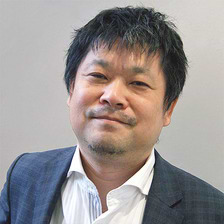
Hiroyuki Egami
Dentsu International Information Services, Inc. (ISID)
This column is structured in three parts:
■Why Multi-Stakeholder Dialogue is Necessary
■Multi-Stakeholder Dialogue as Seen in "Weekly News Deep Dive"
■Putting Yourself in the Shoes of Those Not at the Table
Why Multi-Stakeholder Dialogue is Necessary
This column explores the importance of "dialogue" in business. But who should be included in that dialogue? When discussing solutions to a problem, who should be invited to the table?
This depends on how you frame the problem. If you pinpoint a specific cause—"This is the problem"—and aim to address it there, the people gathered will be experts familiar with the issue's details, those with the authority to wield power when taking action, and the staff responsible for implementation. This is the "debate" approach we often use, like corporate strategy meetings or government expert panels.
The countermeasures adopted in such settings often create a disconnect, where the problem becomes "someone else's concern." Those issuing orders or advice are not involved in the implementation process, and for those executing, it's "just something someone else decided." This likely explains why management strategies decided by someone else often fail to permeate the front lines in your organization.
The "dialogue" approach does not aim to pinpoint the cause of a "problem." Instead, it views the "problem" as a system influenced by the interplay of various causal relationships. You are part of that system—meaning it becomes your own responsibility.
For example, suppose a product has quality defects. Typically, this problem is blamed on the quality control team. However, the team's motivation might be affected by issues in the HR system. It could stem from management strategies putting pressure on product development. Demanding customers insisting on low-cost quality requirements also likely play a role. And you yourself might be contributing to the root cause of problems occurring in your organization, problems happening on the front lines that you are unaware of. In other words, you are also a stakeholder.
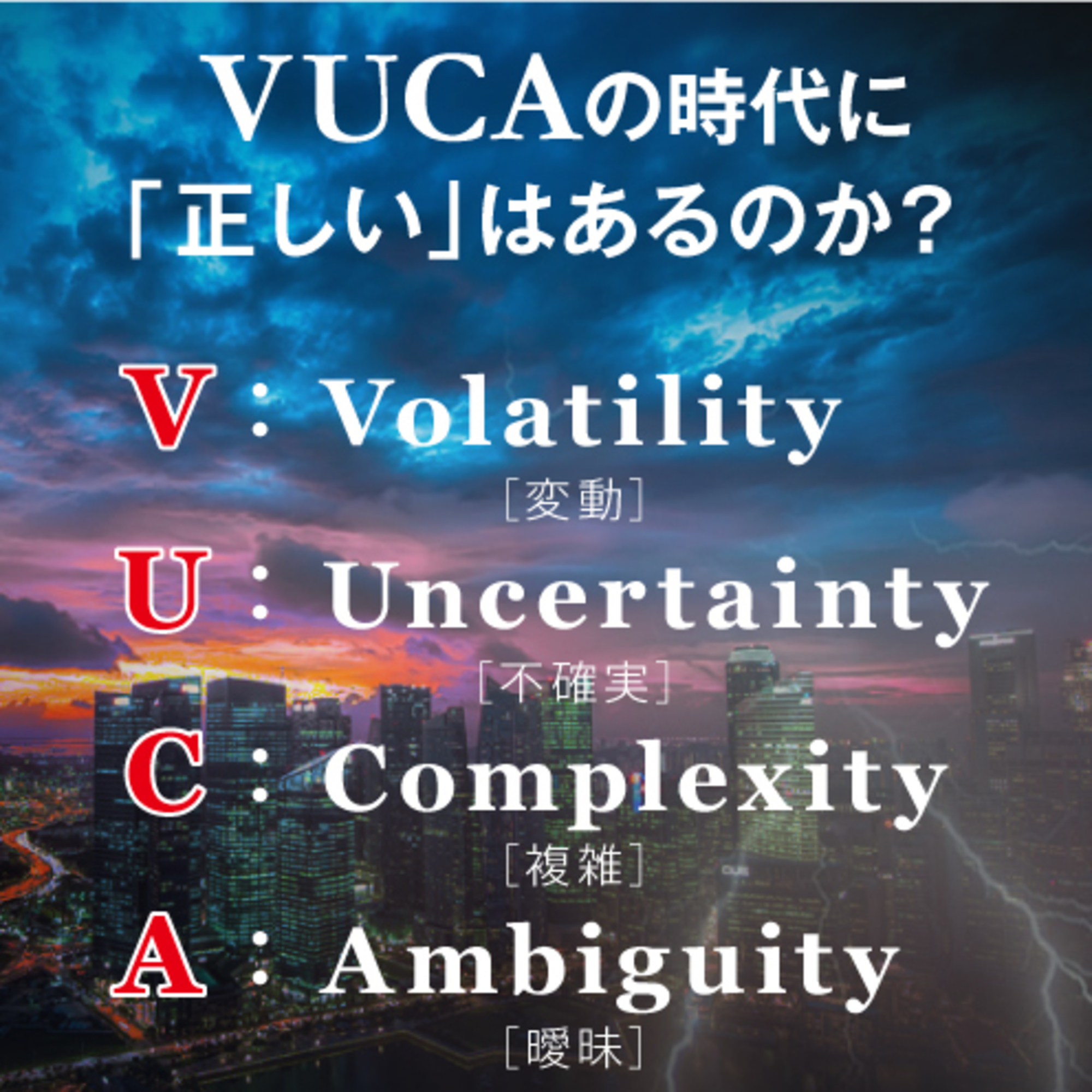
In the VUCA※ era, the more complex the problem, the more crucial multi-stakeholder dialogue becomes. The significance of gathering busy people for dialogue lies in "expanding the circle of those who take ownership and creating new solutions" for problems that experts and authorities alone couldn't solve.
※VUCA: An acronym for Volatility, Uncertainty, Complexity, and Ambiguity.

Multi-Stakeholder Dialogue as Seen in "Weekly News Deep Read"
There's a TV program I feel truly embodies multi-stakeholder dialogue. It's the news program "Weekly News Deep Read," broadcast on NHK on Saturday mornings. In the latter half of the show, there's a dialogue session called the "Deep Read Corner." Here, a "dialogue" involving experts and celebrities is conducted spontaneously around a single theme. The themes tackled in these "dialogues" are complex and thorny issues emblematic of our VUCA era: nuclear weapons, secondhand smoke, ISIS. Each is a topic where viewers—myself included—might be complicit in the problem, yet because we don't feel its direct impact, we're tempted to dismiss it as someone else's concern.
This program doesn't stop at providing general knowledge about the theme, like a news commentary that makes you think "Ah, I see." During the dialogue scenes, celebrities, as laypeople, challenge the experts' arguments and voice "the honest feelings everyone has but finds hard to express."
For instance, during a discussion about nuclear development, when an expert stated, "(Irrational things) are tolerated due to adult circumstances," a celebrity interjected, "What are we then? Children?" leaving the expert at a loss for words. Then, Twitter posts from viewers are introduced. These include the anger and frustration we feel about the issue, along with suggestions that actually hit the mark.
This program has another distinctive feature. The content of the dialogue—regardless of whether it comes from experts, celebrities, or viewers—is immediately transformed into images and text. Using a technique called graphic recording, it's expressed on large sheets of paper. Essentially, it ensures that every opinion, from any perspective, is placed on the table as the dialogue progresses.
Since this is a live broadcast, if you watch closely, you'll notice a subtle shift in the quality of the dialogue once arguments from diverse positions have run their course. This shift often begins when a participant suddenly makes a candid, unfiltered statement that transcends their role. Witnessing this, viewers who previously ignored social issues are given a chance to consider them as their own personal concerns, as if they were directly involved.
Standing in the shoes of those not at the table
You might be wondering: Isn't it unrealistic to gather all stakeholders for a meeting? Won't the discussion just get too scattered?
If such doubts arise, I want you to ask yourself this:
"If there's something not being addressed here, what might that be?"
"How would someone not present here feel if they observed our discussion from the sidelines?"
Maintaining this awareness could spark a chain reaction of personal connection and become the starting point for accelerating the emergence of a new era.
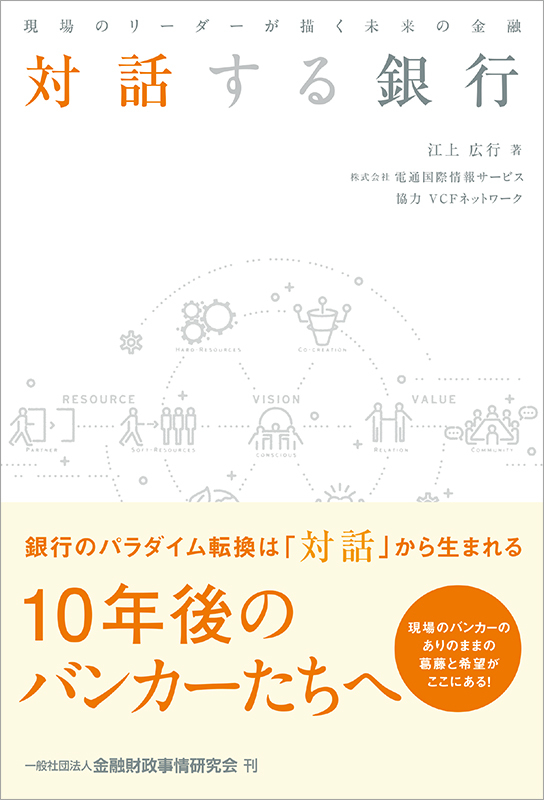
The author of this column, Hiroyuki Egami, depicts how paradigm shifts in the financial industry emerge from "dialogue" in his book published this July, 'The Dialogue Bank: Future Finance as Envisioned by Frontline Leaders'. The themes explored through "dialogue" are rich and varied, including "leadership," "decentralized management," and "the essence of money." Even if you're not in the financial industry, I highly recommend picking up a copy.
Was this article helpful?
Share this article


Newsletter registration is here
We select and publish important news every day
For inquiries about this article
Author
Hiroyuki Egami
Dentsu International Information Services, Inc. (ISID)
Financial Solutions Division Financial Business Strategy Department VCF Group
Marketing Professional