
Note: This website was automatically translated, so some terms or nuances may not be completely accurate.
 Why Businesses Without Dialogue Fail [3/6]
Customers are shifting from Consumers to Persons
Hiroyuki Egami
Dentsu International Information Services, Inc. (ISID)
This column focuses on the importance of dialogue in business. This time, I would like to discuss dialogue with your most important conversation partner: your customers.
This column is structured in three parts.
■You and Your Customers Are "Divided"
■The Power to Become Your Customer: Itako-like Ability
■Your Customer Is Yourself
You and Your Customers Are "Disconnected"
Until now, for us, the businesses providing products and services and the customers purchasing them have been separate entities. If asked, you might think, "What's so obvious about that?" That's how naturally we've treated customers as a separate, divided existence.
For example, standard marketing techniques like segmentation—categorizing customers by gender or income level—and targeting—identifying profitable customers—are methods that observe and analyze customers as separate entities from ourselves. This is because we don't include ourselves within the subjects being analyzed.
So what happens? It's the same as what occurs in any human relationship. The attitude you take toward someone comes back to you in the same way through mutual interaction.
If you treat customers as "separate entities," they will treat you as a "separate entity" too. If you only approach customers when it suits you, they will only transact with you when it suits them. If you try to retain customers with a points system, they will rationally choose services based solely on their points balance.
At this point, a relationship forms where the business and the customer only use each other for convenience. The term BtoC, often used in marketing, symbolizes this. The C, meaning Consumer, is someone who "consumes" the goods or services you provide, an entity separate from you, the service provider.

The ability to embody the customer
"Don't observe customers as subjects; instead, embody them as if possessed, making their concerns your own." My friend Tsuyoshi Furue, CEO of yuima and a marketing coach, named this ability "Itako Power" after the mediums of Tohoku who channel the spirits of the deceased. He offers coaching and workshops to help people practice this skill.
He argues that what truly matters is connecting with the inherent values and aspirations of the person, company, or brand, allowing them to become their authentic "way of being." It is precisely this unfiltered, true expression that becomes the starting point for innovation.
In Ina City, Nagano Prefecture, there is a Western-style confectionery shop called "Kashō Shimizu." This shop has an event called "Dream Cake Day," where they create and present cakes based on children's dreams. The person who started this event was the third-generation owner, Mr. Shinichi Shimizu. The impetus for this came from a family murder-injury incident that occurred in a neighboring town.
Shimizu was shocked by the news. The next day, he declared, "This incident is our responsibility. If our cake had been in that home that day, the injury incident might not have happened," and thus began Dream Cake Day.
For Mr. Shimizu, customers are inseparable, forming a unified whole. He views both himself and his customers as integral parts of the same community. For him, engaging with customers is also engaging with himself as a member of that local community.
The customer is yourself
Let me share another example from the financial industry. In Canada, there is a cooperative financial institution called VANCITY that provides loans to low-income individuals. Their mission is to provide loans while simultaneously helping borrowers escape the cycle of multiple debts. Specifically, they collaborate with the community to support borrowers with challenges like housing and employment, guiding them toward improving their creditworthiness.
On the other hand, what kind of measures do many financial institutions take for the same low-income population? By pursuing efficiency and convenience—such as requiring all transactions to be done online—they may be neglecting the essential human-to-human communication that over-indebted individuals actually need. This neglect could be a contributing factor to the increase in over-indebted individuals.
The former views customers as Persons (and their communities), while the latter sees them as Consumers.
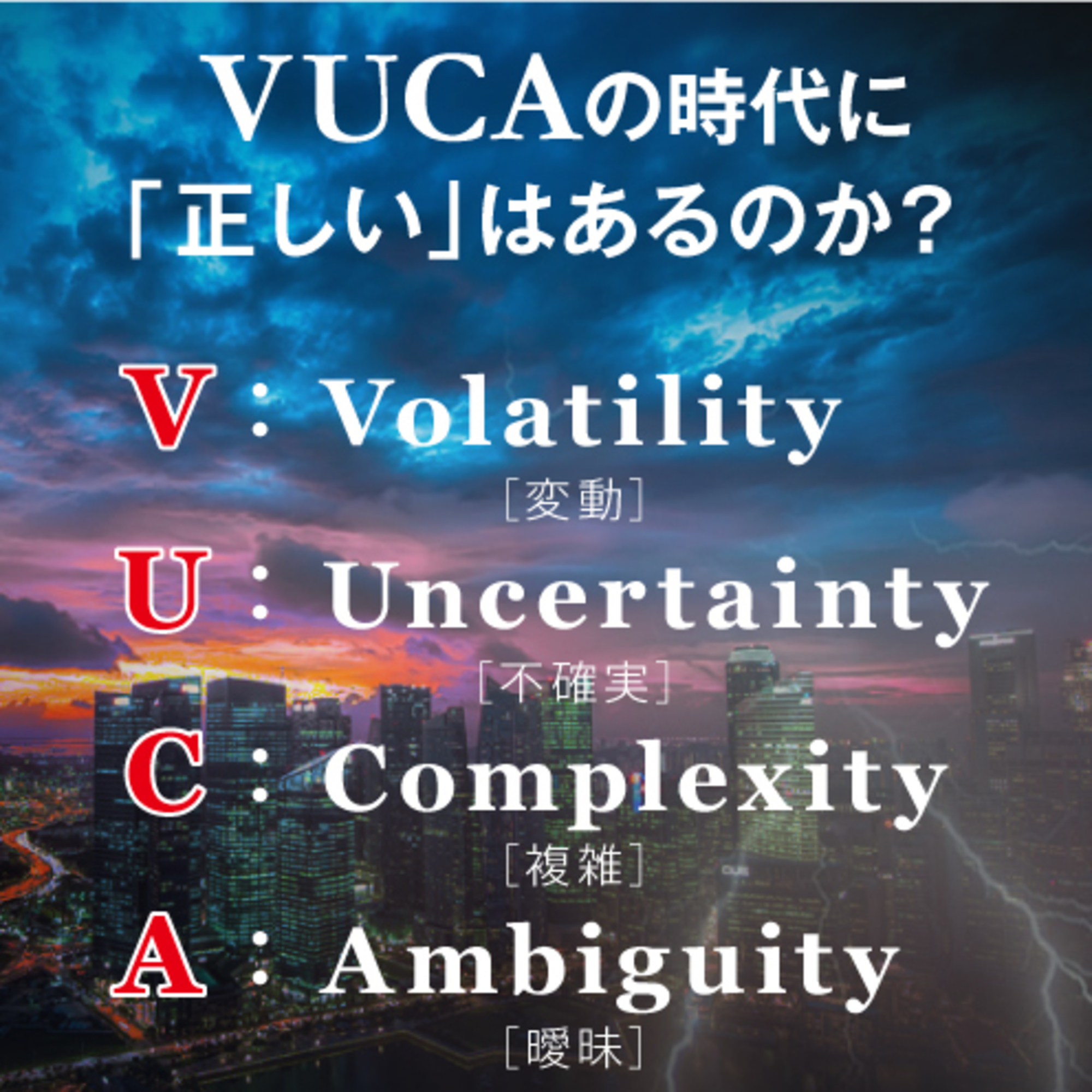
I believe viewing customers as people is an approach that should be applied in today's VUCA※ era, regardless of company size or industry. Corporate marketing strategies and the overarching management strategies require thinking that views the entire system—not just individually targeting customers, but also recognizing how the impact spreads beyond customers to society.
※VUCA: "VUCA" is an acronym for Volatility, Uncertainty, Complexity, and Ambiguity.
The perspective that "the customer is yourself" transforms the B2C (Business to Consumer) relationship—an asymmetrical dynamic where both parties conveniently use each other—into something new. It transforms the relationship into one where you and the customer are individuals within the same community—that is, a PtoP (Person to Person) relationship where you recognize and share with each other. When engaging in such dialogue with customers, they become not just transaction partners, but also co-creative partners.
Now, how does this apply to your business?
What kind of world is the one you belong to, the one you are a part of, your "customers"? What kind of dialogue can you begin with customers within that world?
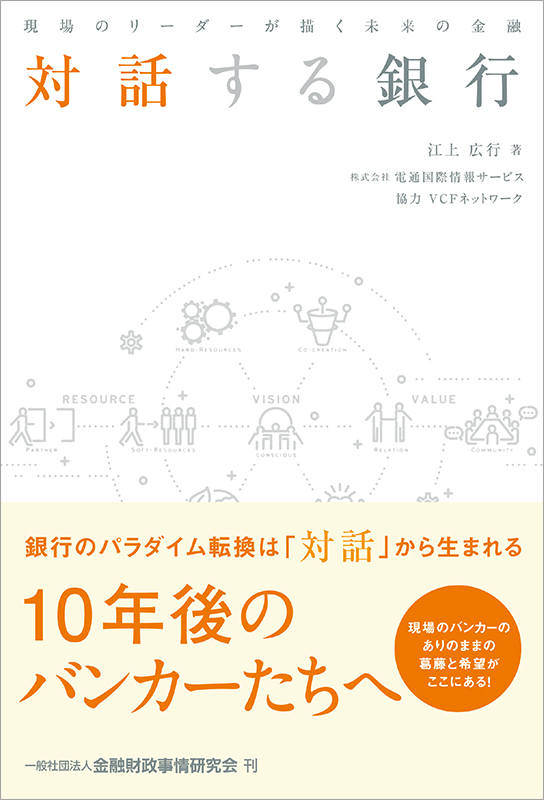
The author of this column, Hiroyuki Egami, depicts how a paradigm shift in the financial industry can be sparked through "dialogue" in his book published in July, 'The Bank That Engages in Dialogue: A Frontline Leader's Vision for the Future of Finance'. The themes explored in this "dialogue" are rich and varied, including "leadership," "decentralized management," and "the essence of money." Even if you're not in the financial industry, we highly recommend picking up a copy.
Was this article helpful?
Share this article


Newsletter registration is here
We select and publish important news every day
For inquiries about this article
Back Numbers
Author
Hiroyuki Egami
Dentsu International Information Services, Inc. (ISID)
Financial Solutions Division Financial Business Strategy Department VCF Group
Marketing Professional