
Note: This website was automatically translated, so some terms or nuances may not be completely accurate.
 Why Businesses Without Dialogue Fail [4/6]
Innovation is born not from management, but from dialogue.
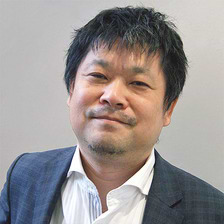
Hiroyuki Egami
Dentsu International Information Services, Inc. (ISID)
Last time, I mentioned dialogue with customers. This time, I want to touch on dialogue within the organization. That is, the nature of dialogue with your closest colleagues, superiors, and subordinates.
This column is structured in three parts.
■The Paradigm of Organizational Structure is Changing
■Have You Heard of Holacracy Management?
■Start the Dialogue Yourself
The Paradigm of Organizational Structure is Changing
When addressing dialogue within organizations, it's important to note that the paradigm of organizational structure is currently undergoing a historic transformation.
Until now, many organizations in Japan—including corporations, government agencies, schools, and NPOs—have been governed by a centralized hierarchical structure where instructions and orders flowed down from the top.
In other words, the top level makes the highest-level decisions, business plans are created based on those decisions, and these plans are then detailed down by department or function. Key Performance Indicators (KPIs) are established to enable central control centers to manage this, and the familiar PDCA cycle is run.
However, as we enter the VUCA era, this hierarchical structure is beginning to malfunction. Decision-making by specific authorities, such as executives, can no longer keep pace with the speed and complexity of changes in the market and society.
※VUCA: An acronym for Volatility, Uncertainty, Complexity, and Ambiguity
The times demand organizational structures suited to the needs of society.
William Ross Ashby, a pioneering researcher in complex systems, stated: "A system capable of responding to a complex environment must itself be a system of equal complexity." This is known as "Ashby's Law."
In today's diverse and complex VUCA era, left-brain communication—relying solely on logical analysis and sharing information expressed through quantification—cannot address complex problems. What organizations need is the recognition that diverse values exist, right-brain thinking that embraces ambiguity and sensibility, and "dialogue" as the process through which these elements fuse despite generating friction.
Organizations where such emergent dialogue is fostered differ significantly from hierarchical structures. Due to advancing decentralization and devolution, decision-making occurs through dialogue at the front lines, closer to customers and markets.
The role demanded of management is to communicate messages to diverse stakeholders, including employees, and to engage in dialogue with them. This serves as the pivotal role that maintains organizational coherence and prevents fragmentation, even while decentralization and devolution proceed. In other words, the role of management transforms from being a decision-maker to a symbolic figure overseeing communication.
This decentralized management style is by no means outdated. Companies like 3M and Johnson & Johnson in the US have embedded an innovation culture within their organizations since the first half of the 20th century by delegating decision-making to the front lines. This decentralized approach has enabled them to sustain strong performance over the long term.
Furthermore, Japan's Kyocera, known for its Amoeba Management, is also famous as a decentralized, distributed organizational management system. What these decentralized management approaches share is that they incorporate "dialogue" into their systems, allowing ambiguity and intuition at the front lines.
Have you heard of Holacracy?
Entering the 21st century, a further evolved form of decentralized management, known as Holacracy, has gained attention. Holacracy refers to a distributed management style that eliminates hierarchical levels for management entirely within the organization.
The term "holacracy" originates from "holon," meaning that the part and the whole are one and the same. This signifies a management style where any segment of the organization can represent the whole, functioning like a living organism. In essence, the organization operates as a system where every member functions as if it were their own responsibility.
Well-known examples of companies practicing holacracy include Zappos and Airbnb in the US. In Japan, Diamond Media, a provider of real estate solutions, is often cited. Its unique management practices frequently draw attention: all management information is open, the president and board members are elected, expenses are discretionary, employee salaries are decided through discussion among the employees themselves, and attendance is flexible.
I am personally acquainted with the company's representative, Kozo Takei. Observing this company, I get the impression that optimal decision-making and execution naturally occur on the ground, based on dialogue at the front lines. It feels like things get decided organically, without formal meetings or reports, simply through lively chatter and discussions via chat tools.
Seeing this truly makes you realize that innovation isn't created by rules or control imposed by authority.

Start the conversation yourself
Now, you might feel a sense of resignation, thinking that in your organization, traditional centralized hierarchical structures still persist, making it incredibly difficult to transform the organization through dialogue at the grassroots level.
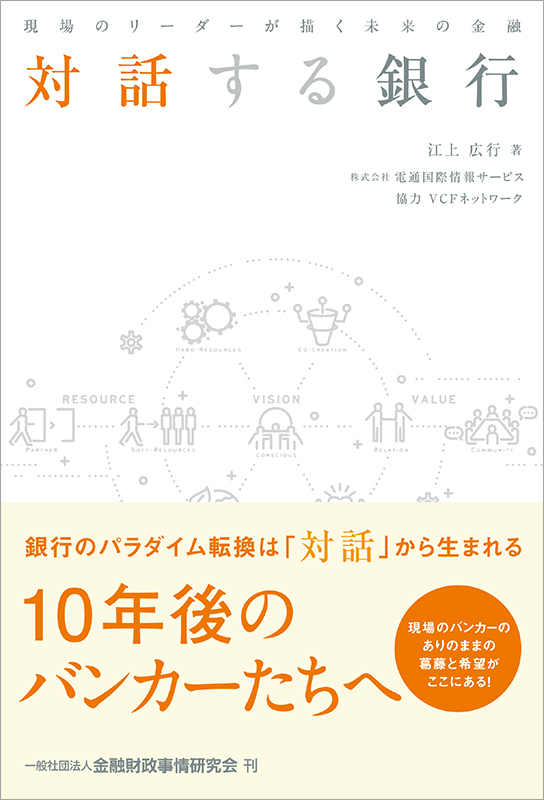
But please remember: dialogue can begin anywhere within an organization and can serve as a starting point for change that spreads outward. Every case study introduced in this column undoubtedly began with a conversation initiated by someone, somewhere.
Was this article helpful?
Share this article


Newsletter registration is here
We select and publish important news every day
For inquiries about this article
Back Numbers


Author
Hiroyuki Egami
Dentsu International Information Services, Inc. (ISID)
Financial Solutions Division Financial Business Strategy Department VCF Group
Marketing Professional