
Note: This website was automatically translated, so some terms or nuances may not be completely accurate.
 Why Businesses Without Dialogue Fail [5/6]
The Era of Business Engaging in Dialogue with Society
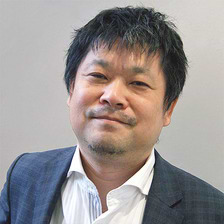
Hiroyuki Egami
Dentsu International Information Services, Inc. (ISID)
This column is now the fifth of six installments. The remaining two will explore "dialogue with an outward-facing society" and "dialogue with one's inner self" as conversation partners. This time, as part of "dialogue with an outward-facing society," we discuss how we should engage with the VUCA society—a business world where we continually face challenges.
This column is structured in three parts.
■ The Era of Shareholder Capitalism
■ From CSR to CSV
■ Consciousness of the Wholeness of the Ecosystem
The Era of Shareholder Capitalism
Business exists as a part within the social and economic ecosystem to which it belongs. However, companies have historically been able to operate without consciously engaging in dialogue with the surrounding society. That is, until now.
The stakeholders we must consider in the business world tend to expand with the times. During the era of shareholder capitalism established in Japan in the 1960s, businesses could function adequately by focusing on shareholders while also considering the market and employees. In other words, the parties requiring dialogue were only those visible in the immediate vicinity.
As social and environmental issues surfaced, businesses increasingly needed to consider the impact on diverse stakeholders: employees, local communities, the nation as a whole, and the global economy. Business was no longer just about selecting or controlling markets; it also required awareness of its previously unacknowledged impact on society.
CSR to CSV
Amidst this, the concept of CSR (Corporate Social Responsibility) gained traction in the 1990s. However, CSR tended to manifest as donations or community support activities outside the core business domain. Companies did not reach the point of sacrificing profits for CSR activities. At this stage, the channels for corporate dialogue with society remained limited.
Entering the 2010s, the concept of CSV (Creating Shared Value) emerged, aiming to leverage the resolution of social issues as a business competitive strategy. CSV posits that confronting social issues directly within the core business domain itself becomes a competitive advantage. Here, companies are required to engage in broader dialogue with society.
Unfortunately, even today, when terms like CSR and CSV are well-established, the disconnect between business and society persists. This disconnect stems from causes beyond the limited number of companies implementing CSR or CSV.
CSR and CSV are often implemented not based on a company's management philosophy or vision, but merely as a "reactive response" to demands from society or shareholders. In reality, most CSR or CSV personnel within Japanese companies exist independently from the company's core business. It is rare for these initiatives to be implemented as a fundamental part of the business, tied to its philosophy or vision.
Ultimately, both CSR and CSV were merely communication actions serving as "reactive responses" for companies seeking societal recognition of their existence. This differs from the concept of "dialogue" consistently emphasized in this column. "Dialogue" refers to the act of fostering emergence from a holistic perspective that views the parties involved as part of a larger, mutually influencing system.
Awareness of the Ecosystem's Holism
To elevate business and society to the level of dialogue, a crucial shift is required in the business perspective. Let go of the previous paradigm of observing and understanding peripheral society from within, centered on one's own business. Move your perspective itself out from your own company and place it on the side of the surrounding society.
This simultaneously means becoming conscious of the wholeness of the surrounding society's ecosystem. To use the human body as an analogy, it's not about viewing other organs like the brain or kidneys from the perspective of the heart; rather, it's about placing your viewpoint on the whole human body and understanding the heart's existence within that context.
Similarly in business, we must view the existence of our own business from the perspective of the entire societal system. When we see the full picture of the ecosystem, a new form of "dialogue" within business becomes visible.

Let me share a concrete example. In the German city of Bochum, there is a social bank called GLS Bank. A social bank is a financial institution specializing in lending to businesses addressing social issues, such as those in the environment, education, and agriculture. For instance, in Germany, following the 2011 Great East Japan Earthquake, momentum for renewable energy grew. Amidst this, this bank rapidly increased its lending and expanded its business. GLS Bank is also said to have significantly influenced the expansion of renewable energy in Germany's ongoing shift away from nuclear power, even before this period.
GLS Bank operates under the management philosophy of being "a bank for people." Beyond specializing in loans for solving social issues, it also advocates to depositors that "depositing your money with a bank carries social responsibility." Depositors, resonating with this philosophy, deposit their money to help create the kind of society they wish to leave for their children and grandchildren. Depositors benefit from a system that transparently discloses the details of funded projects. GLS Bank also provides events and community-building opportunities to connect them.
GLS Bank operates as a social bank neither to fulfill social responsibility nor to generate high profits through social ventures. Its core management perspective focuses on the ecosystem as a whole. GLS Bank exists as one necessary function within this ecosystem, engaging in dialogue with society. Its view is that profits are necessary as a means to sustain its operations.
As we enter the VUCA era, social challenges like environmental issues, inequality, and healthcare/education problems grow increasingly complex. Business is inseparable from solving these challenges. An era where businesses consciously engage with the ecosystem's wholeness and dialogue with society is fast approaching.
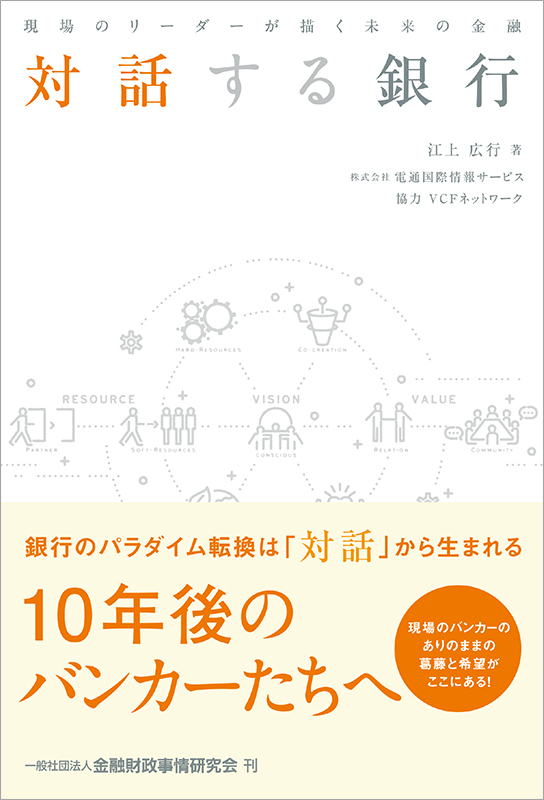
The author of this column, Hiroyuki Egami, depicts how a paradigm shift in the financial industry is emerging from "dialogue" in his book published in July, 'The Bank That Engages in Dialogue: A Future Vision of Finance Drawn by Frontline Leaders'. The themes explored in this "dialogue" are rich and varied, including "leadership," "decentralized management," and "the essence of money." Even if you are not directly involved in the financial industry, we highly recommend picking up a copy.
Was this article helpful?
Share this article


Newsletter registration is here
We select and publish important news every day
For inquiries about this article
Back Numbers

Author
Hiroyuki Egami
Dentsu International Information Services, Inc. (ISID)
Financial Solutions Division Financial Business Strategy Department VCF Group
Marketing Professional