Note: This website was automatically translated, so some terms or nuances may not be completely accurate.
 How Will TripTech Change Inbound Tourism Operations? [1/2]
"SNS Big Data" Accelerates Inbound Marketing
Dentsu Inc. Social Insight Lab explores new marketing and business opportunities based on diverse data emerging from social media. Rui Egashira, a founding member, introduces emerging business opportunities, including the use of SNS big data in inbound marketing and AI-powered translation services.
<Table of Contents>
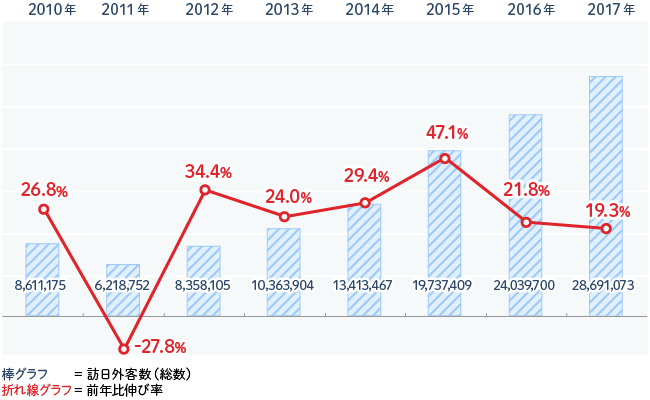
▼Inbound tourists hit record high of 28.69 million. Tourism industry stakeholders also increasing
▼SNS Big Data Analysis Quickly Captures Chinese Tourists' Shift to "Experience-Based Consumption"
▼Solutions Born from SNS Analysis: "Most Hidden Gem Spots" and "Incidental Sightseeing"
▼The challenge in transforming massive, multilingual SNS data into marketing data is "translation accuracy"
▼ "TripTech" is transforming inbound marketing!
Inbound tourists hit a record high of 28.69 million. Tourism industry stakeholders also increased
In 2017, the number of inbound tourists exceeded 28.69 million, setting a new record. Demand for inbound (foreign tourist) marketing is growing across industries including travel agencies, hotels, airlines, railways, and distribution/retail.
Furthermore, inbound marketing initiatives are expanding into various peripheral fields. These include analysis services for local governments formulating tourism policies, information distribution services for foreign nationals, and machine translation services—not just for companies directly interacting with tourists.
Looking at tourists themselves, repeat visitors coming for their second or third time to Japan have also increased. Consequently, interest is growing not only in the usual tourist destinations but also in "regional areas even Japanese people haven't visited" and "various activities beyond just sightseeing and shopping."
Let's examine the latest inbound marketing approaches in light of these developments.
SNS Big Data Analysis Quickly Captures the "Shift to Experiential Consumption" Among Chinese Tourists
Surveys on the actual conditions of foreign tourists visiting Japan have been conducted in the past, but the diversity of languages spoken posed a major challenge. Survey methods also centered on "direct questionnaires at stations and tourist attractions," making it difficult to secure sufficient data volume for the vast number of visitors and grasp the true situation.
Amidst this, the marketing application of SNS big data has begun to gain attention.

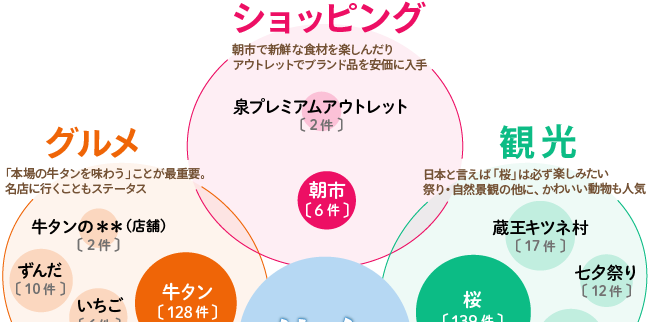
Here's an example of SNS big data utilization. In 2015, Dentsu Social Insight Lab, Dentsu Hokkaido Inc., and NTT DATA were commissioned by the Hokkaido Prefectural Government to analyze the preferences and movements of foreign tourists visiting Hokkaido.
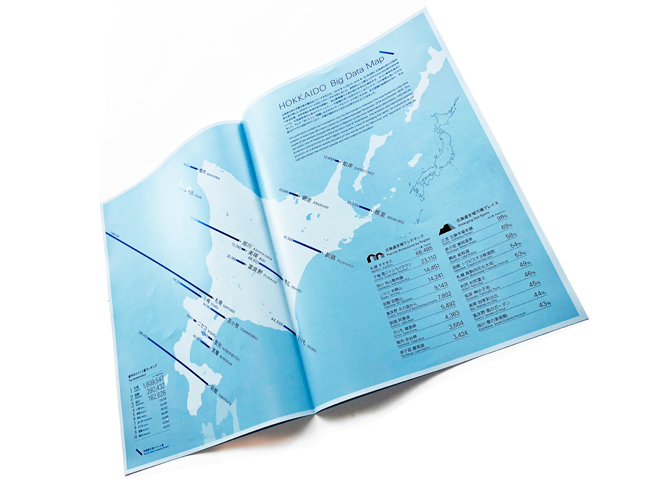
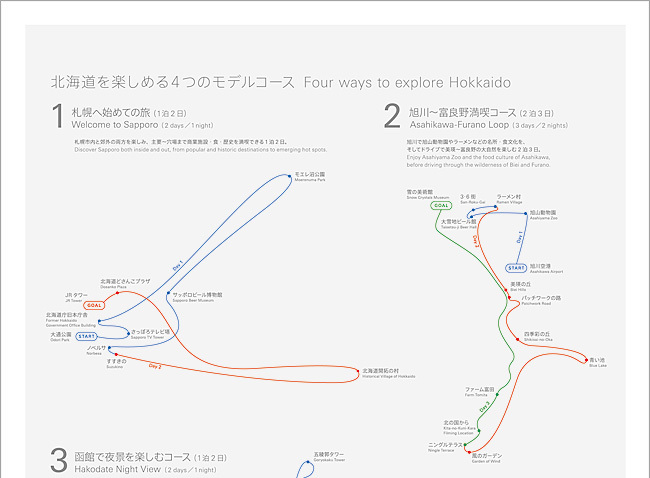
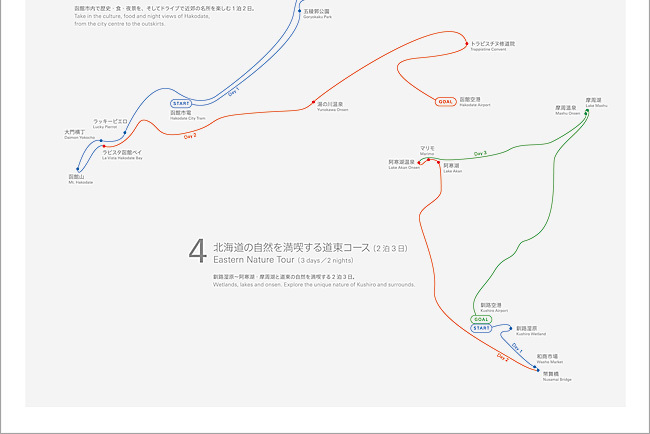
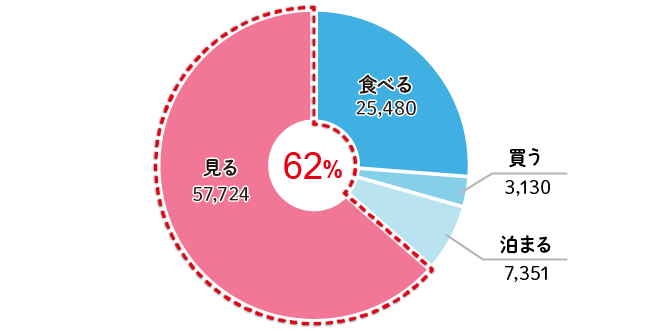
At the time, media coverage focused on Chinese tourists' "spending sprees." However, analyzing actual Chinese tourist posts in this Hokkaido study revealed that posts about experiences (experiential tourism) outnumbered those about goods (souvenirs and shopping) compared to the previous year. This showed a shift in tourism behavior from goods consumption to experience consumption.
We believe this, combined with the characteristics of SNS as a medium, allowed us to quickly capture signs of a phenomenon likely to occur in the near future.
Solutions Born from SNS Analysis: "Most Hidden Gem Spots" and "Side Trips"
Traditionally, inbound marketing focused heavily on the need to "analyze" the dynamics and preferences of inbound tourists. Dentsu Inc. received numerous such inquiries from government agencies, local governments, public transportation operators, and tourism-related businesses.
However, with the current rapid increase in inbound tourists, there is now a growing demand for "concrete action plans" that go beyond mere analysis.
Amidst this shift, SNS big data has become increasingly valuable as a marketing resource. It reveals not only visitor "movements" (like travel routes and local stay durations) but also "preferences" – what they enjoy and how they evaluate tourism resources.
Here, we introduce two solutions developed by Dentsu Inc. Social Insight Lab in collaboration with clients. These solutions extract the voices of foreign tourists visiting the Tohoku region through SNS analysis and frame them into a framework.
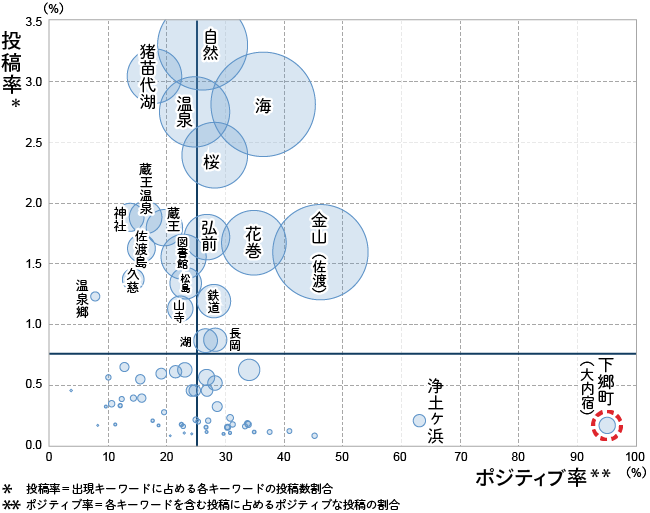
1. Most Hidden Gem Points (MAP) – An indicator for discovering hidden tourist spots
This framework identifies "tourist spots with relatively low overall discussion volume but a high share of positive posts from visitors" based on social media analysis results.
It quantitatively identifies lesser-known, "hidden gem" tourist spots that are not yet widely known and should be promoted.
2. Incidental Sightseeing and Impulse Souvenir Analysis
We analyze "keywords co-occurring (posted simultaneously) with specific place names and receiving high positive ratings" from five perspectives: sightseeing, gourmet, transportation, shopping, and sports. This extracts "places worth visiting while nearby" and "recommended souvenirs available nearby."

The challenge in transforming massive, multilingual SNS data into marketing data is "translation accuracy."
There is no doubt that SNS big data is an effective marketing resource. However, no matter how advanced the analysis technology, if the data itself is inaccurate, the output will not be good. "Translation accuracy" is especially vital for inbound marketing.
In analyzing SNS big data, the entire workflow is crucial: how to quickly translate large volumes of multilingual data (English, Chinese, Korean, etc.), accurately convert it into Japanese data, and then process it for analysis.
For example, when our Social Insight Lab used a well-known machine translation engine to collect and analyze "foreigners' comments about traveling in Tohoku, Japan" from SNS, we encountered an issue where the famous Sendai warlord, Date Masamune (DATE MASAMUNE), was translated as "Date Masamune." Accurately translating regional proper nouns like place names, personal names, and souvenirs across sometimes over a million posts is difficult with existing machine translation solutions.
In other words, a solution is needed that accurately translates foreign visitors' social media comments in Japan, including tourism terminology and regional proper nouns.
TripTech is transforming inbound marketing!
Let's organize the entire flow of inbound marketing.
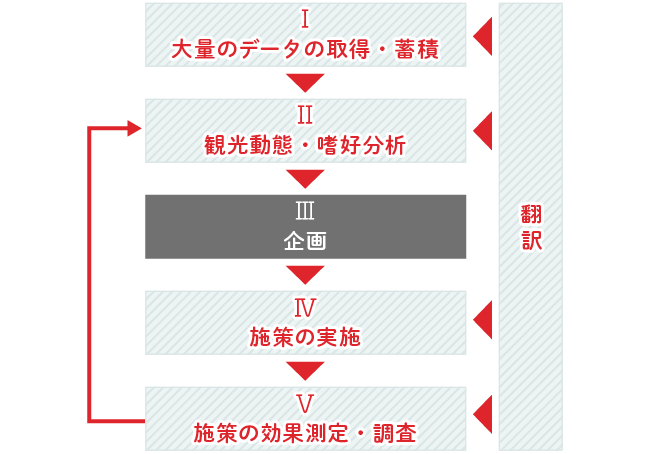
As this diagram shows, high-precision translation isn't only needed in the "Tourism Dynamics & Preference Analysis" phase. It's constantly required during the "Campaign Implementation" stage and the "Campaign Effectiveness Measurement & Research" stage too. Furthermore, beyond simple translation, technology for quickly processing large volumes of data is essential at each stage. This "massive multilingual translation" challenge has also been a major factor driving up inbound marketing costs.
To solve these marketing challenges related to inbound tourism, we need technology that digitally captures the "journey" and drives the PDCA cycle. This is where the integration of multilingual translation and marketing initiatives comes into focus. The urgent need is for digital utilization that drives "travel marketing" – what we might call "Triptech."
<Key Points of This Article>
① Demand for inbound-focused business is growing not only in B2C but also in B2B.
② While SNS big data can reveal "signs of future needs" among inbound tourists, significant barriers like translation costs and accuracy exist for utilizing it as a data source.
③ There is a growing need to digitize tourism-related marketing, including translation, to drive inbound "travel" marketing. The market is seeking "TripTech." Next time, we will speak with Mikiko Yamamoto of NTT East Japan, who is involved in developing the inbound-specialized translation AI "Hikari Cloud cototoba," about the future of inbound tourism marketing and the potential of translation AI.
Was this article helpful?
Share this article


Newsletter registration is here
We select and publish important news every day
For inquiries about this article
Author

Egashira Rui
Dentsu Inc.
Data & Technology Center
Director