
Note: This website was automatically translated, so some terms or nuances may not be completely accurate.
 Recruitment challenges are management challenges. Bring creativity to recruitment. [1/14]
Post-COVID shock, recruitment shifts from academic background screening to #tag searches.
Yuichiro Kojima
The trend toward earlier and year-round recruitment is accelerating, transforming the hiring market.
Furthermore, this year, due to the impact of the novel coronavirus disease, both companies and students are operating in an environment vastly different from before.
What should companies focus on in their recruitment activities going forward?
First, let's look at the results of the job hunting awareness survey conducted by Dentsu Inc. Wakamon (*) this past February.
※Dentsu Inc. Wakamon (Dentsu Inc. Youth Research Department): A planning & creative unit whose mission is to design the relationship between young people and society. Through redesigning job hunting, it produces new ways for young people and companies to connect.
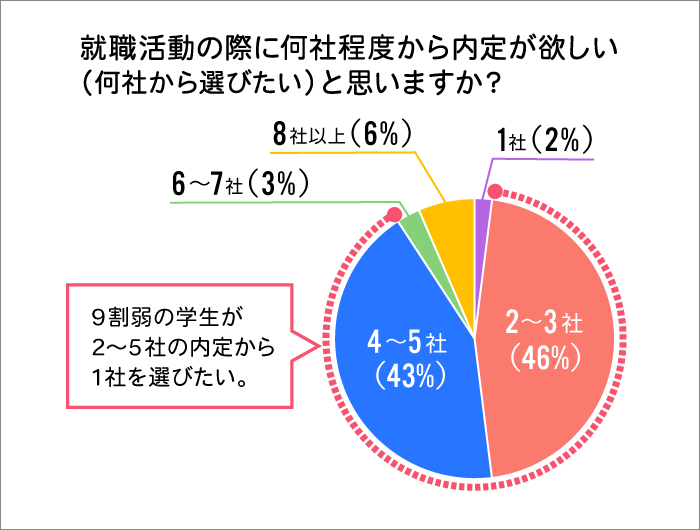
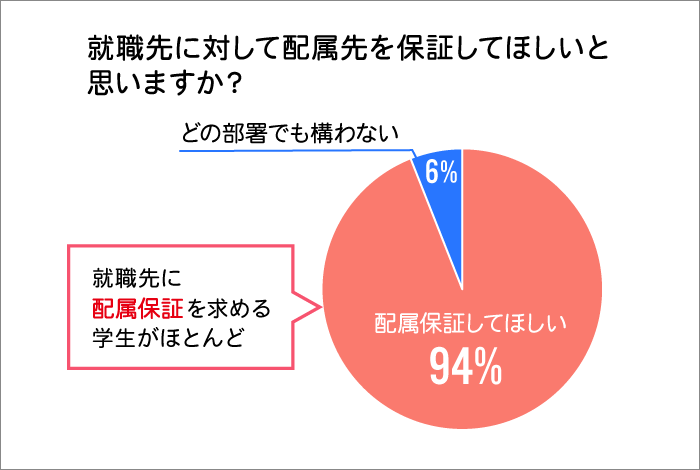
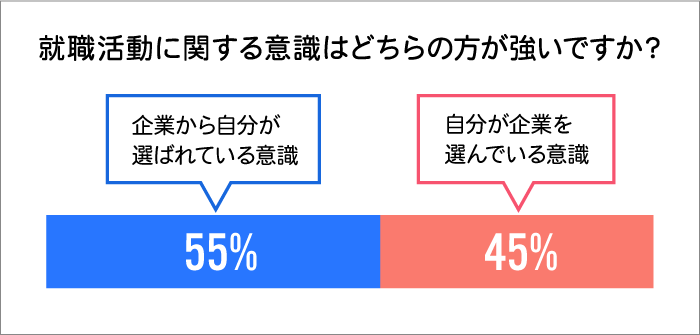
The shift in job-hunting students' attitudes is so dramatic that the difference in how surprised people are by these results reveals generational gaps.
From job hunting where companies choose students to job hunting where students choose companies
Labor shortages are a nationwide challenge in Japan, but this trend is particularly pronounced among the younger generation, affected by declining birthrates. The trend among these highly sought-after young job seekers is toward foreign companies like consulting firms. Japanese companies are now struggling to attract top students. As a result, students increasingly perceive this as a "seller's market."
As the opening data indicates, students are narrowing their job search to specific companies and demanding guarantees of placement in their desired departments. The perception that "students are choosing companies" is strong, suggesting that companies and students are increasingly on equal footing in the job-hunting process.
Now, let's consider the corporate perspective. Major Japanese companies, in particular, have traditionally viewed recruitment as "a place to select students." However, it is now also "a place where companies are selected by students." Consequently, recruitment now requires a branding and marketing perspective. In fact, Dentsu Inc. has received numerous inquiries about this.
Historically, when Dentsu Inc. worked with clients, the primary point of contact was the advertising or public relations department. However, for recruitment planning, we increasingly collaborate with HR departments, recruitment teams, or hybrid teams combining advertising and HR functions.
We also frequently hear requests to link recruitment branding with internal awareness reform (inner branding) or to leverage it for branding beyond students (corporate branding).
HR Departments Exhausted by Year-Round Recruitment
The recruitment market is undergoing significant changes, and this year brings further shifts. The so-called "job hunting rules" previously established by Keidanren (Japan Business Federation) are effectively being abolished. Until now, large corporations affiliated with Keidanren respected students' academic commitments by setting March as the start date for recruitment publicity (such as launching recruitment websites) and June as the start date for recruitment screening (commencing interviews).
However, foreign companies not affiliated with Keidanren and venture companies are not bound by these rules. Furthermore, since these rules are essentially a gentlemen's agreement, more companies are breaking them. Companies want to secure top students as early as possible. This means that if companies strictly adhere to the start date for recruitment activities, they often find that most of the top talent has already been snapped up by the time they begin.
The current reality is that the more Japanese conglomerates adhere to the rules, the fewer top talents join them. In response, Keidanren has announced a review of these "job hunting rules."
On the other hand, abolishing these "job hunting rules" will significantly increase the workload for HR and recruitment teams. While recruitment activities previously peaked from winter to early summer, the removal of this time boundary will shift to "year-round recruitment." This means a state of constant busyness throughout the year.
Furthermore, since contacting students only in the winter of their third year is too late, companies will need to start reaching out earlier to first and second-year students—who were not previously recruitment targets—to build a talent pool.
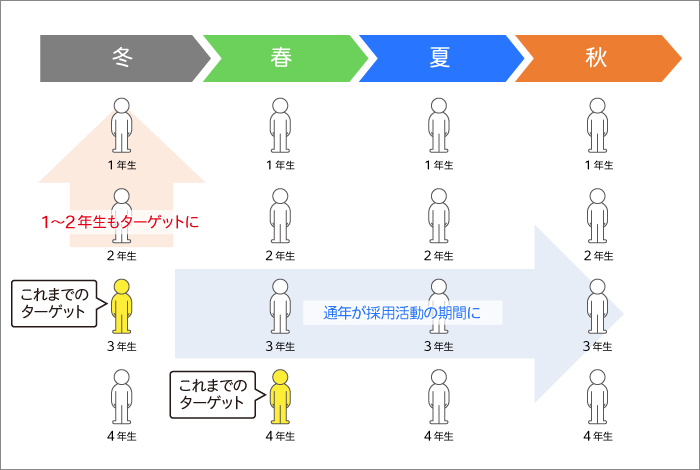
Simply put, the recruitment market will now see twice the timeframe and three times the target pool. Reflecting this trend, outsourcing for new graduate recruitment is also advancing. It's not uncommon for companies to outsource interviewers for recruitment interviews.
The COVID-19 shock accelerates the shift to online
Compounding these recruitment changes is the impact of the novel coronavirus. Recruitment-related events and interviews, which would normally commence following the March lifting of recruitment publicity restrictions, have been canceled across the board this year.
Online events and interviews have emerged as the replacement. While online recruitment was previously used to some extent for students in regional areas, it is now being employed for students in the Tokyo metropolitan area as well.
Dentsu Inc. also held a live streaming event this March called DENTSU RECRUIT LIVE.
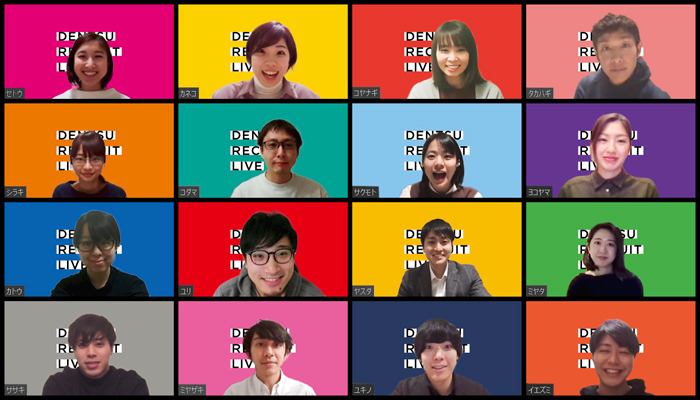
Online events eliminate location barriers, helping to reduce regional disparities in job hunting. Consequently, this event also saw significant participation from international students. Online job hunting is expected to continue even after the pandemic subsides.
From Academic Background Filtering to #Tag Search
A seller's market, year-round recruitment, hiring all academic years, online shifts, and resource-constrained recruitment teams. This "new era of recruitment," impacted by these factors, is expected to bring significant changes to student screening.
Traditionally, students advancing to offline interviews were often screened through academic background filters or aptitude tests like SPI. However, even large corporations must meet with thousands of students. Moreover, discerning a student's potential in a 10- or 15-minute individual or group interview is challenging even for professionals.
Shifting to year-round recruitment and hiring all academic years will only amplify this burden. Consequently, online screening methods will be needed to replace academic background checks and test centers. Recruitment is entering a phase where companies seek out students, rather than students seeking companies.
Today's youth commonly search for information using social media hashtags. Companies searching for students will likely adopt similar "#tag searches."
Tags reflecting real-world attributes, activities, and preferences will likely become functional screening tools. Academic backgrounds and qualifications will become just one among countless tags. Platforms capable of delivering offers tailored to student attributes are already emerging.
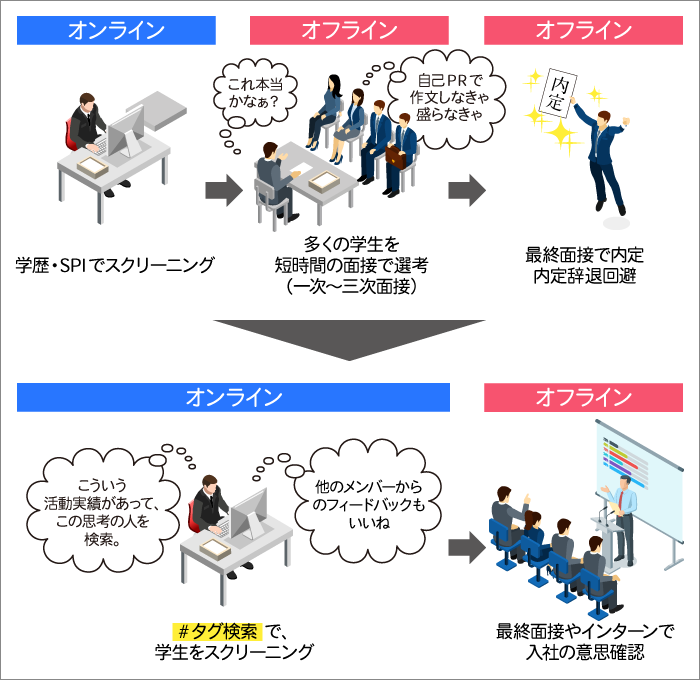
Furthermore, conducting screening online and confirming job acceptance offline should reduce the burden on recruitment teams. If the shift to online becomes the norm due to the COVID-19 shock, recruitment activities are likely to move in this direction.
We've discussed the rapidly changing recruitment landscape thus far. The major bottleneck in adapting to these changes lies in the mindset of upper management and executives.
If they still view recruitment as "a place where students choose us, because major Japanese companies are popular with top students," neither the recruitment team's budget nor resources will increase. This could ultimately lead to an inability to adapt to change, causing top students to leave and potentially weakening the company's overall strength.
Recruitment is a management issue. While headhunting top talent is one approach, shifting the mindset toward recruiting raw talent as new graduates is a crucial first step in internal reform.

A planning & creative unit dedicated to thoroughly understanding the realities of young people in their teens and twenties, primarily high school and university students, and exploring hints for building better relationships between youth and society.
https://dentsu-wakamon.com/
<Survey Overview>
[Source] "Circle Up Survey"
【Survey Period】February 16–20, 2020
【Survey Participants】University freshmen to seniors registered on the university club-specific app "Circle Up"
【Total Sample Size】186 students
【Survey Area】Nationwide
Was this article helpful?
Share this article


Newsletter registration is here
We select and publish important news every day
For inquiries about this article
Author