Note: This website was automatically translated, so some terms or nuances may not be completely accurate.
 Would you like to collaborate with Dentsu Inc. and AI in industry-academia partnerships? [1/1]
Which talent predicted by students' AI would be a hit in 2020? ~A Form of Industry-Academia Collaboration Benefiting Both Companies and Universities~
In recent years, the importance of industry-academia collaboration between companies and universities has grown significantly in the fields of AI and data science. Universities are establishing frameworks for such collaboration in these areas, and Dentsu Data & Technology Center's AI Solutions Department has also been advancing initiatives since last year. In this series, Hiroyuki Fukuda from the department will introduce the challenges in AI utilization in Japan, the benefits of industry-academia collaboration, and Dentsu Inc.'s unique perspective, all gained through our collaborations with various universities.
What are the challenges in Japan's AI adoption?
Globally, companies are actively conducting cutting-edge research. For instance, at major international conferences, Google now leads in the number of papers submitted, surpassing universities and other research institutions. Meanwhile, it's increasingly common for university professors to actively participate in corporate research, blurring the lines between corporate and academic research. In contrast, collaboration between companies and universities in Japan still falls short.
In reality, the key to AI utilization lies not only in the algorithms themselves but also in identifying problems and accessing data. While universities possess resources like supercomputers and researchers with advanced analytical skills, they reportedly have limited opportunities to engage with society's "real-world" challenges and data.
Conversely, while companies generate challenges and data daily, they often fail to fully leverage them. In this sense, providing these challenges and data from companies to universities can be mutually beneficial for both parties.
While Japan is often said to lag in AI adoption, Dentsu Inc., as a solutions company, regularly confronts diverse "real-world" challenges and data. By providing these challenges and data to research institutions, Dentsu Inc. aims to accelerate the practical application of AI in society, similar to overseas trends, and has initiated this effort.
Industry-Academia Collaboration with Tohoku University
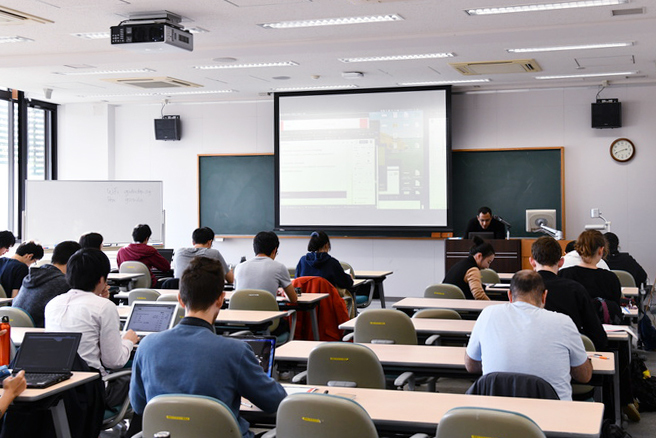
The first initiative involved collaboration with Tohoku University's Graduate School of Information Sciences, home to many renowned AI researchers. Within an 8-session graduate-level course titled "Interdisciplinary Information Science," students tackled two AI challenges: "Predicting the Effectiveness of Digital Advertising" and "Predicting Talents Set to Hit Big in 2020." These are precisely the challenges Dentsu Inc. has been addressing over the past few years. Approximately ten master's students participated, divided into four teams.
To elaborate further, predicting the effectiveness of digital advertising involves forecasting how often internet banner ads will be clicked. Using past delivery data, machine learning techniques are applied to predict click rates based on the characteristics of the banner creative and the delivery settings.
For the talent prediction challenge, students used social media data and text data from TV broadcasts to forecast which talents would become hits in 2020 (the lectures ran from November 2019 to January 2020).
The first lecture featured an introduction to Dentsu Inc. and the projects from Dentsu Inc. representatives, followed by a Q&A session. After that, students worked remotely once a week on building prediction models, with Dentsu Inc. members communicating as needed via an online bulletin board (as expected from information science students, this communication style posed no issues at all). The final session concluded with presentations from each team.
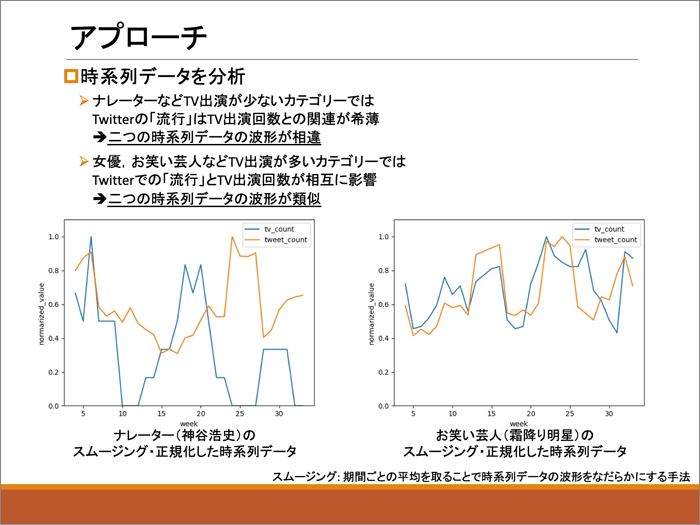
Each presentation was a masterpiece. For Dentsu Inc., the key discovery was finding various new avenues for solutions to challenges we've tackled over the past few years. While their high analytical and modeling skills were expected, the students' fresh perspectives also revealed several approaches and angles we hadn't tried before.
How was the industry-academia collaboration with Dentsu Inc.?
From the university and students' perspective, how was this industry-academia collaboration? We interviewed professors and students and present their insights below.
Using data actually employed in corporate settings and analyzing topics companies want to understand was a novel approach. The uniqueness of the themes and the novelty of the data are crucial elements when publishing data science research findings as papers, and I felt that collaboration with companies facilitates the creation of such work. (Associate Professor Kazunori Yamada, Graduate School of Information Science, Specialization: Data Science)
While the analysis target and general direction were set, there was room for students to think independently, making it a well-chosen theme in terms of difficulty. AI utilization will be indispensable for both those pursuing research in academia and those working in industry, so we need to further enhance these courses. (Assistant Professor Samy Baladram, Graduate School of Information Science, Specialization: Data Science)
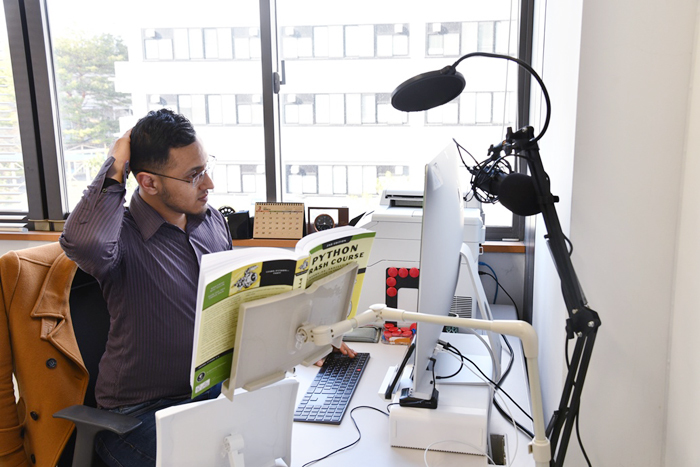
We also gathered feedback on this initiative from graduate students at Tohoku University's Graduate School of Information Sciences.
Using haphazardly collected data often fails to define clear objectives, leading to diminished motivation and preventing students from reaching the crucial analysis phase. The greatest benefit is that companies provide both the "significance of the analysis" and "data with guaranteed validity" as a package. (Yuki Goto, 2nd-year Master's student, Specialization: Communication Engineering)
For students considering employment, the benefit lies in exposure to data and topics handled by companies. I learned that real-world data is far more unstructured and contains more missing values than imagined, requiring significant time for preprocessing. (Yagi Shimei, 2nd-year Master's student, Specialization: Machine Learning)
The program offered a high degree of freedom, frequently encouraging independent thinking in setting research questions and selecting analytical methods. The content emphasized practical business applications, making it easier to envision how I would approach problem-solving in an actual job. (Kei Arai, 2nd-year Master's student, Specialization: Cognitive Informatics)
Which talent will be a hit in 2020, according to AI predictions?
What did you think? While our efforts are still in their early stages, we intend to continue these industry-academia collaborations moving forward. Now, finally, the AI-predicted hit talent for 2020 that everyone's curious about...
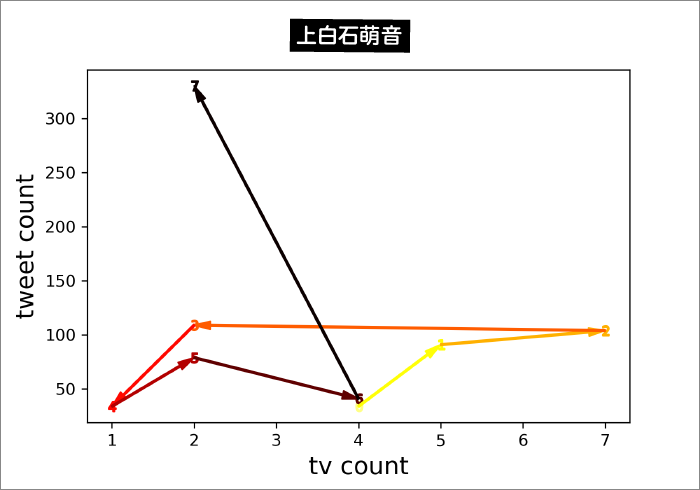
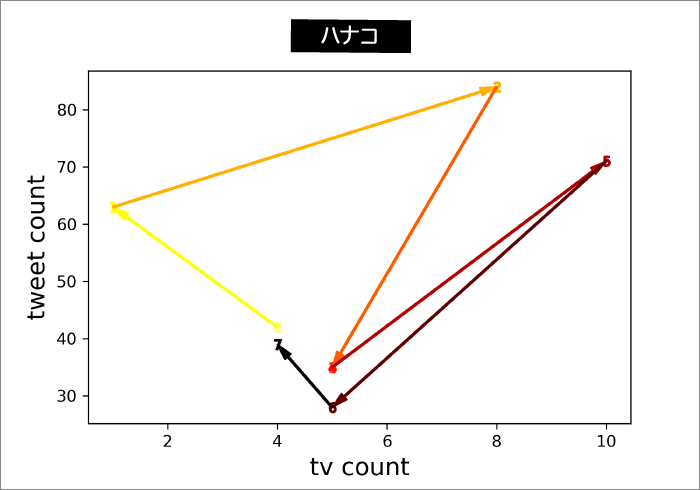
It was Mone Kamishiraishi. Her recent TBS drama "Love Will Continue Forever" (final episode aired March 17) was just a hot topic. Hanako, the winner of King of Conte 2018, seems to be steadily increasing their exposure, so future hits seem promising.
The graph was created by students, with the horizontal axis showing weekly TV appearances and the vertical axis showing weekly SNS mentions. Time progresses from light yellow to black. The AI learned these fluctuation patterns to make its predictions.
We plan to continue introducing our collaborations with universities in future installments. We would be delighted if you would continue to follow our work.
Was this article helpful?
Share this article


Newsletter registration is here
We select and publish important news every day
For inquiries about this article
Author
Hiroyuki Fukuda
Dentsu Inc.
Data & Technology Center