
Note: This website was automatically translated, so some terms or nuances may not be completely accurate.
 What exactly is "career design"? [1/4]
A career is a "path."

Akira Sakai
Creative Journey Representative
Are you familiar with the concept (or system) of "alumni"? Originally meaning "graduates/classmates/former students," the term has evolved to signify "a gathering of former employees of a company." Overseas, effectively utilizing alumni who have left a company as valuable human resources is commonplace. This series will explore the essence of "career design" through the emerging trend of positioning such "alumni" as a core institutional pillar for future business strategy.
What exactly is a "career"?
If asked to translate the word "career" into Japanese, how would you respond? Many would likely answer "rekigyo" (career history) or "jitsumei" (achievements). Some might mention "success," "advancement," or perhaps "social status" and "title (position)." This is why phrases like "utilize one's career" or "discard one's career" are used. Hearing "career woman" conjures an image of a working woman with social standing. "Career advancement" essentially means promotion or moving up the ladder.
Of course, the English word "career" does carry such meanings. However, open an English-Japanese dictionary. The top Japanese translation listed is "lifetime" or "life's journey." Phrases like "make the most of one's lifetime" or "discard one's lifetime" don't form coherent sentences.
As for "lifetime woman" or "lifetime advancement," they make no sense at all.
Fundamentally, the etymology of "career" comes from the Latin word for "the ruts left by a passing chariot." In other words, a career is a "path." The journey you've walked in the past, the scenery you see now, the scenery you feel, the future stretching ahead... All of that constitutes your "career."

With that in mind, let's consider the term "career design," which is increasingly permeating society. Based on the above clarification, we realize that interpreting it as "designing success (or methods for advancement)" is mistaken. If there were a method to design success or advancement, everyone would be practicing it.
Career design is about designing the path of one's life. It's not about designing success or advancement, but about correctly recognizing the path you've walked so far and the place you stand now, and designing the path you should take from here on. This is something anyone can do. Of course, success is not guaranteed. There may be hardships and failures. But you cannot stop moving forward. Stopping career design means stopping your life. As "seniority-based promotion" and "lifetime employment" are crumbling, "career design" is now the hottest topic, a theme that individuals and companies must confront right now.
What exactly is "human resources"?
Like "career," the term "human resources" carries fixed connotations. What comes to mind when you hear "HR"? Management, control, discipline, evaluations, promotions, political maneuvering, demotions—don't these images inevitably spring to mind? But fundamentally, the term "human resources" originates from
"to be troubled by human affairs" (=to struggle with human relationships)
"To exhaust all human efforts" (i.e., to do everything humanly possible)
as seen in its usage.
"human relationships" (= relationships)
"human potential" (manpower/human ingenuity)
In advertising terms, the former is "marketing," and the latter is "creativity." Shouldn't this perspective be precisely what future "human resources" and future "career design" focus on? Sowing the seeds of a career. Nurturing a career to sprout. Cultivating a career. Designing one's own lifelong journey. Companies support this with all their might. This requires both the cool analytical power of marketing and the thrilling excitement of creativity.
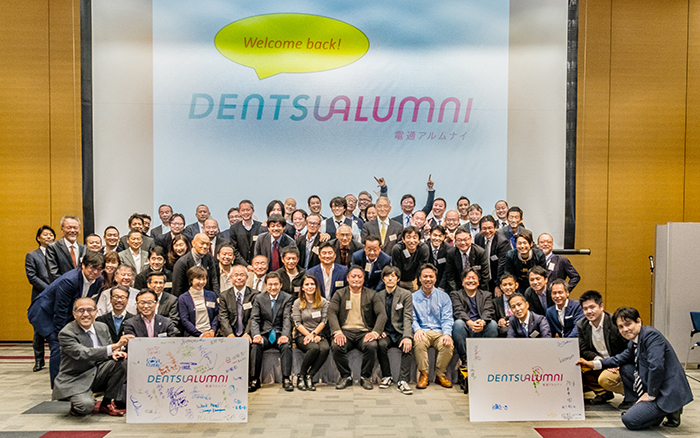
This series will explore the essence and future of "career design." We will introduce examples and phenomena like "alumni" that clearly illustrate the future direction of HR and careers, along with the initiatives of the "Dentsu Inc. Alumni Team," which aims to build new relationships between individuals and society that extend beyond retirement. Through comments from various professionals and stakeholders inside and outside the company, offering diverse perspectives, we will delve into these themes.
Read the interview article featuring Mr. Daimon of Dentsu Inc. Career Design Bureau and Mr. Akira Sakai (Representative of Creative Journey), a Dentsu Inc. alumnus, at the Alumni Lab here.
Was this article helpful?
Share this article


Newsletter registration is here
We select and publish important news every day
For inquiries about this article
Author
Akira Sakai
Creative Journey Representative
Creative Journey Co., Ltd. Representative / Dentsu Inc. Alumni Network Manager