
Note: This website was automatically translated, so some terms or nuances may not be completely accurate.
 What exactly is "career design"? [2/4]
The path is forged beyond "trust."
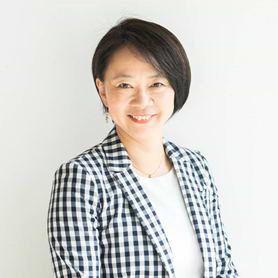
Makiko Shinoda
Yell Corporation
Are you familiar with the concept (system) of "alumni"? Originally meaning "graduates/classmates/former students," the term evolved to signify "a gathering of former employees of a company." Overseas, effectively utilizing alumni who have left a company as valuable human resources is commonplace. This series will explore the essence of "career design" by examining the trend of positioning such "alumni" as a core institutional pillar for future business strategies.
Past experience is merely a hint for the future
To share my own background: After graduating university, I worked at a bank. But I quit after four years and moved to the US. After earning my MBA and returning to Japan, I worked primarily in finance roles at various companies. Then, in my 40s, came "Hobonichi" with Shigesato Itoi. Looking back now, it seems rather chaotic, but I had my own consistent conviction.

That core belief is: "I want to prioritize the life I want to live." What surprised me most when I joined the bank was how frequent the personnel transfers were. It was a workplace where things like, "Hey, you're going to Hokkaido next month," were just par for the course. Sure, you should've researched that before taking the job, but I suddenly thought: What's up with not being able to choose where you live? That's where it started. That's when my career really began to move. Many people tend to cling to their so-called "career," but I believe your background is just a hint for the future, a single trigger.

Lifetime employment is like marrying your first love.
With lifetime employment and seniority systems starting to crumble, there must be quite a few people out there panicking, "What do I do? What do I do?" But think about it. I think lifetime employment is like marrying your first love. Of course, everyone has their own view on marriage, and spending your life with your first love is certainly one form of happiness. But happiness isn't limited to just one form. There should be more options. I think that's what a mature society is all about.
In an immature society, your life gets decided by things like family background or gender. We're not in that era anymore. Nationality, age, disability – these are becoming less significant. Isn't that a sign that society is starting to mature? As security and safety spread, life's choices expand. To put it dramatically, I think this is the "ultimate freedom" humanity is beginning to attain.
Businesses have a lifespan
Even more crucial is this: "Every business has a lifespan." Every single business has a finite lifespan. If you opened a "chōnmagé-only barbershop" today, it wouldn't catch on. The real problem is that companies make promises to their employees that they simply can't realistically keep, and that many people swallow those promises whole. I often get consultations from men in their late 40s asking, "I suddenly realized I'm being treated like second-class citizens at work. What should I do?" Honestly, I want to tell them: You should have thought about this by age 30! It might sound harsh, but no one will think about your life more than you do. Building your career isn't about establishing your position within a company. It's about confronting, and continuously confronting, your own abilities and the question: What do I truly want to do?
HR systems are merely tools
When confronting your own future, I believe what's crucial is this dual effort: the inward work of confronting your own talents, and the outward pursuit of continuously seeking the "place" where those talents can be expressed. Talent only blooms when given a "place." Take someone who's good at kicking a ball – that alone makes them just someone good at kicking a ball. It's only on the field (the place) of a soccer pitch that their talent truly blossoms.
And you must go out and claim that place yourself. If you think the company will eventually provide you with a decent place and authority, you're mistaken. It will never be given to you. It's better to think that way. HR systems, for both the company and the individual, are ultimately just tools. They are neither a guarantee nor insurance for the future. How you use that tool. Whether you master it. Or even create it. That, I believe, is what creativity truly is.

I see the Alumni program as a new trial.
Regarding the Dentsu Inc. Alumni program, my honest reaction was, "Huh? Dentsu Inc., you didn't have a system like this before?" Creatives interact freely, right? Inside and outside the company, regardless of age or gender. That image was very strong.
But the fact that this kind of interaction is expanding is incredibly exciting. Putting it into words might make it sound like "repurposing human resources," but it's not that. For both the company and the individual, I think this is a very exciting "trial." It's about sensitivity—the ability to respond flexibly to changes in the times and society. That's crucial. And here's the most important part: I believe what's essential when trying something new is "trusting the other person." Truly trusting someone you've just met. This isn't just a matter of spirit; it's a significant capability and a business skill. If you operate with a narrow mindset like "insiders are allies, outsiders are enemies," I don't think you can ever achieve a truly wonderful career design.
The interview article featuring Mr. Daimon from Dentsu Inc. Career Design Bureau and Mr. Akira Sakai (Representative Director of Creative Journey), a Dentsu Inc. alumnus, at Alm Lab can be found here.
Was this article helpful?
Share this article


Newsletter registration is here
We select and publish important news every day
For inquiries about this article

Author
Makiko Shinoda
Yell Corporation
Director