
Note: This website was automatically translated, so some terms or nuances may not be completely accurate.
 TV 2021: From the Front Lines of Television Today [1/2]
The Future of Television News: Opening Up to "Colorful & Seamless"
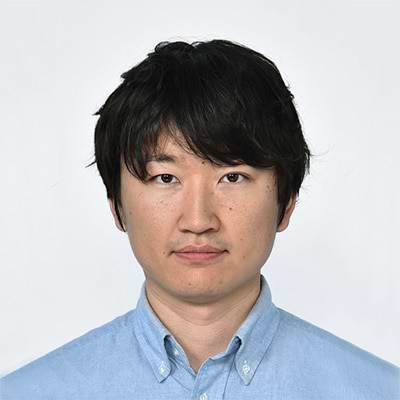
Watanabe Sei
TV Asahi Corporation
There are people doing interesting things in television content production.
They are not bound by fixed notions like "it's terrestrial broadcast" or "it's online."
They sincerely consider what form content should take in this era.
From this, we glimpse the future form of television in a new era.
This time, we interviewed Hikaru Watanabe, Digital Strategy Desk at TV Asahi's "Hodo Station." He shared insights gained during his assignment to ABEMA's news channel, bold approaches to online utilization, his feelings about "Hodo Station," and TV Asahi's company-wide initiative, the "Future Starts Here Project." He spoke about "the future of television" from the perspective of the front lines.
Television must break free from "drawing clear lines"
─After handling morning information programs at TV Asahi, you were seconded to AbemaTV's (now ABEMA) news channel. You then returned to TV Asahi to work on "Hodo Station." It's quite rare to have experience producing both terrestrial broadcasts and internet television. What were you doing at AbemaTV?
Watanabe: From 2016 for about four years, I primarily served as producer for the lunchtime program "Keyaki Hills" (now ABEMA Hills) and as a board member for the "ABEMA NEWS Channel," handling overall channel programming and branding.
My first task upon joining was analyzing popular online news media like NewsPicks and WIRED. I read numerous articles, personally assessing their content, tone and style, readership, and publication timing. This revealed a huge variation in content and level. Some articles were very hard-hitting and complex, while others were catchy and easy to understand – there was a gradient.
When I was in charge of television news programs, my primary focus was on delivering information in the most accessible way possible. I believed that "content must be created so that as many viewers as possible can understand it effortlessly" and that "viewers seek easy-to-understand information." This led me to become somewhat convinced that "television must be easy to understand."
However, through my experience planning branding and overall programming for the "ABEMA NEWS Channel," I realized this wasn't the case. There are truly many people out there with high awareness and a thirst for knowledge—people who want to understand the background of issues or seek complex information. Moreover, these very people are turning away from television and flocking to online news. I became acutely aware that we must create a broader range of content targeting a more diverse audience.
Later at AbemaTV, I launched the daytime news program "Keyaki Hills," consciously designed for diversity and nuance. I took on the role of producer for the show starting in 2018. In January 2020, I returned to TV Asahi as the digital desk manager for "Hodo Station."
Renewing "Hodo Station" with the theme of "Colorful"
─Mr. Watanabe, I understand you were in charge of revamping "Hodo Station" last year. Could you tell us about the theme for the revamp?
Watanabe: The first task I was assigned after transferring was the program's renewal. I proposed a new concept, and to my surprise, it was accepted. I never imagined my idea would be chosen.
The concept I proposed was "Colorful." Through my experience and insights gained at AbemaTV, I felt television news needed to be delivered with much greater variety. Instead of presenting one news story from a single perspective, it should be more multifaceted, more like a spectrum. I thought it would be wonderful if there were a news program that didn't try to make everything black and white, but instead conveyed stories in various colors, like a gradient. My seniors turned this concept into the program tagline "Today, All Sorts." From there, the new opening sequence for "Hodo Station" was born—a vision where light bursts from a prism into a spectrum, leading to a scene of colorful flowers blooming everywhere.
Video Production: Hideki Inaba (P.I.C.S. management)
─So that opening sequence was imbued with that kind of sentiment.
Watanabe: I'm always conscious that we must convey things as they are, with all their facets and perspectives. In today's world, where the internet presents countless viewpoints and ideas, I don't think people want news forced upon them in black and white, prioritizing simplicity above all else.
Clear, yet colorful. That is the form of reporting suited to our times, and I genuinely believe such reporting is the path to television's future.
Television is entering an era where it breathes online!
─How do you feel about the relationship between television and the internet?
Watanabe: I think television has entered an era where it must expand online as naturally as breathing.
Recently, I launched an initiative to distribute interview content from "Hodo Station" online ahead of its television broadcast. This wasn't a preview or a promotional video. We released the full-length content before the terrestrial broadcast, and I received some feedback asking, "Why would you do that?"
But from the perspective of the internet generation, the current situation—where you have the TV broadcast, then take two or three extra steps before the video finally gets released online—feels unnatural to me. Frankly, for the current generation, who are highly internet-savvy, it feels natural to find TV broadcasts inconvenient – you can't watch them whenever you want, and you can't rewind or fast-forward. So, I thought providing the content first in the form of online video, which is standard for them, would be far more considerate and familiar. To deliver content more directly to viewers, I believe 'D2C Inc. for TV news' is necessary.
On the other hand, television possesses a unique quality: the casual ease and serendipity of stumbling upon unknown content just by having it on. This is something the internet, where you actively seek out content, lacks. We approached this with the expectation that when viewers who watched the terrestrial broadcast, made with television quality, thought "I want to see more in depth," seamlessly accessing the full online version would create a synergistic effect, building excitement together.
Furthermore, I'm currently responsible for picking up topics trending among the working generation from online reactions, then using the investigative power of "Hodo Station" to dig deeper and broadcast them. This stems from the idea that "what's trending online = what the working generation cares about," aiming to flatten the divide between TV news and the internet as much as possible.
I often think that online expansion isn't something you just dive into with a sudden burst of energy. Of course, I don't believe in concepts like "TV is superior" or "online is inferior." For modern people, both are equal tools for obtaining information, and their relationship is natural. Since there are no barriers, I feel they must move seamlessly between each other. I believe this is the first step in "TV news DX."
The future of television begins here
─Finally, could you share your thoughts on "the power of television"? What appeal or value do you see in it?
Watanabe: What I see as television news's strength is its high level of investigative capability. It's backed by years of experience, know-how, and rich information sources. I also feel it possesses the careful discernment to identify and cover the truth.
Another strength is its wealth of talent. The ranks are deep, ranging from veterans who experienced television's growth period to young digital natives, offering a broad spectrum of experienced personnel. Moreover, at TV Asahi, young staff gain truly diverse experiences under the guidance of seasoned seniors. I myself have been given opportunities like working at AbemaTV and being assigned to "Hodo Station" – experiences so valuable they feel almost wasteful.
─Watanabe-san, you're also responsible for content production within "Hodo Station" for TV Asahi's company-wide "Future Starts Here Project," right?
Watanabe: Yes. The "Future Starts Here Project" is an initiative involving various TV Asahi programs that encourages reflection on the future of people and the planet. For "Hodo Station," I launched a segment titled "Future Starts with People," inviting leaders active at the forefront of their fields to share their visions for the future. I believed that, especially in times like these, the words of leaders thriving in diverse fields could serve as a guiding light for navigating our complex society.
As the first installment, we aired interviews over five consecutive nights in late October 2020, featuring distinguished guests including Taiwan's Minister of Digital Affairs Audrey Tang, architect Tadao Ando, and TeamLab CEO Toshiyuki Inoko.
Starting January 11th, TV Asahi will present "Future Starts Here Week." "Hodo Station" will feature five consecutive nights of special interviews. We hope many viewers will tune in, both on TV and online.
I believe television will increasingly be required to fulfill diverse roles beyond just producing and broadcasting content. This includes bridging online and offline, pursuing convenience, building archives, and fostering relationships with other media... The knowledge and experience needed for this are endless. We must study voraciously, develop the ability to handle a wide range of fields, and tackle our work with multitasking.
It's certainly not easy, but with hope. I envision creating a "television of the future" that is colorful, seamless, flat, and accessible.
<Future Starts Here Week "Hodo Station" Program Overview>
・Date & Time: January 11 (Mon) - 15 (Fri), 2021, 9:54 PM ~ Broadcast on TV Asahi
・The Future Starts Here Project Website
Featuring the series "Future from People," spotlighting individuals at the forefront of their fields, alongside major projects focused on sports and environmental issues. "Future from People" introduces STEAM educator Sachiko Nakajima, the first Japanese woman to win gold at the International Mathematical Olympiad, plus special interviews with "Shuzo Matsuoka × Yu Darvish" and "Aya Terakawa × Miu Hirano"!
Was this article helpful?
Share this article


Newsletter registration is here
We select and publish important news every day
For inquiries about this article
Author
Watanabe Sei
TV Asahi Corporation
News Department
Hodo Station/Digital Strategy Desk