
Note: This website was automatically translated, so some terms or nuances may not be completely accurate.
 TV 2021: From the Front Lines of Television Today [2/2]
What is the 'D2C Inc. approach to television news' that is needed now?
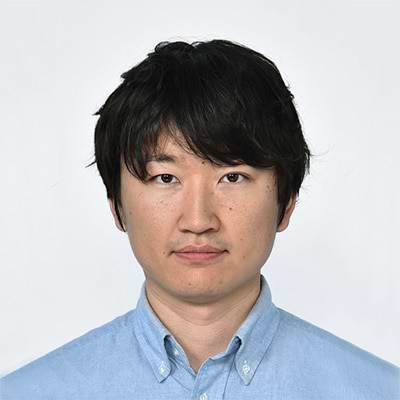
Watanabe Sei
TV Asahi Corporation
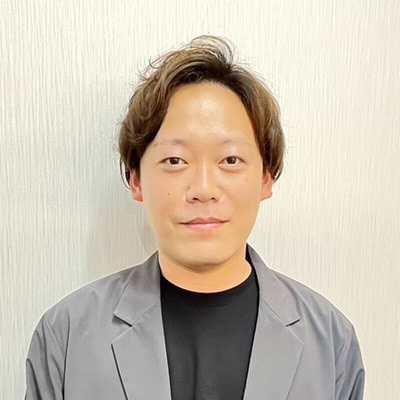
Kaku Akiaki
TV Asahi Corporation
There are people doing interesting things in television content production.
They are not bound by fixed notions of "terrestrial broadcast" or "online."
They earnestly consider what form content should take in today's era.
From this, the form of television for a new era becomes visible.
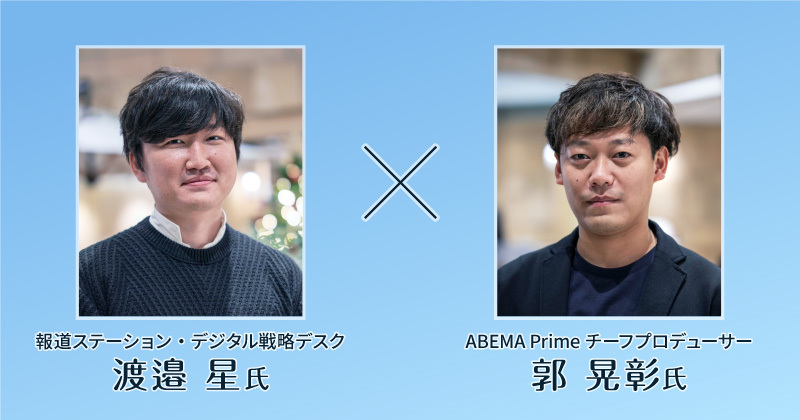
Joining us this time are Mr. Teruaki Kaku, Chief Producer of the news reality show "ABEMA Prime" on the ABEMA NEWS channel, and Mr. Hikaru Watanabe, Digital Strategy Desk at TV Asahi's "Hodo Station".
What are Mr. Kaku's thoughts on "the strengths and appeal of online broadcasting"? What does Mr. Watanabe envision for "TV news's D2C Inc." (Direct to Consumer)? And what are the new initiatives for "Hodo Station"?
These two rising young television producers exchanged views on the theme of "the potential of television centered on the convergence of terrestrial and online broadcasting."
Online broadcasting has no concept of "time"
─First, could you tell us about your relationship?
Guo: We're senior and junior colleagues at TV Asahi. I joined in 2010, and Watanabe joined in 2012. We worked together on the morning information program "Yajiuma TV!" (now "Good! Morning"), and later, we were both seconded to ABEMA. For about three years, we served together as board members for the "ABEMA NEWS Channel." I still handle news programs at ABEMA, while Watanabe-kun returned to terrestrial broadcasting in 2020 and now works on "Hodo Station."
─So both of you have gained experience in news programs across terrestrial and online broadcasting. Having worked in both media, what differences do you perceive?
Watanabe: The biggest difference is broadcast length. Obviously, terrestrial TV has a fixed daily schedule. Online broadcasting, however, has no concept of time constraints. ABEMA extends broadcast times and cuts commercials during disasters or emergencies. We program in real-time, watching viewer reactions. Sometimes we live-stream various press conferences all day long. That lack of time constraints—that incredibly free style—was shocking at first.
Guo: Since we produce with a small team, we often decide on content quickly after a few people discuss it, then rush through reporting, editing, and distribution all at once. When I worked on terrestrial broadcasts, I only had to focus on content production. With online broadcasting, however, I must swiftly handle everything from scheduling and promotion to digital strategies and production. That's the challenging part, but I also find it incredibly educational, interesting, and rewarding.
Not forgetting those left behind in the larger flow
─Is there any ABEMA content you've worked on that particularly stands out for you? If there's an example unique to online broadcasting, please share it.
Watanabe: I remember the project "Today's Kyonan Town" vividly. During the 2019 Boso Peninsula Typhoon, the program I was in charge of sent a reporting team to Kyonan Town in Chiba Prefecture—one of the affected areas—for a full month.
What drew our attention to Kyonan Town was a Twitter post showing images of a river violently overflowing, accompanied by the plea "Please help us." From the mountain ridgelines visible in the images, we estimated, "This is probably somewhere around here in Kyonan Town," and we got to the scene faster than any other media outlet. As we interviewed the poster, we learned the town had suffered immense damage, lacked relief supplies, and that their pleas for help weren't reaching the outside world. Nationwide damage was too vast, and the full extent hadn't yet been grasped. Twitter was the catalyst that made us aware of this disaster area. When we aired the report, it generated a huge response. We received inquiries from various media outlets, including terrestrial broadcasters, asking to borrow our footage.
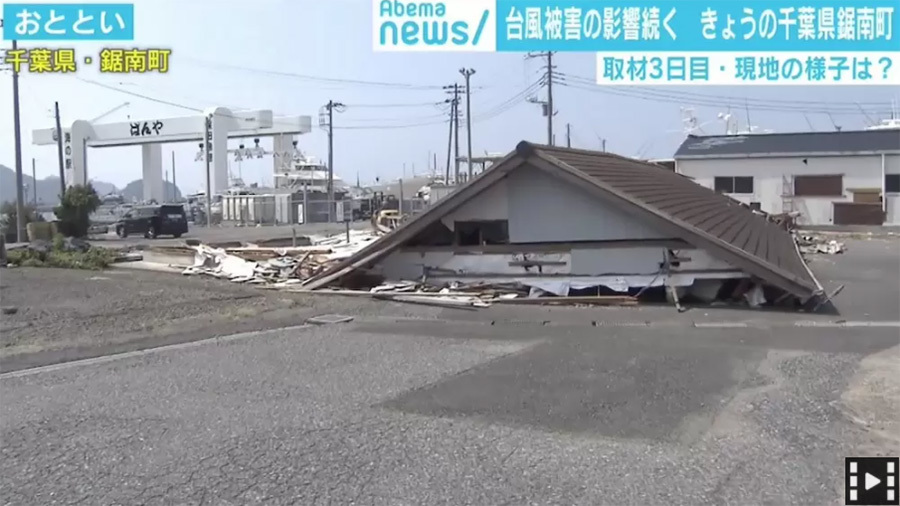
This became our starting point, and we focused our efforts on Kyonan Town, continuing daily coverage. The extent of the damage in Kyonan Town and the gradual recovery efforts driven by the townspeople's resilience gained recognition, primarily online. Hearing from locals that this ultimately led to a significant collection of relief supplies made us very happy. Kyonan Town, hidden in the shadow of more prominent disaster areas and largely unreported, was able to share its reality. This made me realize we could do something unique to online media: "We can't do grand things, but we can focus on the micro" and "We can ensure people left behind in the larger flow aren't forgotten."
Guo: In terms of "unique to the internet," we put thought into how we cover press conferences. Sometimes rules like "no video use online" are imposed during these events. How do you convey content that people are highly interested in when you can't use video or audio? Previously, we came up with and implemented the method of "live-commentating the conference content in real time."
At that time, we created text articles simultaneously with the broadcast and uploaded them online. Since no terrestrial TV stations were broadcasting during that time, viewers were extremely grateful.
The strengths of online broadcasting lie in its ability to make micro-moves that scratch where it itches, its freedom from rigid rules and formats, and its speed in producing programs.
Digital expansion for terrestrial TV hinges on D2C Inc.
─How do you measure the effectiveness of online broadcasting? Is viewership still the primary focus?
Guo: Previously, we only used "number of live viewers and viewing duration" as KPIs, but we've adjusted that recently. Why? Because the catch-up streams on ABEMA Video and the archived YouTube videos have generated unbelievable view counts.
Additionally, many people get information through our text-based owned media, "ABEMA TIMES." Recognizing this, we realized "live broadcasts aren't everything."
Now, we broadly examine data from archived videos and articles too, looking holistically at metrics like total views, viewing duration, the number of Twitter comments, and how viewers interact.
I've also come to view live broadcasts as "source material for filming and recording." Viewers engage with information through various means; live broadcasts aren't the only point of contact. Therefore, I believe we should treat the video content from live broadcasts as raw material and actively process it into formats suitable for each platform—YouTube, Facebook, TikTok, and so on. Different lengths are fine, and having multiple versions is good.
Watanabe: I agree. For "Hodo Station" video content, we also edit it slightly when posting to Twitter, like bringing the conclusion forward. I don't think simply dumping terrestrial broadcast content online as-is will get people to watch. As Guo-san said, re-editing to fit the online context is incredibly important.
I think getting people who don't have the habit of turning on the TV to actually turn it on is incredibly difficult. People who normally read NewsPicks, digital newspapers, or watch YouTube won't suddenly think, "Okay, I'll turn on the TV at broadcast time to watch this live."
So, shouldn't we instead consider delivering content in a format that fits where and when the audience is? Also, especially for news, it's important not to drip-feed content but to present it in a way that can be "consumed in full" on that platform. Drip-feeding awkwardly just makes viewers drift away. Phrases like "continue on the app" or "continue on TV" should probably be avoided.
First and foremost, isn't it crucial to properly deliver content to the media and places where viewers are present, to make them aware of it, and to get them to recognize it as a good program? As I mentioned in my previous article, I believe "D2C Inc. for TV news" is needed to ensure content reaches viewers directly.
Media must become much more of a "mediator."
─What specific digital initiatives is "Hodo Station" implementing?
Watanabe: Since April 2019, we've been uploading eight video clips per day from "Hōdō Station" to Twitterand Facebook, in collaboration with KAIZEN PLATFORM and TV Asahi Mediaplex.
Concurrently, we established a system where a dedicated team of writers produces articles for the program's official website. For the daily broadcasts, we also focus on topics trending outside newspapers and TV, digging deeper into them on the show—an approach aimed at the working generation. For example, by focusing on questions or information trending online and thoroughly investigating them using Hodo Station's reporting power, we believe we can create content that scratches that itch—revealing things like, "Yes, yes! I've been wondering about that for a while."
These efforts have increased Twitter engagement by over tenfold compared to before. Page views for text articles on the program's official website have also risen significantly.
Kaku: Historically, news and information programs operated under a culture of not preserving content. Despite the significant cost, manpower, and effort invested in creating it, the moment the live broadcast ended, it became inaccessible. Watanabe-kun is actively "archiving" this content and "expanding it digitally in various forms." I feel he's effectively bringing what he learned and experienced at ABEMA into the terrestrial broadcasting world and putting it to good use.
Terrestrial TV has plenty of high-quality content, like late-night documentaries. By creating an environment where people can discover and engage with that content in the best possible way when they "Google" it, we can make them think, "TV stations make such great programs!" or "This is actually useful!" Ratings are important, but rather than focusing solely on whether we get numbers for that day's broadcast, I think it's better to consider the vector of "whether it's useful."
Watanabe: Media means "mediation." We must become an even broader, more flexible bridge connecting people everywhere. I believe the digital expansion of terrestrial broadcasting is one way to achieve that.
Was this article helpful?
Share this article


Newsletter registration is here
We select and publish important news every day
For inquiries about this article
Back Numbers
Author
Watanabe Sei
TV Asahi Corporation
News Department
Hodo Station/Digital Strategy Desk
Kaku Akiaki
TV Asahi Corporation
ABEMA Prime Chief Producer