Note: This website was automatically translated, so some terms or nuances may not be completely accurate.
 What is "bottlium," which commits to environmental issues through "bottle-to-fiber"? [1/1]
Japan is a "resource powerhouse" for waste PET bottles. An Introduction to Bottle to Fiber
As global warming progresses, momentum is building worldwide to achieve carbon neutrality through "plastic reduction."
One familiar example is the reuse of plastic bottles. While "Bottle to Bottle" recycling—using collected bottles to make new bottles—has gained significant recognition, did you know that "Bottle to Fiber" initiatives are also increasing? These projects transform plastic bottles into raw material for fibers used in the apparel industry and beyond.
This article introduces the potential of bottle-to-fiber, focusing on "bottlium," a joint initiative by TOMRA Japan, a leading company in PET bottle collection and recycling, and Dentsu Inc., a leading company in advertising.
<Table of Contents>
▼ "bottlium" Enables Low-Environmental-Impact Bottle-to-Fiber
▼Resource-Circulating Products Become the Standard in the Apparel Industry
▼Good Quality Starts with Good Resources! But What Exactly Are "Good Waste PET Bottles"?
"bottlium" achieves low-environmental-impact bottle-to-fiber
TOMRA, headquartered in Norway, holds the world's top market share in the category of automatic PET bottle collection machines.
TOMRA Japan, jointly funded by TOMRA and Sumitomo Corporation, collects and recycles 550 million PET bottles annually in Japan alone through partnerships with major convenience store chains and others, contributing to the circular economy.
TOMRA Japan and Dentsu Inc. have launched a business producing "high-quality organic pellets" using waste PET bottles. The first product from this initiative is "bottlium".
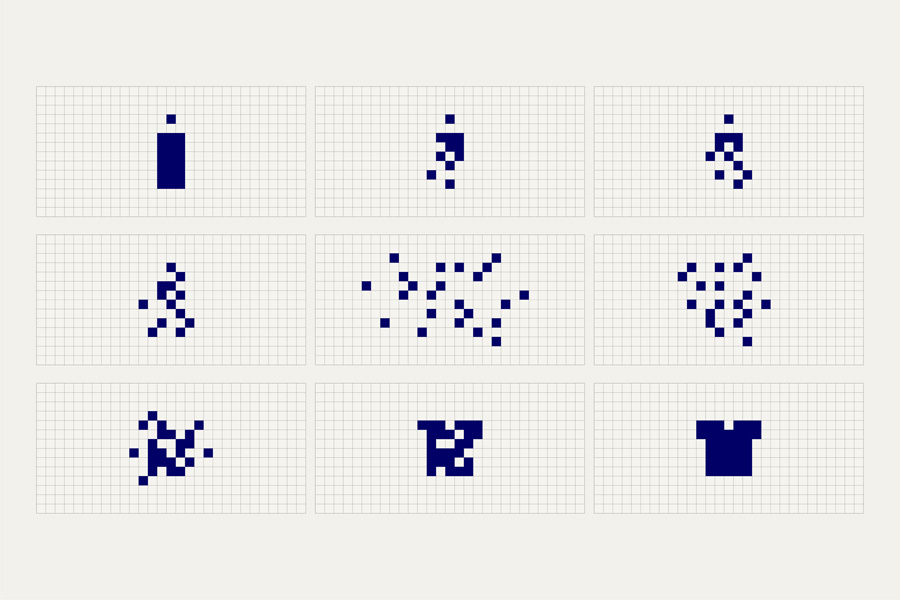
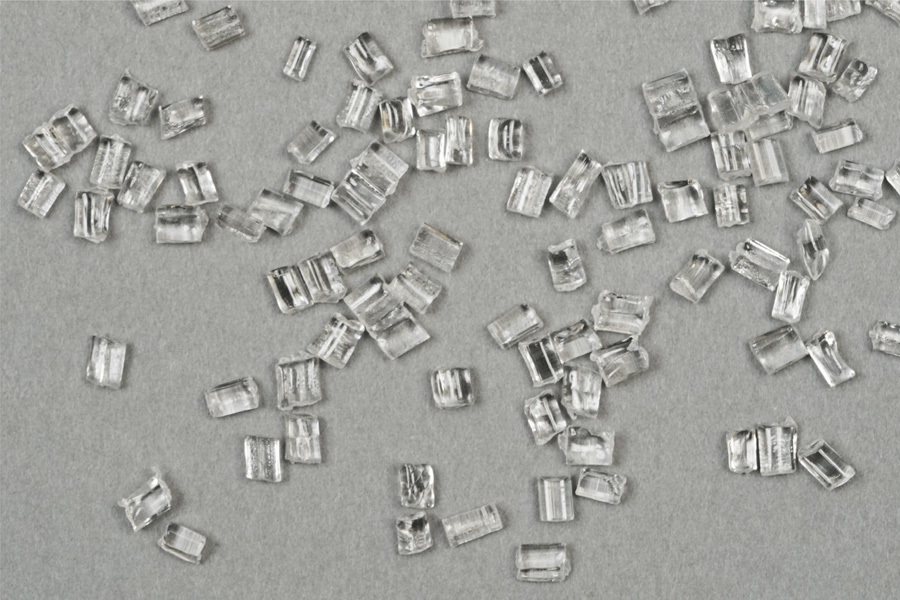
There are several methods for reusing waste to support the circular economy. "Chemical recycling" involves depolymerizing waste to remove impurities. "Material recycling" transforms waste into pellets (small particles created by crushing items like PET bottles) and then reshapes them into new products.
bottlium falls under material recycling, as it creates fibers from pellets.
bottlium produces high-quality organic pellets that can be reused as fibers. These pellets are made from PET bottle resources collected through Japan's largest-scale collection system, the "Reverse Vending Machine" (RVM), located at over 1,400 sites nationwide.
Its defining feature is achieving recycling through processes with minimal environmental impact.
For example, while chemicals are typically used to clean waste PET bottles, bottlium employs an eco-friendly "water washing" method. This results in the lowest environmental impact during wastewater treatment among pellets produced under comparable conditions (※1).
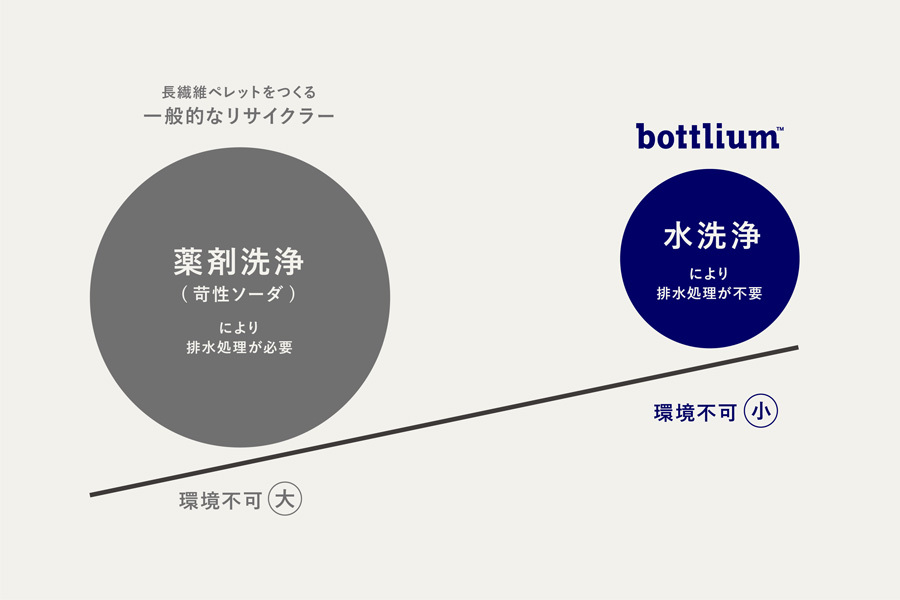
※1 Based on recyclers processing 10,000 tons/year or more (Tomra Japan survey, as of April 2021)
We have also established a low-impact transportation system for waste PET bottles. By processing them into one-third of their original volume using RVMs before transport and further compressing them into cubic shapes at temporary storage sites, we reduce CO₂ emissions from collection to the factory by up to 38.2% (※2).
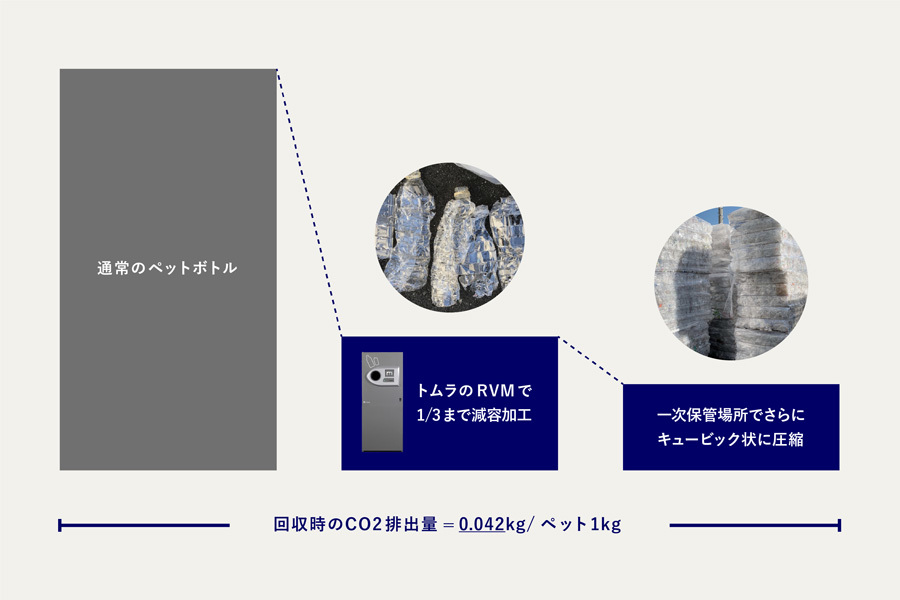
※2 Compared to municipal collection routes (Tomra Japan survey, as of April 2021)
Furthermore, since bottlium uses PET bottles collected at specific retailers' RVM machines, it can disclose traceability information such as "which store in which region collected the PET bottles used to produce the pellets." This information could potentially be leveraged for regional branding.
According to TOMRA Japan's research, as of April 2021, recycled 550 million PET bottles annually in Japan, with over 4 million people nationwide continuously participating in this initiative.
Resource-circulating products are becoming the standard in the apparel industry
Now, when it comes to creating fibers from PET bottles, we believe the apparel industry will be the primary sector utilizing Bottlium.
Here are three key benefits for apparel manufacturers using bottlium:
1. Co-creation with Consumers
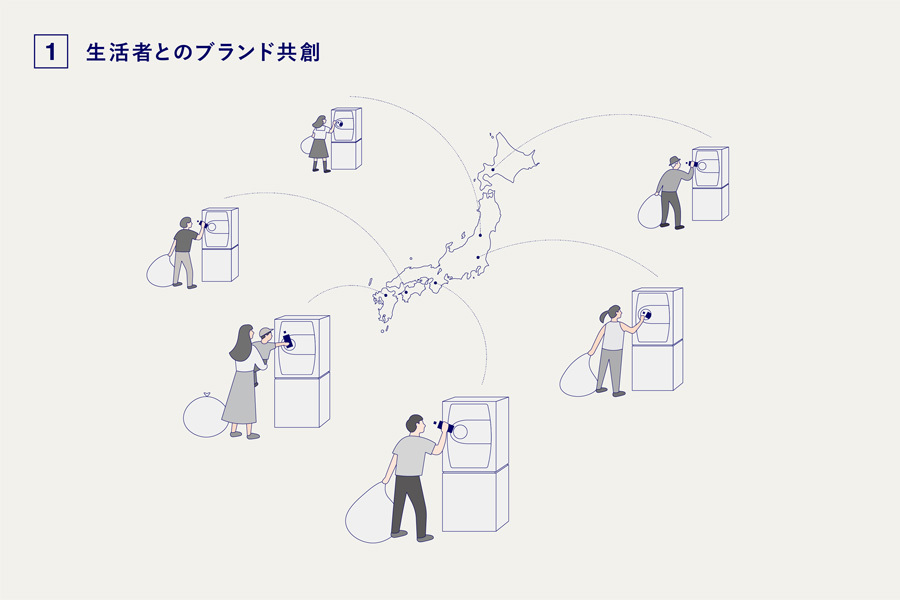
By creating "locally produced, locally consumed co-creation products" that return locally sourced resources (i.e., discarded PET bottles) back to the community, brands can build deep relationships with local consumers.
2. Highest Quality Enables Broad Scalability
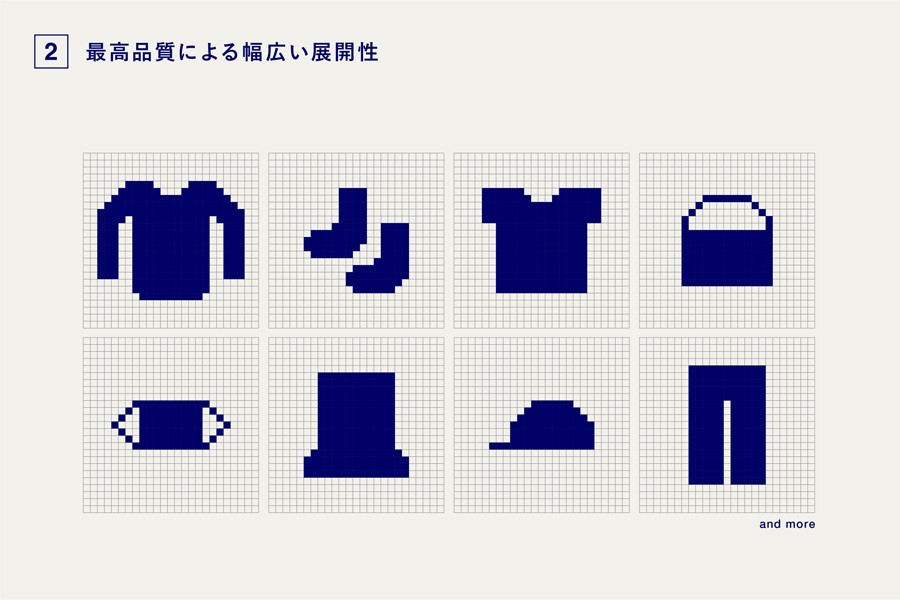
Among pellets produced from collected PET bottles, our "special long fibers" represent the highest quality standard, offering superior functionality and enabling diverse product applications.
3. Pursuit of Thorough Sustainability
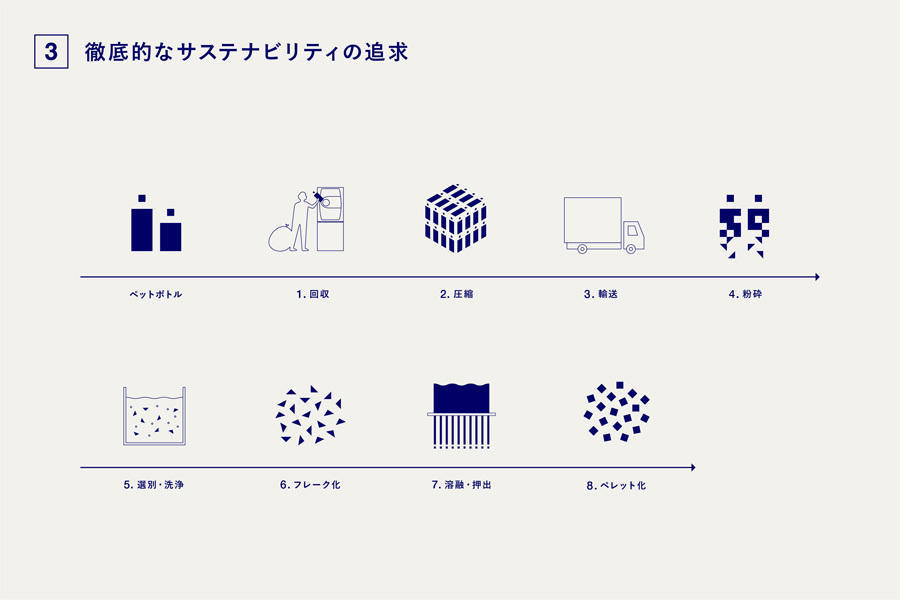
Beyond merely reusing PET bottle resources, we have established a production process that is thoroughly environmentally conscious. This embodies our corporate commitment to achieving genuine sustainability, not just superficial gestures.
Today, contributing to the circular economy and a circular society is expected even from apparel brands. Whether it's novelty campaigns using fibers derived from PET bottles or launching new brands, bottlium supports companies—including apparel manufacturers—in their SDGs activities through a wide range of proposals.
Next, we'll briefly introduce domestic and international trends surrounding PET bottle reuse.
Currently, a global trend of accelerating "plastic waste export restrictions" is underway, requiring both exporting and importing countries to establish domestic recycling systems.
Within this context, many countries are focusing their efforts on recycling, primarily for "containers and packaging," and promoting the use of recycled plastics.
Consequently, major consumer goods companies, for example, have set targets for the "recycled material content ratio" in their products but face challenges such as "insufficient supply of recycled materials."
To achieve a resource cycle for recycled plastics, proper sorting and collection along with advanced recycling technology are essential. Against this backdrop, the activities of major recycling companies and chemical material manufacturers are drawing significant attention.
In the apparel and sporting goods industries in Europe and the US, collaborating with recycling companies and chemical material manufacturers to create environmentally conscious products is already becoming standard practice.
For example, Nike uses recycled materials in 78% of its products, incorporating recycled polyester made from PET bottles into its clothing and shoes.
Adidas has also developed shoes that are 100% recyclable. Furthermore, the company has pledged to switch all polyester used in its products to recycled polyester by 2024.
In recent years, the European sustainable fashion brand ECOALF, which makes all items exclusively from recycled materials or low-impact natural materials, has also gained attention.
Looking domestically, Japan has seen the emergence of "BRING," a brand tackling clothing recycling through Japan Environmental Design, which has formed partnerships with companies like Goldwin and Takashimaya. The use of recycled materials itself is gradually increasing in Japan.
However, there is a growing desire for initiatives in Japan that take an even more proactive step, similar to ECOALF, which determines materials based on environmental impact indicators.
Good quality comes from good resources! But what exactly is a "good waste PET bottle"?
Here's something we really want you to know: Japanese PET bottle resources are exceptionally scarce, even on a global scale.
The "Voluntary Design Guidelines for PET Bottles" established in 1992 elevated Japan's PET bottle recycling to the world's highest standards. Furthermore, the complete ban on colored PET bottles in 2001 led to the widespread circulation of colorless, transparent PET bottles that are easier to recycle.
Consumer sorting and disposal also advanced. According to the PET Bottle Recycling Annual Report 2020, the collection rate reached 77.4% in 2009. Then, in 2018, the soft drink industry took the lead among other industries by announcing the "Soft Drink Industry Plastic Resource Circulation Declaration," committing to plastic resource circulation and marine plastic countermeasures.
This initiative unites the industry in aiming for 100% effective utilization (combining recycling with thermal recovery*) of PET bottles by fiscal year 2030. Bottle-to-bottle recycling efforts are already well-established, marking the entry into a new stage toward achieving 100% effective utilization.
※ Thermal recycling: Unlike chemical recycling and material recycling mentioned earlier, this involves recovering and utilizing the energy generated when waste is incinerated.
Furthermore, and this is my personal observation, Japan gives the impression of being clean with little litter in its streets, and people are cooperative with waste separation. You often hear comments like "Japanese people are clean freaks." I believe this national character is a reason behind the high quality of waste PET bottles and the high collection rates.
Earlier, I mentioned the high scarcity of Japanese-made PET bottle resources. Let me elaborate further.
For instance, if bottles contain leftover food or drink, or if colored PET bottles are mixed in, they become unsuitable for recycling.
Recycling bins often found next to vending machines frequently contain large amounts of caps, labels, trash, and residue. Even PET bottles collected through municipal recycling programs are often collected with labels and caps still attached.
In contrast, TOMRA's RVM is designed to reject bottles with caps, labels, or residue. Furthermore, its color sensor prevents the collection of colored plastic bottles.
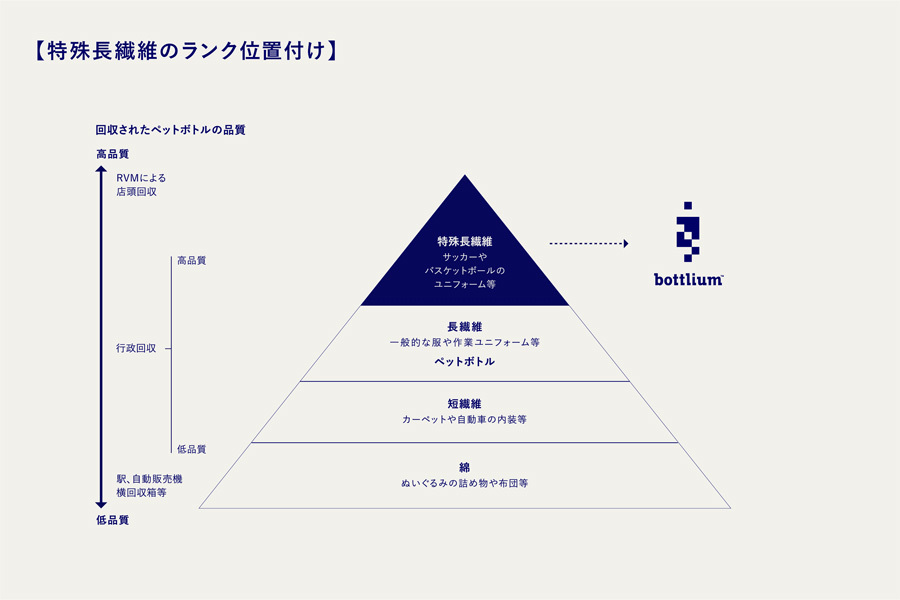
PET bottles brought in as clean resources by consumers themselves. Precisely because we use 100% of these as raw material, bottlium pellets are transparent, easy to color, and achieve a quality suitable for any product.
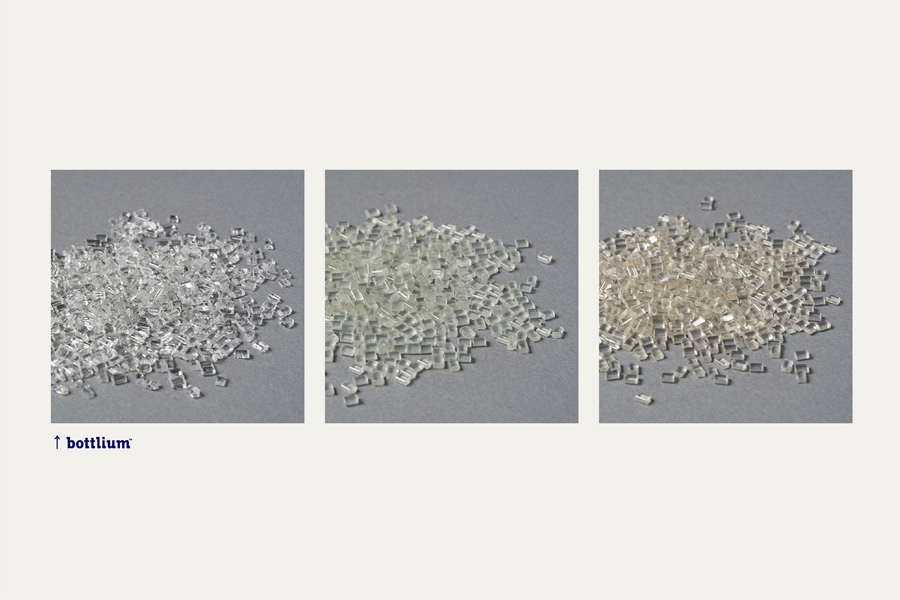
Good quality comes from good resources.
We aim to maximize the unique characteristics of Japan's scarce PET bottle resources and TOMRA Japan's high-quality collection scheme to spread Japan's "Bottle to Fiber" initiative both domestically and internationally.
If you're interested in utilizing Bottle to Fiber, not just in the apparel industry, please contact us!
Official Website: https://bottlium.tomra.co.jp/
Contact: https://tc.tomra.co.jp/tomra/contact/
*bottlium is a joint initiative with TOMRA Japan as part of Dentsu Inc. Sustainable Business Solutions (dSBS).

Was this article helpful?
Share this article


Newsletter registration is here
We select and publish important news every day
For inquiries about this article
Author

Hiroaki Mori
Dentsu Inc.
Business Transformation Division