
Note: This website was automatically translated, so some terms or nuances may not be completely accurate.
 What is a team? [6/6]
Getting to the Core of Psychological Safety (Part 2)

Toshiro Murase
Waseda University
This series asks Professor Toshiro Murase of Waseda University about the essence of communication. In this industry, terms like communication, collaboration, relationship, and engagement are often thrown around using foreign words, but what exactly are they? Professor Murase provides a clear explanation.
Don't Run Away from Conflict
This series delves into the "essence of teams." In this final installment, we first presented the theme of conflict to Professor Murase. As a salaried worker myself, I believe everyone holds both the desire to "contribute to the company" and the desire to "advance their own career."
But this can easily provoke reactions contrary to one's intentions. The same applies to social media posts. You desperately want to share your thoughts with the world. Yet, the more you post, the more negative reactions you receive.
In response, Mr. Murase offered this perspective: "I believe the foundation of communication lies in conflict. You could say it's about continually facing dilemmas. When diverse opinions emerge, it can be troublesome. But if you avoid that, neither you nor your team or company can grow. Pursuing efficiency alone doesn't foster human growth. Eliminating negativity isn't that difficult. But it's precisely by finding positive potential within that negativity that you seize opportunities for growth. Isn't that what a team exists for?"
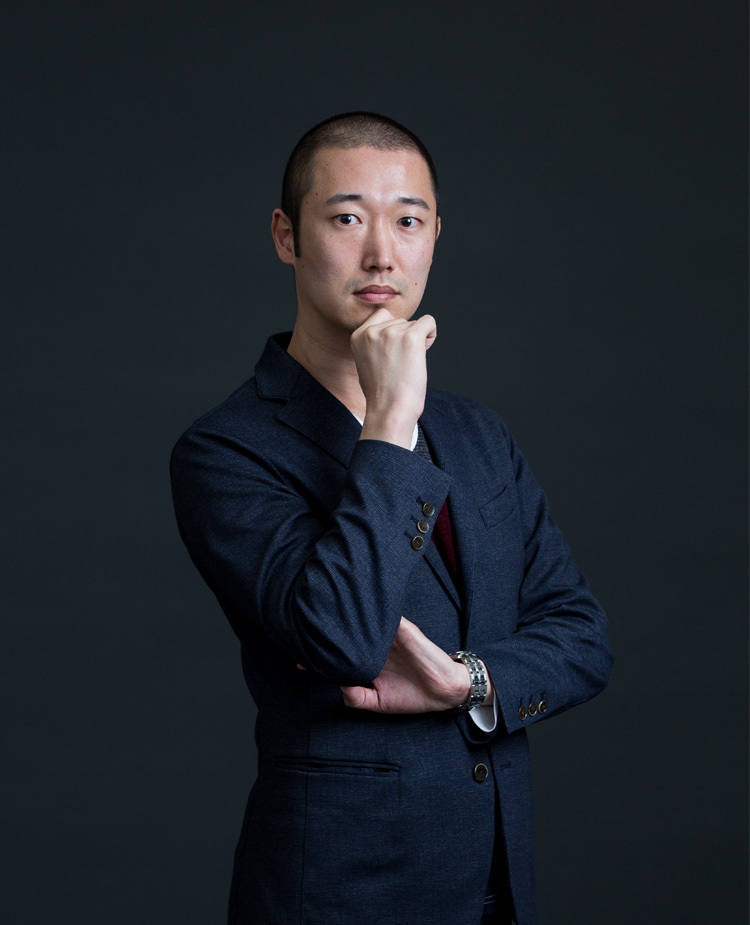
Associate Professor, Waseda University School of Commerce. After graduating high school in 1997, he moved to the United States. Earned his Ph.D. in Industrial and Organizational Psychology from the University of Central Florida in 2011. Served as a postdoctoral researcher at Northwestern University and Georgia Institute of Technology before teaching at Roosevelt University in Chicago. Assumed his current position in September 2017. Specializes in research on leadership and teamwork.
Murase's point resonated with me. It's about those people who only voice negative opinions in meetings. I recognize myself in that. Saying something like, "Overall, I think it's good, but isn't there cause for concern on this point?" somehow makes you look good. But simply pointing out negatives without offering solutions doesn't move the team forward. It's precisely because there is conflict and disagreement that both the individual and the team can grow.

The core of sustainability is "team."
"Tacit knowledge, or shared understanding, gradually shifts over time, doesn't it? It changes with the era and across generations. How should we address this?" In response to this question from the author, Mr. Murase replied:
"I believe shared understanding has two elements. One is considering how the team moves and works together. The other is deepening a shared understanding of the team members themselves. That means everyone on the team has the same grasp of each member's quirks, individuality, strengths, and weaknesses. You think, 'That person will surely think this way, act this way to achieve results. But their weakness lies here. So I'll support them.' It's through this that team strength grows."
Murase's second point is particularly fresh. When we hear "team," we inevitably imagine something like "sharing the same pot of rice." That is, the idea that everyone must act identically.
"That's not it. It's about each individual efficiently fulfilling their role toward a shared goal. To achieve that, everyone needs to share an understanding of each member's unique strengths. For example, a common inefficiency in the workplace is individuals doing similar tasks. It's what's often called 'overlapping work.' To prevent that, communication is absolutely essential."
Murase's point that the essence of a team capable of sustained, long-term results lies in communication really hit home. In an environment where we can't go to the office or engage in "drink-nication," we should refocus on the true nature of communication. The notion that replying to every email means the team's work is done is nothing but an illusion.

[Editor's Note]
At the end of the interview, I threw Murase a slight curveball: "What is the role of a star within a team?" His answer, typical of his perspective, was clear: "The role of a star is to draw attention from outside the team. This allows the team's structure to be formed. It creates winning patterns. This applies equally to idol groups, sports teams, and corporations. And growth happens by repeatedly building and then breaking down those winning patterns."
Mr. Murase concluded the interview by emphasizing that the most crucial element for any team is having "breathing room" or "play." While building the team structure, always leave room for "breathing space" and "play." From there, unprecedented ideas or the next generation of stars might emerge, or the business could skyrocket.
I don't believe that just six installments of this series fully unraveled the question, "What is a team?" But Mr. Murase provided significant hints for contemplating it. The crucial point is that we must not view teams through the lens of so-called "spirit-based theories" like the sports club mentality or blind loyalty to the company.

Was this article helpful?
Share this article


Newsletter registration is here
We select and publish important news every day
For inquiries about this article
Back Numbers
Author
Toshiro Murase
Waseda University
Associate Professor, School of Business
Associate Professor